
Polaroid of the Week: The Berlin Wall – A Symbol of Division and Reunification
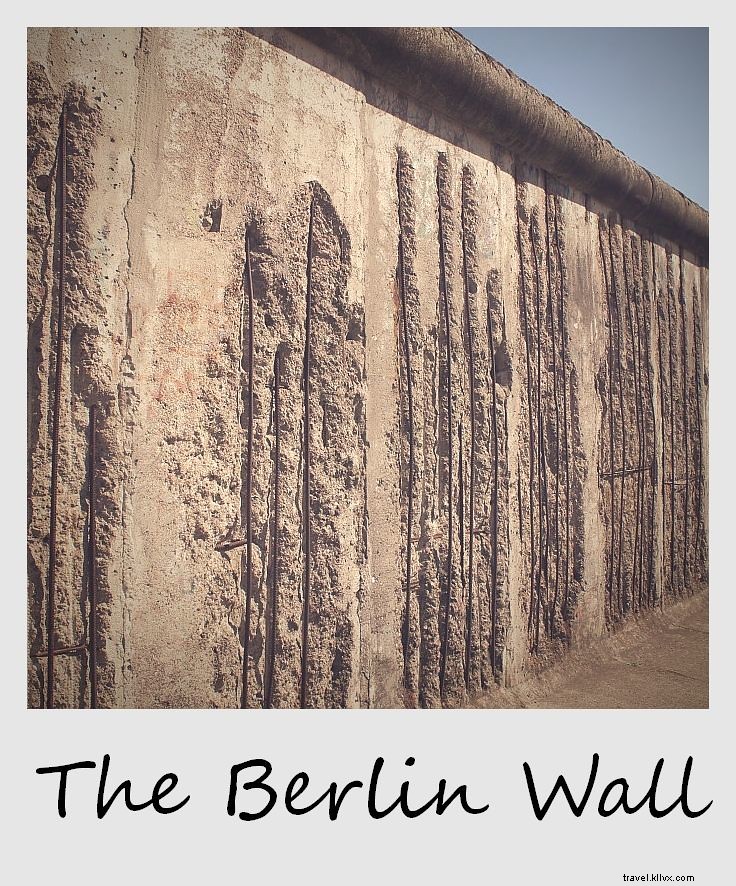 This stark concrete barrier loomed menacingly in Berliners' daily lives for 29 years, dividing their city. While most sections were swiftly dismantled after reunification, key remnants endure, including the East Side Gallery—a vast outdoor mural showcasing provocative street art. Other preserved fragments remain eerily unchanged. The Wall's fall holds deep personal significance for us: as a couple from the former GDR and America, it made our meeting possible, highlighting how today's global mobility contrasts with the GDR's severe restrictions.
Delving into Berlin's history firsthand, one revelation for Jess (from the U.S.) was the Wall's sudden erection in 1961. Post-World War II, Berlin's divide was fluid; West Berlin, an enclave amid communist East Germany, allowed free family visits and cross-sector commutes. Yet, Western prosperity—bolstered by U.S. and French aid—outpaced the East's economic woes and curbs on freedoms. Mass escapes in the 1950s prompted the GDR to build the Wall overnight from August 12–13, 1961. Families awoke separated, commutes halted, and phone lines severed.
Crossing attempts thereafter risked imprisonment or death. This 100-mile barrier isolated East Berliners for 29 years until November 9, 1989, when borders opened. Reunification followed on October 3, 1990, uniting East and West Germany.