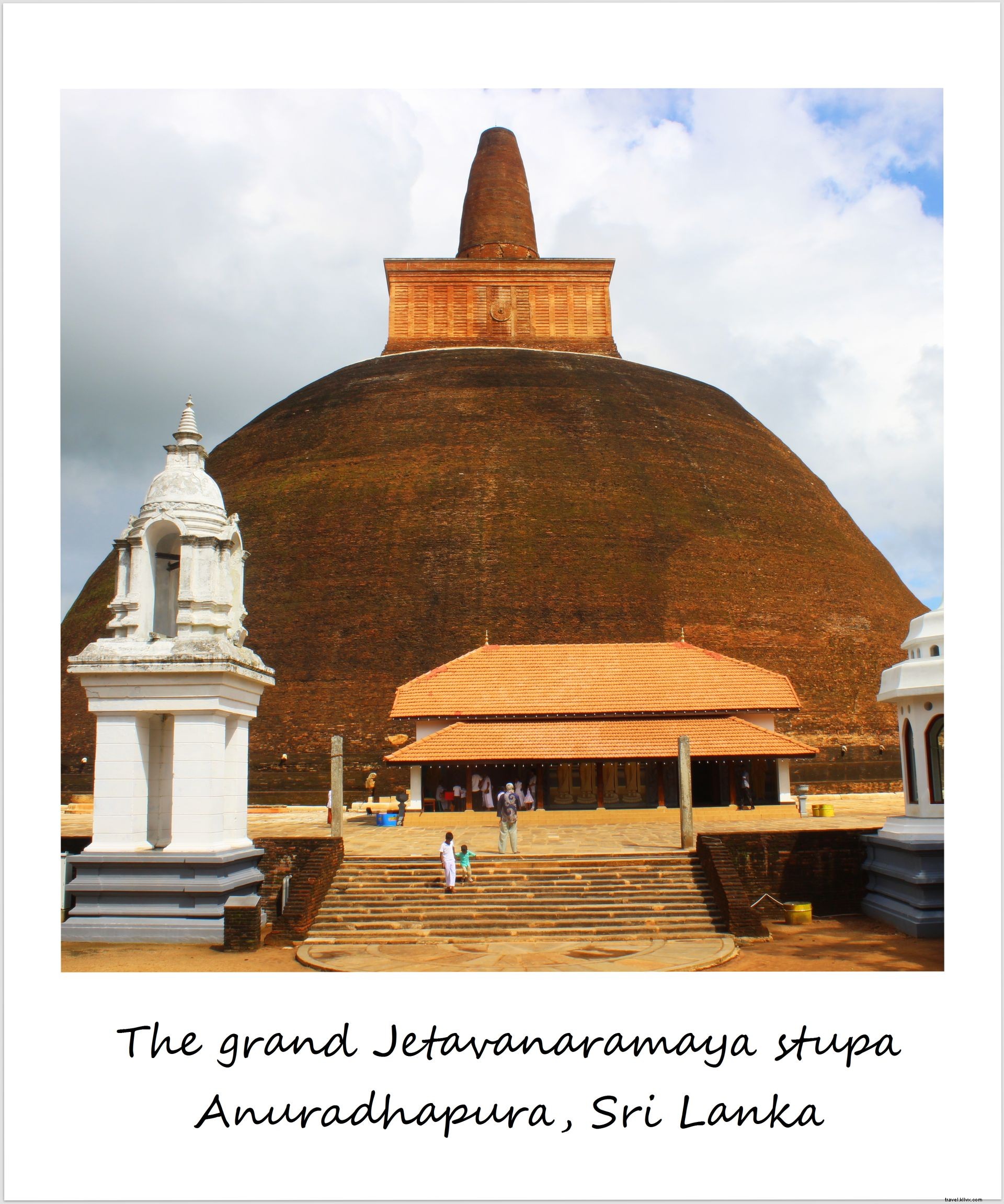
Photo of the Week: The Majestic Jetavanaramaya Stupa in Anuradhapura, Sri Lanka
 This past week focused on temple exploration as my fellow traveler Becki and I journeyed from Sri Lanka's tea country north to the Cultural Triangle. We had previously visited during our pre-TBC Asia conference trip, ascending the 660-foot (200-meter) Sigiriya Rock, home to ancient palace ruins. This time, we explored Polonnaruwa, Sri Lanka's second royal capital from over 1,000 years ago, and Anuradhapura, the first religious and cultural capital of the Sinhalese, which held that status for 1,300 years.
Founded in the 4th century BCE, Anuradhapura is one of the world's oldest continuously inhabited cities. Though most ancient stupas and structures are no longer occupied, they have been remarkably preserved. Today, it remains a sacred Buddhist site, home to 5,000 monks in surrounding monasteries, with hundreds of pilgrims visiting daily. Spanning over 16 square miles (40 km²), it ranks among the largest archaeological sites globally.
The city's vast scale makes a single-day visit challenging, but our knowledgeable tuk-tuk driver guided us to its most stunning sights. The Jetavanaramaya Stupa, featured here, stands out as one of Sri Lanka's—and the world's—tallest stupas. It is the third-largest brick structure from the ancient world, surpassed only by the Great Pyramids of Giza. Constructed with 93.3 million baked bricks to reach 400 feet (120 meters), it represents extraordinary ancient engineering, built between 276 and 303 CE.
We spent the day admiring gleaming white stupas, ancient bathing pools, a mystical rock temple, and the Jaya Sri Maha Bodhi—the sacred Tree of Life at Anuradhapura's heart. Our Cultural Triangle itinerary felt perfectly sequenced: starting with compact Sigiriya, progressing to impressive Polonnaruwa, and peaking at awe-inspiring Anuradhapura. All three are UNESCO World Heritage Sites, a fitting recognition.