Namibia's Thriving Safari Wildlife: Africa's Premier Conservation Success
Namibia's captivating desert landscapes, though appearing unforgiving, harbor abundant wildlife, including stable or growing populations of Africa's iconic safari species such as elephants, cheetahs, black and white rhinos, and lions. While these vulnerable and endangered animals decline sharply elsewhere on the continent, Namibia's achievements stand out as a global model.
Conservation is constitutionally enshrined in Namibia—the first African nation, and one of few worldwide, to do so. By equitably sharing wildlife tourism revenue with local and indigenous communities, Namibia has empowered them to lead protection efforts. Nearly one in eight Namibians participates, with registered conservancies covering over 18% of the country and an additional 19% safeguarded in national parks and reserves.
Visitors to this stunning destination can observe Namibia's signature wildlife and experience its pioneering conservation firsthand.
Black rhinoceros
Three decades ago, black rhinos in Namibia's remote northwest Kunene region (Kaokoland) faced extinction. Today, it boasts the world's largest free-roaming population—the only such group living on communal, traditionally owned lands without formal protected status. Community involvement, local anti-poaching patrols, and rhino tourism income have fostered positive human-wildlife relations. Lodges like Palmwag Lodge and Serra Cafema offer luxury stays with vehicle safaris and guided walks to spot desert-adapted rhinos.
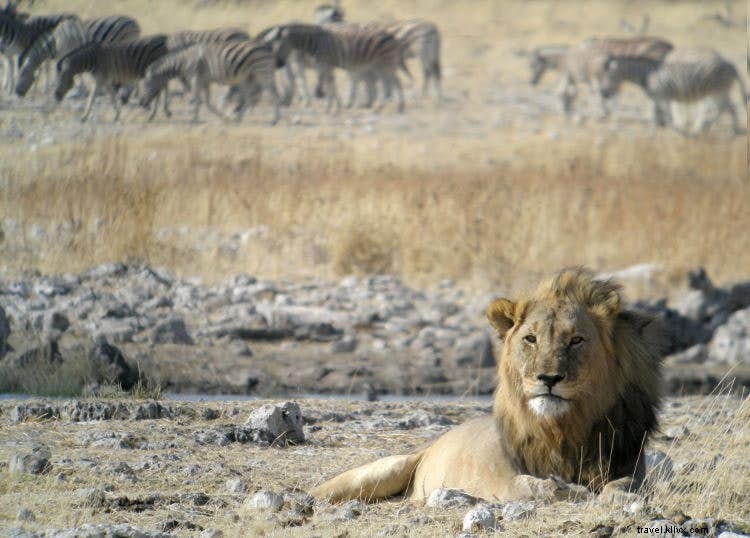
Lion
Desert-adapted lions inhabit the rugged mountains, coasts, and seasonal rivers of the Kunene region, from the Kunene River to the lower Kuiseb. Ranging mostly outside formal protections, they have coexisted with communities enduring livestock losses. The Kunene Lion Project has mitigated conflicts over the past decade through research on movements, densities, and demographics, boosting tourism revenue and securing long-term survival. In Etosha National Park, lions frequently hunt zebras and gemsbok at waterholes.
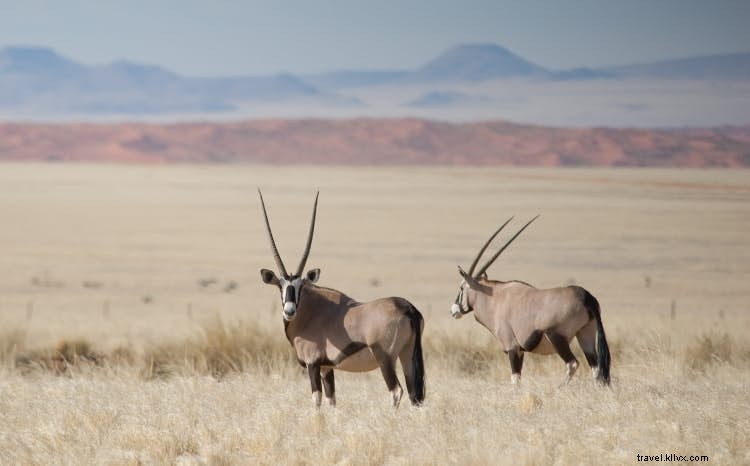
Gemsbok
With dramatic long horns, a tawny coat edged in black, and graceful stride, the gemsbok is Namibia's national emblem. Thriving on minimal water and desert melons, it excels in the country's 44% desert and semi-desert terrain. Populations rebounded after war and droughts, now exceeding 200,000, mostly on community-managed farmlands. Spot herds anywhere rural, or capture iconic images against Sossusvlei dunes in Namib-Naukluft National Park.
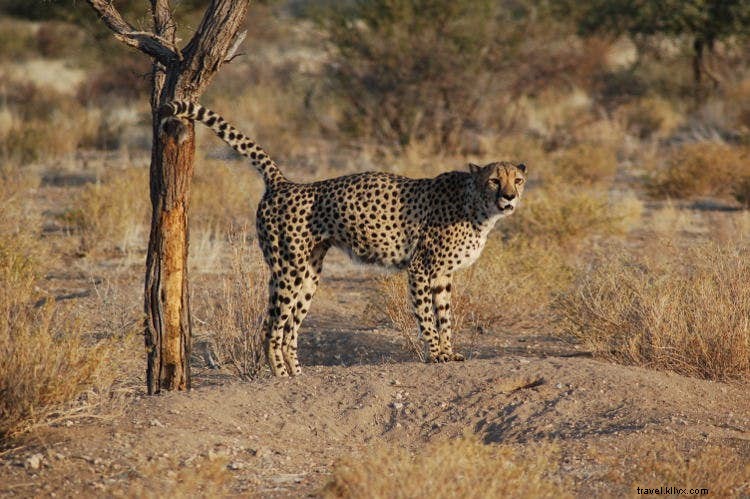
Cheetah
Namibia sustains about 25% of the global cheetah population, mostly on private conservancies. Decades of rehabilitation and release programs by public-private partnerships have bolstered numbers. Prime viewing awaits at Waterberg Plateau near Otjiwarongo, spanning 400+ sq km of park and private lands with cheetahs, leopards, buffalo, and rare antelopes. Nearby, the Cheetah Conservation Fund's headquarters offers an education center and close encounters with non-releasable cheetahs.
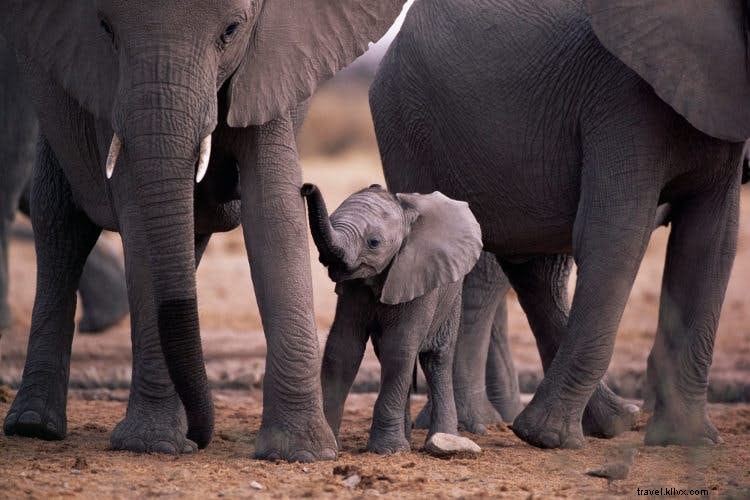
Elephant
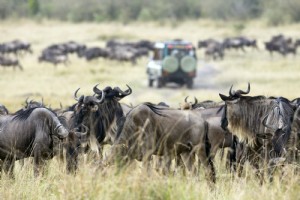
Desert elephants in Kunene expertly access underground water in dry riverbeds. For reliable sightings, visit Etosha National Park, Namibia's flagship reserve at 22,750 sq km. Its vast salt pan draws flamingos post-rains, while waterholes attract game from savanna and scrub. Home to 114 mammals (many endangered) and 380 birds, Etosha guarantees elephant views—around 2,300 strong—at Okaukuejo's watering hole, alongside black-faced impala, gemsbok, wildebeest, zebras, giraffes, and rhinos. Abundant species are relocated to other areas.
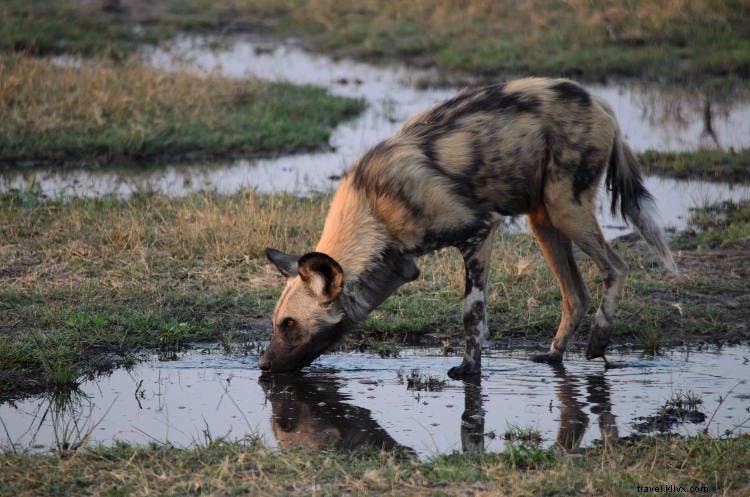
African wild dog
Namibia's most endangered mammal, the African wild dog, features mottled coats and large ears. Pack hunters roam up to 3,000 sq km, covering 50 km daily. The northeast hosts 300-600, with minimal protection amid Herero pastoralists facing livestock predation. NGO and government programs mitigate losses through education and incentives. Emerging conservancies in Otjozondjupa, Omaheke, and Khaudom National Park signal hope, backed by Namibia's proven conservation model.
This article was first published in March 2012, refreshed in October 2014. Additional research by Matt Phillips.