Chimpanzee Tracking in Uganda's Kibale Forest: One of the World's Most Thrilling Wildlife Encounters
While mountain gorillas dominate travel headlines, tracking chimpanzees—our closest genetic relatives—through Uganda's lush jungles offers an equally exhilarating wildlife experience at a fraction of the cost.
With approximately 300,000 chimpanzees inhabiting Africa's equatorial forests, sightings in the wild remain rare. Kibale Forest National Park in Uganda stands out, hosting five habituated groups accessible via short hikes.
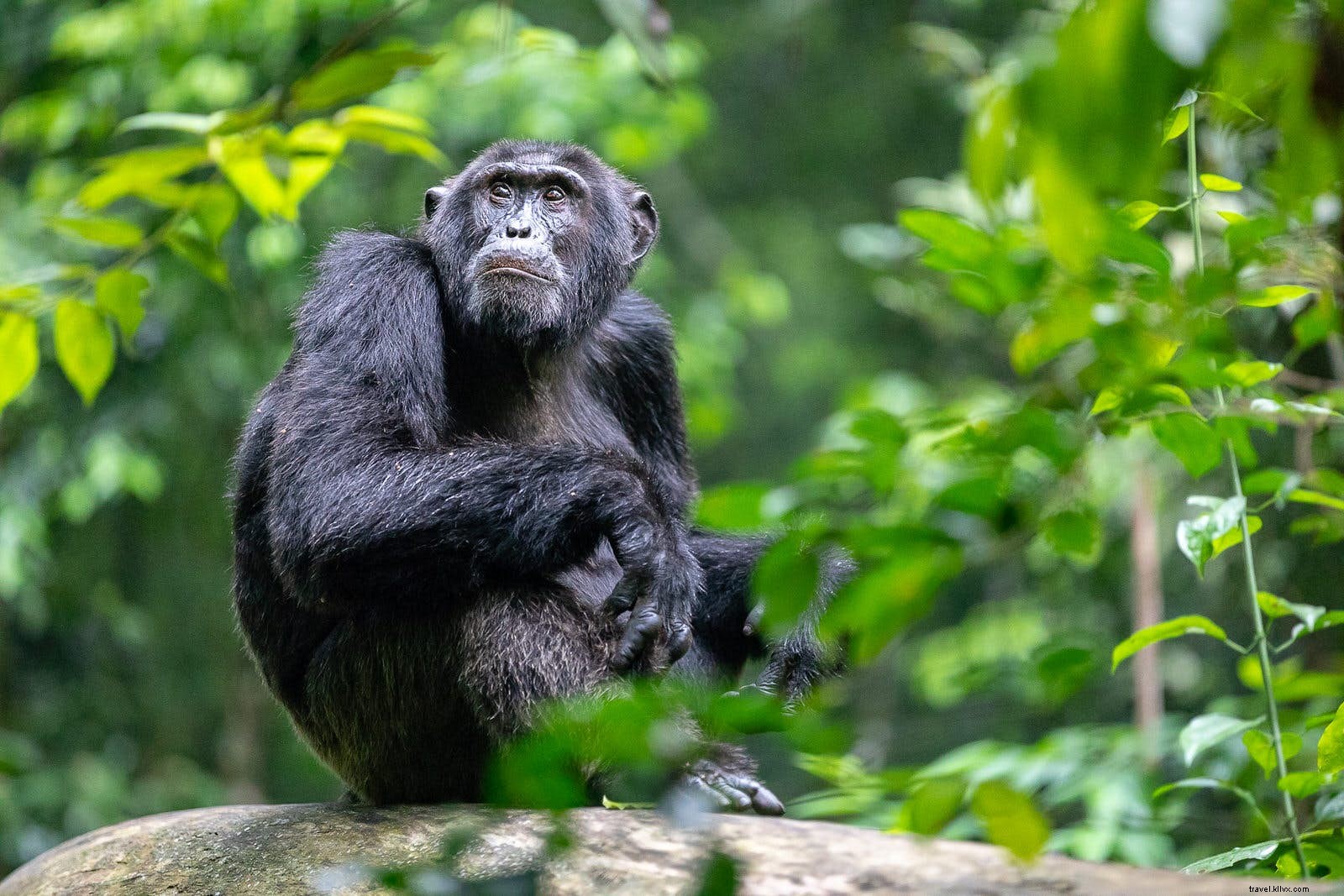
Africa’s Chimpanzees
Chimpanzees form communities of up to 150 individuals, split into subgroups led by an alpha male. They spend days in the treetops grooming, resting, and foraging on fruits, leaves, and bark. Ground-level descents provide prime viewing opportunities.
Sharing 98% of our DNA, chimpanzees are humanity's nearest relatives. Pioneering primatologist Dr. Jane Goodall revolutionized our understanding in the 1960s at Tanzania’s Gombe Stream National Park, documenting tool use and meat-eating—behaviors once thought uniquely human.
Through patient habituation, Goodall gained acceptance, paving the way for scientists and tourists to observe these remarkable animals up close.
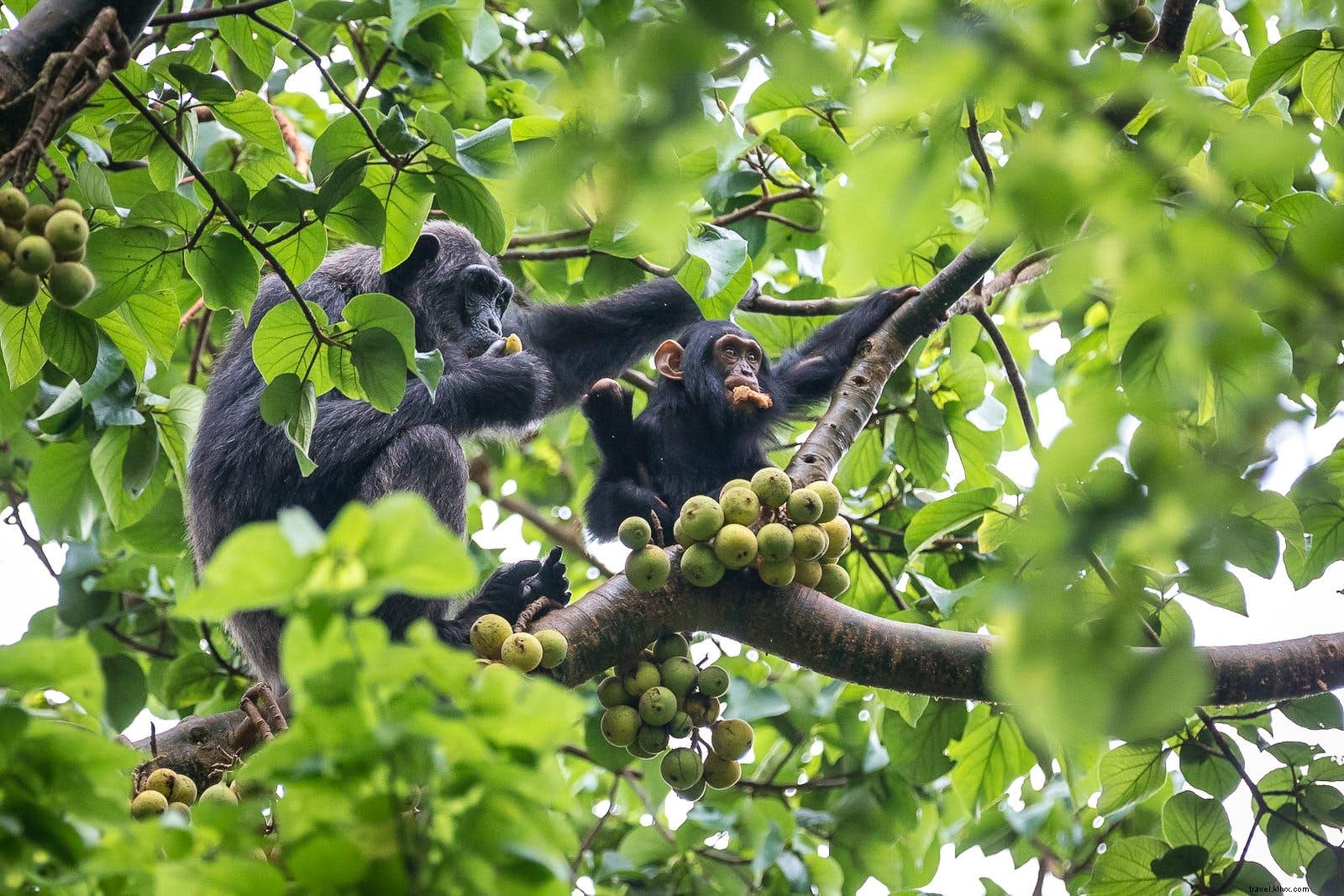
Chimpanzees of Kibale Forest National Park
Kibale Forest shelters about 1,500 chimpanzees across 13 communities. Several habituated groups support research and tourism, including the Kanyanchu group with over 120 members.
Led by alpha male Totti (named after an Italian footballer) since 2016, following a rivalry with predecessor Magezi, Kanyanchu treks occur mornings and afternoons, lasting 3-4 hours with up to one hour of observation. Permits cost US$150 per person—far below US$750 at Uganda's Bwindi Impenetrable or US$1,500 at Rwanda's Volcanoes National Park for gorillas.
For deeper immersion, opt for the full-day habituation experience (US$220), tracking communities in the two-year process. Expect brisk hikes, as chimpanzees move swiftly, but the intimate views reward the effort.
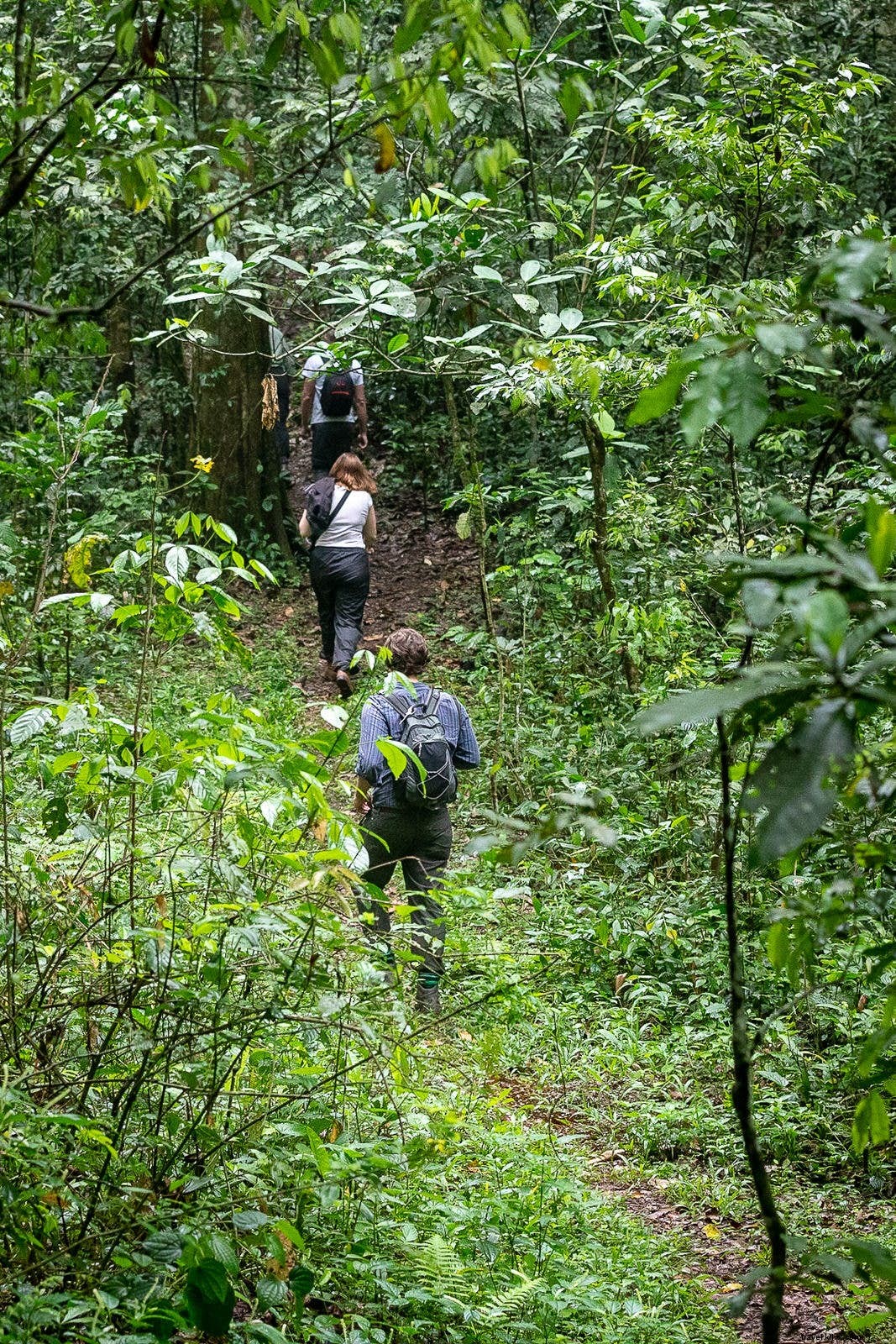
What to Expect on a Chimpanzee Trek
Half-day treks suit most visitors, balancing search time with an hour of observation. Briefings cover chimpanzee behavior, safety rules—like maintaining distance to prevent disease transmission via shared DNA—and avoiding mimicry that could provoke responses.
Groups of up to seven, led by armed guides, venture into the forest. Navigate undergrowth, roots, and branches while listening for their haunting calls—high-pitched screeches signaling proximity.
Locate subgroups feeding on figs, grooming, or playing aloft, or descending for ground-level magic.
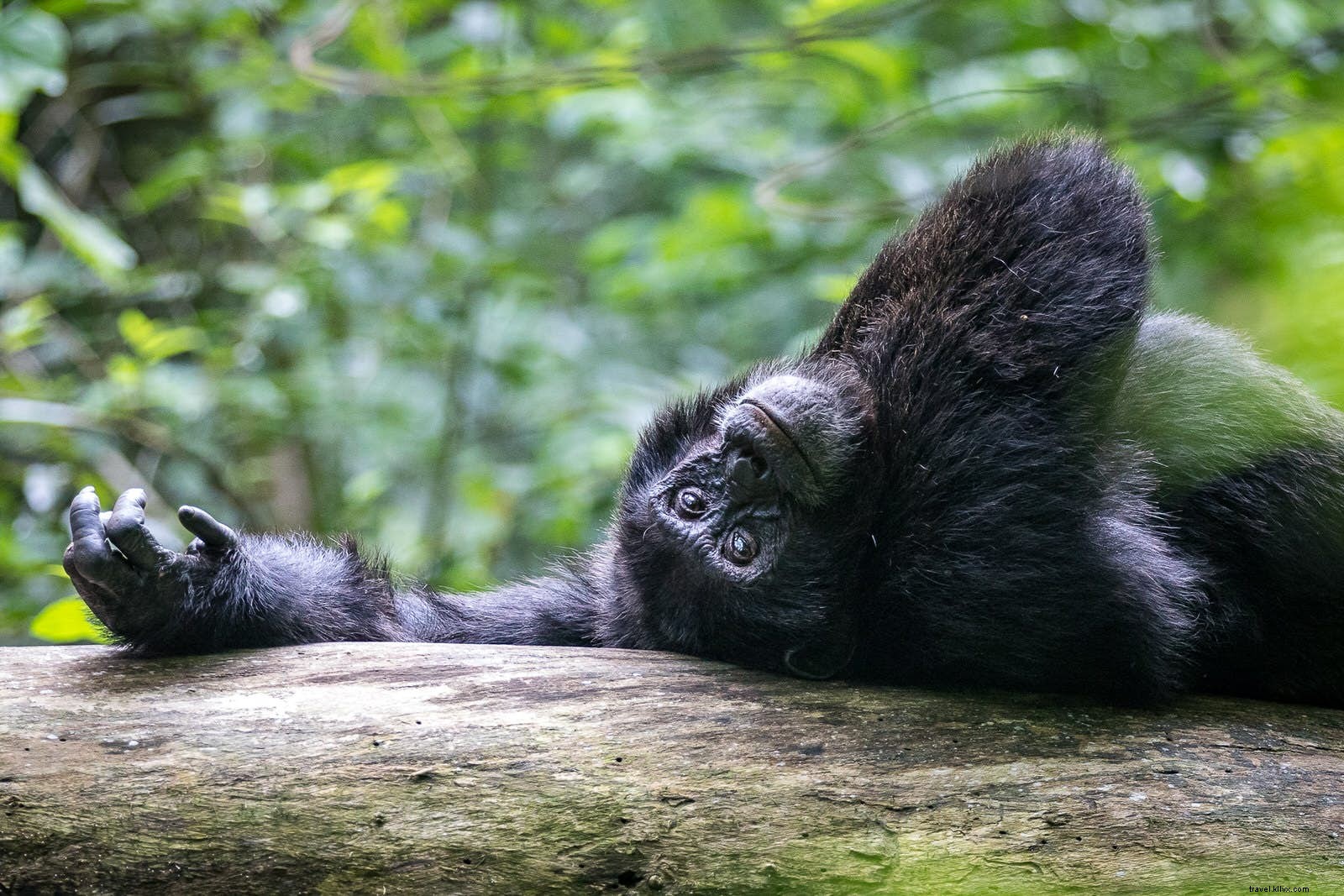
Face-to-Face with Wild Chimpanzees
The first close encounter delivers unmatched thrill: intelligent gazes, human-like expressions, and poised interactions mere feet away. Their bright eyes meet yours, almost playfully engaging.
Though gorillas headline Uganda tours, chimpanzee tracking matches the excitement with easier terrain, denser populations, reliable sightings, and lower costs—ideal for priority lists.
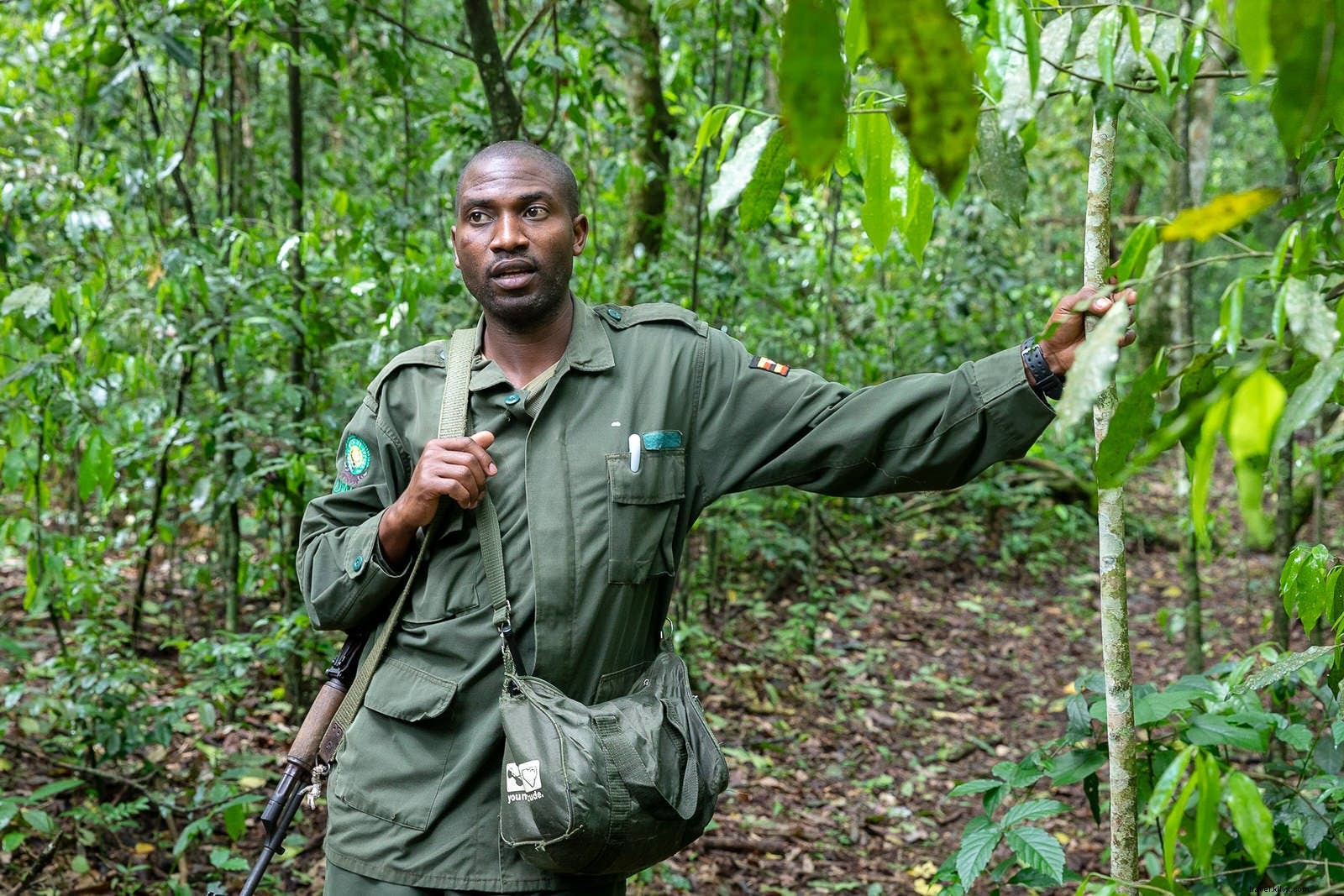
Kibale's Expert Guides: Unsung Heroes
Exceptional guides elevate the experience. Uganda Wildlife Authority rangers undergo rigorous selection—exams, interviews, fitness tests—ensuring deep conservation knowledge, English fluency, and enthusiasm. With 50 applicants per spot, they represent the best.
Consider ranger Africano, 34, raised near Kibale. Evicted during 1993 gazettement, he channeled passion into studies, securing a role protecting the forest and supporting his family.
Beyond Kibale, sightings occur near Queen Elizabeth and Murchison Falls National Parks, but Kibale's 1,500 chimpanzees yield 90% success rates, cementing its status as Uganda's top chimp destination.