
Melchor Múzquiz: Coahuila’s 7th Pueblo Mágico – World‑Class Paleontology & Artisan Heritage
Protector of one of the most important paleontological collections in the world, great artisan masters of saddlery and fluorite; home of the Kikapu and Mascogu tribes, and delicious cuisine that includes pickled chorizo in vinegar, are some of the attributes that earned Melchor Múzquiz the declaration of the seventh Pueblo Mágico (Magical Town) of Coahuila, in 2018.
Located three hours from Saltillo, the Pueblo Mágico de Melchor Múzquiz began its history in 1737, when it was founded by the Spanish as the Santa Rosa de Lima prison to repel the attacks of the Indians who inhabited the region. However, this land has palpable proof that its origin began 900 years ago with the discovery of dinosaur and crustacean fossils that are exhibited in the Museo de Paleontología (Museum of Paleontology).
To continue discovering the origins of the town, you must go to La Plaza Principal (The Main Square), where you will find not only the temple of Santa Rosa de Lima but also the Museo Histórico (Historical Museum). The building itself is a beauty because it is built with river stones but, inside, it explains how the foreign tribes of the Kikapu Indians and the black mascogues settled in Múzquiz and became part of its cultural heritage.
Precisely, some members of these ethnic groups are frequently seen in the square selling tanned skins and carved wood. In order to learn more about them, the Pueblo Mágico de Melchor Múzquiz offers social gatherings that require previous authorization from their spiritual leader, since they are governed by uses and customs.
Also in the downtown area, you must visit a workshop of the master artisans of fluorite, a mineral with turquoise and violet veins that are used to make sculptures and even furniture. It is impossible to leave aside the saddleries to buy belts, boots, and saddles.
Another must-see is the food business, mainly in which you can read a menu with dishes that include chorizo. This one is elaborated with a 300-year-old artisan technique, which consists of leaving it to dry in the sun and then “curing” it with vinegar and spices.
If you thought there was no contemporary art in Melchor Múzquiz, you are mistaken. Ten minutes from downtown, the house of Mexican painter Julián Galán Romo was declared a museum to get to know his lithographs and, by the way, the doll's house on a human scale, where the artist used to play.
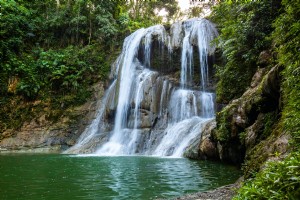
Finally, you must visit the natural areas of the Pueblo Mágico such as the Sabinas River with its spring births for kayaking and the recreational park La Cascada with natural pools for taking a dip.
Candela, Coahuila: A Free-Rooted Pueblo Mágico
Explore Zimapán: A Hidden Gem of Hidalgo's Sierra Gorda