decorative font style

El Mirador – Discover the Ancient Mayan Temple of Sayil

This stepped temple is in the middle of the road between the Gran Palcio and the Palacio Sur. It is topped by another temple which is believed to have been occupied by ruling class personnel.
Going up to the Mirador is allowed, so you can imagine how extensive the ancient Mayan city of Sayil was, as well as appreciating the remains of what was once a market.
On the sides there are still hand-carved maskarons. And, yes, they also evoke the God of Rain.
Tourist Attraction
  • Carrying On: Sir Ranulph Fiennes’ Polar Expedition and Legacy

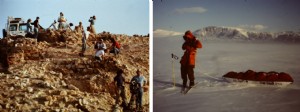
    Everyone has heard of Sir Ranulph Fiennes. He is, after all, the perfect epitome of an explorer and completely mad-capped Englishman. His name is as ubiquitously mentioned down the pub as it is seen on the bookcases of the adventure section in your local library. Leader of the only team ever to to fully circumnavigate the world on its polar axis and the first man to completely cross the Antarctic continent unsupported, Ran is also one of UK’s top celebrity fundraisers, with an expressed aim o

  • From Cairo to London: My 21-Year-Old Hitchhiking Journey Across the Middle East

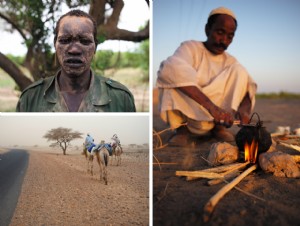
    Sidetracked: When you were 21, you hitchhiked from Cairo to London via Baghdad. In Israel, a bomb went off and the borders were closed to all but Jordan. In Jordan, you couldn’t afford to fly out and the only other border you could cross was into Iraq. What on earth happened there? Levison: That was my third year at university, in 2003. It was the summer break, and a friend and I went to Egypt with the intention of travelling around Israel and then taking a boat to Greece to spend the summe

  • Amguid Crater: Unveiling the Sahara’s Ancient Impact Site

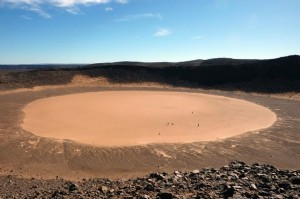
    In a remote region of the Sahara Desert, an impact crater was punched into the land less than 100,000 years ago. Measuring some 500 meters (1,640 feet) wide and about 70 meters (230 feet) deep, the Amguid Crater is located in southwestern Algeria. On satellite imagery, the white spot of the flat, sandy crater floor is clearly visible; the residue formed by millennia of sporadic rain running into the bowl and evaporating. The first known record of the Amguid crate