decorative font style

Explore Timgad: Ancient Roman City in Algeria
Explore Timgad: Ancient Roman City in Algeria Explore Timgad: Ancient Roman City in Algeria Explore Timgad: Ancient Roman City in Algeria
This entry is a stub
Help improve Atlas Obscura by expanding Timgad with additional information or photos.

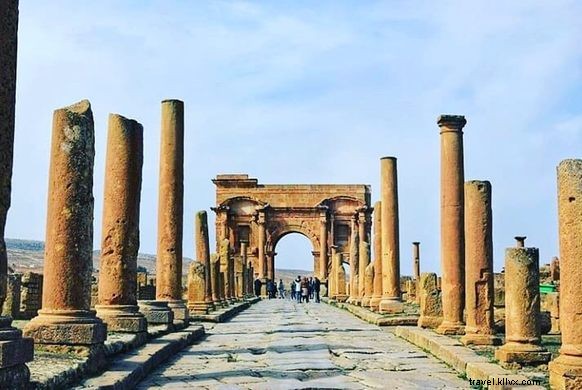
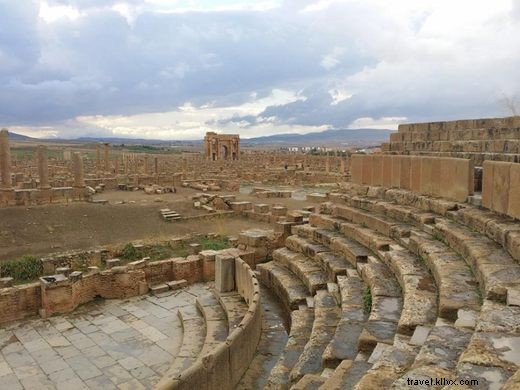
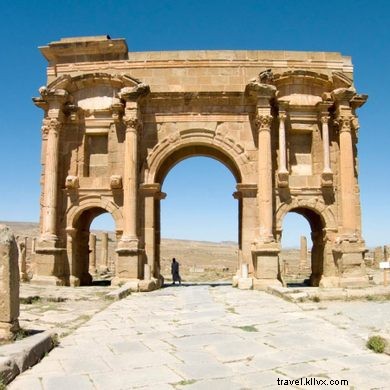
Located in the province of Batna, Timgad was an ancient Roman city built by the Emperor Trajan. It ceased to be inhabited after the 8th century. The triumphal arch, called  the “Arch of Trajan,” survived the test of time, and was finally renovated in 1900. The theater is also in good condition, and is still used for modern music shows. The city was added to UNESCO’s world heritage list in 1982.    


Tourist Attraction
  • Christmas in Salem House Tour: A Magical Holiday Tradition

    by Anne Sterling When Destination Salem asked me to write about a favorite Salem event, the annual Christmas in Salem House Tour immediately sprang to mind. My memory draws me back to my first tour in December of 2003, when Salem was pummeled by a powerful snowstorm that lasted three days and postponed the second day of the tour. Being a December baby, I was delighted th

  • Doug Aitken s MIRROR: Stunning Art Installation Unveiled in Downtown Seattle

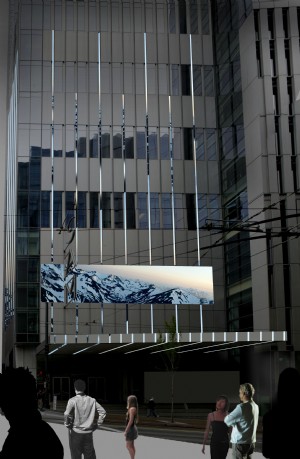
    A rendering of Doug Aitken’s MIRROR at Seattle Art Museum Picture this:  1000+ people gathered along a closed-off First Avenue between Union and University Streets in downtown Seattle, on a crisp March evening, awaiting a slightly delayed art installation unveiling because of……excess sunshine. Yep, that was the scene on Sunday night March 24. I and about 1000 of my new pals were gathered to witness the premiere of Doug Aitken’s new MIRROR artwork on the side of Seattle Art Museum. But

  • Amguid Crater: Unveiling the Sahara’s Ancient Impact Site

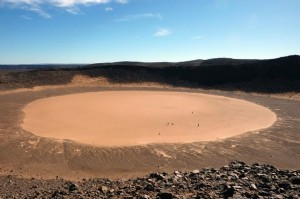
    In a remote region of the Sahara Desert, an impact crater was punched into the land less than 100,000 years ago. Measuring some 500 meters (1,640 feet) wide and about 70 meters (230 feet) deep, the Amguid Crater is located in southwestern Algeria. On satellite imagery, the white spot of the flat, sandy crater floor is clearly visible; the residue formed by millennia of sporadic rain running into the bowl and evaporating. The first known record of the Amguid crate