From Cairo to London: My 21-Year-Old Hitchhiking Journey Across the Middle East
Sidetracked: When you were 21, you hitchhiked from Cairo to London via Baghdad. In Israel, a bomb went off and the borders were closed to all but Jordan. In Jordan, you couldn’t afford to fly out and the only other border you could cross was into Iraq. What on earth happened there?
Levison: That was my third year at university, in 2003. It was the summer break, and a friend and I went to Egypt with the intention of travelling around Israel and then taking a boat to Greece to spend the summer. The Iraq War had just finished. We set off a few weeks after the combat operations in Baghdad finished in May, and before the insurgency had really begun. It was fairly calm, an interesting time, and we wanted to find out a little bit more. I was a fairly reckless 21-year-old.
We travelled around and initially it was fascinating. Then came an attack on the UN HQ in Jerusalem. The Israelis closed all the borders and ports, and the FCO said that everyone ought to leave. We had no money and didn’t have too many options. The only direction we could go was Jordan. It was fairly safe there, as was Amman; then there were subsequent attacks all across the Middle East – this was the start of the insurgency. We were stuck in Jordan and we had nowhere to go. We couldn’t now get to Greece and couldn’t afford a flight home.
We researched a bit and discovered the border with Iraq was open because the US was in control of the border. We got into a taxi and drove 1,000 miles to Baghdad (it cost us $40). We met US soldiers on the gates and fortunately they let us in. We found ourselves at the Palestine Hotel where all the journalists had been staying. Sadly, the top floor of the hotel had been destroyed as a result of a tank commander mistaking a camera-man for a sniper. Our plan was to sleep rough on the roof of the hotel, but we met Martin Geissler, the ITV newsman, and he asked what we were doing there – we were the first non-journalists into Baghdad. He offered us one of his team’s spare rooms whilst we were waiting for an escape plan to materialise. Their security, ex-special forces, escorted us up to Turkey, passing what was likely Saddam’s hideaway at the time.
How old were you when you joined the Army, and what made you join?
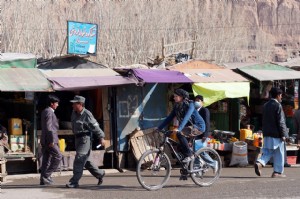
I first joined the OTC when I was a student – the armed forces had always been a career I really liked the idea of. I had read autobiographies of Victorian explorers and they had all been in the military. The OTC gave me a flavour of the Army life and I decided I wanted to travel more, having already travelled around the Middle East. I was interested in the whole region, in fact. I hitchhiked from Nottingham to India through Afghanistan, Pakistan, and Iran. That took five months and it was fascinating to go to Afghanistan before joining the Army. Then it was Sandhurst after that for a year, and some advanced infantry tactics in the Parachute Regiment. I was in the Paras for about five years.
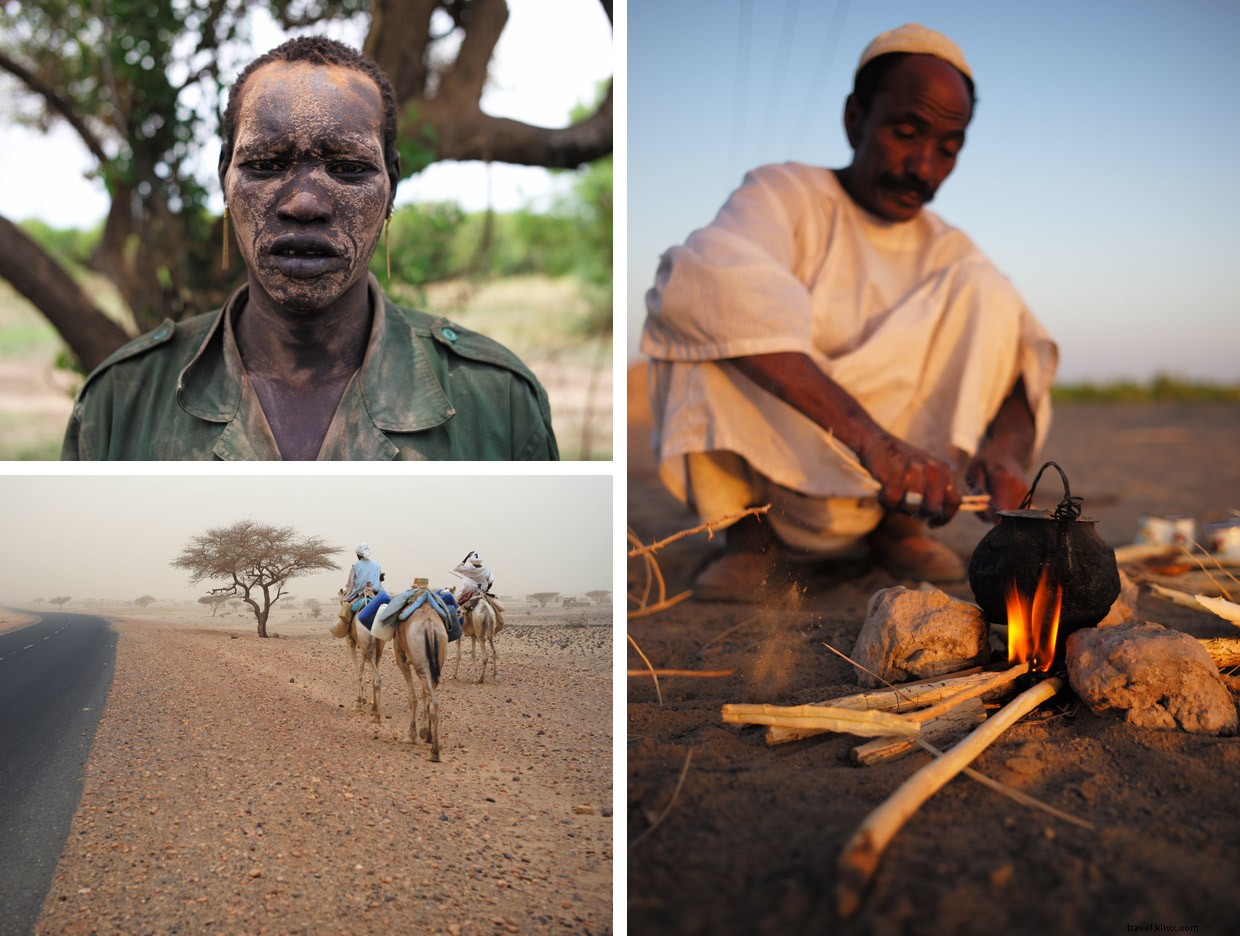
You have been forced to avoid areas of conflict on your expeditions, for example in the Sudan. How did your experiences in conflict zones like those in Afghanistan prepare you for the expeditions you have undertaken?
The military definitely taught me a lot, giving me practical and, more importantly, mental skills. The Army teaches you to push yourself beyond what you feel is possible. Yet when compared with conflict zones, and tours in the Army, you need a very different mindset going as an individual – you don’t have any backup. No-one is coming to rescue you. I was an independent traveller to these places, but you do learn to appreciate risk. Everyone has guns in these places, and as a former soldier, I was less daunted by this fact; these are soldiers like any others and my understanding of them made it less immediately terrifying.