Tourist Attraction



This is one of the less explored zones, communicated through the saché 9, the widest in Cobá. Here you will find a display of 8 steles and 18 altars. This give us a hint about the ceremonial character of Macanxoc. The main stele is the number 1, the only one of the Mayan area -at this moment- that is inscribed with 4 dates. It makes reference to the 21 of December of 2012, interpreted as the end of times or the beginning of a new Mayan era.
This ensemble of buildings is characterized by a ball game, the Xalibé, an astronomical observatory and the Templo de los Frescos. The Xalibé is a semicircular structure of 14 meters in height and 4 levels that, according to the interpretations, could have represented the seasons of the year. In its central part you will find a staircase of 20 steps related to the days in the Mayan calendar. The tallest building in this group is the Templo de los Frescos. It is known that this temple w
This ensemble of 53 buildings is the oldest in this Archeological zone and is located between the Cobá and the Macanxoc lagoons. However, just some settlements can be visited. Among these, you will find the church, the second tallest building with 24 meters in height. It is confirmed by 9 bodies of rounded corners. Inside the temple an offering was found with pottery, jade ornaments, pearls and other jewelry ornaments. You can also visit one of its ball games. This site presents some e
Nohoch Mul or “big mound” is the tallest pyramid from the Archeological Zone of Cobá, built on a natural terrain elevation. Its style is similar to that of Chichén Itzá and Uxmal. It is confirmed by 7 body with rounded corners and at the top you can find a small temple dedicated to the Descendent God that once was painted of blue and red. A side form its main stairs, of 120 steps, you will find a fragment from a stele, sculpted in both sides. In this very group the Gran Plaza is locate
The Ranas archaeological site is located southeast of the Sierra Gorda of Querétaro. This prehispanic settlement had a strategic location that allowed it to control the commercial traffic of the zone. It was inhabited from the year 400 to 1300. The place has several plazas, temples and 3 ball games. Researchers have come to the conclusion that the richness of this place depends on the garnet or cinnabar. This mineral was used for mural painting . The name of the archaeological site, th
Symbolic vestigesThis archaeological zone is located next to the San Juan River, just south of the city. Most of the vestiges of this pre-Hispanic settlement are now under the streets and houses of the Cruz neighborhood.The north of Mesoamerica was abandoned by an agricultural group at the beginning of the second millennium and these territories were occupied by hunting groups known as Chichimecas, until the arrival of the Spaniards.The Río San Juan can be considered at that time as the b
Here you will be able to see throughout its three halls a collection of 80 pieces related to the most important aspects of the old Ndachijan, better Known as Tehuacán, in Puebla.Here you will find archeological pieces, big format sculptures in stone and mud, as well as pottery. You can also see some of the local and international ceramic work. Listen carefully to your guides so you can learn about the old trade routes that took place from Oaxaca to Puebla and Tlaxcala.The tour includes audiovisu
“The City of the Death” was built on the north side of Tlacolula Valley and was the second ceremonial center of importance in Oaxaca, just after Monte Albán. After the fall of Monte Albán, this Prehispanic city was the political and religious center for Zapotecos and it was inhabited by more than 10 thousands and 500 people in its heyday, just before the arrival of the Spaniards. While you go through its vestiges, you will realize that Mitla has a peculiar characteristic: the tiles are
Make space in your itinerary to visit las Pinturas Rupestres de Chiquihuitillos (Cave Paintings of Chiquihuitillos), these are in an archaeological site located in the neighboring city of Mina. The paintings are sheltered in perfect condition in a set of hills where the first inhabitants of the area captured drawings on the rocks, some related to their cosmogony.
Only 30 minutes from Rincón de Guayabitos is the Altavista Archaeological Site, known as “La Pila del Rey”. To get there you must go into the Sierra de Vallejo, a fascinating and completely green road. In its 80 hectares ( 198 acres ) more than 2 thousand petroglyphs or stone engravings have been identified, which are believed to have been carved more than 1500 years ago by an Aztec group called Tecoxquines. Surrounded by rocky formations and soaked in an almost otherworldly mysticism,
Declared a World Heritage Site, the archaeological zone of Xochicalco was an ancient ceremonial center and fortified city that had its heyday between 650 and 900 AD, right between the fall of Teotihuacan and the rise of Tula. On the hills that form the archeological site, two great basements stand out. The first is known as the Piramide de la Serpiente Emplumada (Feathered Serpent Pyramid), decorated with profuse high reliefs on its sides. There are eight snakes that symbolize the god Quetz
Since you are in Cuitzeo, a good idea is to take advantage of the proximity to Huandacareo, a town that was part of Cuitzeo until the beginning of the last century but became independent years later.The place is famous for its thermal water baths, many of which offer lodging and additional services such as skin treatments or spas, ideal for pampering or spending time with a partner.If you arrive as a family, dont worry because the facilities of almost all its spas have childrens areas and plenty
This pre-Hispanic settlement began to be explored in 1984, its name is due to the shape of the three most outstanding structures you will see on the site.There is still little data of its origin, since it is said that there could have been two important periods that the area experienced. In the first, there is a great similarity with Teotihuacan, where some of its structures preserve slope and board.However, the other period is associated with the Tarasco Empire, who used the site to bury their
In Teocaltitán de Guadalupe delegation, at Jalostotitlán municipality, is México’s most important archaeological zone. You can discover its history and importance through a guided tour.It’s a ceremonial site with Mesoamerican Epiclassic periods architecture from between 450 and 900 AD. It’s 2.5 kilometers Teocaltitán de Guadalupe southeast.The archaeological zone is settled on 110-meters-high Teocaltitán hill’s top. It’s distributed in the complex 25 hectares, which include rectangular platforms
Near El Arenal and on one side of the Tequila volcano is the Zona Arqueológica Teuchitlán o “Guachimontones” (Archaeological Site of Teuchitlán or “Guachimontones”) a local-colloquial word used for a structure or pyramid.These constructions are unique in the world, since they had circular bases and were made in honor of Ehécatl, god of the wind. Within the archaeological zone there are three rounded and stepped pyramids built with basalt stone, volcanic tuff and mud. In addition, the site has a
The Zona Arqueológica de Tepeapulco or Xihuingo is 23 kilometers away from Zempoala, near Tepeapulco city, which means “Next to the Great Hill”. It’s at the foot of the Xihuingo hill, term translated as “place of the year” or “where the year is calculated”.Marks found on the nearby cliffs suggest that astronomical calculations were made there. Also red rock paintings and petroglyphs were found.The place was part of the Teotihuacán influence zone and retains many proportional and architecture sty
The Zona Arqueológica de Huapalcalco (Archaeological Site of Huapalcalco) is 3-kilometers Tulancingo center. It’s considered the oldest human settlement in Hidalgo for preserving cave paintings over 13 thousand years old. The Huapalcalco region was considered the most important in prehispanic population, since the first Toltecas settled there. Here you can see the hillside of Cerro del Tecolote and two architectural complexes. Explore the three-bodies and Teotihuacan-influence pyramid
Protected by the very god Quetzalcóatl, you’ll be able to admire the gigantic stone Atlanteans who watch over what was once the most important Toltec city. Find the Zona Arqueológica de Tula in the historic center of Tula de Allende, Hidalgo (entering through Actopan and taking Calle Del Tesoro). Venture to explore this city’s vestiges that until date is a reliable example of its majesty, very much in keeping with its cultured and prudent people; even the great lords’ sons from near and far
Tepeapulco is 10 minutes from Ciudad Sahagún. You can visit the Parroquia y Exconvento de San Francisco, a temple built in 1528 by a group of Franciscan friars who colonized this area. Pay close attention to all the plant details of its Plateresque facade. 40 minutes from Ciudad Sahagún is the Cerro de Xihuingo, a geological formation that is part of the Trans volcanic Belt. It’s Hidalgo’s second highest mountain. On prehispanic times it was part of the commercial route from Teotihuacán to
Dedicated to sun, hills and water cult, the Zona Arqueológica de Tehuacalco (archaeological site of Tehuacalco) was first associated with the widely explored Yope culture that was and is one of the few ceremonial centers that Mexicas never dominated. The site’s name has several ways of interpretation and there is no unanimous agreement, although the most accepted meaning is “Place of the Sacred Water”. The archaeological zone discovered in 1998 is about 60 kilometers from Chilpancingo
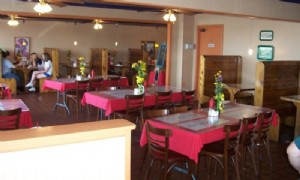 Atkinson's Blue Diamond Cafe: Authentic American & Southern Cuisine
 Breathtaking Basilica Rooftop Walk: Stunning Aerial Photo
 Fascinating Shark Facts: Ancient Ocean Survivors and Essential Safety Tips
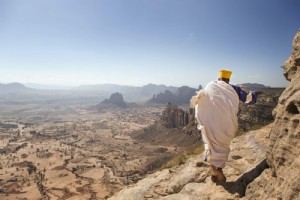 Africa's Most Thrilling Adventures: Budget-Friendly Wild Experiences Beyond National Parks
 Discover Minnesota’s Premier Car Shows, Roll‑Ins & Cruises This Summer
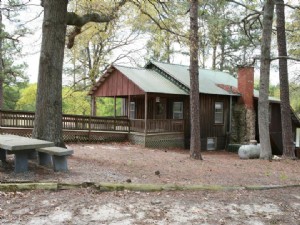 McDuffie Public Fishing Area Campground – Scenic Lakeside Camping & Fishing