Tourist Attraction



35 kilometers from Tizimín county seat, within the Kulubá and Emannuel ranches, is the Temple of Kulubá, approximately a thousand years old and one of the region’s few archaeological sites preserved practically intact whose name’s meaning in Spanish is “Water of the Kulu Wild Dog”.This Mayan archaeological complex, spread over nine kilometers, was strongly influenced by Puc and Chichén Itzá regions, evident in the 400 structures that form it.One of the most impressive areas of this site is its c
This stepped temple is in the middle of the road between the Gran Palcio and the Palacio Sur. It is topped by another temple which is believed to have been occupied by ruling class personnel.Going up to the Mirador is allowed, so you can imagine how extensive the ancient Mayan city of Sayil was, as well as appreciating the remains of what was once a market.On the sides there are still hand-carved maskarons. And, yes, they also evoke the God of Rain.
It’s the most important basement within the Sayil archaeological site. It is 40 meters high and has 90 chambers that, it is believed, could house about 350 people who were part of the ruling elite.The Gran Palacio was built on three levels and inside you can see the vaulted ceilings that supported them. The first level has an area collapsed from the growth of tree roots.While in the second there is a rich ornamentation with hand-carved maskarons representing Chaac (god of rain) in a descending a
On a land elevation a structure with several terraces and a monumental staircase called the Gran Pirámide (Great Pyramid) or Gran Teocalli was built, of which only a part has been rebuilt, but which is of great interest.This construction is near the Mayan Arch, on the same side of the road that divides the archaeological site and that leads along the so-called Puuc Route.On that same side of the road, another structure known as the Manos Rojas building, in Mayan Dzalkabilkik, also draws attentio
A large arch on a platform serves as Kabáh’s main door and marks its political connection, since it is the starting point of a 18 kilometers long sacbé or white Mayan road that leads to Uxmal archaeological ruins.El Arco, in the form of a Mayan vault, has practically no other ornamentation than moldings in its center. Archaeologists estimate that the pillars lower part was painted red, as on the west face there are indicative vestiges. The structure was rebuilt in the 1950s by a team led by Mexi
The biggest building in Kabáh was erected on a natural elevation and is made up of 12 different constructions including stairs, platforms, and altars. The building had about 30 rooms and, when accessing the second floor, you can see the different rooms entrances, separated by beautiful columns. Its roof is adorned with cresting.Annexed to the main palace there is a building with two staircases, one northern the other western, that gives access to the rooms on the ground floor that have large col
The so-called Palacio de los Mascarones, whose name Codz Poop translates as “Rolled Petate” or “Royal Mat”, is the archaeological site most relevant building and is profusely adorned with Chaak representations, god of the rain that sported a characteristic rolled nose.The Codz Poop facade is covered by some 260 deity mascarons carved in limestone, although archaeologists estimate that at the time some 446 faces covered the entire building. Each mascaron is shaped with 34 pieces that, when assemb
For more than ten thousand years the area where Tlaxco sits today has been inhabited. The earliest settlements testimony can be seen in some caves surrounding the Pueblo Mágico (Magical Town). La Peñuela camp, 22 kilometers from Tlaxco, besides offering the opportunity to practice adventure sports, has cave art samples. To be able to observe the paintings settled on the volcanic rock, you need rappelling five meters down to get the cave bottom, where the paintings are. Another sample i
Another archaeological site you should know is La Herradura, which has been recently explored and is said to be the heir to the Teotihuacan-Acolhua culture before being inhabited in Tlaxcala northwest region.When going over the area you’ll notice why it was important for the Valley of Mexico basin inhabitants and other prehispanic groups: it was a commercial exchange purposes transit area for going to the Gulf and southern Mesoamerica. Remains of the Teotihuacan culture Classic period have also
Tecoaque Archaeological Site is an unmissable place: it’s culturally linked to Teotihuacán domain and expansion, which crossed a considerable portion of Tlaxcala northern, as it was where its merchants passed.Prepare a cap and comfortable shoes, since you’ll have to walk in Calpulalpan plains and and go all over the site located four kilometers eastern Los Cerritos Archaeological Site, on kilometer 33 Federal Highway Mexico-Veracruz.The importance of this area was the border location it had in t
The Gran Cué pyramid, better known as El Cuizillo, is Tammapul Archaeological Site main building and also one of Mesoamerica’s most unique prehispanic constructions.The limestone pyramid has a 41-meters-diameter circular base and a 12-meters-high conical structure. The building core is cylindrical, the outline is divided into three different floors and no similar construction has been discovered so far.Archaeologists estimate that Tammapul, which means “Place of Mists”, was inhabited between the
A place that you should visit is Comalcalco Archaeological Site, where the architectural Mayan vestiges highlight for being the only one brick-built. It’s in Chontalpa central area, on Río Seco east bank and only 2 kilometers from Comalcalco town.Walking around the place will take you to a vast area where Classic period’s most important architectural ensembles are found. Discover the bricks characteristics that, mostly, were “engraved” by Mayan artisans, reproducing on them countless figures.Y
Tabasco is the cradle of one of Mesoamericas great mother civilizations. Villahermosa guards with zeal and pride some testimonies of that ancestral culture: the Olmec. And as an example, in the 1950s the Parque-Museo La Venta (La Venta Park-Museum) was inaugurated—an archeology and nature combination on Laguna de las Ilusiones shores.In a natural jungle environment, an almost a kilometer journey is made to appreciate the 200 pieces collection from La Venta Archaeological Site, a precolumbian cit
Here, both the population and rulers met. It could be said it was today’s City Hall equivalent. It was considered the most important place; you can see six structures making up and delimiting its not inconspicuous plus-2,200-square-meters area.To access, you’ll have to climb for a compacted soil and sandstone rock stairway. The firmness and precision they conserve is striking and you’ll realize it when walking on them—unlike other archaeological sites, is very comfortable and easy since the stai
This is incline as if it were a pool, but without water. You can still see the stands and even descend through them. The field is covered by grass like current soccer fields, although this juego de pelota (ballcourt) has a different distribution—it’s very long but quite narrow and shallow.You may only see trees above your shoulders if you look from the inside. Maybe this distribution is because they intended to keep all the attention on the game’s ritual, allowing both players and assistants to
Plenty of La Venta visitors go to the Archaeological Site founded by Olmecs. This humid place, surrounded by vegetation and animal sounds, witnessed how this culture established and became one of the region’s oldest and most important.Although its prehispanic name is unknown, one of La Venta’s preserved vestiges is the 34 meters high and 140 in diameter main pyramid, built in clay and considered the oldest in Mesoamérica territory.La Venta Ceremonial Center remains were discovered in 1925 by arc
More than two thousand cave paintings were found by archaeologists in La Pintada, a hard-access rocky canyon in the Sonoran desert, 60 kilometers away from Hermosillo, in the Sierra Libre.The richness and diversity of human and animal figures shaped on stones by Seris and Pimas have become La Pintada the cave paintings most famous archaeological site in Sonora.This settlements greatest development period was between 700 and 1600 A.D.Currently, only visits controlled by researchers from the Insti
Great part of the history of El Fuerte is concentrated in its archeological site named Cerro de la Mascara. Here you will be able to see petroglyphs like la Zorra, la Reina y el Observatorio.The construction of the Piedra Enterrada stands out for its geometrical shapes.Among the undergrowth and the saguaro it is possible to see the steals that were engraved by hand 2,500 years ago by the Mayos. This site, in comparison to the others, is not embed in only one space, but rather extended throughout
A trip to the Archeological Site Tamtoc is a must while you are visiting Ciudad Valles. Walk through the prehispanic constructions of this place which is also called “The Place of Water Clouds”. While you are here, you will feel as if you are going back in time when you discover more than 70 structures perfectly preserved of about 36 and 21 meters in height. Tamtoc was considered once the capital of the Huasteca Potosina during its heyday in the years 600 to the 1100 AD. During sp
One of the most impressive archeological zones is Chunyaxche, better known as Muyil, which is the name of one of the closest lagoons. This site is located 6 kilometers from Carrillo Puerto highway. When Mayan culture was in its heyday Muyil worked as an oral and as a customs place for travelers. You will find spectacular views of the mangroves. This is also the best spot to watch the different and beautiful birds that live here. Be ready to lose yourself through the roads in this jungl
 Island Beach State Park: New Jersey's Pristine 10-Mile Barrier Beach Haven
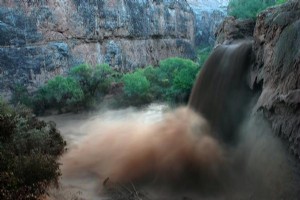 A Terrifying Night in the Grand Canyon: Facing Flash Flood Fears During a Massive Storm
 The Hidden Dangers of Traveling Without a Plan: My Terrifying Bangkok Arrival
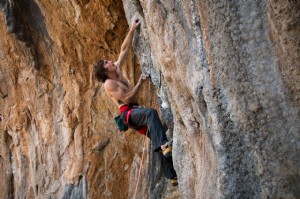 Petzl Roctrip – Journey Through Turkey's Scenic Roads
 Garden City Jazz LLC – Premier Live Jazz Experience in the Heart of Garden City
 Discover Virginia's Wild Barrier Islands on the Eastern Shore