Edzná Maya Ruins: Ancient City of Ingenious Engineering and Puuc Architectural Marvels
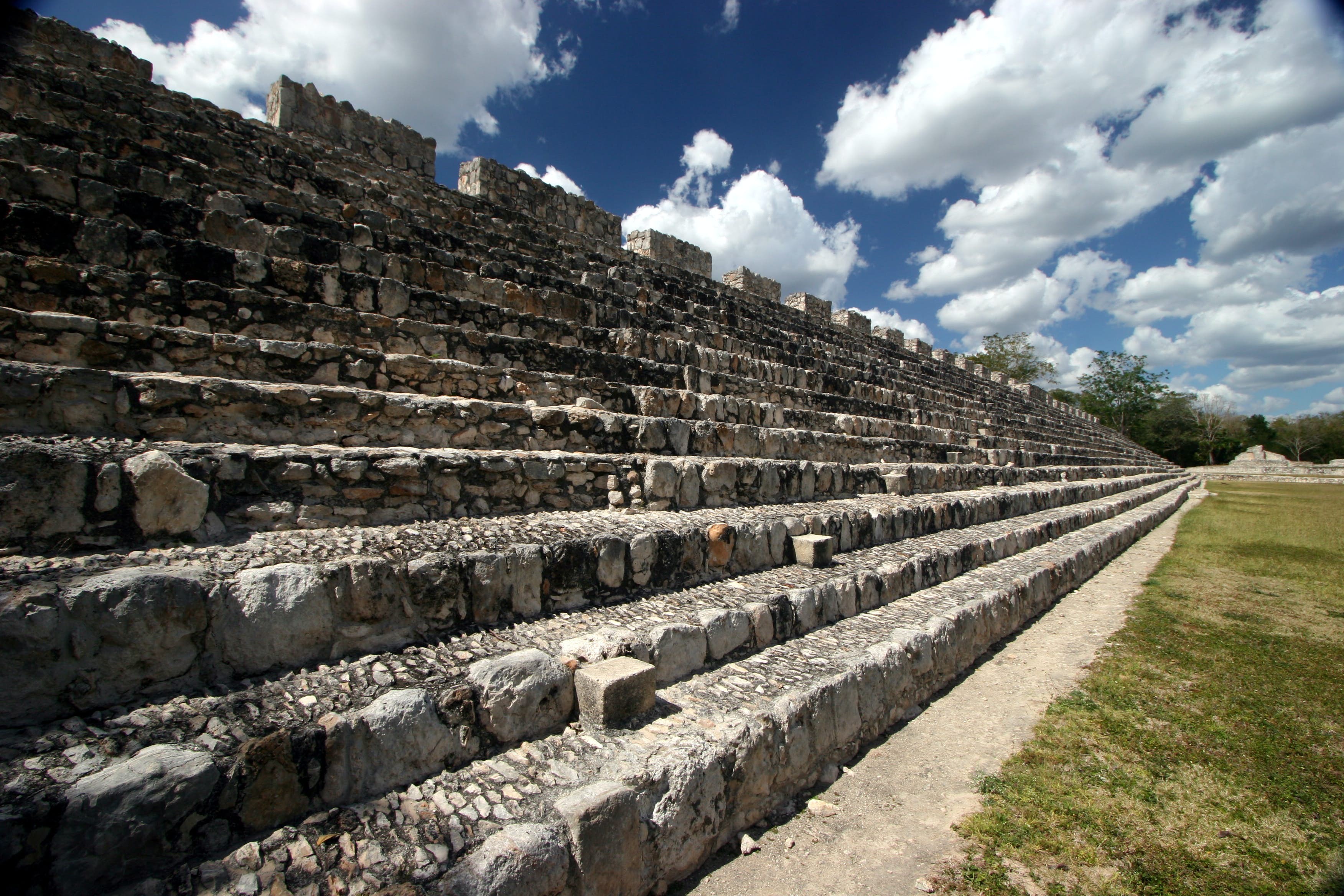
Edzná’s vast complexes, spanning over 17 square kilometers, were built by a highly stratified Maya society that flourished from around 600 BC to the 15th century AD. The inhabitants constructed more than 20 complexes in diverse architectural styles, including an innovative network of water-collection and irrigation systems. (Though distant from Puuc Hills sites like Uxmal and Kabah, some structures here feature Puuc-style elements.)
Most visible carvings date from AD 550 to 810. The causes of Edzná’s decline and gradual abandonment remain a mystery; the site stayed hidden until rediscovered by local campesinos (farmers) in 1906.
Edzná, meaning ‘House of the Itzáes,’ honors a prominent Chontal Maya ruling clan. Rulers inscribed key events on stone stelae; about 30 have been found at principal temples, with several displayed under a palapa shelter just beyond the ticket office.
From the palapa, a 400m path winds through vegetation—follow the ‘Gran Acrópolis’ sign. To your left lies the Plataforma de los Cuchillos (Platform of the Knives), a residential complex with striking Puuc features. Its name derives from an offering of silica knives unearthed within.
Cross a sacbé (ancient stone-lined pathway) to reach the centerpiece: the Plaza Principal, a grand 160m-long by 100m-wide space ringed by temples. On your right, the Nohochná (Big House) is a massive elongated structure with four halls, likely used for administrative functions like tribute collection and justice.
Opposite stands the Gran Acrópolis, a raised platform with key buildings, including the iconic 31m-high Edificio de los Cinco Pisos (Five-Story Building). This final iteration of four rebuilds showcases Puuc style, rising five levels to a roof comb with vaulted rooms. Admire the well-preserved glyphs along the central staircase base.
South of the plaza, the Templo de los Mascarones (Temple of the Masks) protects two reddish stucco masks under a palapa. Representing rising and setting sun gods, these remarkably preserved faces bear aristocratic Maya traits: dental mutilation, crossed eyes, and oversized earrings.