
Salvatierra: Guanajuato's Historic Mountain Town
At Guanajuato southern, in the middle of the mountains, there’s a historic land crossed by the Lerma River that the ancient Purépecha called Guatzindeo, “Place of Beautiful Vegetation”, due to its mild and humid climate throughout the year. This site now is known as Salvatierra.
In 1644, by order of Viceroy García Sarmiento de Sotomayor, it was granted the title of city of San Andrés de Salvatierra, becoming the first town in Guanajuato to hold this appointment.
The current Pueblo Mágico of Salvatierra was important in the evangelization process. Among the main orders that settled are Discalced Carmelites, Franciscans and the Capuchin nuns. For this reason, a big part of its tourist attractions are temples and former convents such as that of Nuestra Señora del Carmen, the first city building which boasts a high altar pink quarry carved.
The Carmelite order left another gem: the Puente de Batanes (Batanes Bridge). The 200 meters long structure serves so that locals and travelers of this Pueblo Mágico can cross the Lerma River. In both ends there are two hermitages with a vaulted ceiling. The main garden is surrounded by old inns that offer lodging, there are also restaurants and cafes of yesteryear such as Bella Época.
Its architecture is in the French style and it was one of the Porfiriato's most beautiful buildings. There are typical dishes that shouldn’t be missed, such as “largas” (giant tortillas stuffed with stews), “gorditas de nopal” and volovanes.
The Mercado Hidalgo, with an admirable carved-in-quarry facade, has more than 100 stores to buy clay crafts. Salvatierra is characterized by being a town where clay is worked, so you can also take home lamps and flowerpots.
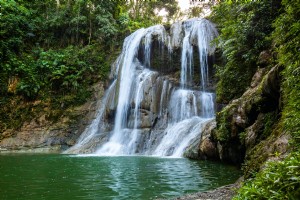
In Salvatierra surroundings are the Marquesado vestiges, a 1709 mansion opened to admire its architecture. Another historical construction is the Exhacienda of San José del Carmen, which offers night tours. And, to contemplate nature, El Sabinal, a place of green areas and waterfalls from the Lerma River.
Finally, near Salvatierra are the Pueblos Mágicos of Yuriria and Acámbaro, destinations of the Ruta de los Conventos de Guanajuato (Route of the Convents of Guanajuato). From Guanajuato city, Salvatierra is two hours drive on Highway 45 to Celaya.
Explore Comonfort: Guanajuato's Enchanting Pueblo Mágico
Discover Yuriria: A Hidden Gem in Guanajuato’s Pueblo Mágico