Shugendo: Japan's Syncretic Mountain Faith – Yamabushi Pilgrimages in Tohoku's Dewa Sanzan and Shikoku
What is Shugendo?
Discussions of Japanese religion often highlight Shinto and Buddhism. Shinto, centered at shrines, represents Japan's ancient indigenous faith, rooted in animist nature worship from the Jomon period (14,000–300 BCE). Buddhism, practiced at temples, arrived from China via Korea in the sixth century.
Yet the story is more nuanced. As Buddhism took root, Shinto was still evolving, leading to centuries of intertwining influences until the 1868 edict separated them, elevating Shinto as the state religion.
From this fusion emerged Shugendo, a syncretic tradition blending Shinto, Buddhism, Taoism, animism, and shamanism on Japan's sacred mountains. Its practitioners, Shugenja or Yamabushi (“those who sleep in the mountains”), undertake rigorous ascetic journeys in white and saffron robes, their conch shell calls echoing through ancient forests.
Origins and Development of Shugendo
Shugendo's roots trace to Prince Hachiko (542–641 CE), who fled to Dewa Province (now Yamagata Prefecture) after his father, Emperor Sushun (d. 592), was assassinated. Welcomed in Tsuruoka for introducing vital grains, he later retreated to Mt. Haguro amid a plague. After 100 days of prayer, a revelation from Haguro Gongen (a manifestation of Vairocana Buddha) granted him a purifying flame, ending the illness and earning him the title Nojosen.
Inspired, Nojosen established shrines on the Dewa Sanzan—Mts. Haguro, Yudono, and Gassan. His disciple, En no Gyoja (654–c.700), formalized these teachings as Shugendo, spreading them to Nara, Wakayama, and Shikoku.
By the 13th century, Shugendo organized into a network of fudasho sacred sites and lodges, attracting diverse pilgrims seeking penance or renewal through nature.
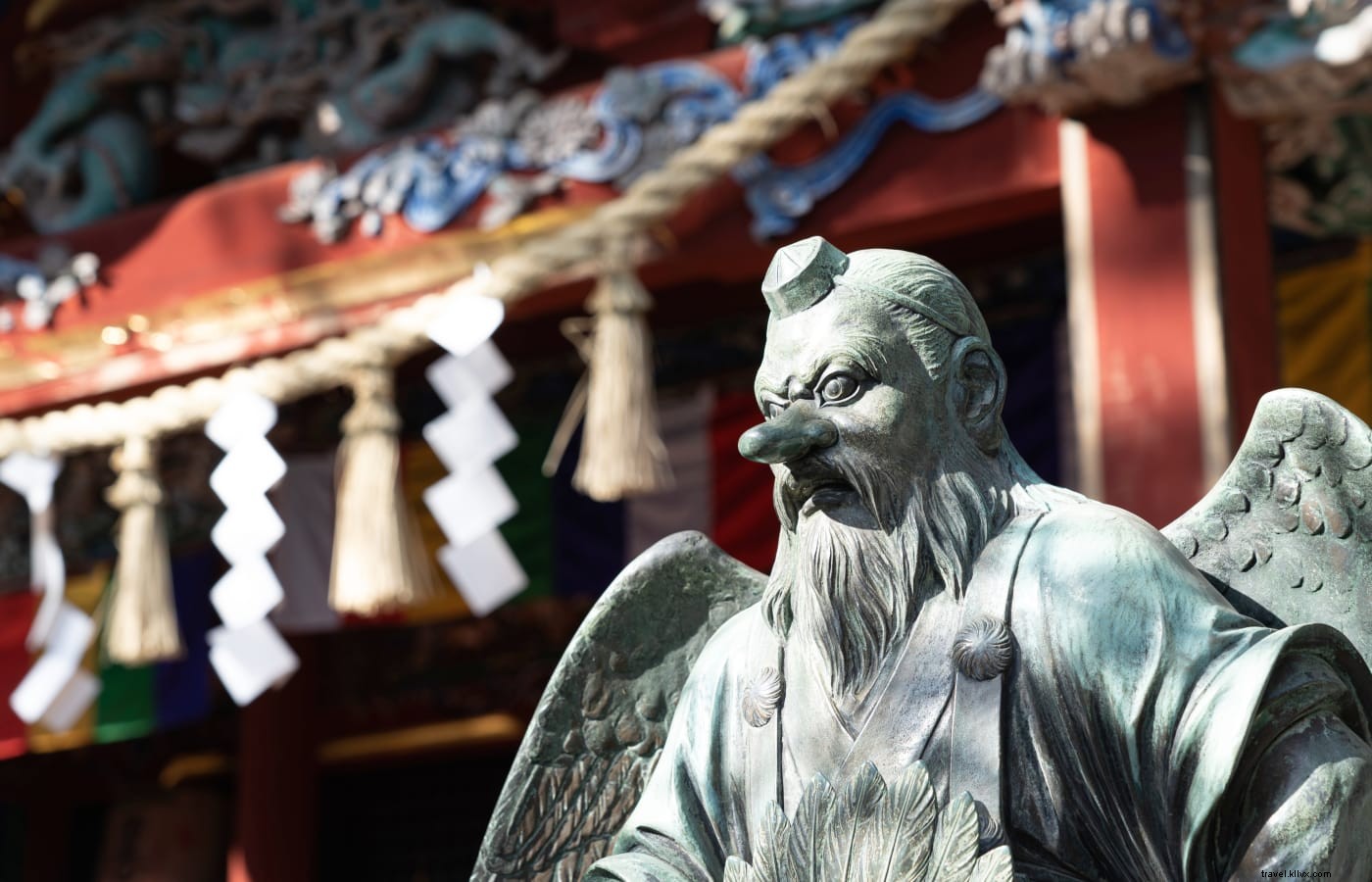
Tengu statue on Mt. Takao, Tokyo.
Yamabushi relations with communities varied: valued for herbal knowledge and aid in some areas, suspected as tengu—mythical mountain spirits—in others, due to their agility on cliffs.
Today, full-time Yamabushi serve as priests or guides, while seasonal retreats draw modern seekers from all backgrounds.
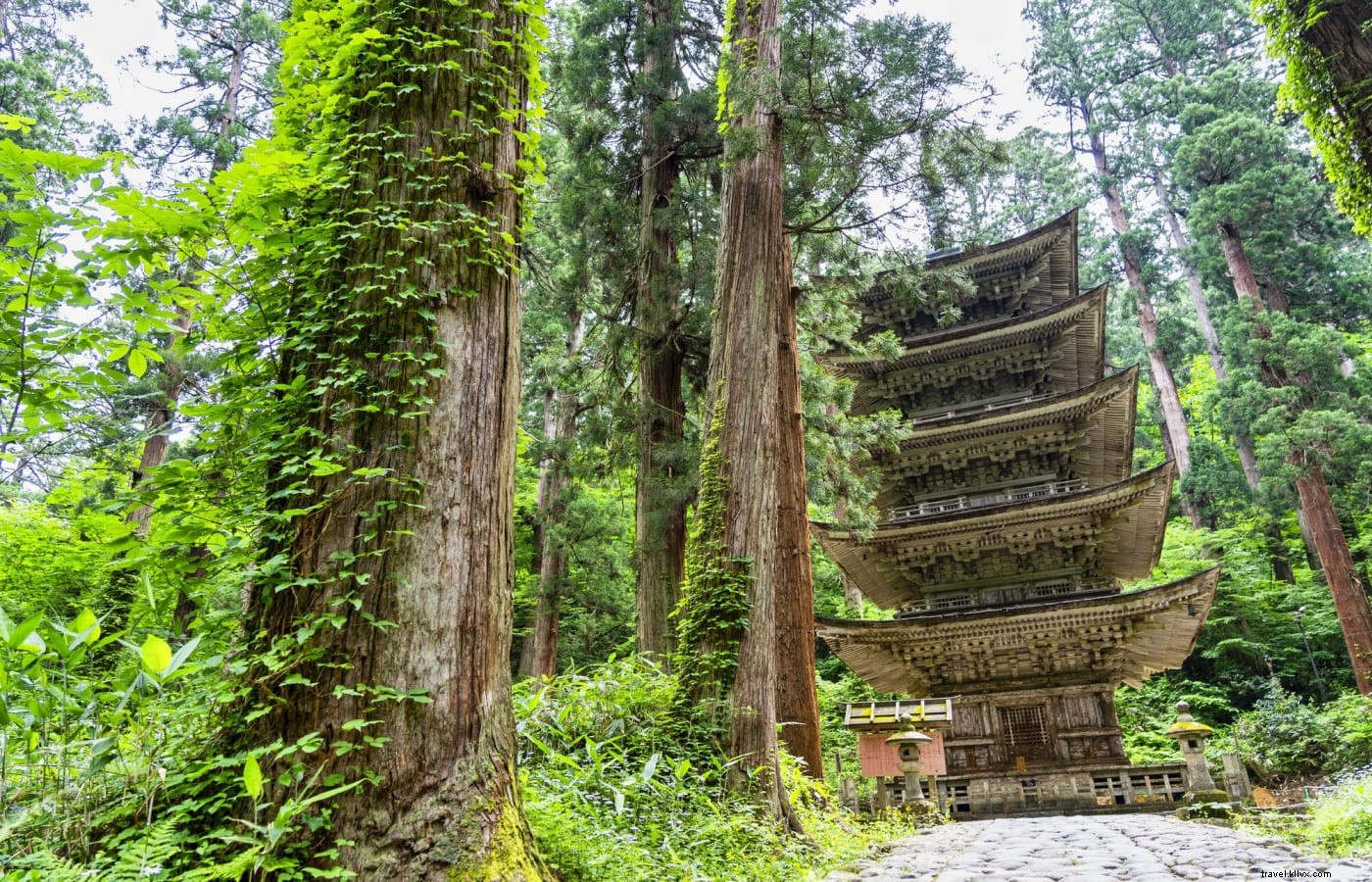
Mt. Haguro, Yamagata Prefecture, features old-growth forests and ancient monuments.
The Dewa Sanzan Pilgrimage
The Dewa Sanzan in Yamagata remains a premier destination. Base lodges like Daishobo, led by 75-year-old Yamabushi Master Hoshino Fumihiro (Shobun), host pilgrims retracing paths of Matsuo Basho and Benkei.
Novice retreats span three summer days across the mountains, symbolizing death and rebirth. Limited to six amid the pandemic, they demand silence, responding only with “uketamo” (“I accept”).
Clad in shiroshozoku robes (death of ego), hokan headdress (rebirth), prayer beads, and tabi boots, participants conquer 2,446 Haguro steps, Yudono's rocky trails, night hikes, fire leaps, takigyo waterfall austerities, and nanban-ibushi rituals.
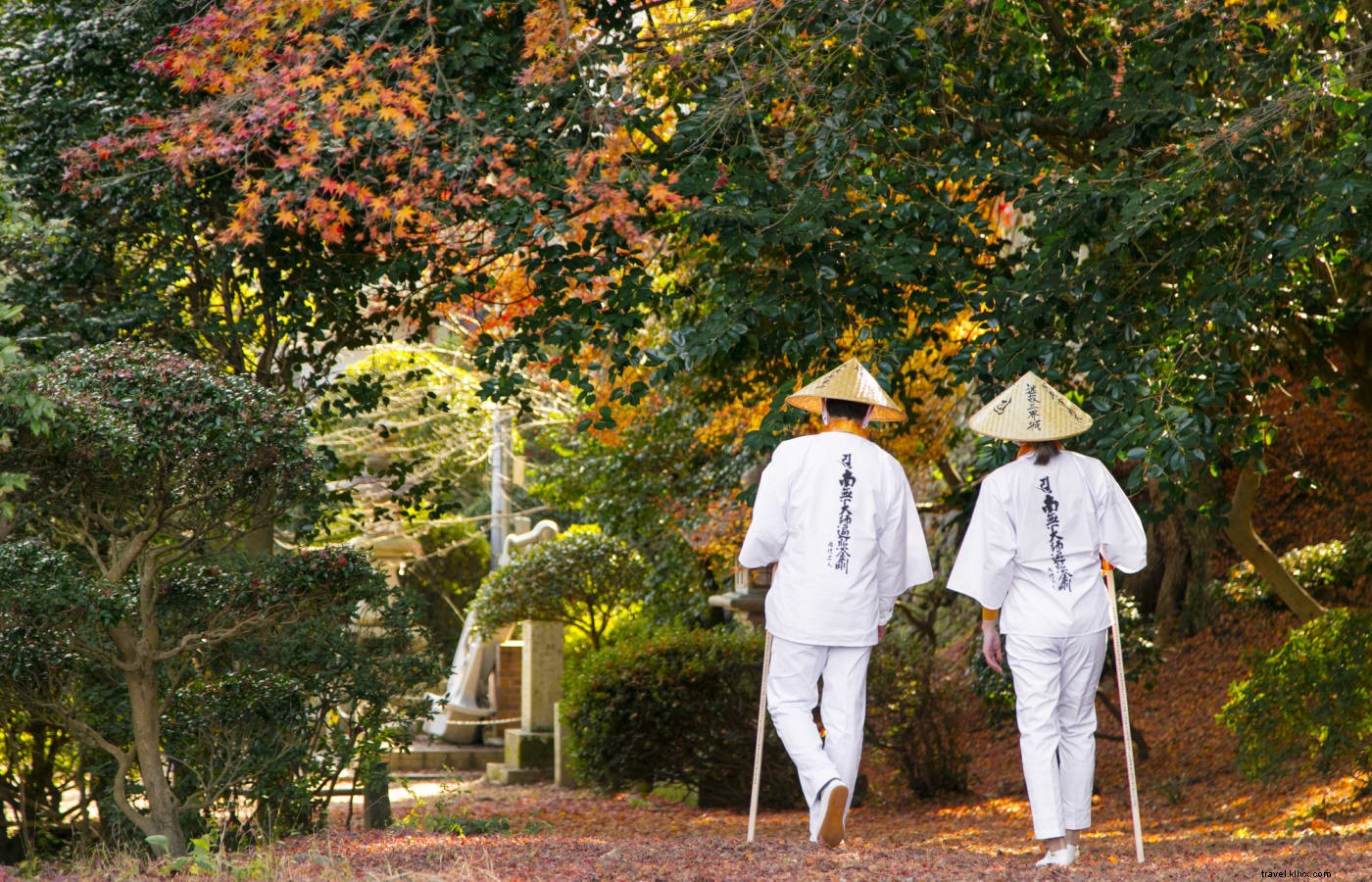
A Yamabushi in traditional shiroshozoku attire.
Mt. Haguro evokes the earthly realm, Gassan the spirit world, and Yudono rebirth. Completing yields euphoria, but full Yamabushi status requires Aki-no-mine (autumn week) for hafuri rank, and Fuyu-no-mine (100-day winter rite) for matsu-no-hijiri, as with Master Hoshino at age 60.
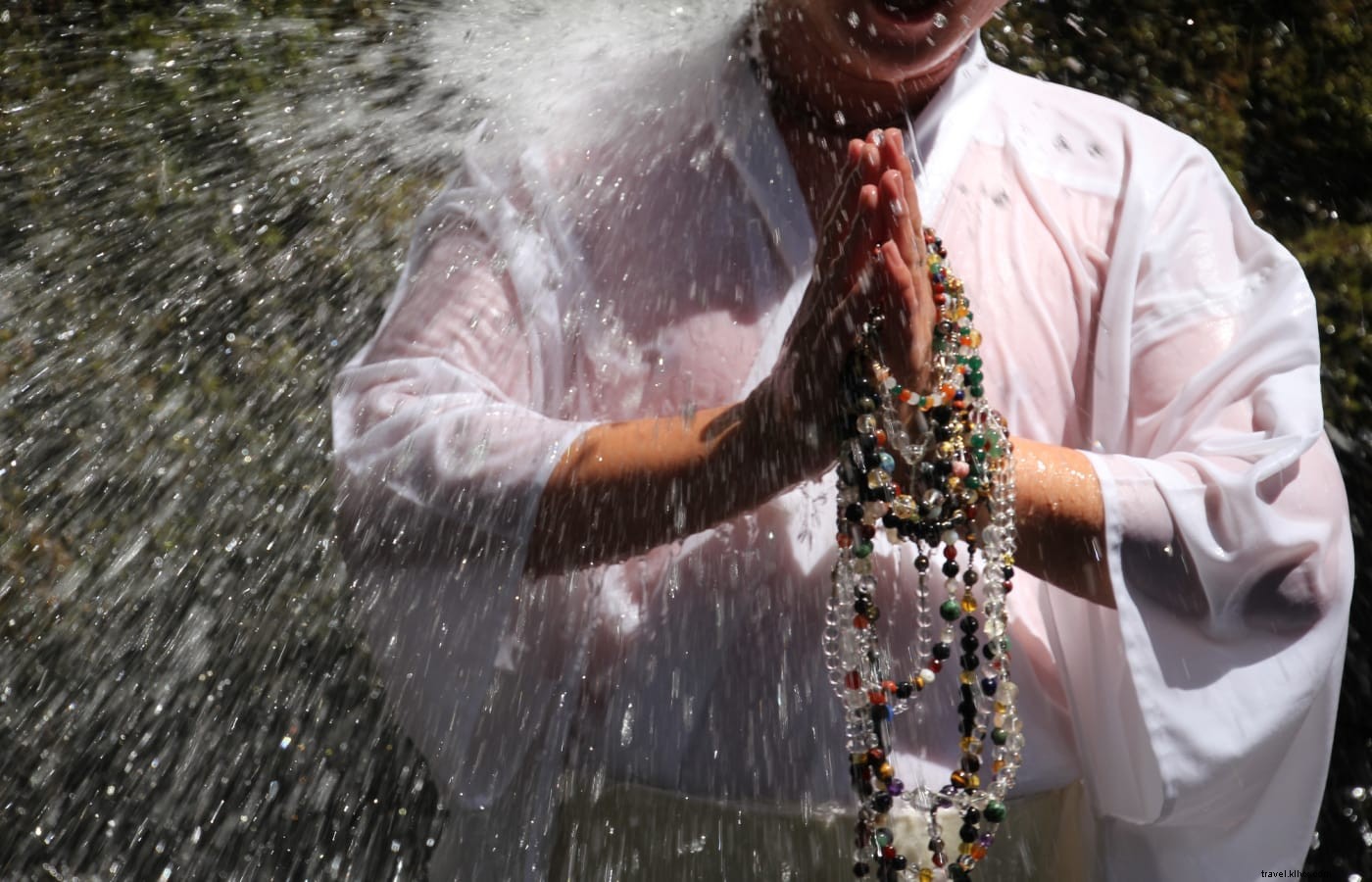
Takigyo waterfall training, essential for Yamabushi.
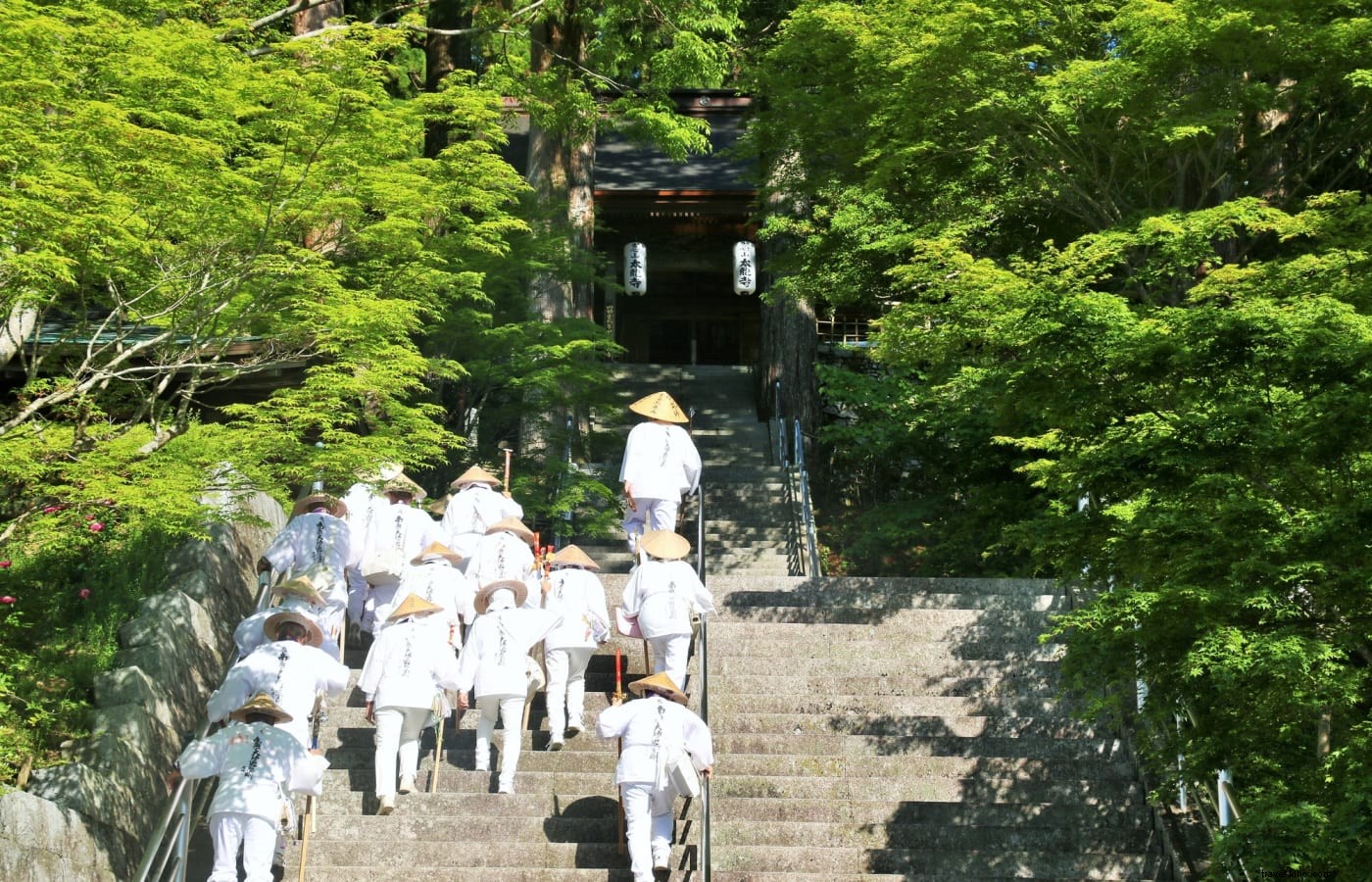
The Shikoku Henro, one of Buddhism's famed routes.
The True Roots of the Shikoku Pilgrimage
Shikoku's 1,200-km Henro visits 88 temples linked to Kukai (774–835), Shingon founder. Yet Shugendo shaped it profoundly: En no Gyoja sanctified Mt. Ishizuchi (Henro site 64) in 685.
Medieval hijiri from Mt. Koya and 13th–14th-century Yamabushi built the infrastructure enabling the Henro's temples and tourism, including proxy pilgrims sharing temple soil.
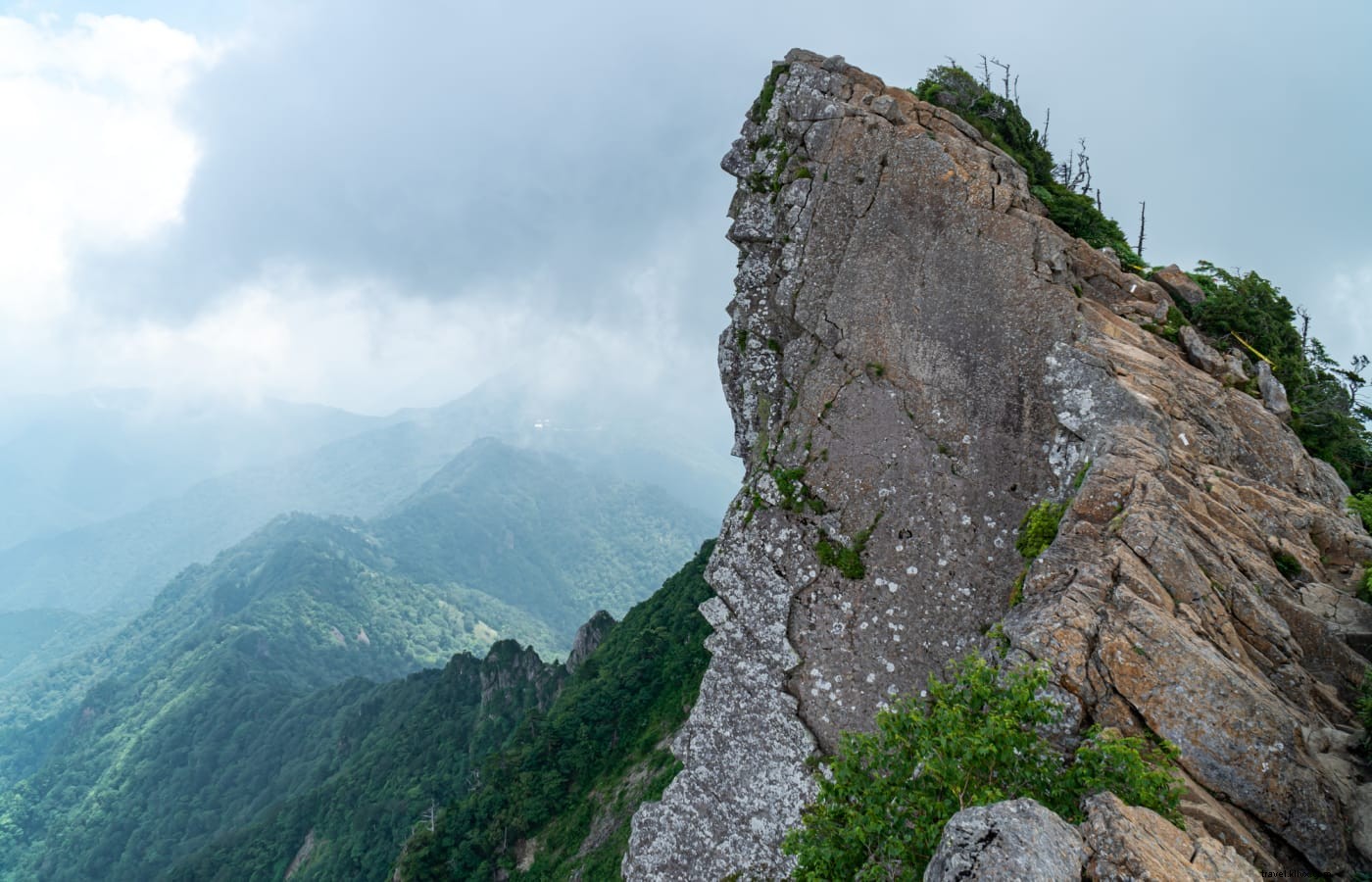
Mt. Ishizuchi, revered by Shugenja since the 7th century.
Today, Mt. Ishizuchi hosts July gatherings; May–October offers “Yamabushi experiences.” Beware: it may spark a lifelong path.
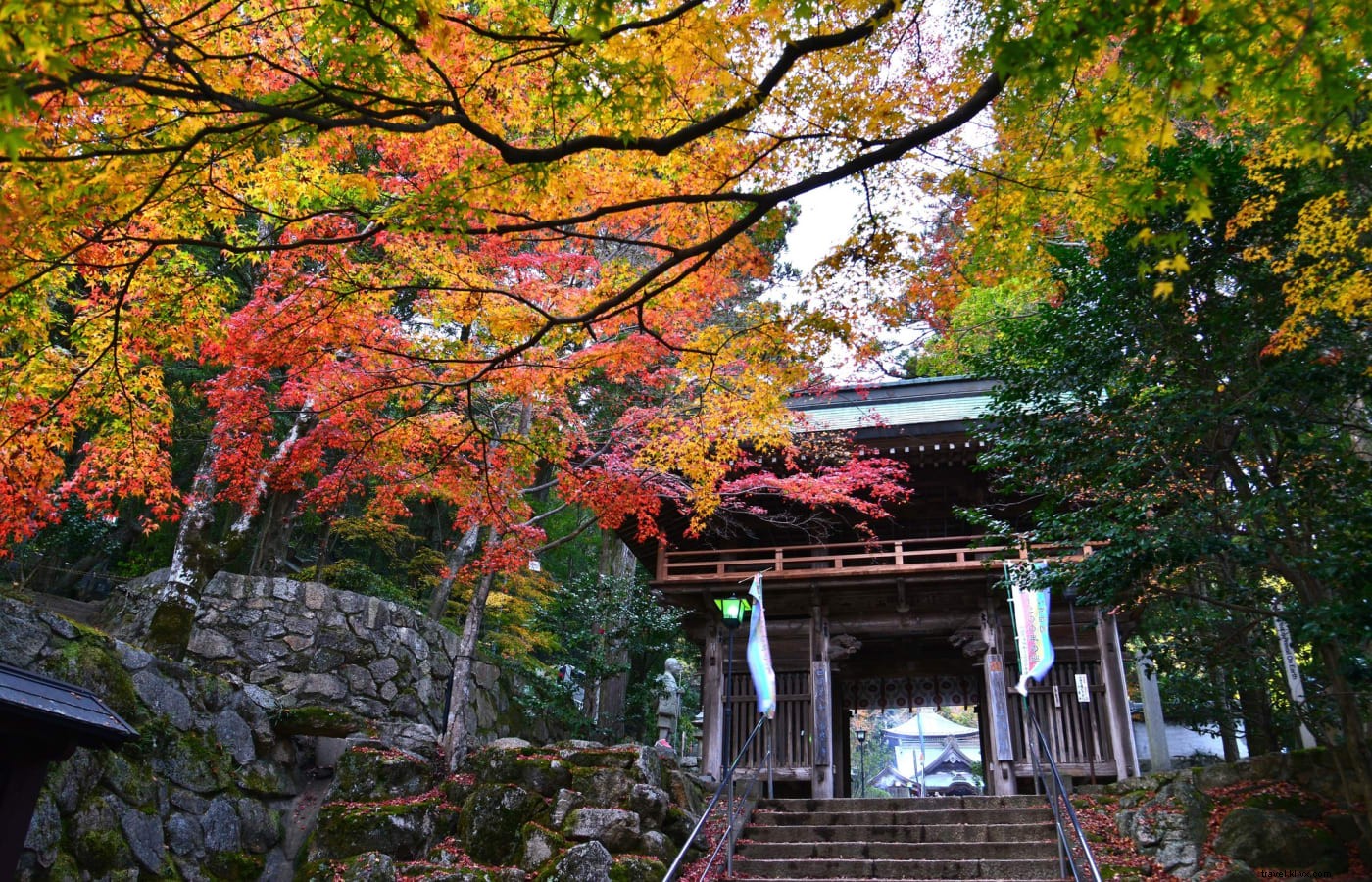
Okubo-ji, the 88th and final Henro temple.