Colca Canyon, Peru: Ultimate Trekking Guide, History, Tips & Myths
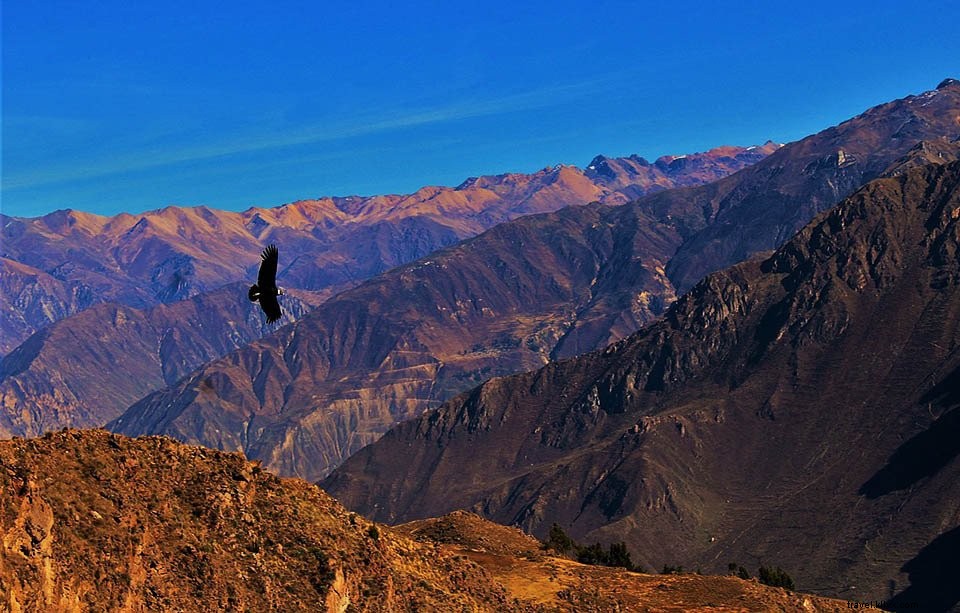
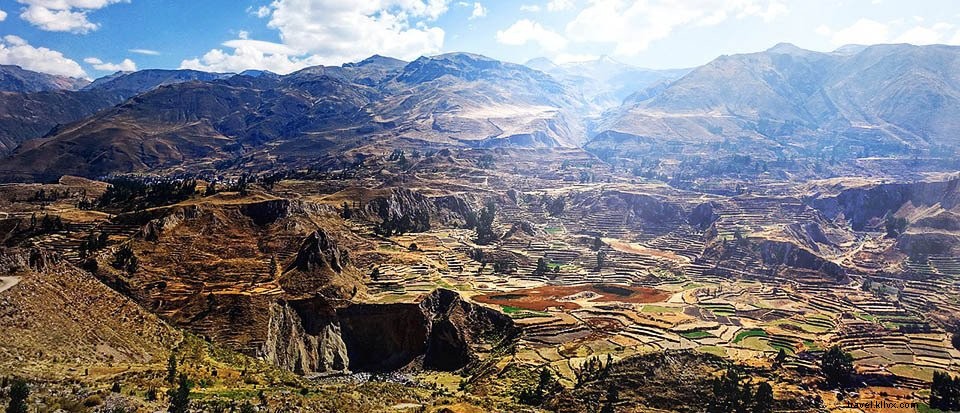
I approached Colca Canyon with some skepticism, expecting it to pale in comparison to iconic Andean treks like the Inca Trail to Machu Picchu or the Salkantay Trek. I couldn't have been more wrong. Visiting Colca Canyon offers breathtaking, otherworldly vistas that rival—and in my view surpass—those from Machu Picchu's summit, plus a rare chance to explore one of the world's deepest accessible canyons.
This guide shares the canyon's history and fascinating facts, practical trekking tips, and advice on selecting the best routes and tour options based on my firsthand experience.
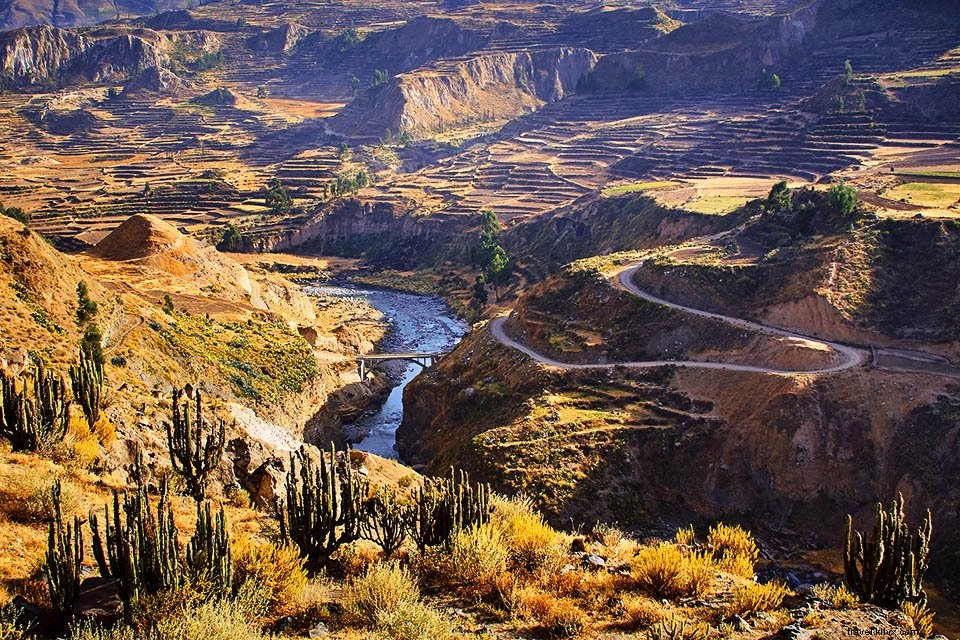
John Paul II Falls: A Brief History of Colca Canyon
To draw you in, I stretched the truth slightly in the introduction—a common poetic license. While outdated sources claim Colca as the world's deepest canyon, it's actually outdone by Peru's neighboring Cotahuasi Canyon and, per 2018 geological studies, China's Yarlung Tsangpo Canyon. Extreme conditions make precise measurements challenging, but Colca remains the deepest canyon reliably explorable by tourists.
Geologically, the canyon was sculpted over 40 million years by the Colca River, now a modest stream but once a powerful force. Polish explorers were the first to fully navigate it by kayak in 1981, documenting unknown areas and naming sites like Chocolate Valley and John Paul II Falls. Another Polish team repeated the feat in 2008, and a Polish geologist from the Polish Geological Institute conducted the first thorough bottom survey—highlighting Poland's deep ties to Colca exploration.
Arequipa and Cabanaconde: Starting Your Colca Canyon Trek
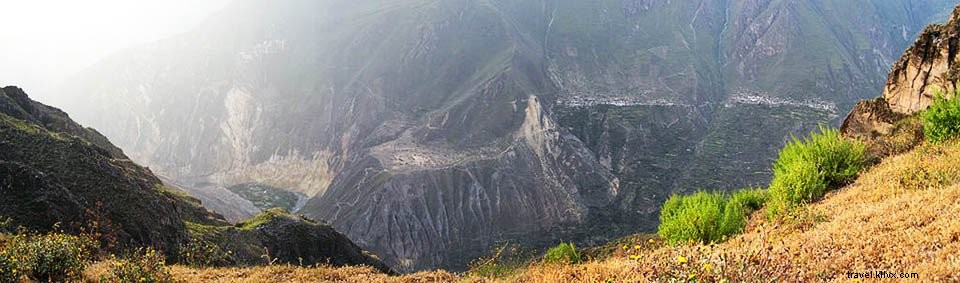
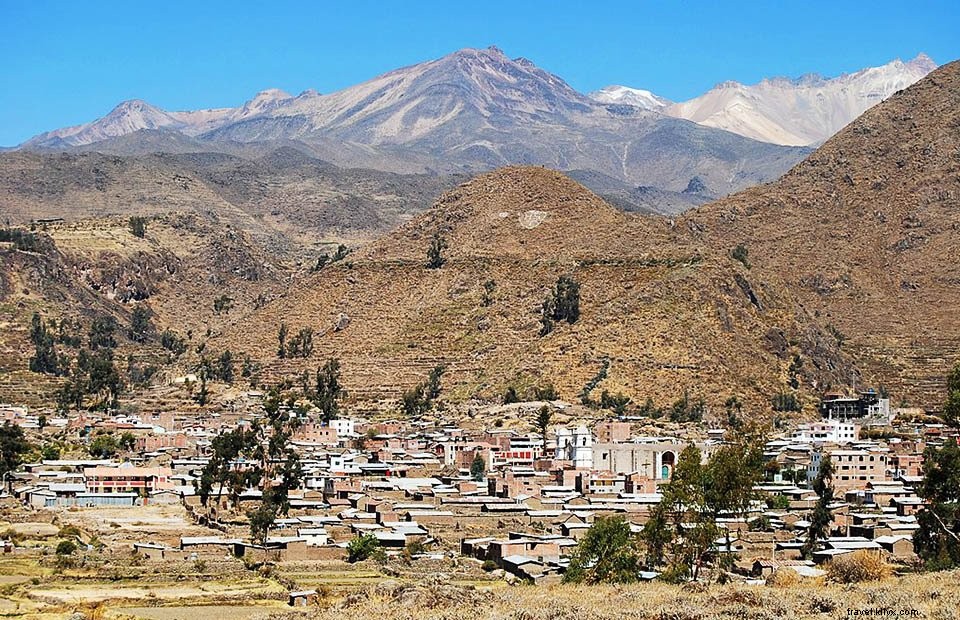
The main trailhead is in Cabanaconde, 200 km from Arequipa, where most visitors begin. Arequipa, a stunning colonial city, hosts numerous tour operators offering Colca trips. With 150,000 annual visitors, independent travel is popular and feasible—unlike the regulated Inca Trail. Both organized tours and solo treks have merits; I'll cover both.
Book tours in Arequipa 1-2 days ahead—spots are plentiful. Options range from 1-2 day overviews (hike down and back) to multi-day (2-5 days) guided treks with lodging and meals. Prices: $20-80 USD, often including basics. Check sample offers here or here. Arequipa is a must-visit itself:
Preparing for Your Colca Canyon Adventure
Acclimatize in Arequipa before heading to Cabanaconde—altitude sickness can be dangerous without dedicated mountain rescue (private services are costly). Try a local hike around the city.
For independent travel, buses from Arequipa run frequently (ignore timetables). Cabanaconde offers shops, hostels ($5-10 USD/night), hotels ($15 USD), and private rooms ($10-20 USD). Main-square hostels have safes for valuables (+$1.25 USD/night).
Stock up on high-energy snacks, 4+ liters of water daily (buy a filter bottle to refill from the river—bottled water costs ~$6 USD/2L). Essentials: sun hat, sunglasses, sturdy hiking boots, warm layers (nights drop to near-freezing), cash (no ATMs; entry 70 soles/~$18 USD), and comprehensive travel insurance.
Treks demand excellent fitness: 1,500m descents/ascents, 45°C heat, no shade, cold nights. Final climbs are toughest—prioritize safety over views.
Bring ample cash—everything from entry fees to hot springs is cash-only.
Colca Canyon Highlights and Top Trekking Routes
Near Cabanaconde, key stops offer views, food, and rest within 1-2 days' hike.
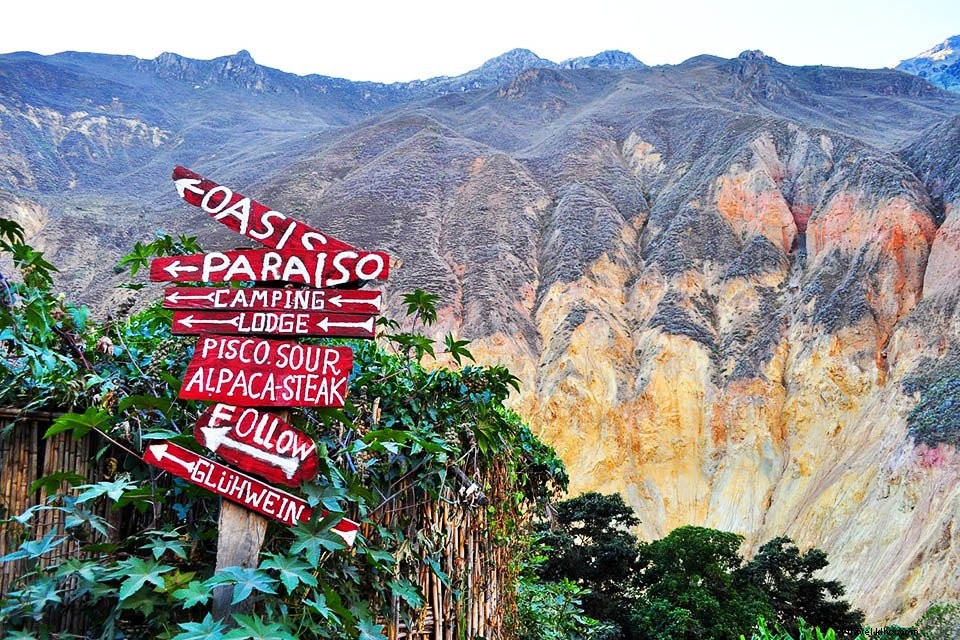
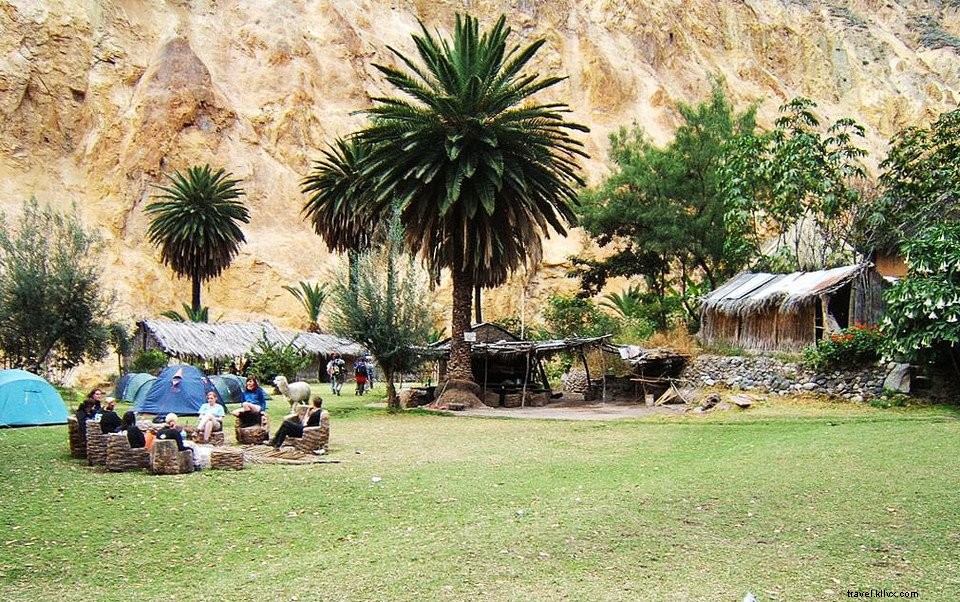
Sangalle (Andes Oasis)
This idyllic gorge village evokes fantasy realms. Iconic photos abound, but lodging/food is pricey: 70-100 soles/night (~$18-26 USD), meals 40-50 soles, beer 30 soles (~$8 USD).
Alternatives: San Juan de Chuccho and Llahuar
Budget-friendly San Juan de Chuccho has basic lodging. Llahuar offers hotels and soothing hot springs—perfect post-hike. Both guarantee space; rent mules (~200 soles/day) for gear relief.
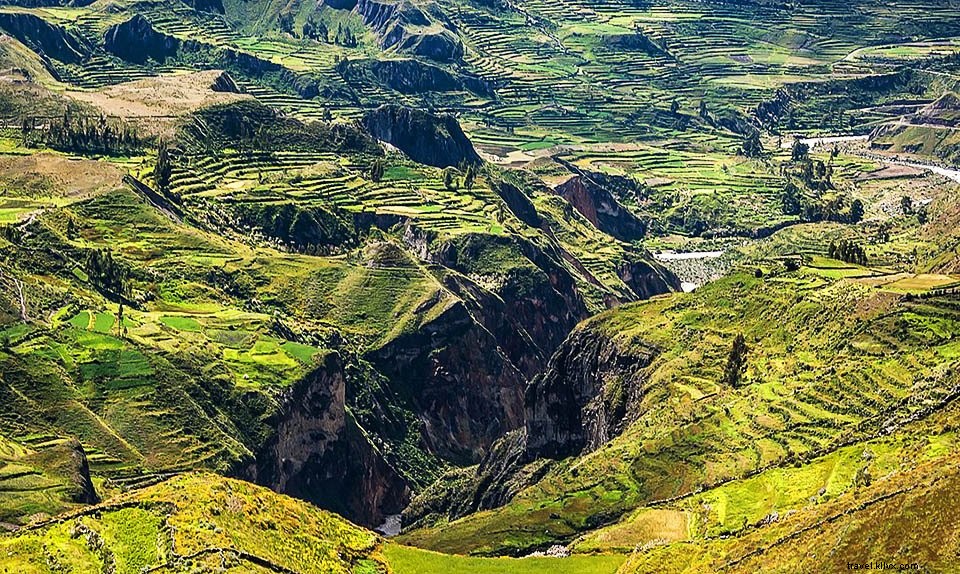
Inca Village Remnants
Preserved Inca settlements and terraces showcase ancient agriculture. Some offer agritourism stays to experience local culture.
Popular Routes
Shortest: Cabanaconde-Sangalle (5.5h down, overnight)-Cabanaconde (7.5h up).
Popular: Cabanaconde-San Juan de Chuccho (lunch)-Sangalle (overnight)-Cabanaconde (12-13h Day 1).
Alternative: Cabanaconde-Llahuar (overnight, hot springs)-Sangalle-Cabanaconde.
Easiest for beginners: Cabanaconde-San Juan (overnight)-Sangalle (overnight)-Cabanaconde (3 days).
Customize as needed. Greet locals with "buenos días"—it sparks smiles and builds rapport.