
Ultimate Birdwatching Guide: Top Spots and Seasons on the Outer Banks
Birds: The original aviators that inspired Orville and Wilbur Wright. The Outer Banks is home to nearly 400 bird species, creating a birdwatcher's paradise.
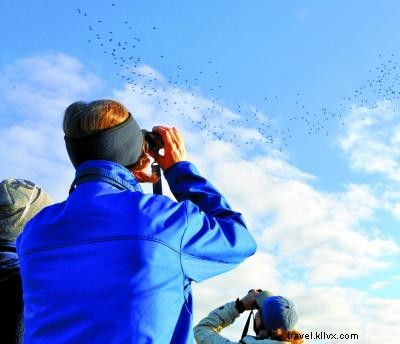
Birdwatching on the Outer Banks is rewarding year-round, with peak seasons in fall and winter. One standout location is Pea Island National Wildlife Refuge at the northern tip of Hatteras Island. This refuge serves as a key wintering site for thousands of snow geese, Canada geese, tundra swans, and 25 duck species. It also features shorebird nesting areas and wading bird rookeries. Spot endangered species like peregrine falcons and piping plovers on your next visit.
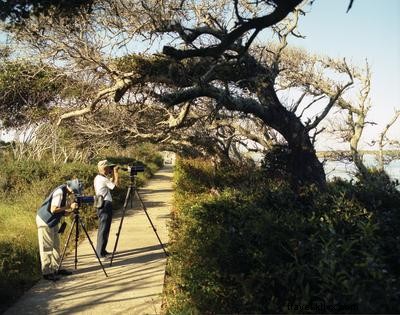
Another prime birdwatching destination is the Nature Conservancy's Nags Head Woods Preserve. Ancient oaks, hickories, and beech trees—some centuries old—form a mountain-like canopy over the sands. Over 100 bird species have been recorded here, with more than 50 nesting on-site. The preserve also hosts 15 amphibian species, 28 reptiles, seven fish species in its freshwater ponds, and diverse aquatic plants like the rare water violet.
Purple martins return spectacularly each year to the William Umstead Bridge on northern Roanoke Island, with colonies exceeding 100,000 birds. These migrants travel from Brazil and northern South America. Recent satellite tracking confirmed their routes, though research continues on whether individuals return to the same sites annually.
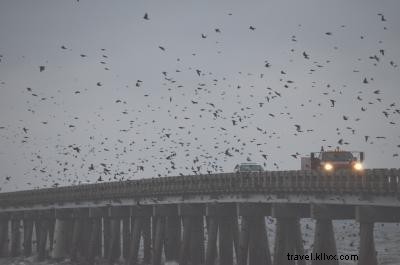
(Photo by Coastal Carolina Purple Martin Society)
Don't miss the renowned Wings Over Water Wildlife Festival, one of the U.S.'s top wildlife events. It offers birding, paddling, photography, art, and natural history tours. Attracting participants nationwide and globally, the main festival occurs in late fall for mild weather, lower crowds, and rates. The December Encore targets birders and photographers seeking peak migratory flocks in cooler conditions.
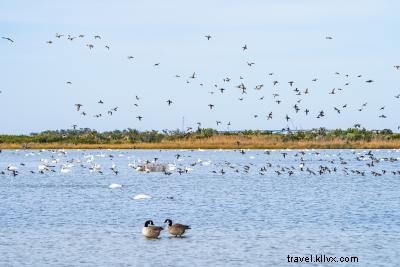
Bird species migrate seasonally across the Outer Banks:
- Spring
Pea Island Wildlife Refuge Center is open daily with volunteer-led bird walks. As marshes, forests, and shorelines bloom, shorebirds replace waterfowl, and neotropical songbirds return from Central and South America to nest in maritime shrubs. Look for black-bellied plovers, American avocets, and brown pelicans.
- Summer
The Refuge Center offers summer canoe tours along North Pond Trail and educational programs on wildlife and habitats. Dune flowers and draining marshes attract pollinators and birds. Spot blue herons, great egrets, snowy egrets, American coots, black-necked stilts, and black skimmers.
- Fall
The refuge remains open daily with volunteer bird walks, featuring ducks, swans, and geese. Migrants rest here en route south, coinciding with Wings Over Water tours. Expect American kestrels, northern pintails, ospreys, falcons, redhead ducks, and willets.
- Winter
Daily access includes North Pond Trail, beaches, and Highway 12 drives. December through February brings massive flocks of mallards, northern shovelers, tundra swans, American oystercatchers, American wigeons, canvasback ducks, northern harrier hawks, and snow geese.