Lake Charles' Lost Landmarks: Preserving Vanished Historical Treasures
History enthusiasts exploring Lake Charles will value the Calcasieu Historical Preservation Society's Lost Landmarks project. Launched three years ago, this initiative honors significant buildings that once shaped the community but no longer stand. The Society has installed markers at nine such sites to safeguard their legacy.
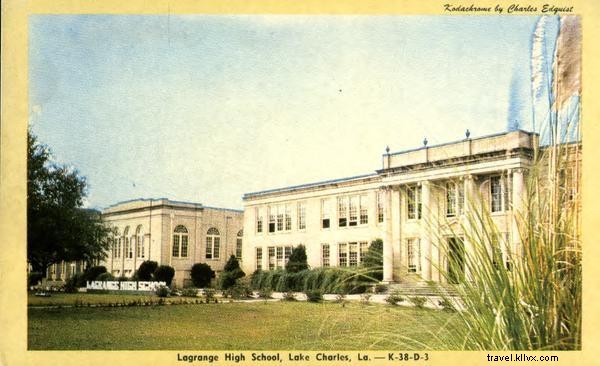
(LaGrange High School, 1940 - McNeese Archives)
The historic marker for the original LaGrange School stands near Coyote Blues Restaurant in the 3600 block of Ryan Street. In 1903, Mesard LaGrange donated one acre for a one-room schoolhouse. A decade later, he contributed nine more acres for expansion. The new facility opened in 1929, serving students of all grades in Calcasieu Parish until 1954, when LaGrange High School relocated to Louisiana Avenue. The Ryan Street site then functioned as a junior high until 1983, when it was deemed outdated and demolished.
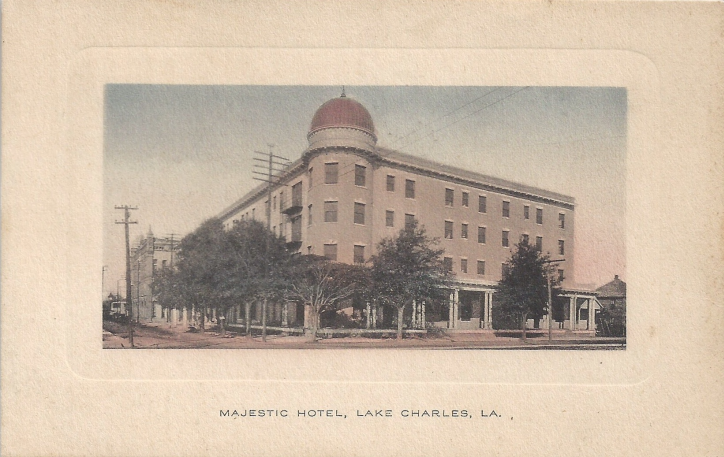
Opened in 1906, the grand Majestic Hotel at the corner of Pujo and Bilbo Streets welcomed guests and survived the 1910 Fire thanks to its private water system. Notable visitors included Harry Houdini, General and Mrs. Eisenhower, and Jackie and John Kennedy. For decades, it was the hub of social, political, and cultural life in Southwest Louisiana. Ultimately deemed obsolete, it was razed to create a parking lot—echoing Joni Mitchell's poignant lyrics.
Ball’s Auditorium was a key stop on the Chitlin' Circuit, hosting legends like Ray Charles, Fats Domino, Tina Turner, and the Temptations. A Lost Landmarks marker on St. John Street in North Lake Charles marks this historic venue.
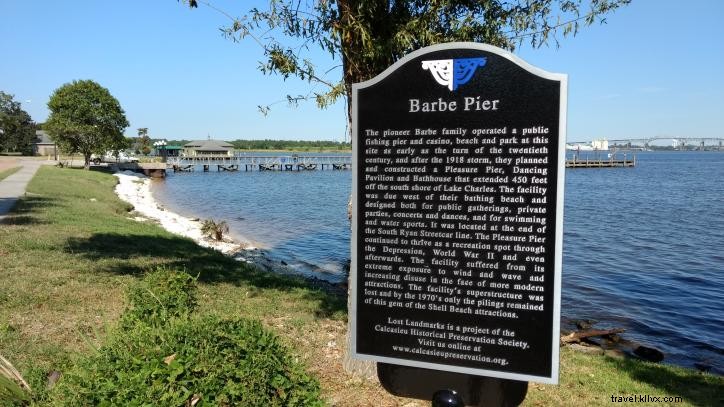
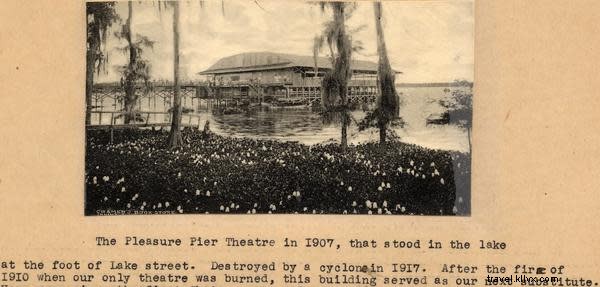
The Barbe family operated Barbe Pier, a public fishing pier, casino, beach, and park in the early 1900s. A Category 3 hurricane in 1918 devastated the site (storms were unnamed until 1953), but they rebuilt with Pleasure Pier, a dance pavilion, and bathhouse west of the beach. Natural erosion and waning interest led to its decline at the end of the South Ryan Streetcar Line.
The original St. Charles Academy, a girls' boarding school, stood at the northeast corner of Ryan and Kirby Streets but was lost to the 1910 Fire. A new structure rose in 1913 at the current Immaculate Conception Catholic School site on Ryan and Michael DeBakey Drive. In 1970, it merged with Landry Memorial High and Sacred Heart High to form St. Louis High School. It briefly served as a convent before demolition in 1974.
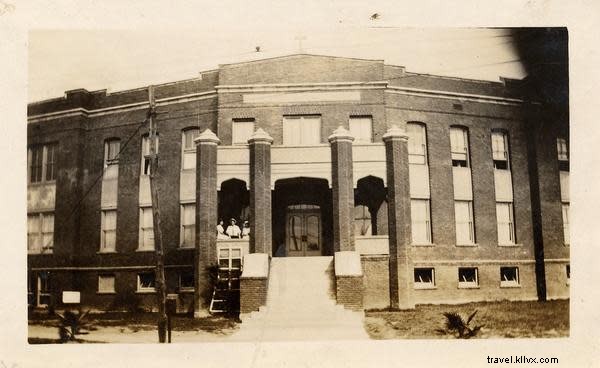
(St. Charles Academy, 1912 - McNeese Archives)
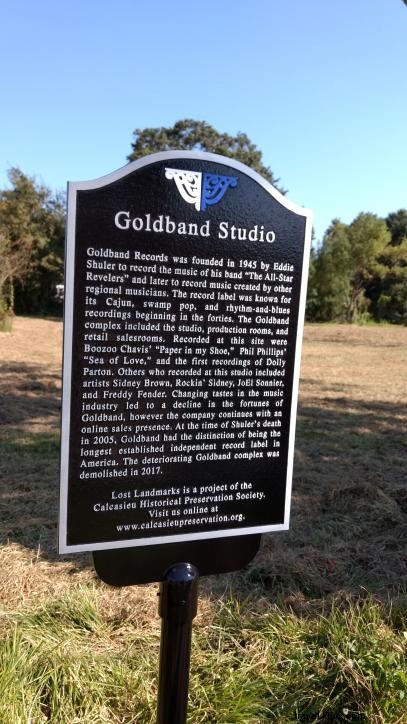
In 1945, Eddie Shuler founded Goldband Records at Ryan and Church Streets to record his All-Star Revelers and local talent. This studio birthed Swamp Pop and hosted Dolly Parton's first recording, plus stars like Freddie Fender, Mickey Gilley, and Phil Phillips' "Sea of Love." At Shuler's passing in 2015, it was America's longest-running independent label. Neglected, the building was demolished in 2017.
Rail lines once crisscrossed the Lake Area, supporting at least four Lake Charles railroad stations, now gone. A marker on Clarence Street near Ryan details the Iron Mountain-Missouri Pacific station (demolished 1989) and depots for Southern Pacific, Union, and Kansas City Southern.
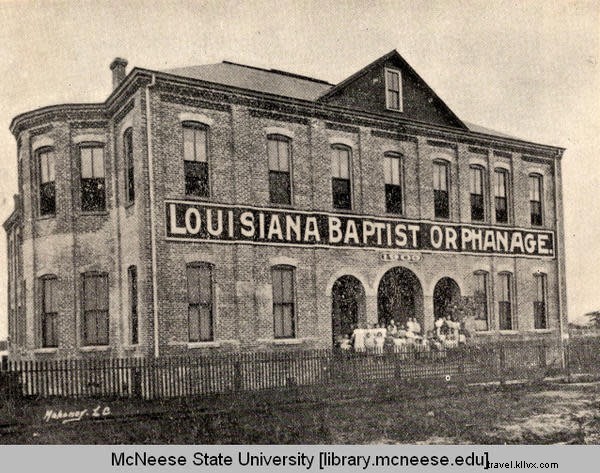
The Louisiana State Baptist Orphanage at Seventh and Banks Streets, built in 1899 for 150 children, operated until 1925 on the site of today's St. Louis Catholic High School. Mrs. J.A. Landry bought it and donated to the Christian Brothers, who opened Landry Memorial High for boys in 1927.
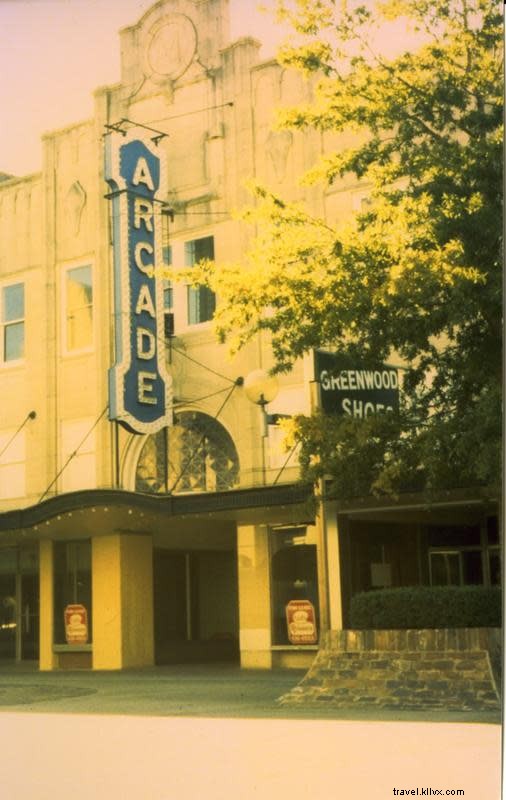
(Arcade Theater, 1970 - McNeese Archives)
A marker near the Historic Calcasieu Marine Bank courtyard at Ryan and Pujo Streets commemorates key structures: the six-story Weber Building for offices; the Miller Building for shops and offices; the Arcade Theatre for vaudeville, concerts, and stars like the Barrymores; and the grand Paramount Theater, largest of over 20 local cinemas. Listed on the National Register in 1978, all four were destroyed by fire in 1985.
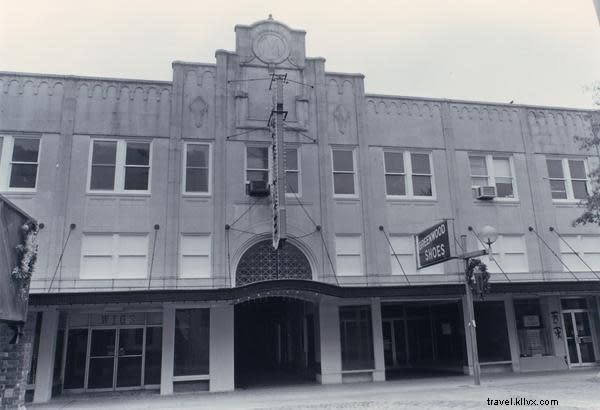
(Arcade Theater, 1970 - McNeese Archives)
For more details, visit www.calcasieupreservation.com.