The Rigorous Daily Lives of South India's Fishermen: Chinese Nets in Kochi and Traditional Hauls in Kovalam
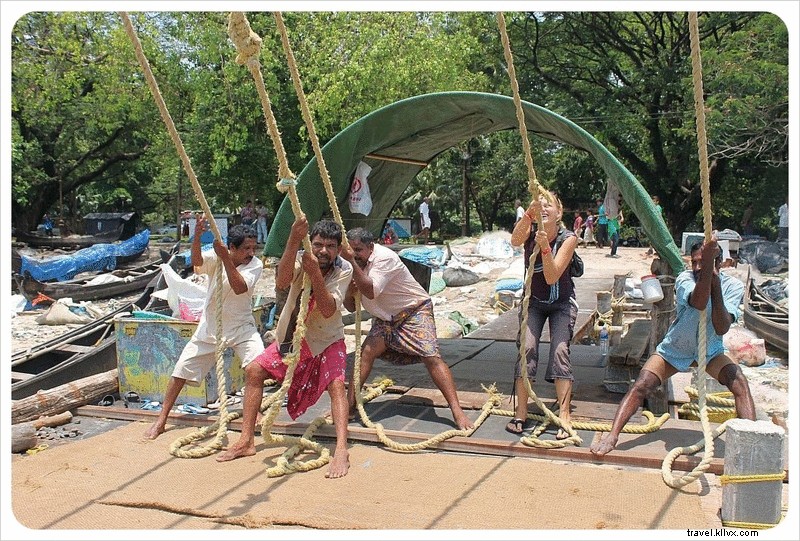
The rhythmic chant of "Heya-ha-heya-ha-heya-ha" echoed closer as we turned the corner in Fort Kochi, leading us to the iconic Chinese fishing nets lining the shores of this historic port town. Fishermen work in coordinated teams on wooden piers to operate these massive structures. Little did we know, I would soon join one of those teams.
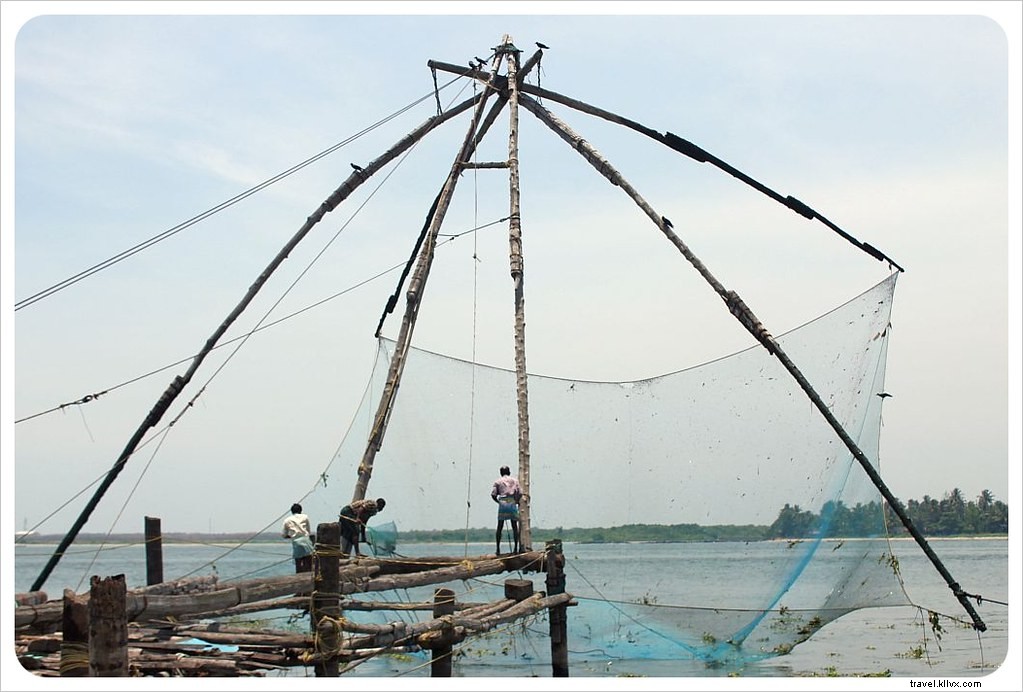
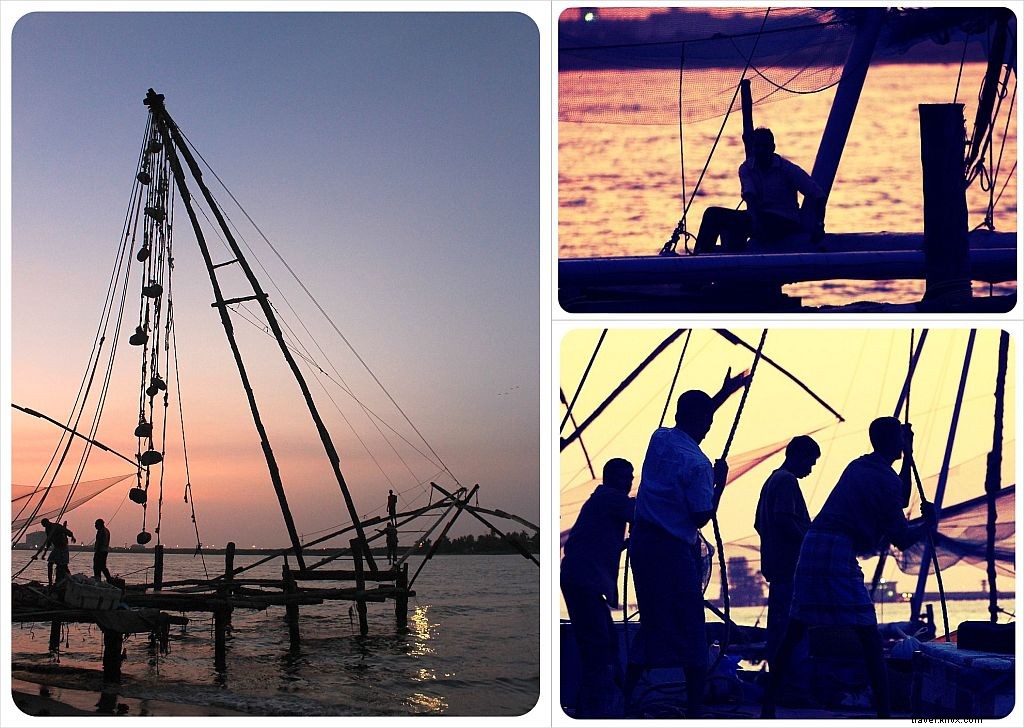
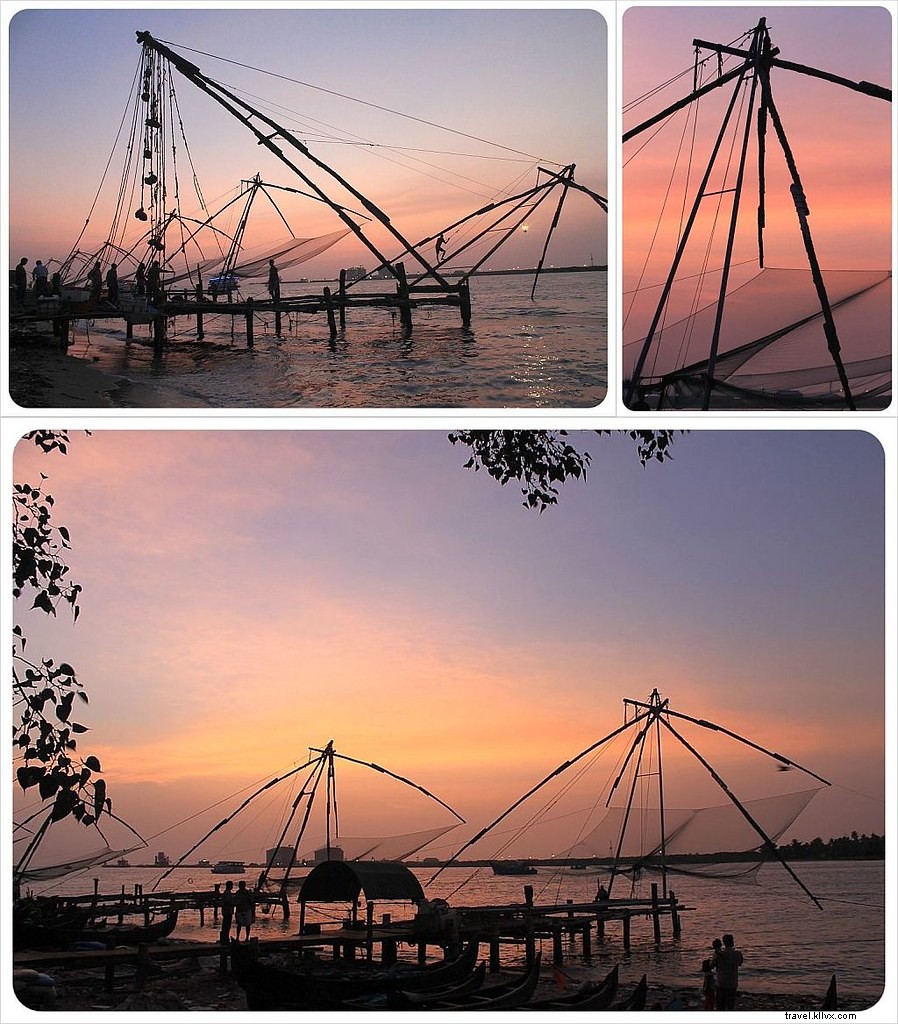
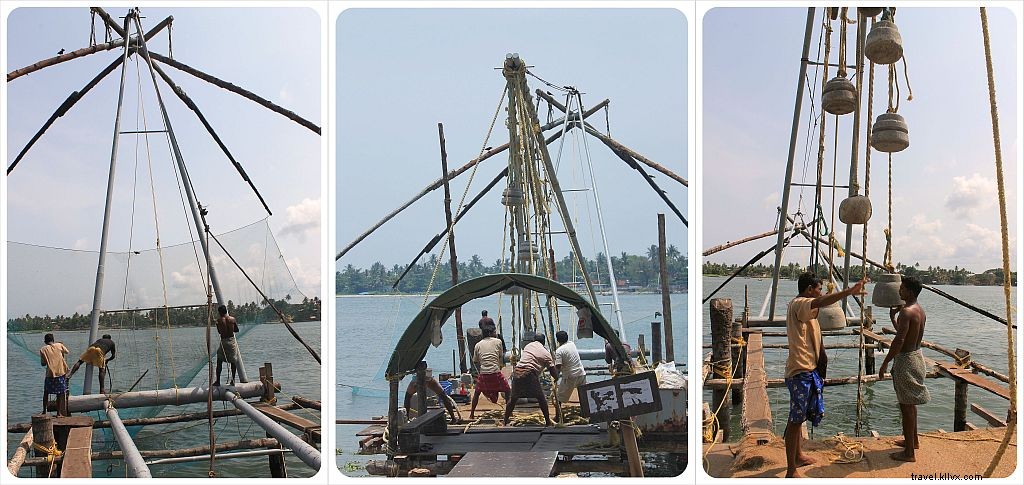 Using a pulley system anchored at the shore, the nets are submerged for about three minutes before being hauled up to capture fish. Heavy stones suspended from ropes act as counterweights.
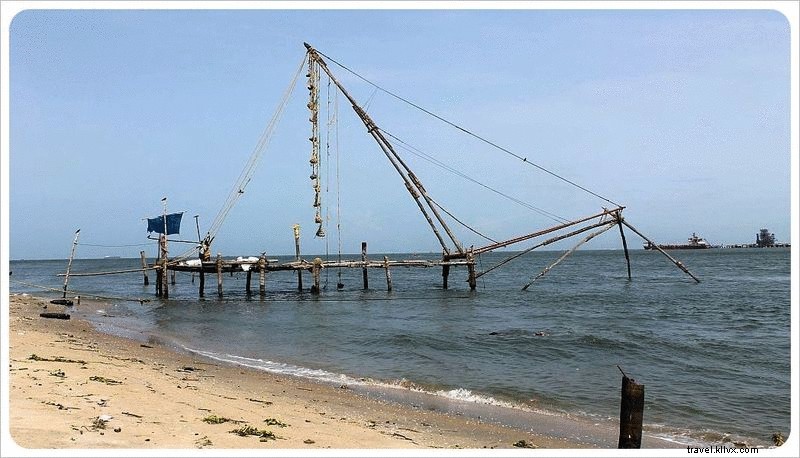 Towering around 10 meters high with nets spanning 20 meters wide, these structures feature a cantilever arm extending over the water. A team of five to six fishermen manually lifts it by hand.
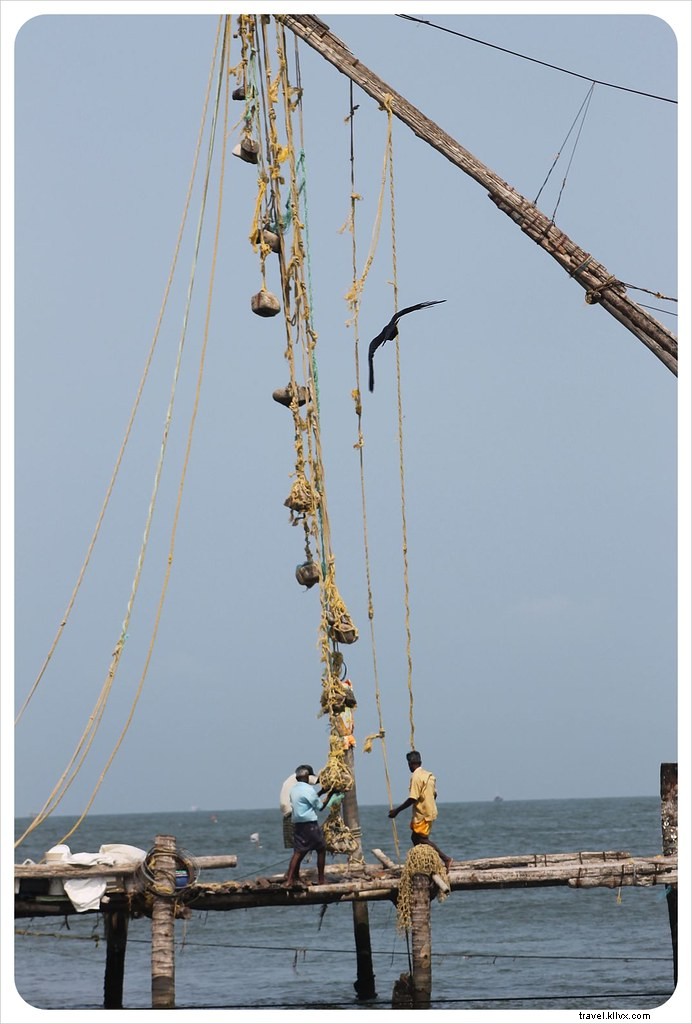
Chinese Fishing Nets in Kochi
These Chinese fishing nets in Kochi rank among the most fascinating sights from our travels. Introduced in the 14th century, they were originally all wood, though some components have since been replaced with metal. The total weight lifted each time exceeds one ton.
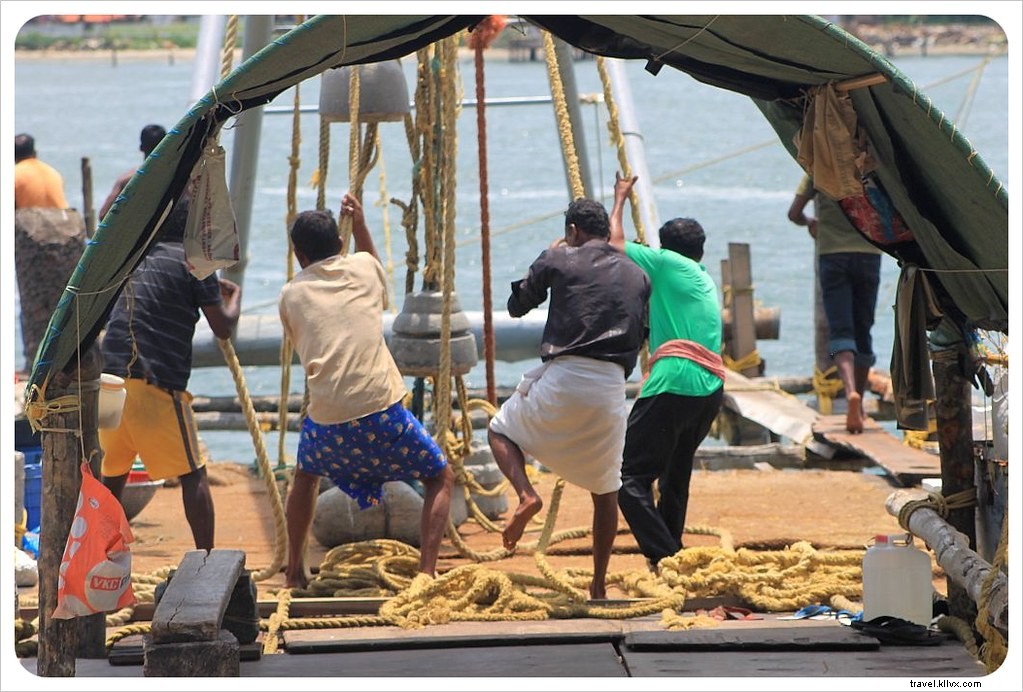 Due to the immense load, Kerala's fishermen must maintain absolute focus with every pull. Even shared among five or six, it equates to roughly 200 kilos per person. Remarkably, they repeat this process up to 300 times daily.
 Once raised, a fisherman ventures to the net's edge, using a smaller net to extract the catch and transfer it to boxes at the structure's end.
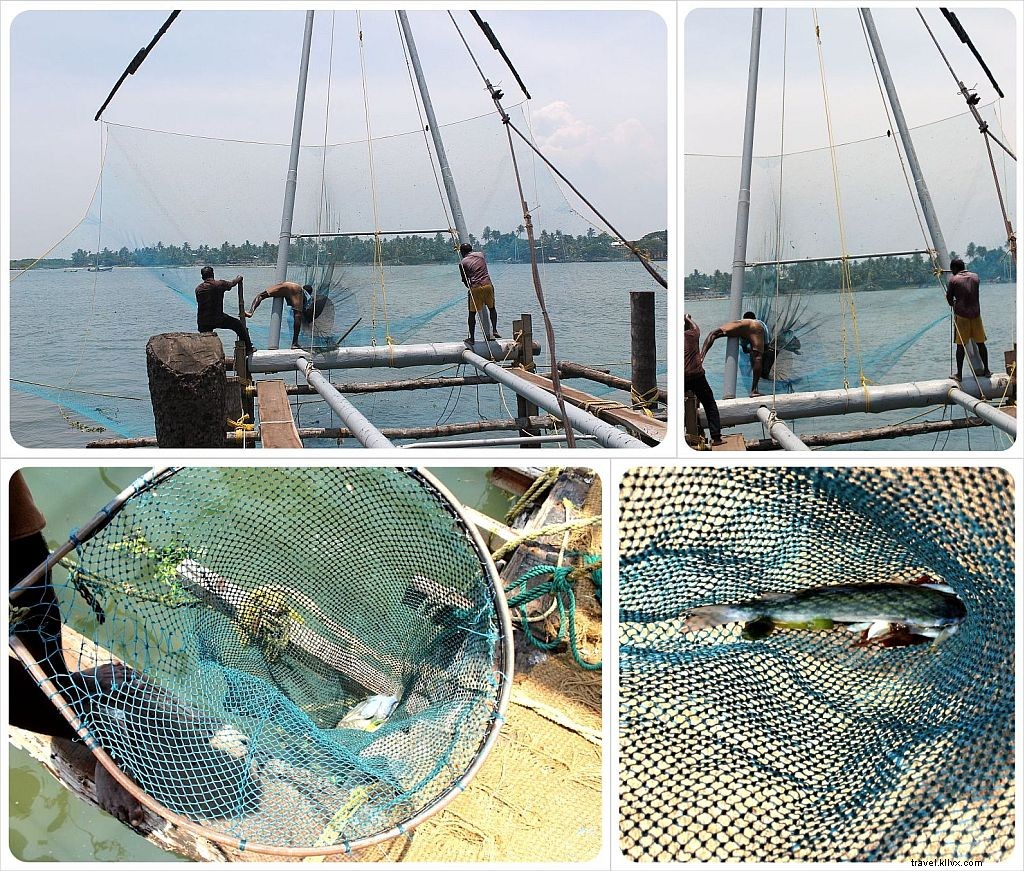 Observing for some time, we were struck by the meager hauls—often just tiny fish or none at all.
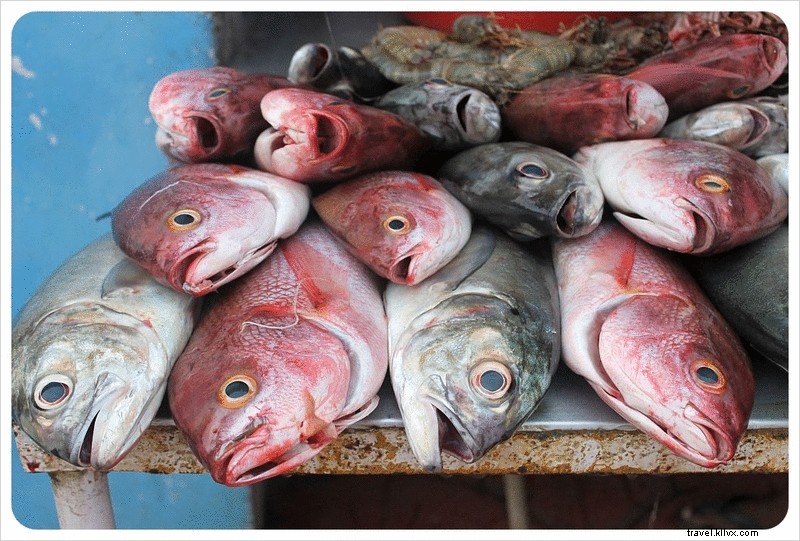
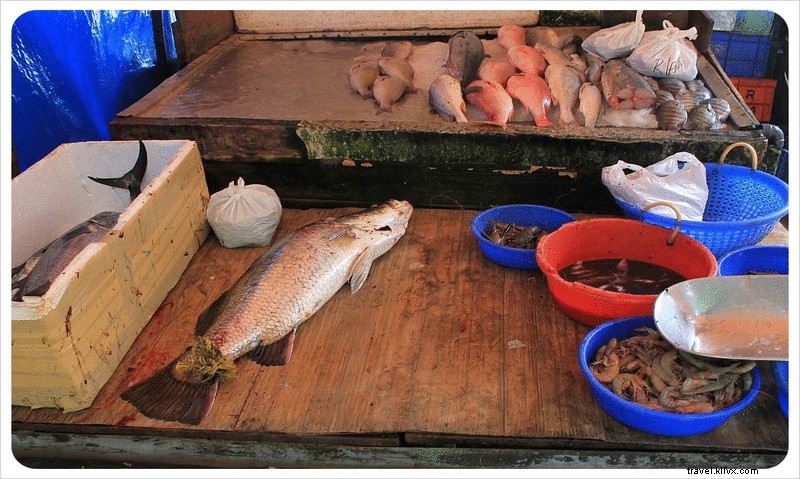
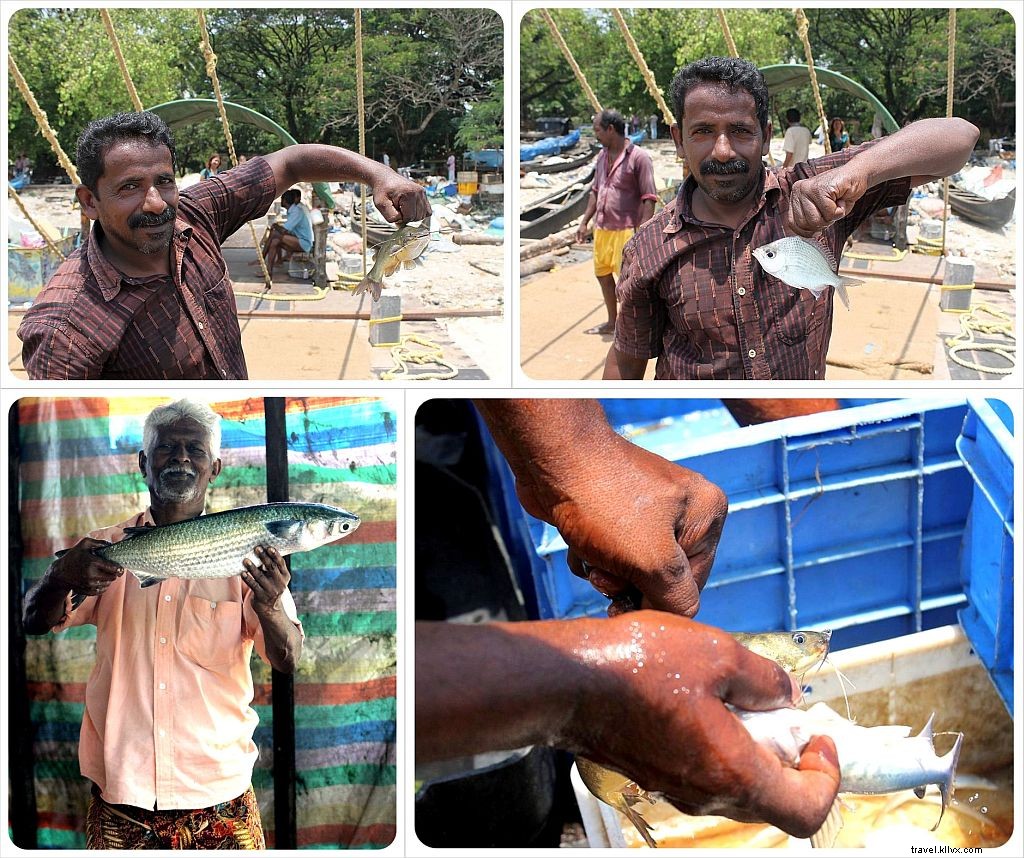 Each net's crew operates as a cooperative, pooling daily earnings. Fish are sold at the adjacent market, with nearby restaurants offering to prepare purchases.
 The fishermen welcome onlookers and often invite tourists to assist with the ropes—for a small tip. Trying it myself, I was amazed at the weight. It's astonishing they endure this hundreds of times daily for such slim rewards, making tourist tips a vital supplement.
 How did these nets reach South India? Legend credits Portuguese explorers, who had earlier established ties in Macau.
Traditional Fishing in Southern Kerala
Days later, traveling south by train, we arrived in off-season Kovalam, a quiet beach town teeming with fishermen employing a distinct method.
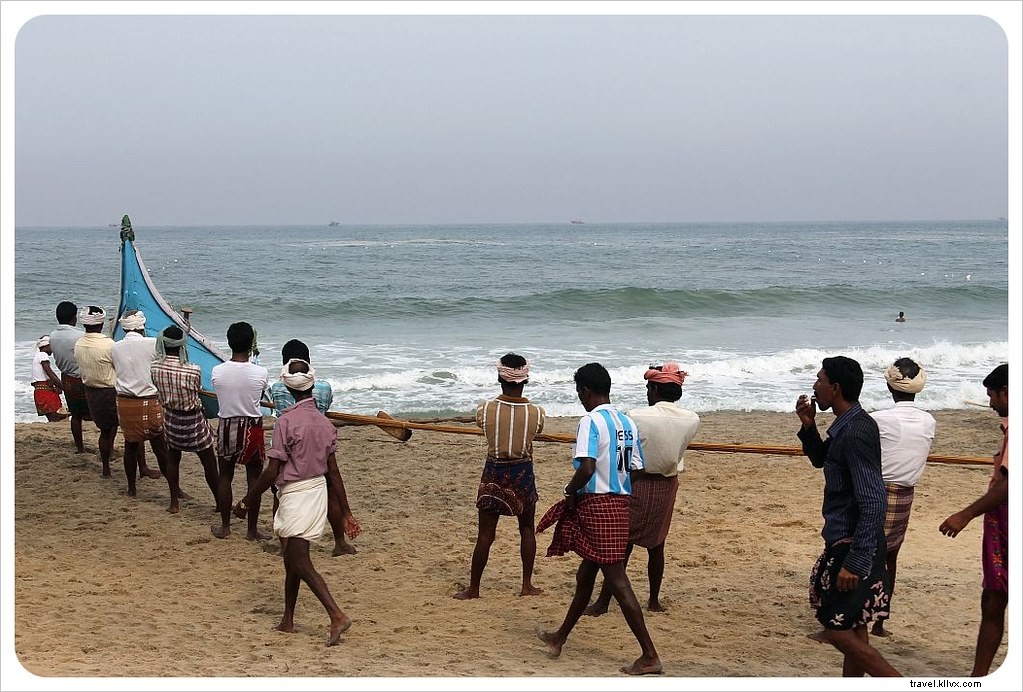 At dawn, clad in traditional Keralan lungis—sarong-like garments—they gathered to haul overnight nets from the sea.
 Earlier, teams in simple wooden boats positioned the vast nets hundreds of meters offshore, then returned towing ropes from each end.
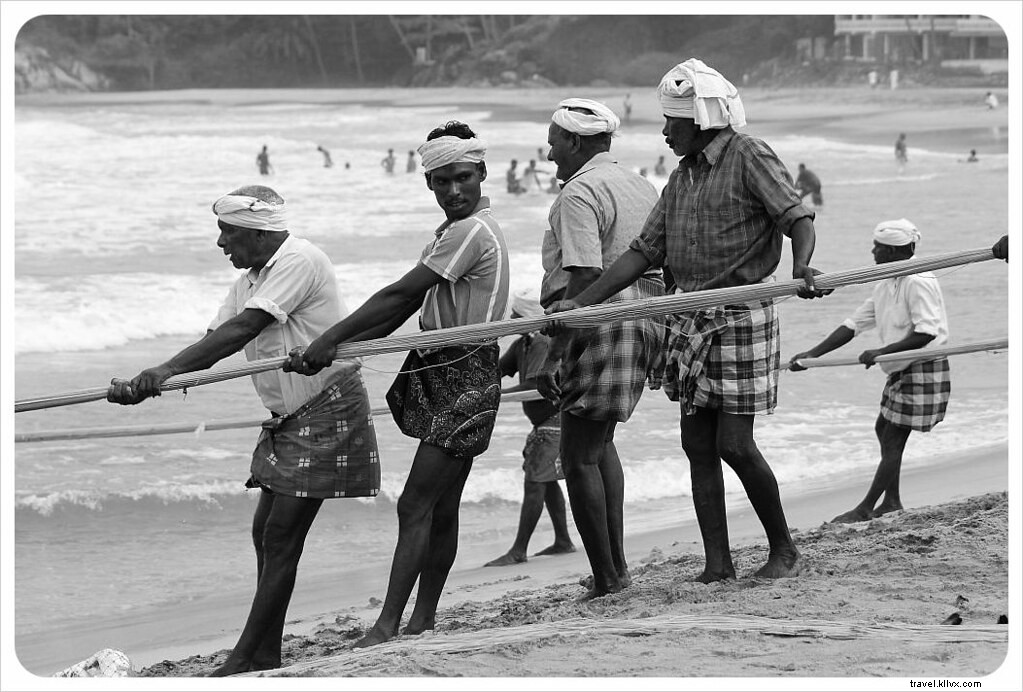
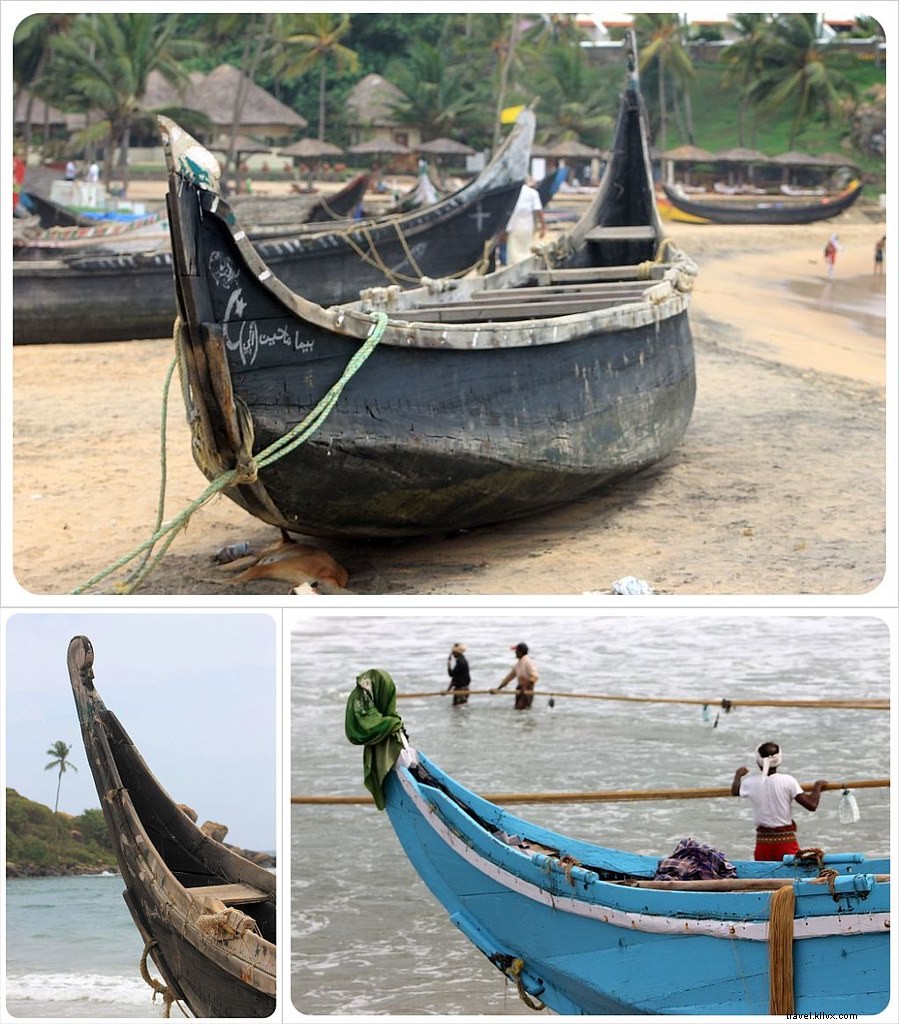 Requiring around 30 men, these enormous nets demand collective strength to reach shore.
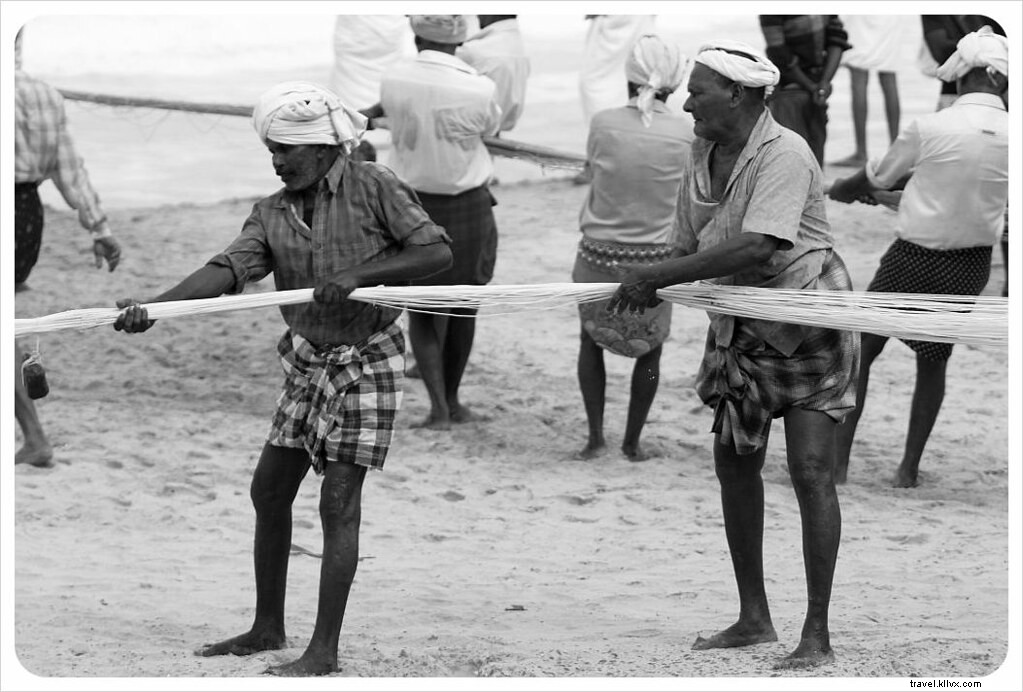 Divided into two groups per net end, they chanted rhythmically—echoing Kochi's cadence—drawing the net inward, forming a circle as it neared.
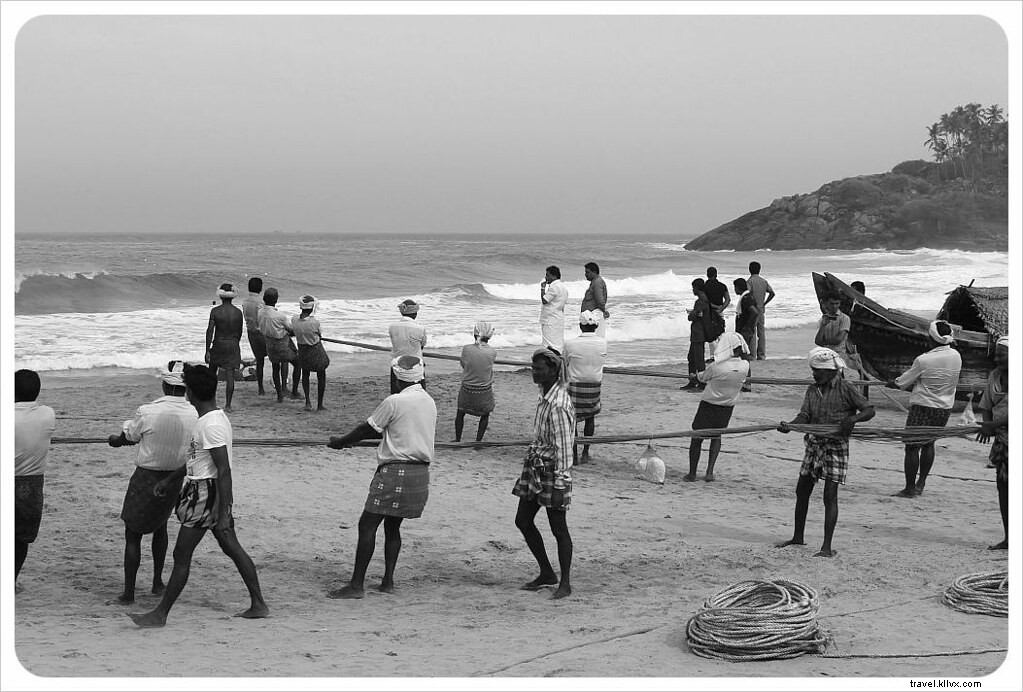 Some worked from the beach, others battled waves far out.
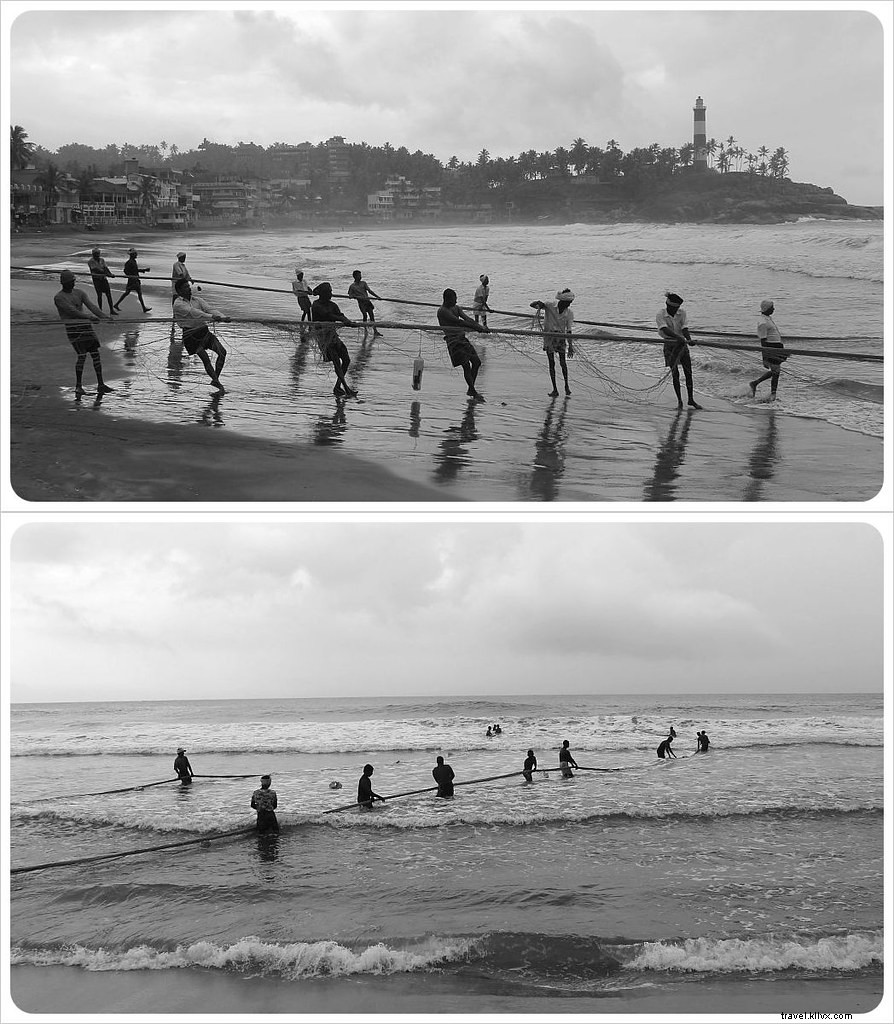 Strong currents and relentless waves challenged them.
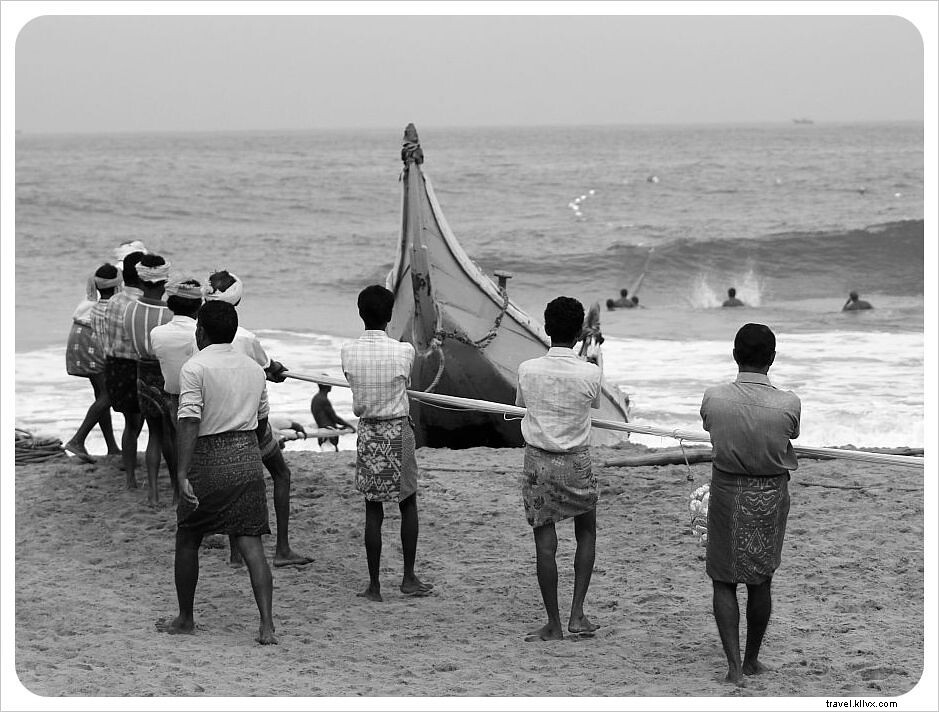
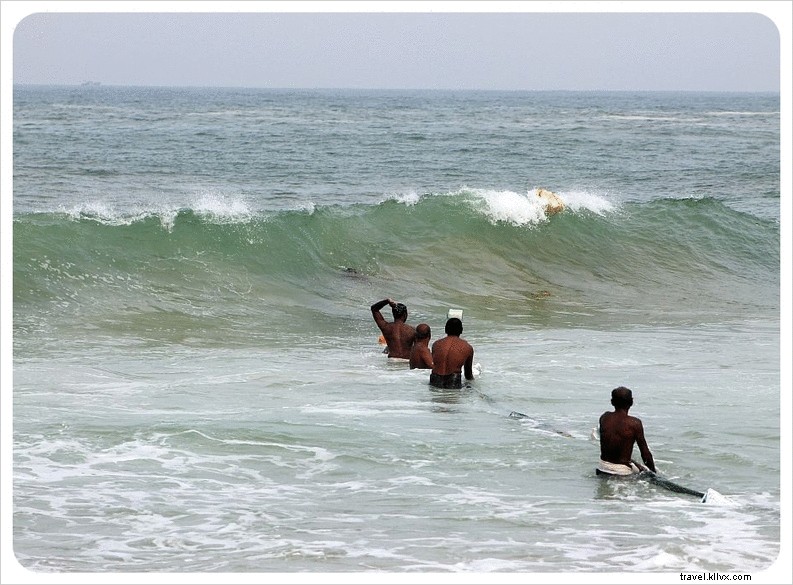 Chants intensified as the heaviest, fish-laden section approached, taking about 30 minutes total.
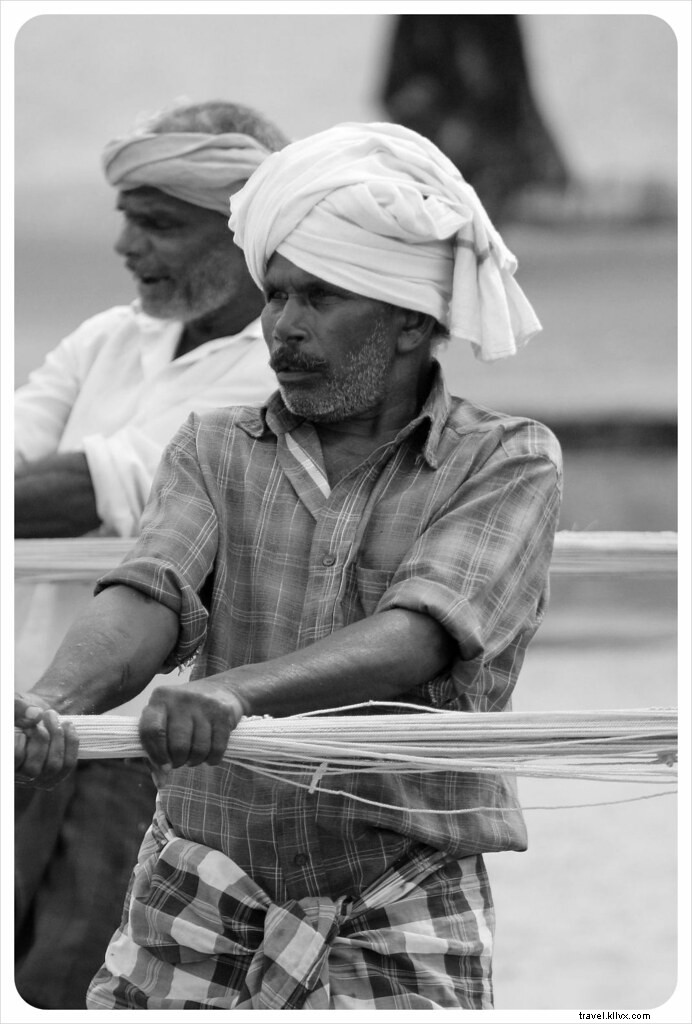
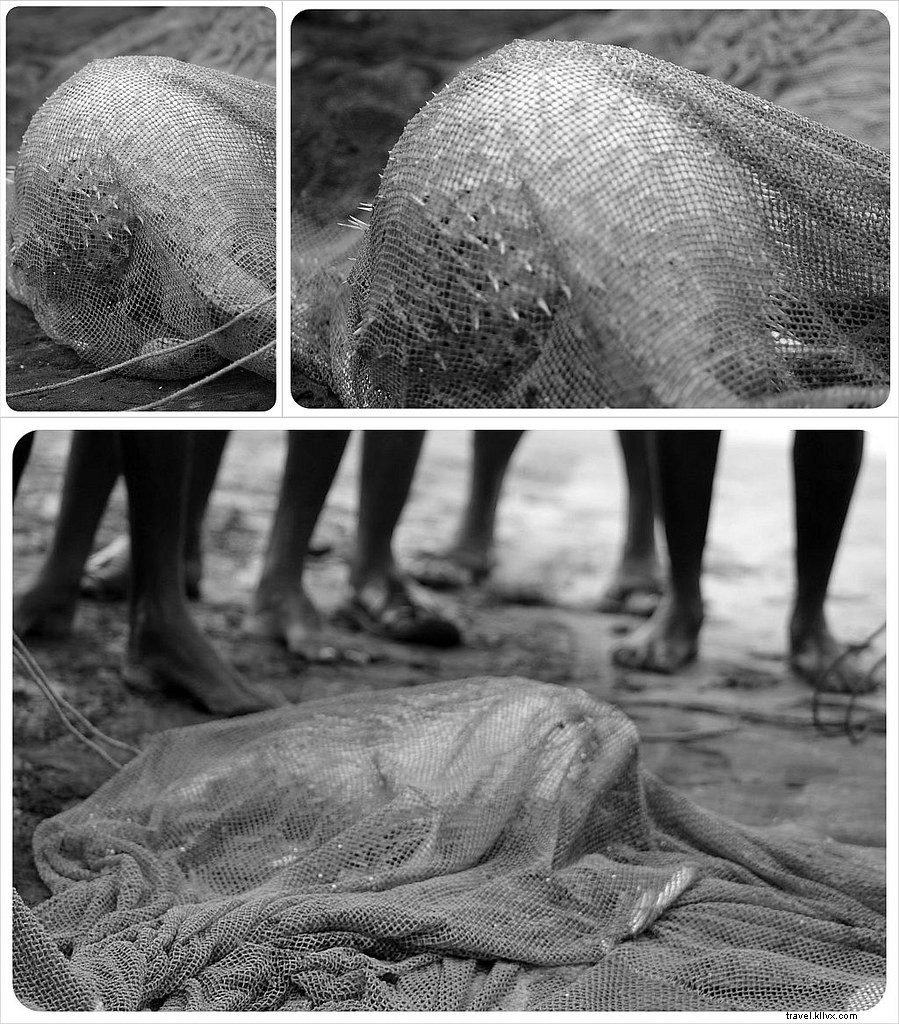
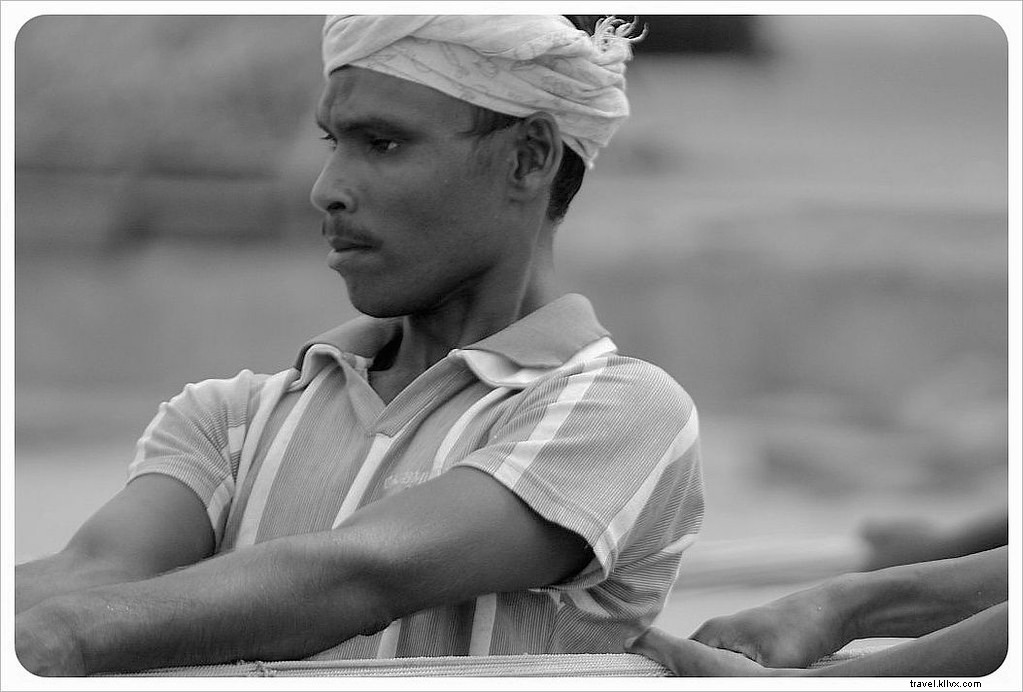 Inspecting the catch, we found scant reward—mostly tiny fish, with one notable puffer deflating soon after.
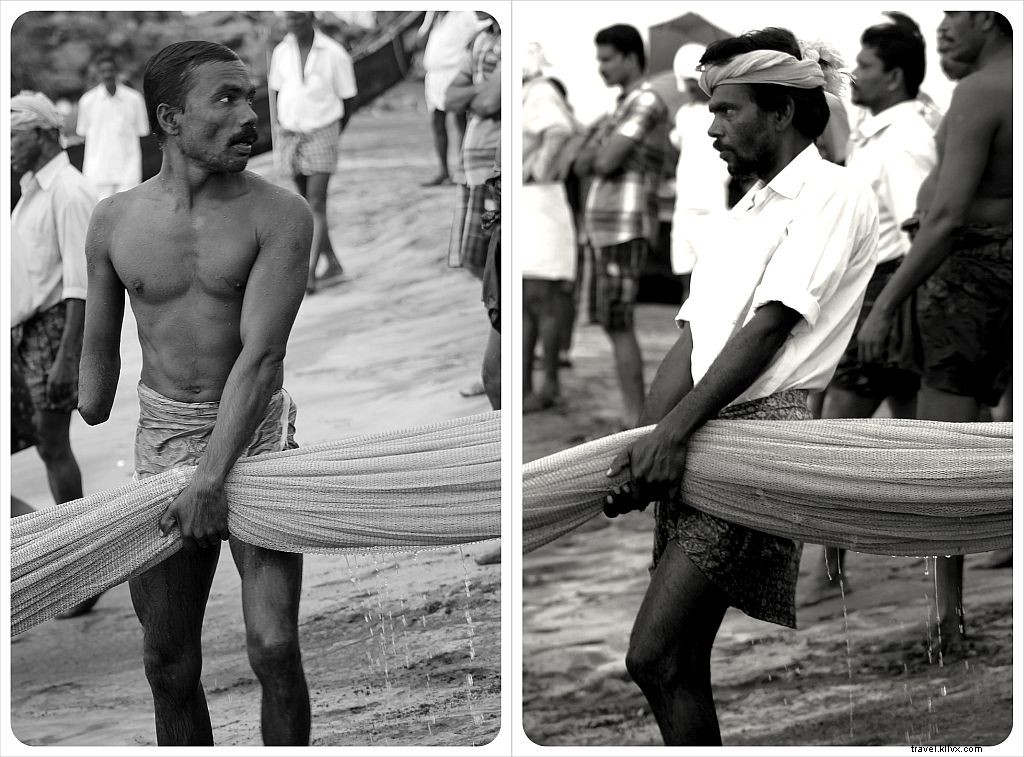
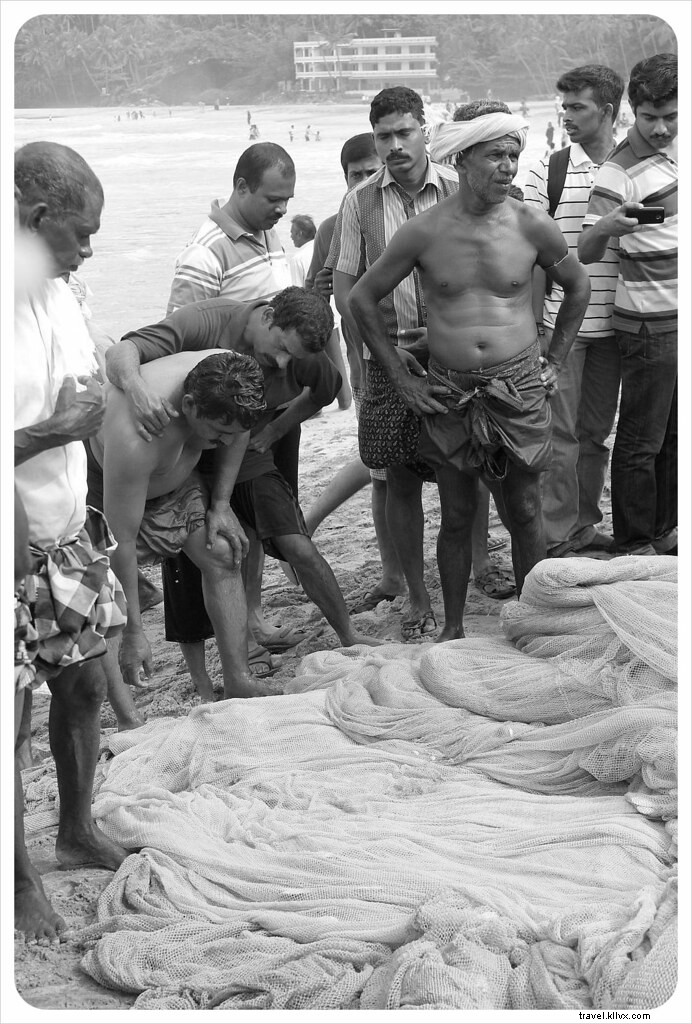 Disappointment evident, they dispersed, ready to repeat the ritual at dawn.