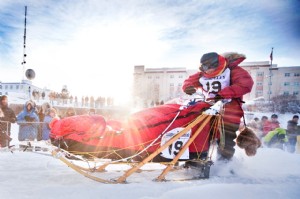
Life on the Line: Arctic Realities Amid Climate Change
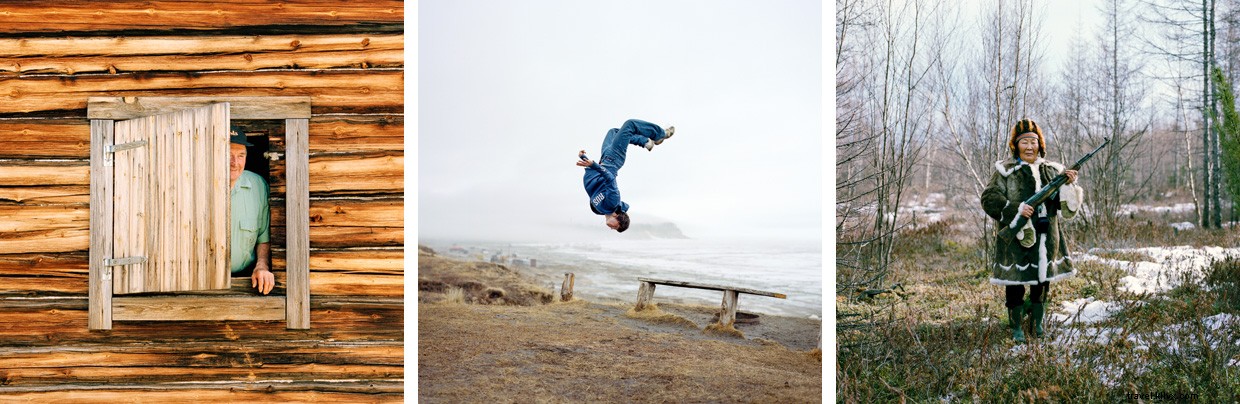
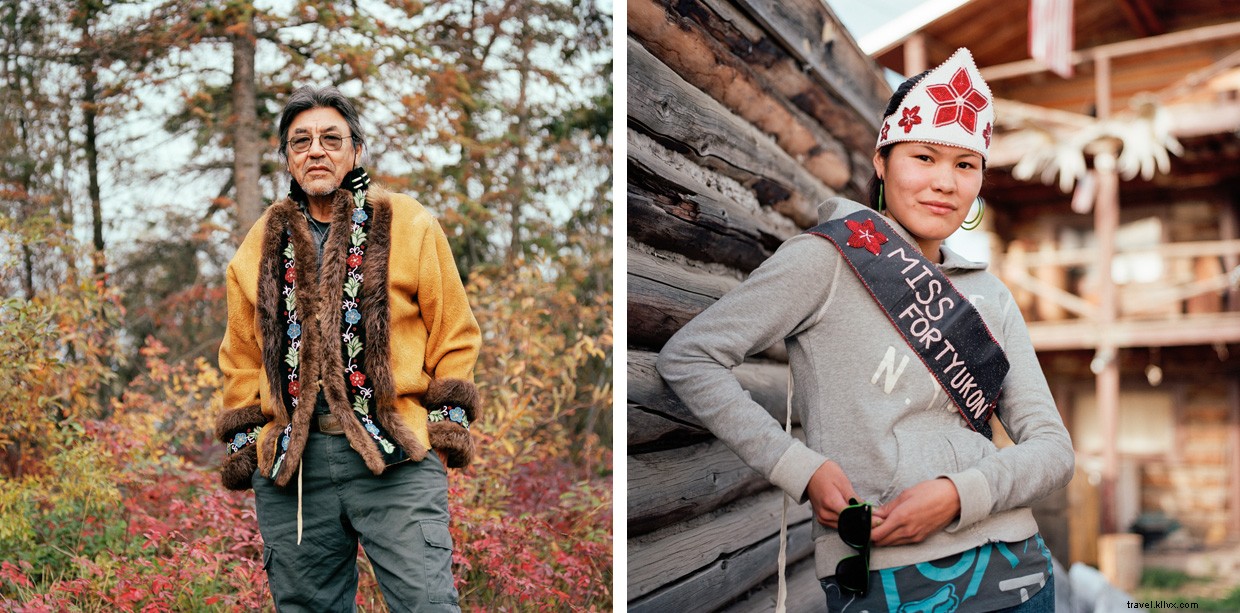
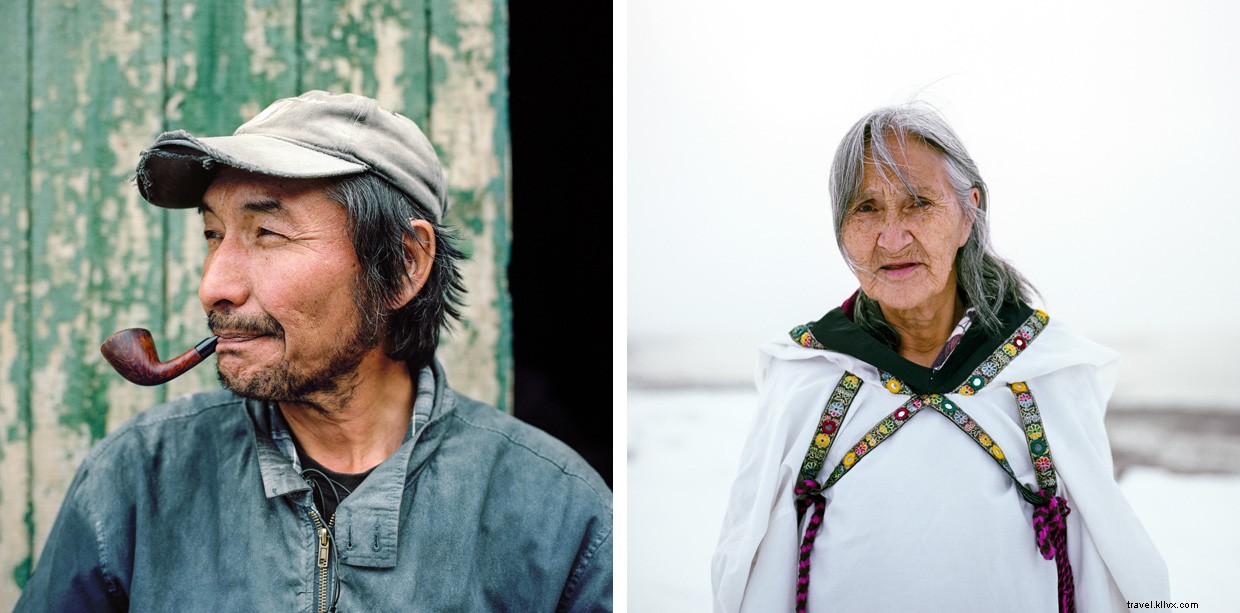
Life On The Line celebrates the variety of existence in the circumpolar Arctic, in the face of overwhelming environmental and cultural change. Over a number of years, photographer Cristian Barnett has journeyed to the Arctic Circle, an invisible line of latitude 66 degrees and 33 minutes north of the Equator. The line intersects eight countries and is home to a rich diversity of peoples for whom the sun never sets in high summer, nor rises in deepest winter. All the photographs were taken on film within thirty-five miles of the Arctic Circle.
Huw Lewis-Jones joined Cristian on many of his journeys. Here Cristian shares his stand out moments and what life on the Arctic Circle means to him.
HLJ – The Arctic Circle threads its way over vast distances, an invisible line that runs through eight countries and a variety of landscapes. Tell us how the Life on the Line project came about?
CB – I was looking at the Arctic Circle on a map in an inflight magazine, simple as that. The idea came to me instantly and, almost as quickly, I realised I would need to devote a huge amount of time and money to try and bring it about. That was daunting to say the least, but I became intrigued – you might say a little obsessed – by the mysterious dotted line that dissected apparently vast empty spaces. It’s a mathematical line of latitude 66 degrees and 33 minutes north of the Equator, intersecting various nations and, as you know, home to a rich diversity of people. There’s magic in that for me. I was transfixed by the idea of the North and it cast a spell before I’d even got there. And that feeling of wonder has increased as I’ve come to understand it more.
Tell me a little about your first journey?
Well, the very first trip was to Finland in 2006. The idea was a simple one: photograph people on the Arctic Circle. I really had no greater ambi¬tion than that. I’d shoot everything on colour film with my medium-format Hasselblad. Working with a Finnish assistant we arranged some shoots in advance and met other people while there. This was the formula that I ended up using for the rest of the trips. The whole adventure seemed like my idea of a perfect job – I was hooked. I loved turning up to meet people, spending some time talking with them, taking their picture and then making our way to the next location. It was a series of condensed experiences.
I found myself, in a way, being passed around a community and given opportunities to meet those people a community wanted me to meet. That certainly encouraged me to continue. There was also the haphazard, sponta¬neous element: the pure chance. The first photograph I made was of Timo, who was drilling a hole in the ice with what looked to me like a giant cork¬screw. He was measuring the thickness of the frozen lake to check that it was still safe for cars to travel across. Even this seemed to me an extraordinary thing back then, to drive a car across a lake. I now know that travel across frozen ice, whether sea ice, lakes or rivers is a totally normal, indeed essen¬tial, thing in the Arctic during winter. Seven years later, I decided to make a final trip to Finland, the last for the whole project, and returned to meet Timo in his cabin. He was just finishing building it as winter was descending.
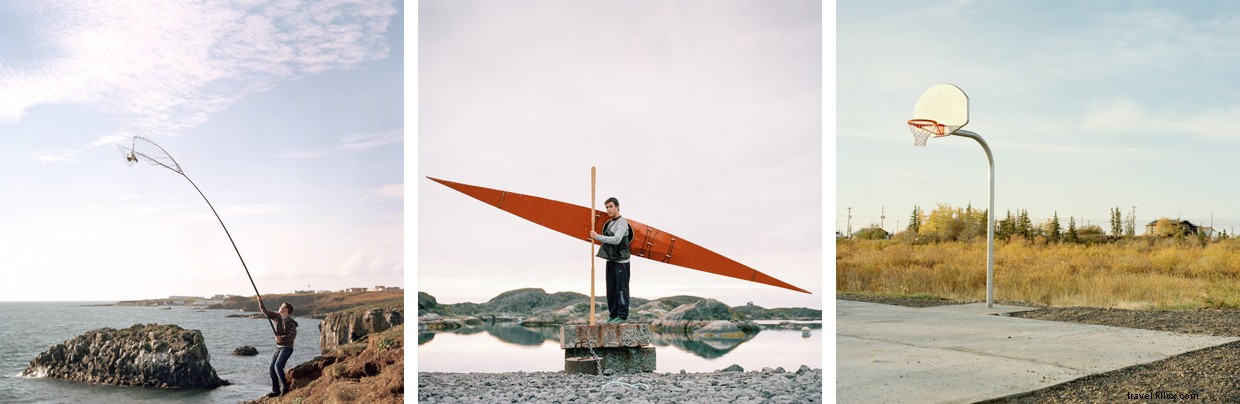
You’ve gone to great lengths to reach some remote places. Yet in many countries the Arctic Circle itself has become a draw hasn’t it, a destination that has encouraged development simply because the interest of outsiders?
That’s right, it’s peculiar, but I suppose I’m exactly one of those people to be drawn there. I think of Rovaniemi in Finland, a place pretty much defined by its location and the touristic pull is strong. You can explore ‘Santa’s Village’ and post letters home stamped on the line. In some countries you find monuments or plaques. In many other places nothing at all. More recently hotel managers have been erecting signs and trying to drum up interest. In Grímsey, a little island off Iceland, you can jump over a piece of pipe that has been built to represent the line, so yes sometimes it’s all a little meaningless, but it’s always intriguing and often fun.
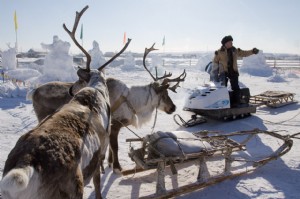
Travelling with the nomadic Nenets is something I’ll treasure. We slept together in reindeer-skin tents. Yet it’s not a lifestyle stuck in time. On my first night there most of the kids were watching films on small DVD players. It was not what I expected, but it was more interesting for me because it was real. Once I went fishing off the west coast in Greenland with an Inuit hunter. We went back to his apartment that night and he uploaded images he’d taken on his digital camera that day straight onto Facebook. His wife is the local hairdresser. In a way, they are more connected to the real world than I am.
Some people talk of the Arctic Circle as a gateway, and that is what it means to me. It’s an imaginary place yet one that is, of course, very real; a place where the modern world and the natural world now meet and a place that faces an uncertain future. This is the Arctic as an inhabited place, or at least, small gatherings of humanity in a seemingly endless landscape. What is it about the Arctic environment, do you think, that is so special?
I love the space of the Arctic. Sometimes you can be in a busy town but open tundra is within walking distance. The nearest town might be days away and some locations can be isolated for months during the year. I feel a freedom in these places. Perhaps it’s a little like being at sea in the middle of the ocean: the promise of far horizons. But my experience of the Arctic has been brief and manageable, so I never see it as a scary, hostile space.
In winter, or at least on the edges of winter, the light is ethereal with a peculiar texture, other-worldly perhaps. In some cases the featureless land¬scapes are just so massive that it’s no surprise that I find the human elements interesting. Driving along the north coast of Iceland, coming to the end of this project, I experienced two of my favourite days. But there is no record; I met no people. It was midwinter and the conditions were severe, but mostly I was snug in the car as the storm raged outside. Had I done a trip like this at the start, I’m sure I wouldn’t have felt so comfortable.
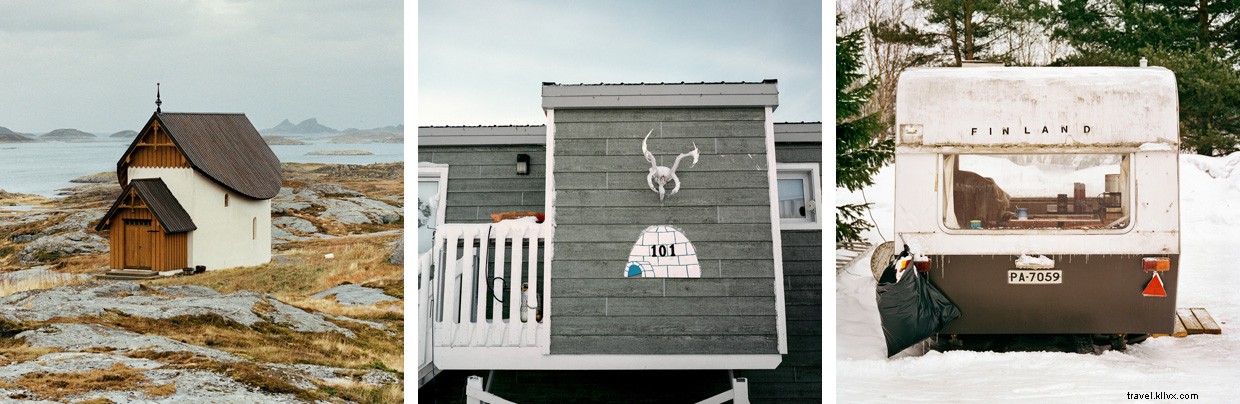
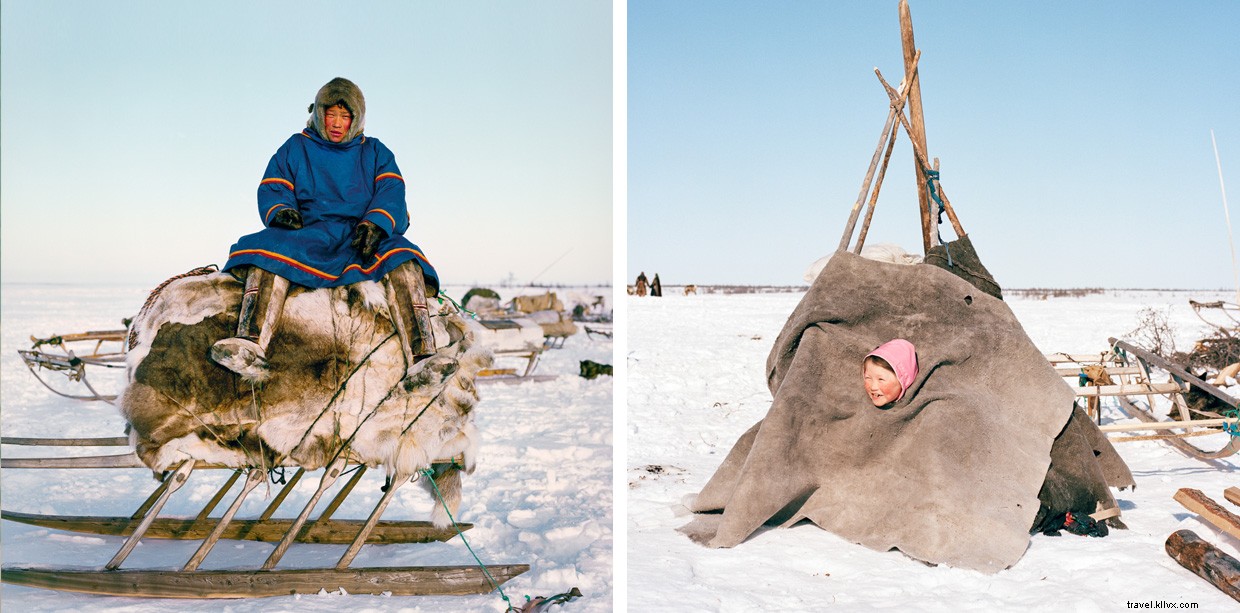
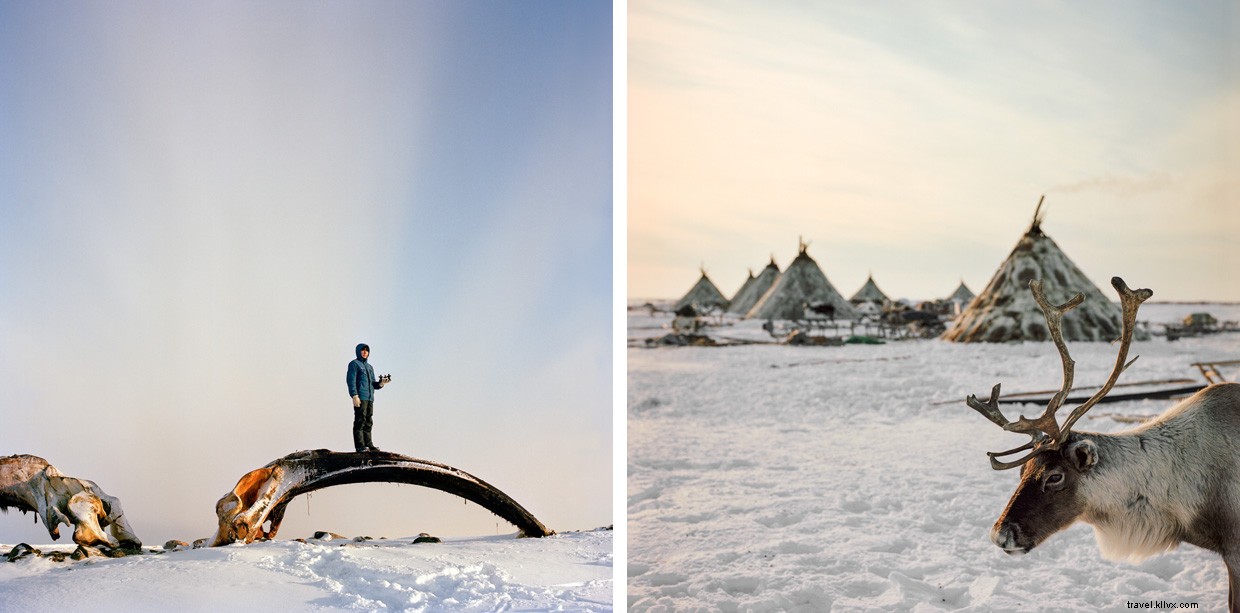
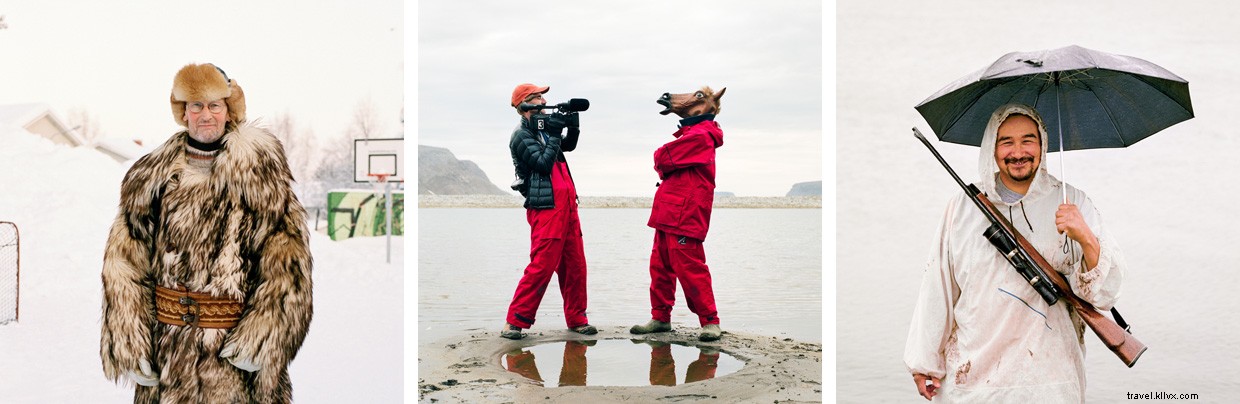 I sometimes feel that my photographs don’t come close to illustrating the experience of the journey. However, a portrait can often tell a story in a way that writing can’t. As humans we have an endless fascination with other people and the opportunity to look at another’s face will always be interesting. The really great photographs (and I should say, I don’t feel I’ve created one yet), capture such a special moment that it seems like something extraordinary is left hanging in the air.
Ultimately, what excites me most about photography is that it allows me to go to places and do some things I would never be able to do without a camera – simple as that.