Top 4 Stargazing Spots in Georgia's Golden Isles for Unforgettable Night Skies
Georgia's Golden Isles offer a pristine coastal escape where the night sky comes alive with stars, the Milky Way, and constellations. Far from city lights, these barrier islands provide dark skies ideal for stargazing. Many prime locations remain accessible after dark, making them perfect for cosmic adventures. Here are the four best spots to gaze at the heavens.
Driftwood Beach, Jekyll Island
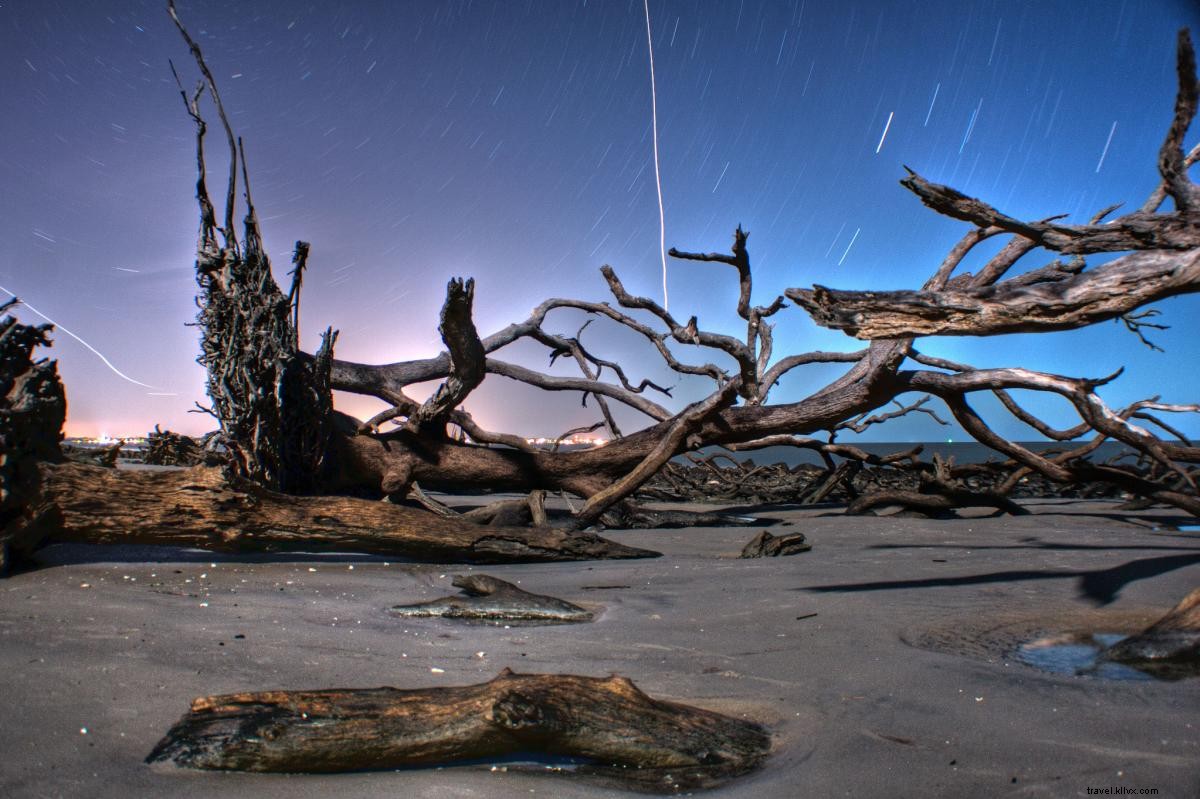
Driftwood Beach on Jekyll Island captivates with its untouched beauty, featuring ancient driftwood sculptures along the shore—ideal for stargazing. Sit amid the driftwood to admire the stars overhead, or capture stunning night photos with dramatic foregrounds and a sparkling cosmos. Endless opportunities await, but check tide charts and visit at low tide for the best experience.

Little St. Simons Island
Little St. Simons Island, a secluded paradise accessible only to guests of The Lodge on Little St. Simons Island, spans 11,000 acres of pristine wilderness. After sunset, the dunes reveal brilliant constellations, while seven miles of private beach offer serene stargazing under a vast, star-filled sky.
St. Andrews Beach Park, Jekyll Island
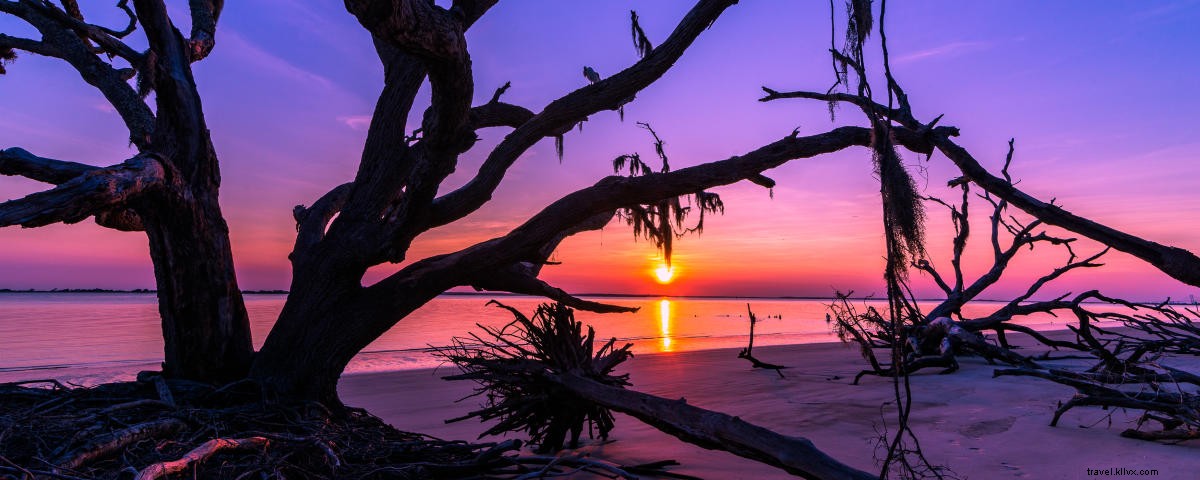
Unlike most east-facing Jekyll Island beaches perfect for sunrises, St. Andrews Beach Park faces west, offering spectacular sunsets followed by prime stargazing. Located at the island's southern tip, this spot features quiet shores and a wildlife viewing platform with unobstructed views. From spring through fall, the Milky Way arcs across the southern sky, illuminating the galaxy's starry band.
Neptune Park and Waterfront
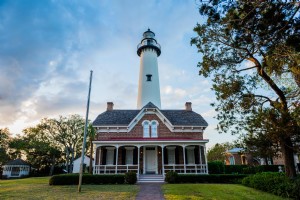
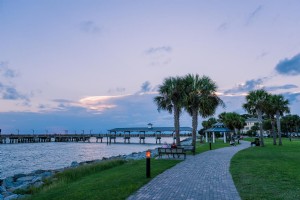
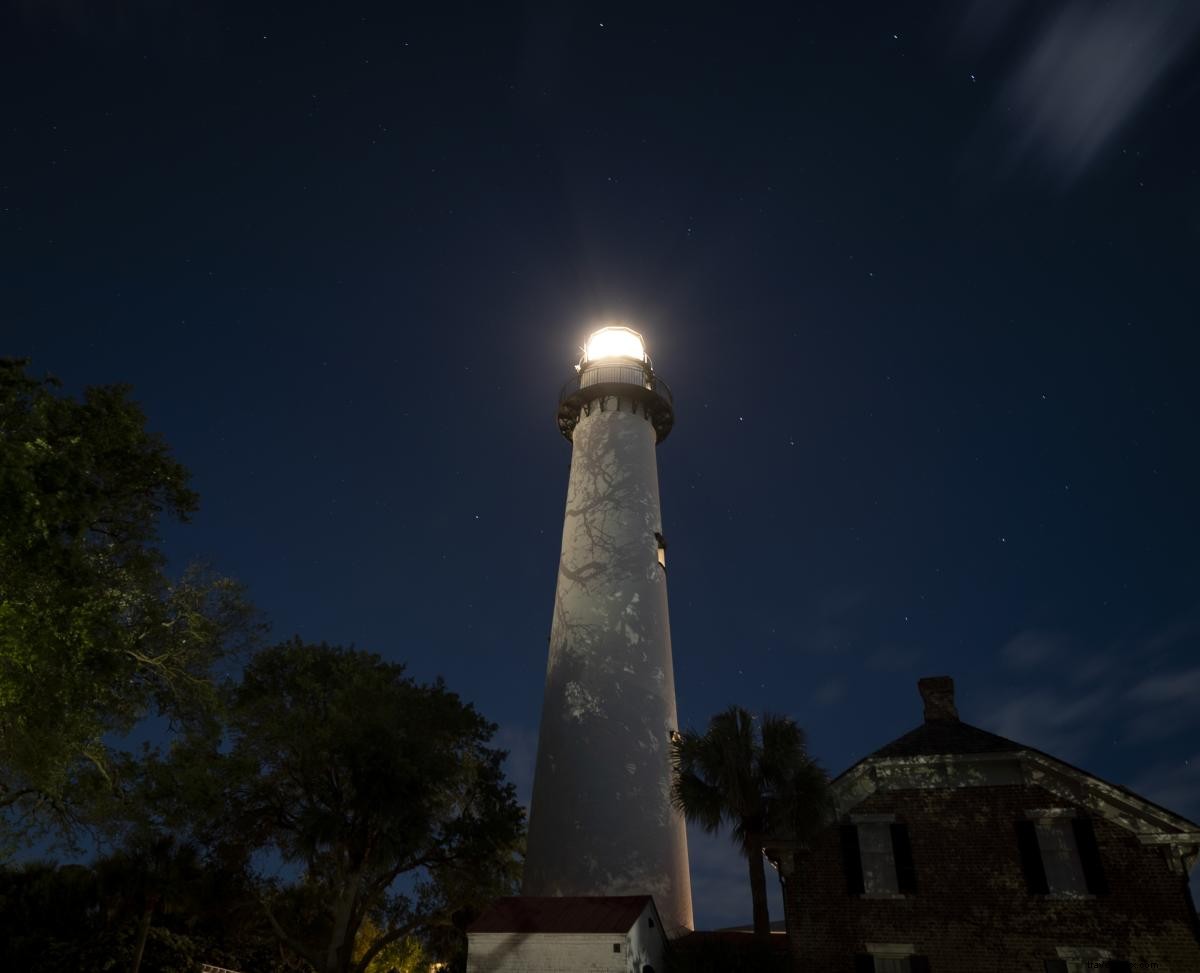
Neptune Park and the St. Simons Island waterfront deliver iconic daytime vistas that transform magically at night under a canopy of stars. Frame the historic St. Simons Lighthouse against the cosmos or soak in the lively pier atmosphere. Swing by Pier Village for a meal before or after your stargazing session.
Essential Tips for Stargazing in the Golden Isles
- Check the moon phase: New moons provide the darkest skies for vivid stars, though full moons offer picturesque, silvery nights.
- Monitor the weather: Opt for clear or partly cloudy nights to maximize visibility.
- Use turtle-safe lighting: From May to September, employ red LED "turtle-safe" flashlights to protect nesting sea turtles—ask your hotel concierge if needed.
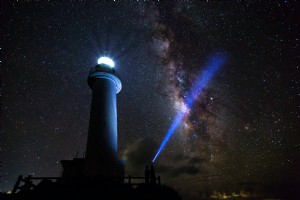
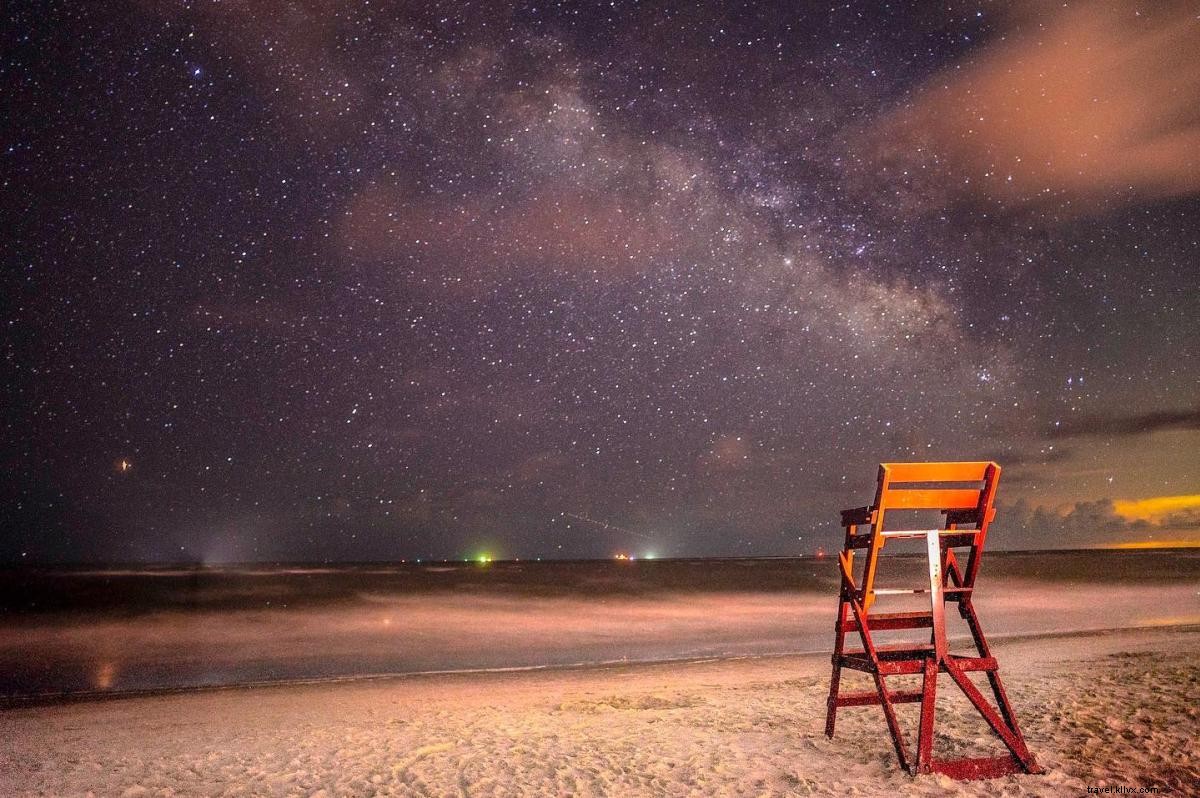
- Spot the Milky Way: In the northern hemisphere, it rises southeast and sets southwest, visible from mid-February (around 3 a.m. ET) to October (post-sunset). Use a Milky Way guide for planning.
- Scout locations by day: Visit sites in daylight to identify parking, viewpoints, and needs like bug spray or sturdy shoes for safety and to appreciate the day's transformation to night.