Marathon's Legacy: Journey Through History
 You will find the tumulus of the Athenians close to the sea. It is an earth mound of ten meters high and 50m in diameter amidst olive trees, cypresses and grass. The dead Athenian soldiers, almost 192, were burned before buried. Until the Roman period, the tumulus was a sacred place of pilgrim. People believed that they could hear the clash of the weapons, the cries of the soldiers and the whinnies of their horses running in the battle. Today the site offers the opportunity for a pleasant walk and still inspires awe!
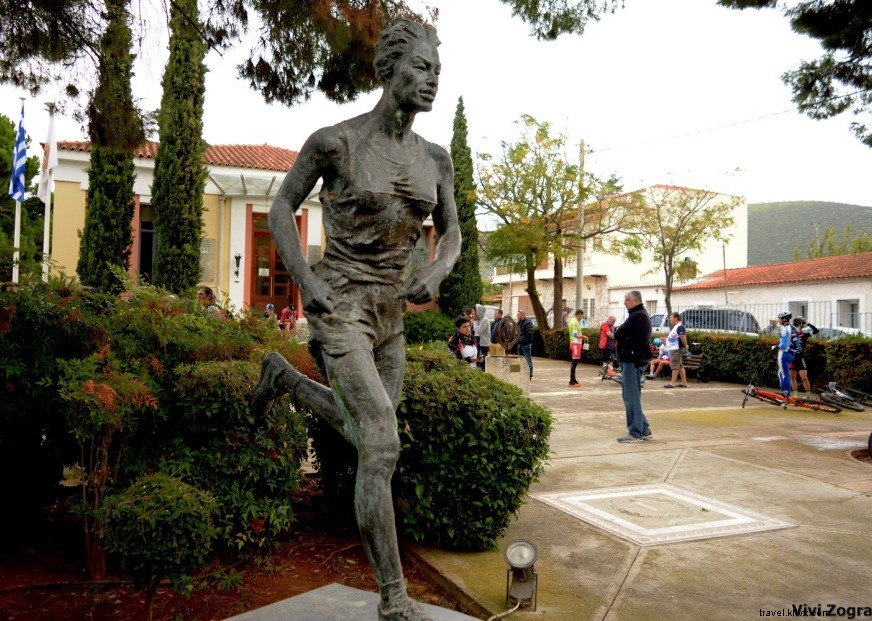
After the victory, a runner was sent to Athens to announce the triumph. He ran almost 42km and is said that after his announcement he died of exhaustion. In his memory, the Marathon Run was inaugurated in the Modern Olympics in 1896.
You will find the tumulus of the Athenians close to the sea. It is an earth mound of ten meters high and 50m in diameter amidst olive trees, cypresses and grass. The dead Athenian soldiers, almost 192, were burned before buried. Until the Roman period, the tumulus was a sacred place of pilgrim. People believed that they could hear the clash of the weapons, the cries of the soldiers and the whinnies of their horses running in the battle. Today the site offers the opportunity for a pleasant walk and still inspires awe!
After the victory, a runner was sent to Athens to announce the triumph. He ran almost 42km and is said that after his announcement he died of exhaustion. In his memory, the Marathon Run was inaugurated in the Modern Olympics in 1896.
 The museum of the Marathon Run is housed in the old primary school of the village. It contains collections of personal items of Greek runners who have participated in Olympic Marathons since 1896: their sports outfits, their running shoes, medals, newspaper articles about their achievements. On big boards you will read important information about the Olympic Marathons that took place universally, such as in Mexico, Los Angeles, Berlin, Rome etc. They report about who was the winner, how he won, what was the course of the Run, what the weather was like. There are also some special information: the Ethiopian winner of the 1960 Marathon in Rome run barefoot, the first time when women participated in a Marathon was in 1984 in Los Angeles, the Greek winner of the Marathon in 1896 offered a branch of olive tree to Hitler in Berlin in 1936.
Contemporary athletes were inspired by the ancient battle of Marathon: Maria Polyzou ran for almost a month from Athens to Sparta and back, in memory of Pheidippides. A group of volunteers organize runs from Athens to the statue of Leonidas in Sparta every September.
Vivi Zografou | Dark Attica
The museum of the Marathon Run is housed in the old primary school of the village. It contains collections of personal items of Greek runners who have participated in Olympic Marathons since 1896: their sports outfits, their running shoes, medals, newspaper articles about their achievements. On big boards you will read important information about the Olympic Marathons that took place universally, such as in Mexico, Los Angeles, Berlin, Rome etc. They report about who was the winner, how he won, what was the course of the Run, what the weather was like. There are also some special information: the Ethiopian winner of the 1960 Marathon in Rome run barefoot, the first time when women participated in a Marathon was in 1984 in Los Angeles, the Greek winner of the Marathon in 1896 offered a branch of olive tree to Hitler in Berlin in 1936.
Contemporary athletes were inspired by the ancient battle of Marathon: Maria Polyzou ran for almost a month from Athens to Sparta and back, in memory of Pheidippides. A group of volunteers organize runs from Athens to the statue of Leonidas in Sparta every September.
Vivi Zografou | Dark Attica
Why Athens Should Be on Your Travel List: 5 Compelling Reasons
The Ultimate Guide to Greek Coffee: History, Tradition, and Brewing Secrets