Stargazing Over Death Valley: From Sunset Splendor to Pristine Night Skies
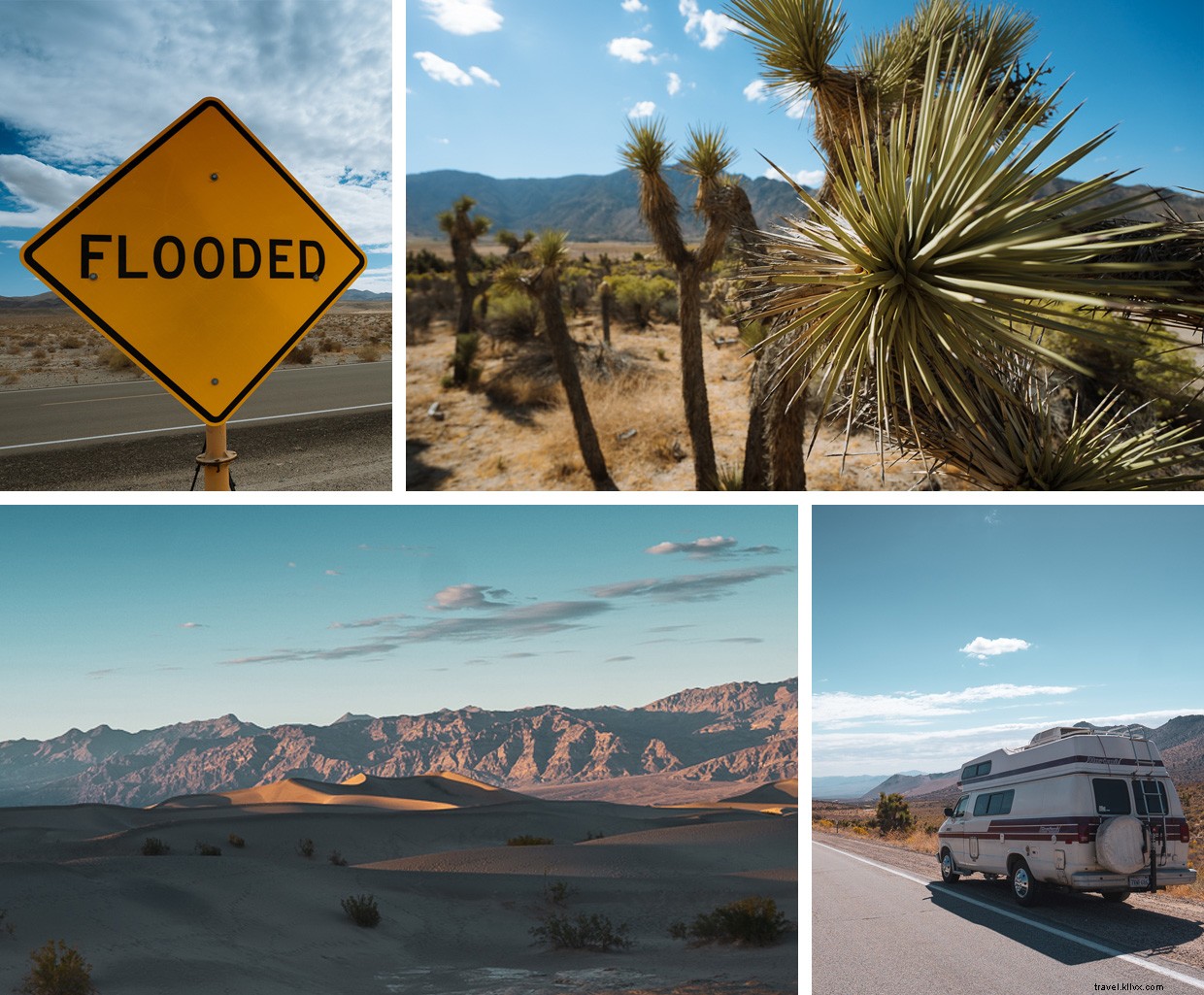
The sun setting over Death Valley is an event. It’s the time of day visitors plan for, and food at the few restaurants is served around those times; no-one misses sunset over Death Valley. It is one of nature’s great spectacles and then, a couple of hours later, nature reveals even more beauty: some of the clearest night skies anywhere on Earth. That’s why in our ‘characterful’ 35-year-old camper van we were eagerly watching the altitude markers along the road climb and climb to get to Death Valley for sunset. 1,000ft, 2,000ft, 4,000ft, 5,000ft. The engine seemed as relieved as we were upon reaching the first great pass at the Darwin Plateau, but the brakes were less impressed as we watched the altitude makers go down again, even steeper. At the bottom of Panamint Valley, we stopped and stared up at the spectrum of colours that painted the mountains. Ochre, yellow, deep red, brown, all in harmonious contrast against the celestial blue sky.
Up again, we chugged to Towne Pass at almost 5,000ft, and then Death Valley revealed itself. The Mesquite Flats, with their ever-shifting dunes, were framed against the backdrop of the craggy Amargosa Mountains. We still had a couple of hours until sunset, but already the harsh, washed-out midday sun began to pick out some definition on the dunes and mountains. Shadows lengthened across the landscape. It was far richer in texture than it had first seemed. As we started the long descent down to the park at Stovepipe Wells, the temperature noticeably increased too. A heat haze shimmered above the flats.