Root and Branch: The Dynamic World of Wild Foraging Restaurants
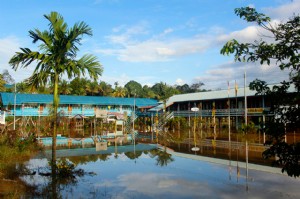
These swift changes in the landscape around us also applies to wild edibles when there are tangible changes week to week and even one day can sometimes significantly alter the wild food larder.
Foraging restaurants have become more popular over the last number of years, with some establishments changing their menu day to day to work with the raw ingredients that have been found that morning.Eating wild food in a good restaurant is an amazing experience and one that inspires me to try out new dishes, but I firmly believe that eating similar food in the setting where it lives or grows wild can have a much more profound effect on us.
For example, do you recall your last surf – the iodine and salt smell of the sea, sound of waves as you get close to the break, the feel of wriggling into slightly damp neoprene, taste and feel of salt on your lips and skin post session? I bet you also remember the fish chowder, warm bread and cold beer you had sitting outside a cafe with your wetsuit slowly drying? Or maybe you imagine a bluebird powder day off-piste last winter – the weightless feeling under your board, wind and sun chapped lips, the smell of hot wax in the morning, sound of bindings ratcheting tight, the sensation of speed, the glitter of snow crystals, then after, the taste of tartiflette, salad savoyarde and vin chaud.
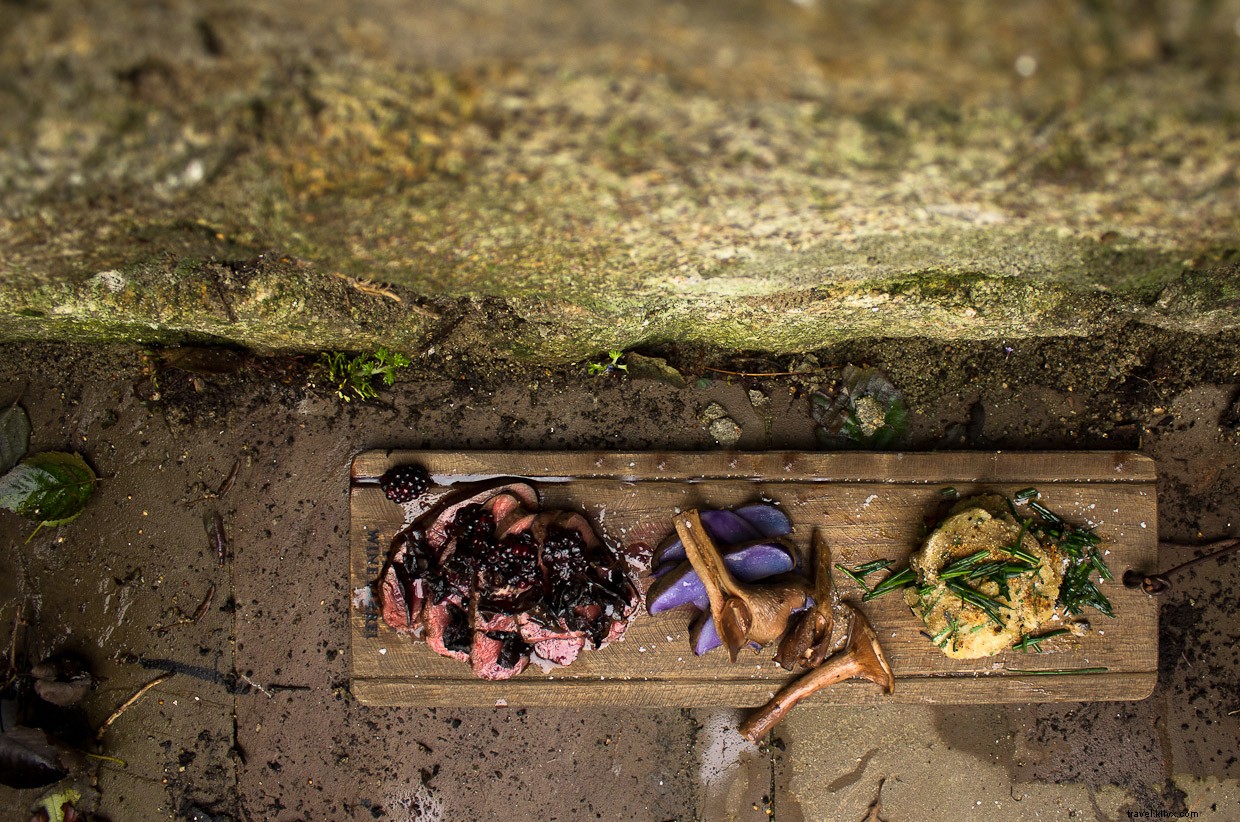
For me moments like these, and many more, link the land and the food from that land together, and I appreciate both all the more because of that connection. A good friend described the taste of particular dish from a restaurant in Copenhagen as ‘like eating Bambi in the forest’. With apologies to any vegetarians reading this, when I heard those words I could immediately imagine the smells and tastes of an autumnal forest and it was that phrase that inspired me to try and create something similar.
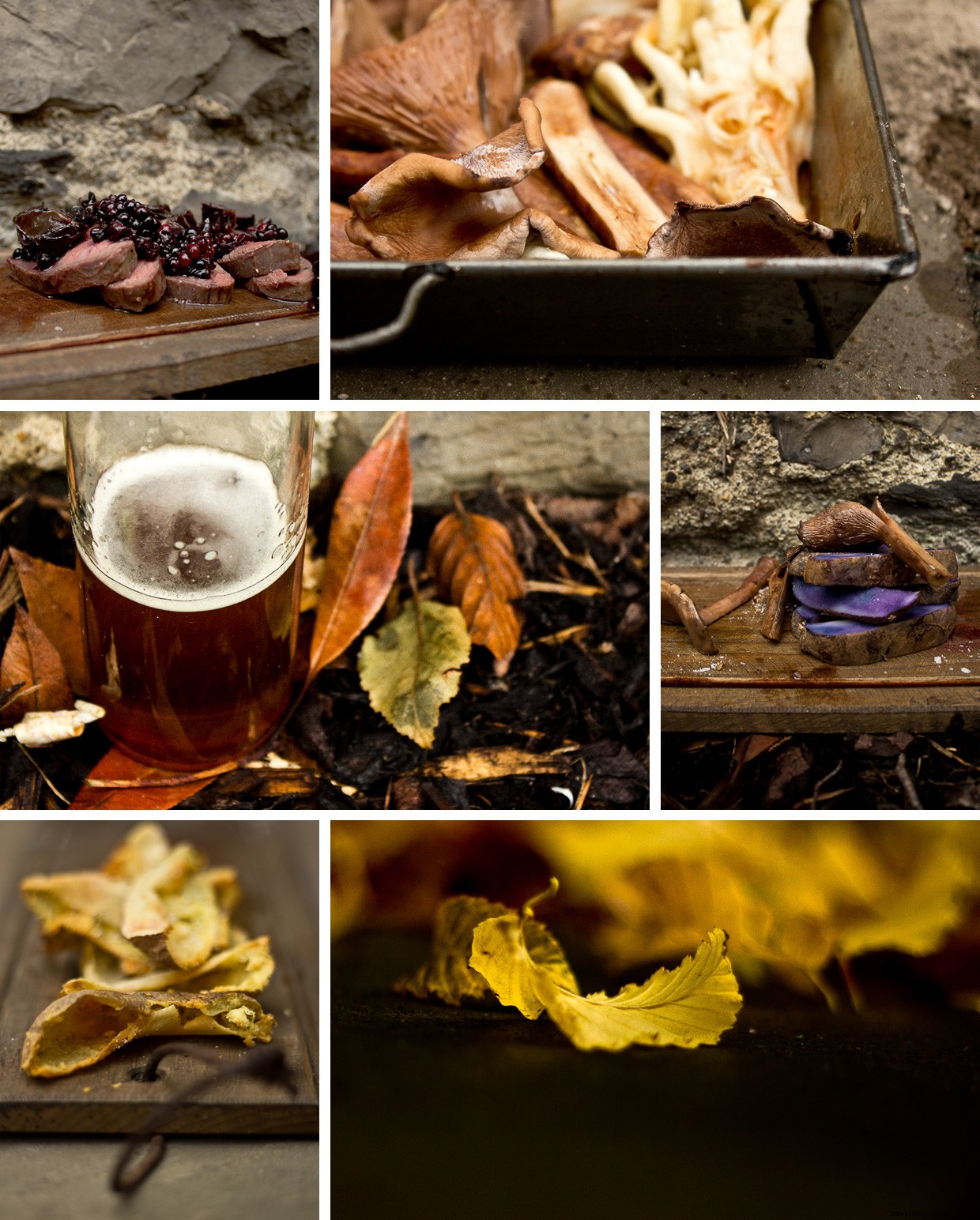
Ingredients (serves 4-6)