Explore Historic Minnesota River Valley Scenic Byway: A Journey Through Time
You don’t need a time machine to go back to the good old days. Just hop in the car and head down the Minnesota River Valley Scenic Byway, where historic homes, churches and commercial buildings remain an integral part of modern life.
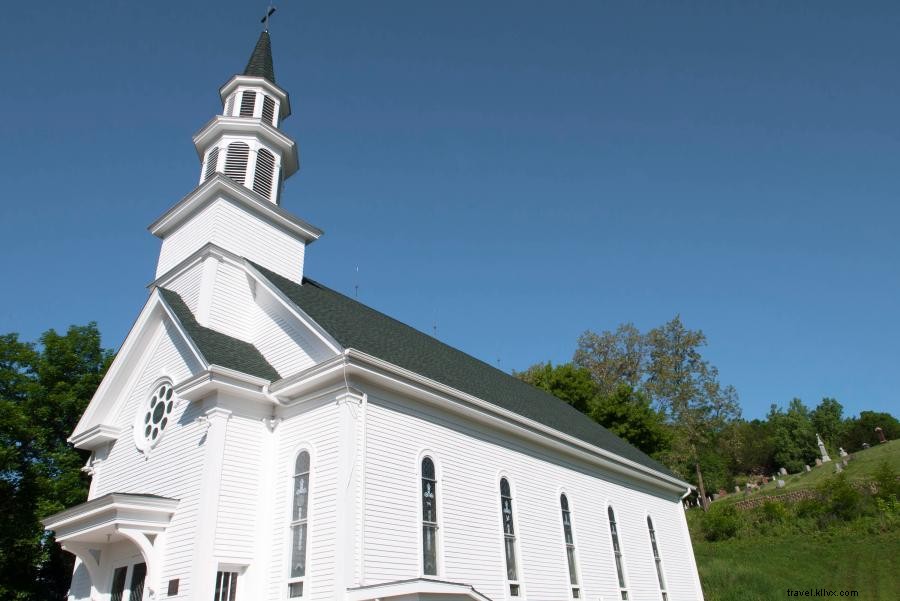
Churches, Main Streets & the Jolly Green Giant
The eastern end of the byway begins in Belle Plaine and travels south to Mankato. In the small township of Jessenland, the St. Thomas Church, built in 1870, is one of the oldest parishes in the state and was the center of this early Irish settlement. Signage explains the history of the church, which still holds regular services, and the cemetery up the hill provides a peaceful backdrop.
The next stop is the charming city of Henderson, whose main street is a nationally registered historic district. More than a dozen buildings made of local brick line both sides of street, with plaques indicating the year they were built and what was originally there—Johnson’s Barbershop, Jacob’s Saloon and Grassinger Butcher Shop, to name a few. Stop into Toody’s Sweet Treats, a recently reborn soda fountain and pharmacy, for homemade fudge, pies and real ice cream.
The next town on the byway, Le Sueur, is best known for the two major enterprises that started there: Green Giant and the Mayo Clinic. The two families behind these institutions actually inhabited the same house, which is open for tours Friday-Sunday through October.
The house has been restored to the way it was when Dr. William W. Mayo and his family lived there in the mid-1800s, with some of their original furnishings still on display.
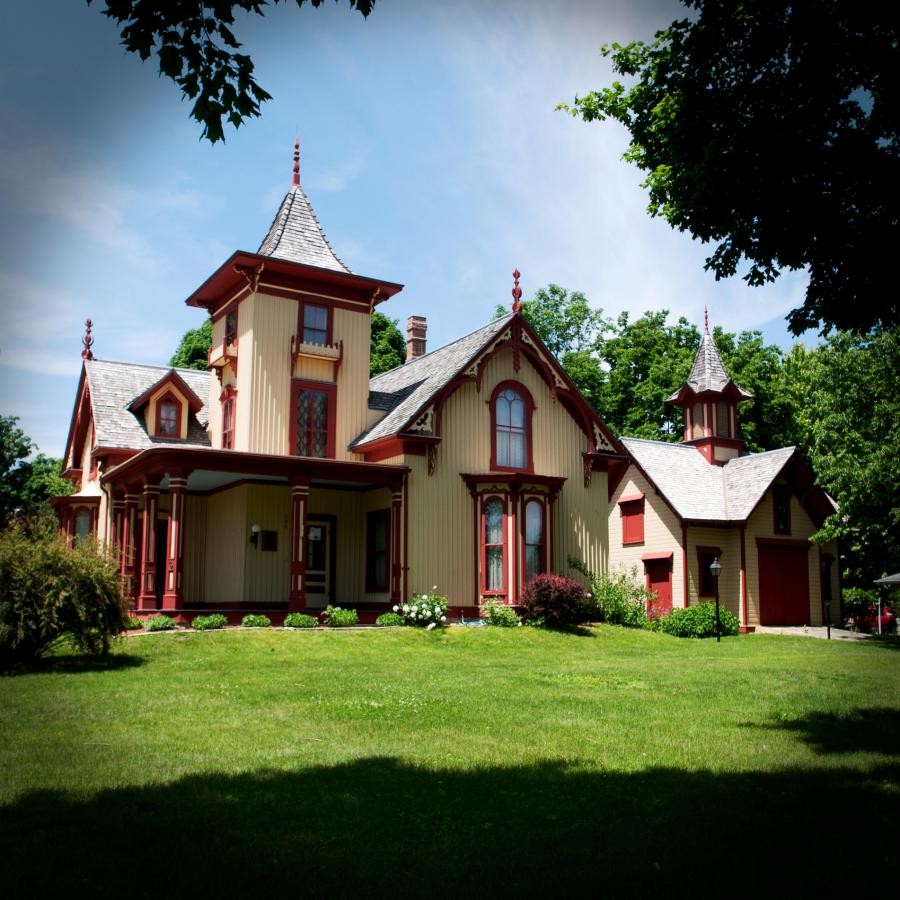
Historic Homes, Lunch & Shopping
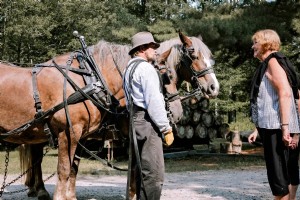
A few miles down the road, the village of Ottawa has six buildings on the National Register of Historic Places, all built out of locally quarried limestone. Perhaps the most notable is the Methodist Church, established during a time when area pastors traveled between congregations on horseback.
St. Peter boasts more than a dozen sites on the National Register, and makes a great stop for lunch and boutique shopping. Visit Julee’s Jewelry in the old Nicollet Hotel building, grab a drink at River Rock Coffee or savor the brisket at 3rd Street Tavern.
As the biggest city on the byway, Mankato has a large concentration of historic landmarks, including the Blue Earth County Courthouse, Union Depot, Carnegie Art Center, and picturesque Victorian homes in the Lincoln Park neighborhood.
Built in 1871, the Hubbard House was home to the flour-milling mogul of the same name and is open for tours on weekends through September. The mansion features many of the family’s furnishings from the early 1900s, including three marble fireplaces, a Tiffany lamp and art glass windows. Tours start and end in the carriage house, where stagecoaches and vintage automobiles are on display.
Continuing Northwest from Mankato
From Mankato, the byway veers northwest through New Ulm, Redwood Falls and Montevideo, all the way to the South Dakota border. Historic highlights on this leg include the Harkin Store west of New Ulm, the Depot Museums in Sleepy Eye and Belview, and the birthplace of retail pioneer Richard Sears near Redwood Falls.