Lamu, Kenya: A Timeless Travel Throwback to the Archipelago Shaped by Trade Winds
Dive into our travel archives to explore how the world has evolved while preserving timeless elements. In this insightful 2011 essay, experienced travel writer Amanda Canning vividly portrays the Lamu archipelago off Kenya's coast, where medieval stone streets weave tales of grand fortunes and humble histories.
Editor's note: Since this article's original publication, Kenya has faced terrorist incidents. The U.S. State Department advises against travel to Lamu County, while the UK's Foreign, Commonwealth & Development Office excludes Lamu Island from its advisory (but warns against broader Lamu County). Always consult current government travel advice before planning a trip.
As dusk settles over Lamu, elderly men gather under the ancient almond tree in Mkunguni Square, chatting with legs stretched and sandals discarded. Nearby, young women in niqabs consult a local magic man, who hands them twisted tree roots from a weathered tin. They vanish into the narrow alleys branching from the square, swallowed by the encroaching night.
At the harbor, the day's bustle persists into evening. Teens in replica football jerseys leap between colorful boats at the quay, handing crates of Coca-Cola, coral bricks, and mail to younger boys who load them onto donkeys and navigate the town's maze-like streets.
The Enduring History of Lamu
Though cargo has evolved over seven centuries since Lamu's first literary mention, the rhythm of activity endures. This Kenyan archipelago's prosperity has always hinged on ocean tides. Mariners arrived on monsoon winds from Arabia in the 10th century.
By the 13th century, Lamu was a key hub on Indian Ocean trade routes, dependent on seasonal winds. Ships from India, China, Persia, and Arabia brought silk, carpets, porcelain, and spices westward; return voyages carried African treasures like ivory, leopard skins, rhino horn, tortoiseshell, coffee, and enslaved people. Lamu Town flourished as a major East African port, attracting wealthy merchants who built opulent homes from coral stone, mangrove poles, and lime plaster—materials still in use.
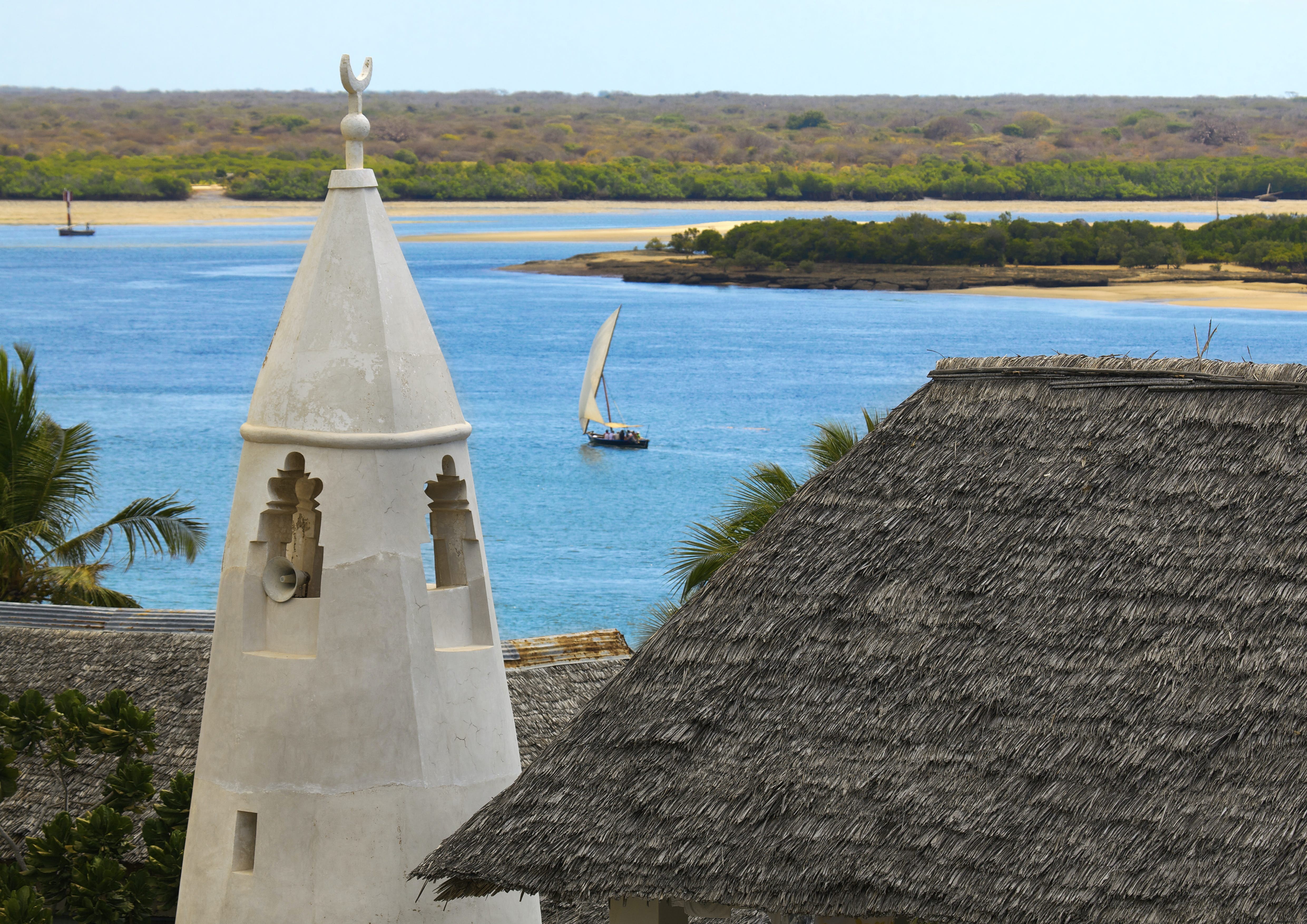
Slavery's abolition ended Lamu's economic peak, yet its identity remains fused with those ancient trade winds. Swahili culture (from Arabic Sawahil, meaning 'coast') merges African and Arab influences, blending black magic with Islam, defining every facet of island life. Imams still summon the Muslim community to prayer at the 40 mosques, a tradition dating back a millennium to Arab traders.
Lamu Town could seamlessly transplant to Oman, 2,200 miles away. Its stone houses, or nyumbe, adhere to Arabic architecture with Swahili adaptations. Porchways host daily vignettes: courting couples, giggling schoolgirls, neighbors sharing mango juice.
Behind ornate carved mahogany doors, courtyards open skyward for cooking and gatherings, leading to high-ceilinged rooms. The innermost, shielded from street views, houses unmarried women. In elite homes, walls feature niches once for spices and porcelain, now holding radios or Mecca photos in modest frames.
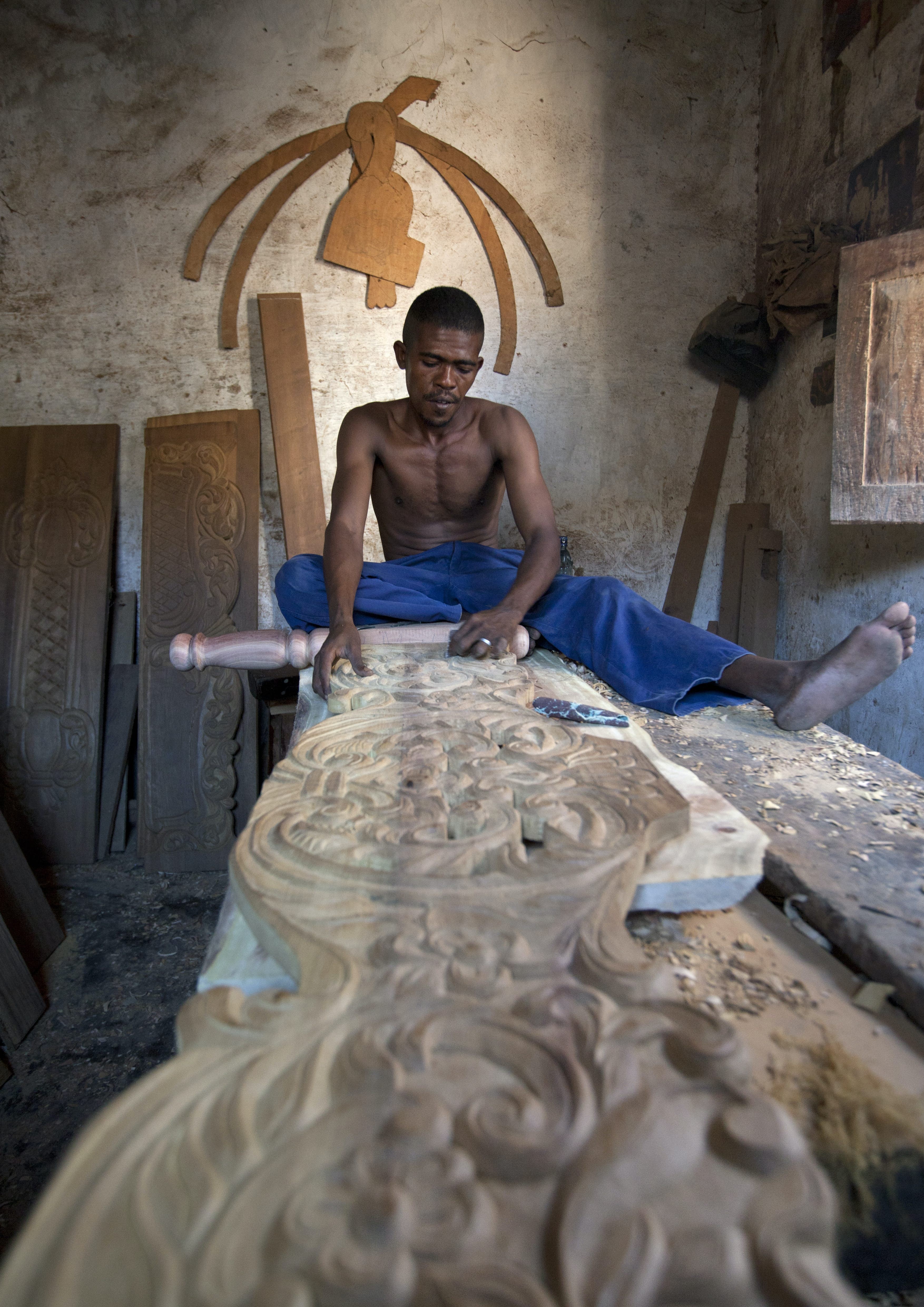
Lamu's Master Woodcarver
In many restored nyumbe, furniture bears the craftsmanship of Ali Abdalla Skanda, one of Kenya's most revered woodcarvers. His sea-facing workshop in northern Lamu Town brims with door frames, bedposts, unfinished chairs, cobwebs, and shavings. Rare woods—mahogany, ebony, teak, iroko, mangrove—stack in the back.
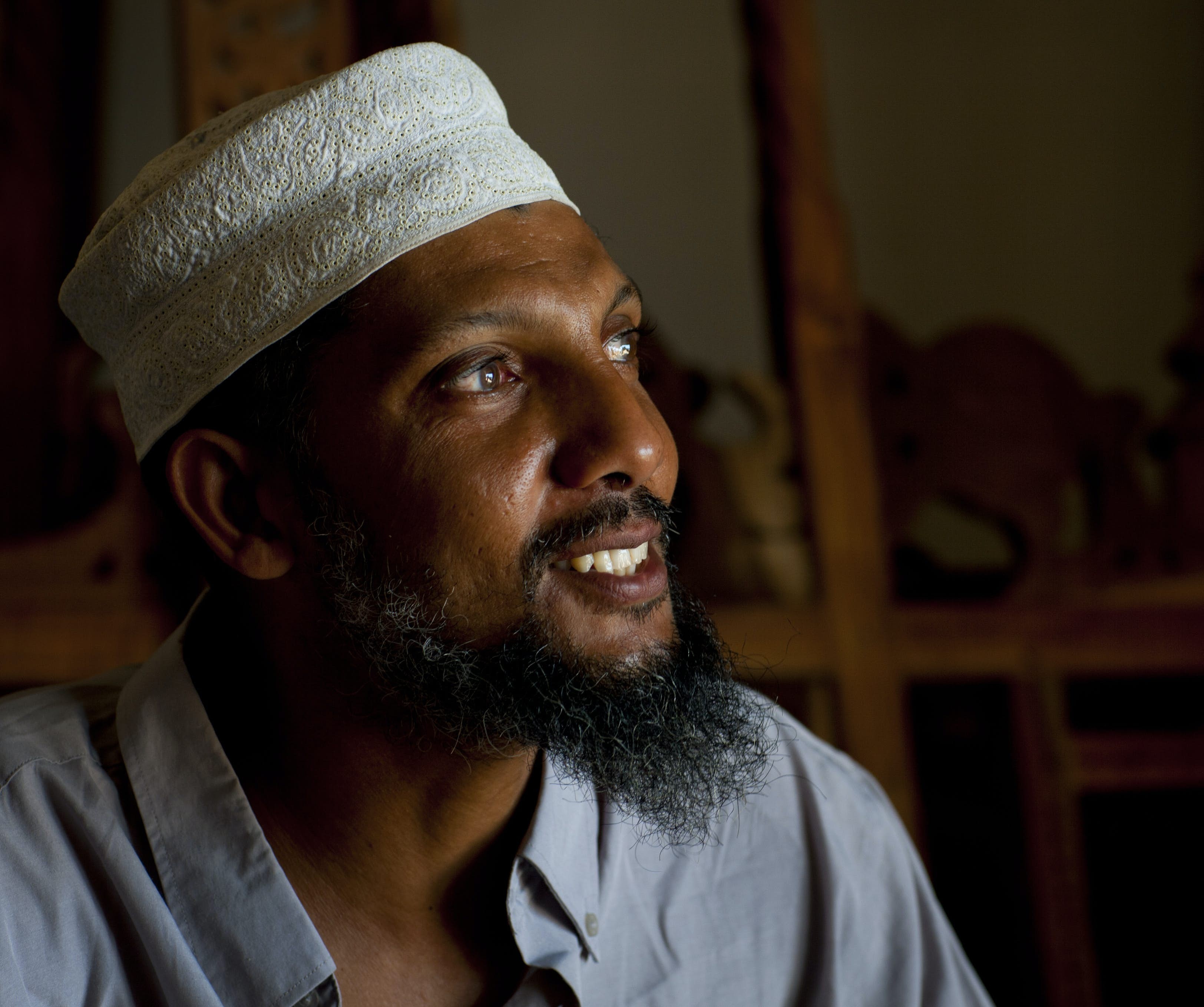
Frail in his pale kanzu robe and embroidered kofia hat, Ali perches on a low stool by the door, brushing away flies. Daughter Sukhila offers milk to passersby; son Mohammed, with luminous golden-brown eyes, seals a deal with an American buyer. "We ship to New York and London," he says proudly. "My father is a genius."
Ali honed his skills young, traveling to Zanzibar and Somalia as a ship crew to absorb diverse carving traditions.
"Father blended Indian, Indonesian, and Karachi styles into his own," Mohammed translates from Swahili. "I recreate antique furniture with hidden compartments."
Mohammed is among over 100 students Ali has mentored. Ali's greatest joy lies in this legacy, beyond carving Kenya's Parliament House door or Lamu's finest entrances.
"He's carved for 60 years," Mohammed notes. "His was Lamu's first workshop; now 50 surround it. He empowers lives with this skill."
Ali's passion ignited building his first boat under master Muhamadi Kijuma, honored at Lamu Museum. Local dhows evolve from Omani designs, incorporating Mozambican and 16th-century Portuguese elements while retaining triangular sails.
Matondoni village, five miles along the coast, is the dhow-building heart: mud-and-wattle homes amid palms, echoing with hammers. The beach holds decaying hulls.
Young Mickey seals cracks in one with coconut oil-soaked cotton. Nearby, blacksmith Mahmood forges nails, his only trade amid aspiring sailors.
"We are sea people," Mickey affirms. "Dhows are our heritage."
Though trade winds no longer drive fortunes, dhows sustain Lamu as primary transport—beyond 2,500 donkeys—for fishing, haulage, and inter-island travel. For two decades, tourism has revived them. Mickey points to a sturdy dhow offshore.
"They once sailed to Arabia and India. Now, tourists charter them."
This is Swalihina, rescued by Basecamp Explorer from ruin. Their dhow school trains locals in traditional repairs. After five years, the 17-meter (56ft) beauty glides with polished mangrove and sails. Charter guests snorkel amid turtles and coral by day, stargaze on deck by night.
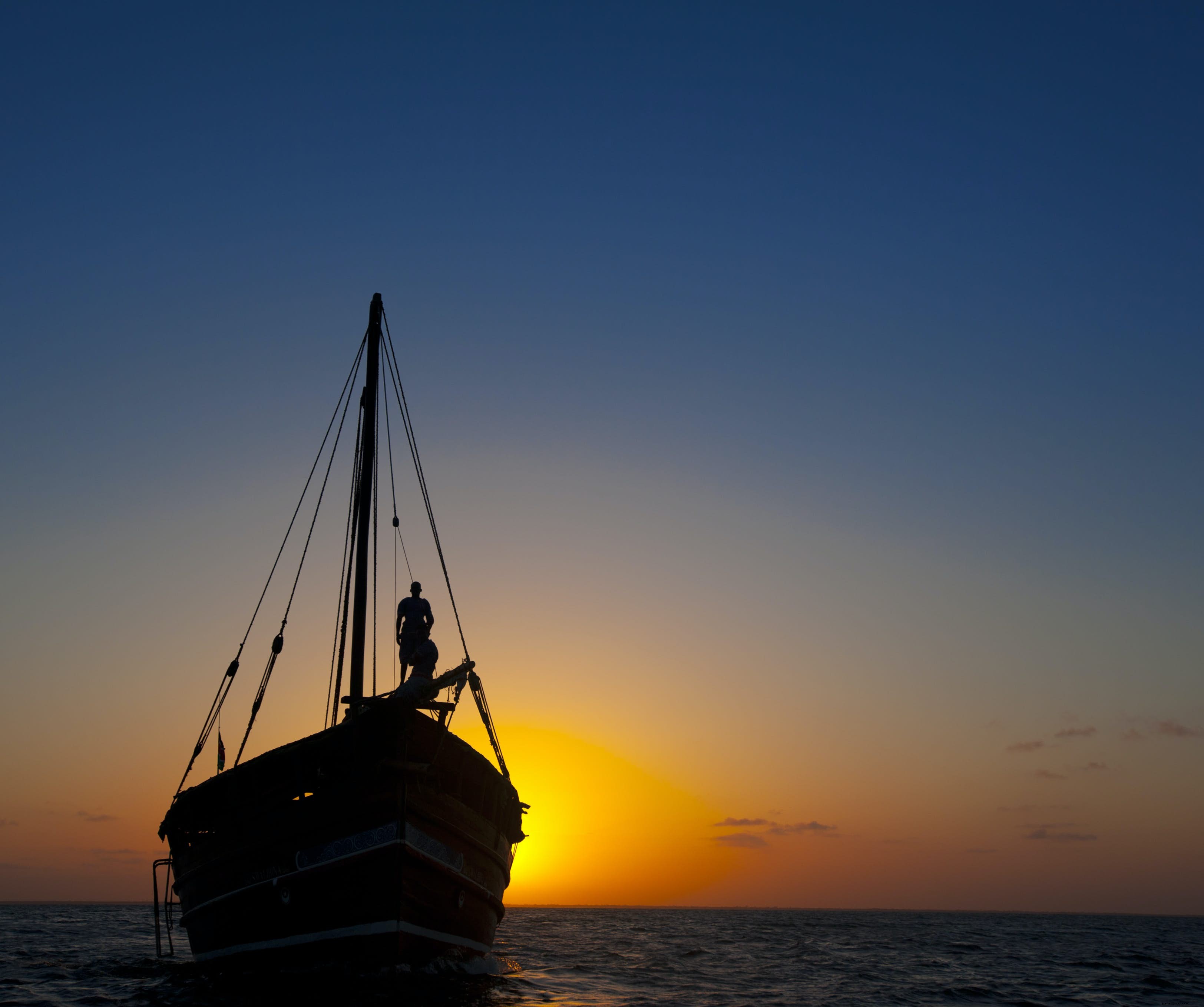
A Sailing Heritage Preserved
Basecamp's mission transcends luxury: preserving culture. As sunset paints the sea, Annette Bulman shares, "We asked how to empower the community long-term. Now youth master a sustainable trade."
Swalihina requires a 10-person crew. Captain Sahib's nephew Erry, a poised 16-year-old fluent in English, grew up on boats. He rows to underdeveloped Paté Island, recalling intensive sailing training. A child trails with a toy boat.
"I'm young but experienced," Erry says. "I teach classmates—everyone dreams of captaining a dhow."
Skills shine in biannual races, peaking during Maulidi, the Prophet Mohammed's birth festival—a coastal Hajj alternative. It culminates in a procession from Ali Habib Swaleh's tomb at Riyadha Mosque.
Prelude nights feature Matondoni elders' hypnotic stick dances outside the mosque, earning shillings for luck. Children mimic in Mkunguni Square and homes.
On a rooftop near Skanda's workshop, Lamu Museum's Husna hosts a vibrant Maulidi: kids in shillings crowns dance to drums, rewarded with samosas and soda.
Maulidi blends solemn faith and joyful Swahili flair. Fahra Swabir, festive in jeans yesterday, now in black bui-bui, jokes, "Today I'm a ninja—too many men!"
Crowds swell: football-clad boys, Mombasa Muslims in silk abayas, Maasai in red shawls, women in bantu wraps, tourists, Nairobi journalists.
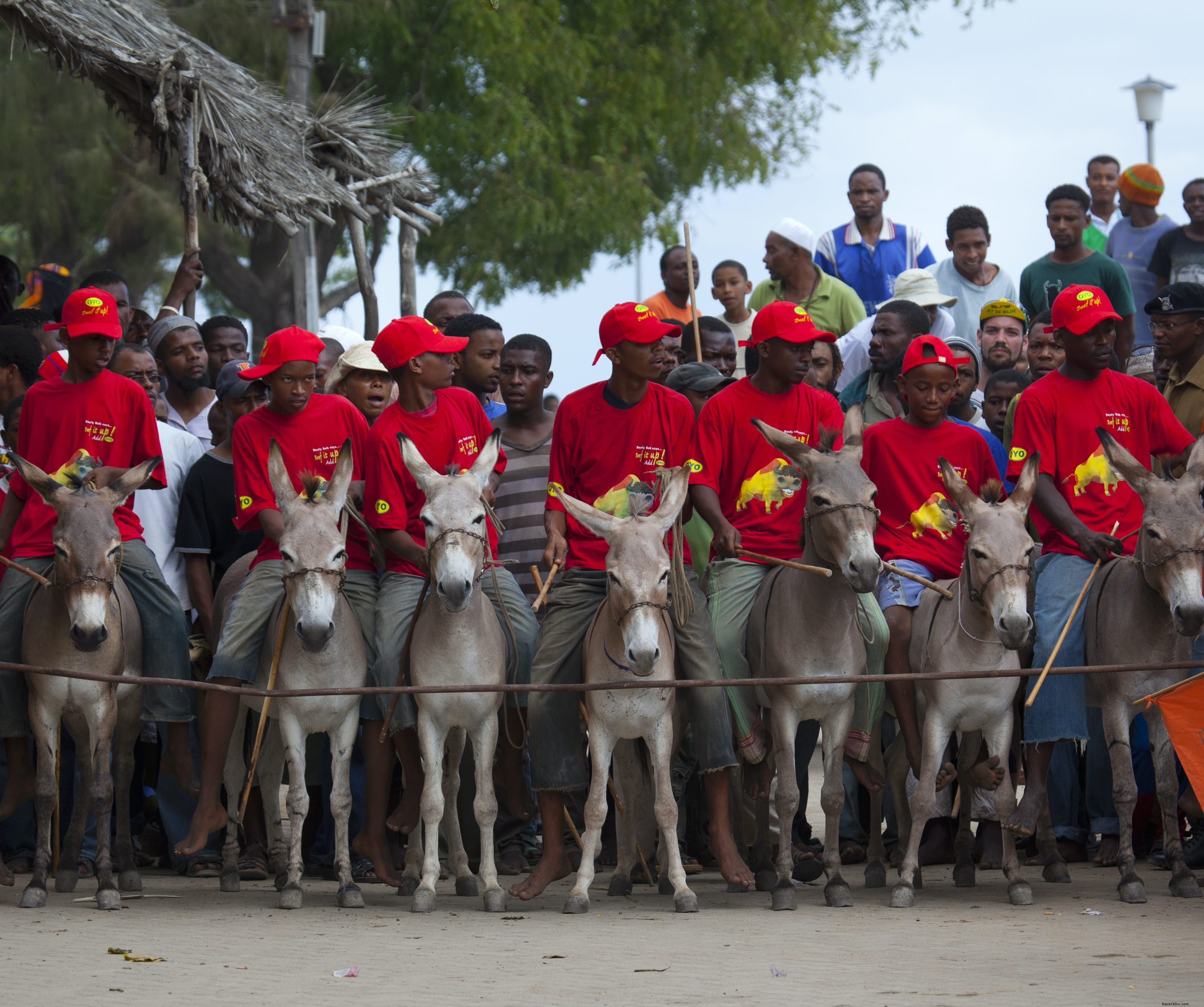
Maulidi's Thrilling Races
All gather for Lamu's quirky Maulidi highlight: the donkey race. Named beasts like Barack Obama and Wayne Rooney jitter at the start. Hooves clatter as young jockeys spur them along the corniche—chaotic, like Pamplona. Donkeys bolt into crowds, unseating riders. Fahra slips away for dhow races.
Races draw massive crowds. Overloaded dhows ready sails, rudders, and beans. Erry eagerly boards.
"Our ancestors raced; we carry the tradition," he says. "Sailing demands crab-like strength—or the sea claims you." His boat launches calmly.
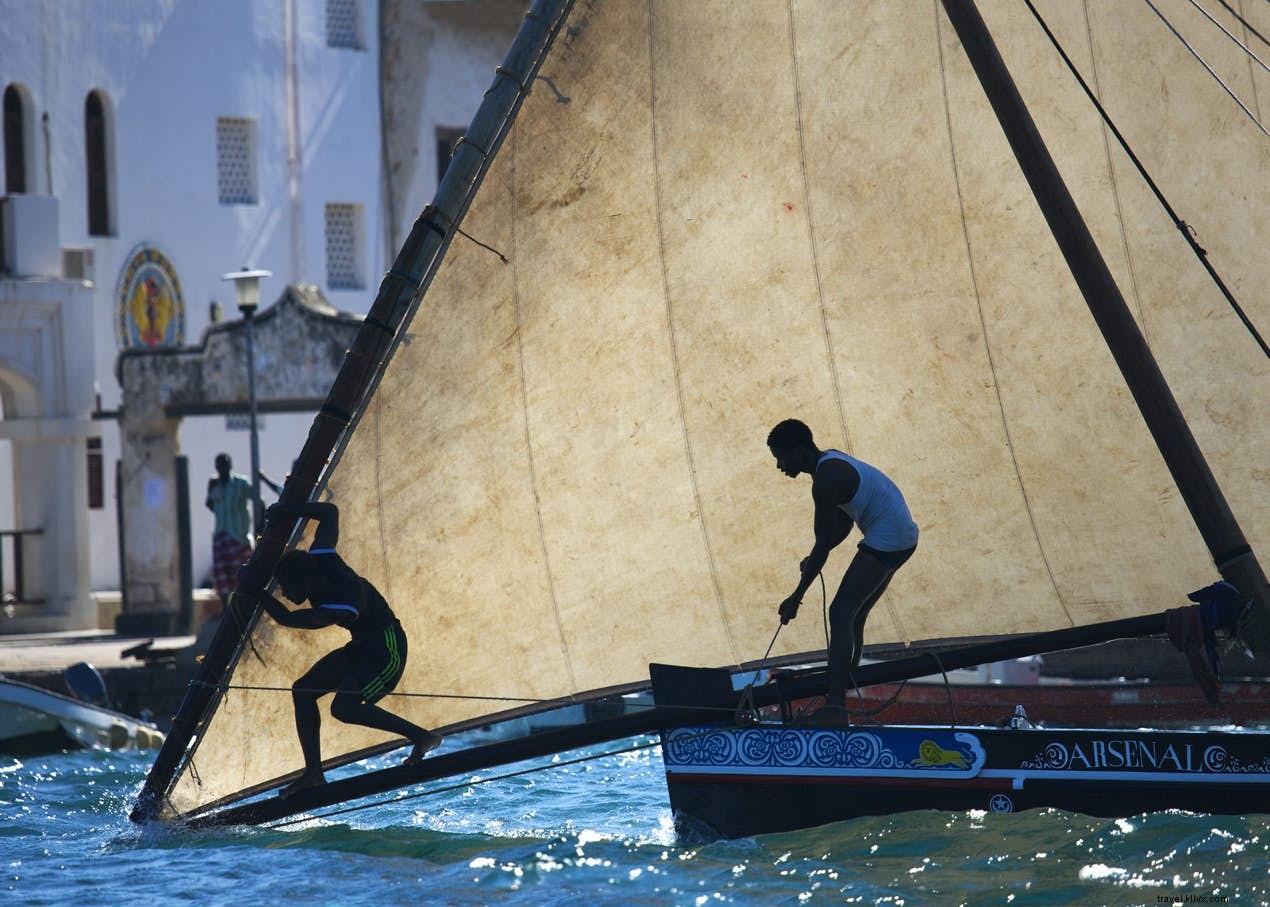
A horn signals; 12 dhows glide past town toward Paté. On return, frenzy erupts: crews balance precariously, yanking sails. One boy blesses waves with a branch. Boats tilt dramatically. Erry's exits early; Arsenal dominates.
Victors revel: mast swings, water jumps, songs echo as hulls flood.
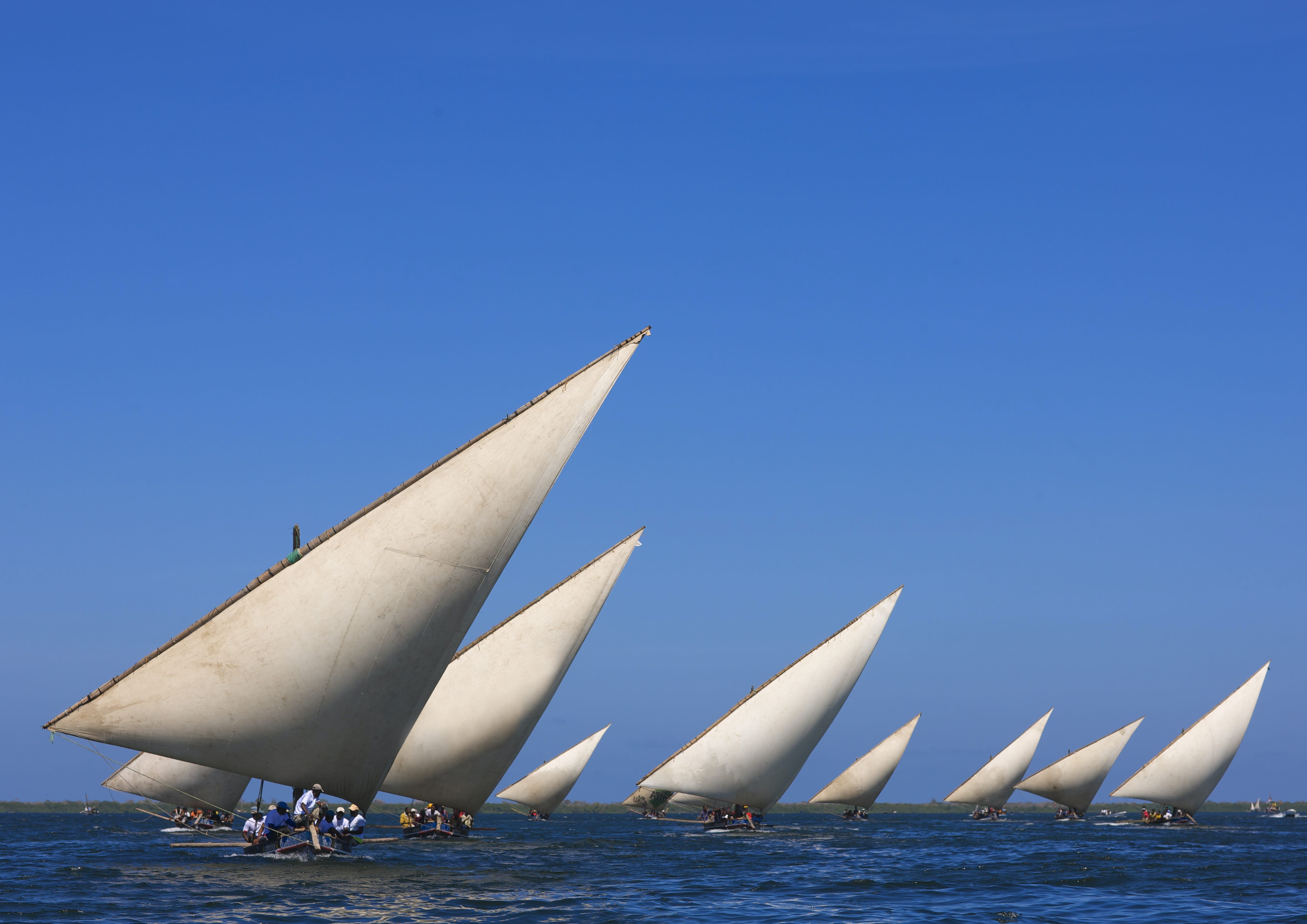
Nightfall brings Arsenal's crew singing home. Tomorrow, the trophy heads to Manda. In 600 years, it may join 15th-century Chinese porcelain on these shores—echoes of fortune-seekers who found paradise in Lamu.