
Native American Heritage Month: Exclusive Interview with Agua Caliente Band Chairman Jeff L. Grubbe
In honor of Native American Heritage Month, we present an insightful conversation with Tribal Chairman Jeff L. Grubbe of the Agua Caliente Band of Cahuilla Indians. This federally recognized tribe, comprising more than 520 members, has stewarded Greater Palm Springs since time immemorial.
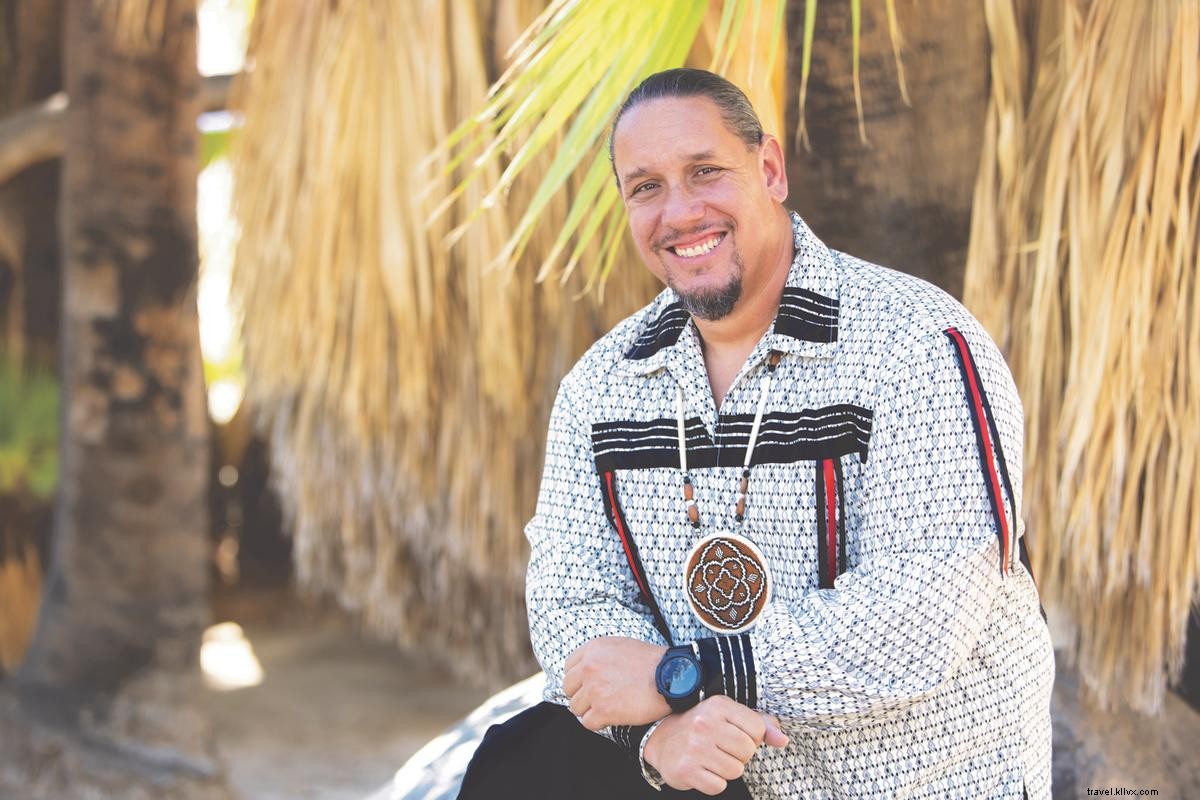
Tribal Chairman Jeff L. Grubbe of the Agua Caliente Band of Cahuilla Indians
Today, the tribe stewards over 31,500 acres of ancestral lands in the region, including the Indian Canyons, Tahquitz Canyon, and the sacred Agua Caliente Hot Mineral Spring—the namesake of Palm Springs. In 2022, they opened the Agua Caliente Cultural Plaza, The Spa at Séc-he, and the Agua Caliente Cultural Museum to the public.
In addition to preserving their rich culture and heritage, the tribe generously supports Greater Palm Springs communities through philanthropy. Since opening their first casino in Palm Springs (now three, including in Rancho Mirage and Cathedral City), they have donated millions to local agencies, civic groups, public services, youth organizations, healthcare providers, schools, libraries, and food banks.
Q. What are some unique traditions of the Agua Caliente Band of Cahuilla Indians, and are they still practiced and taught today?
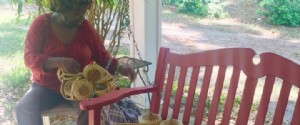
A. The Agua Caliente Band of Cahuilla Indians maintains a profound connection to the Palm Springs area, residing here since time immemorial. Renowned for exquisite basketry, pottery known as ollas, and the healing waters of the Agua Caliente Hot Mineral Spring in downtown Palm Springs, the tribe's Cultural Preservation Committee offers classes in basket weaving, pottery, beading, and the Cahuilla language for tribal members.
Q. The Agua Caliente Cultural Plaza spans 5.8 acres. What will visitors find there?
A. Opened in fall 2022, the Agua Caliente Cultural Plaza features the Agua Caliente Cultural Museum, The Spa at Séc-he celebrating the sacred hot spring, a Gathering Plaza, gardens, and an Oasis Trail. Located at the corner of N. Indian Canyon Drive and E. Tahquitz Canyon Way in downtown Palm Springs.
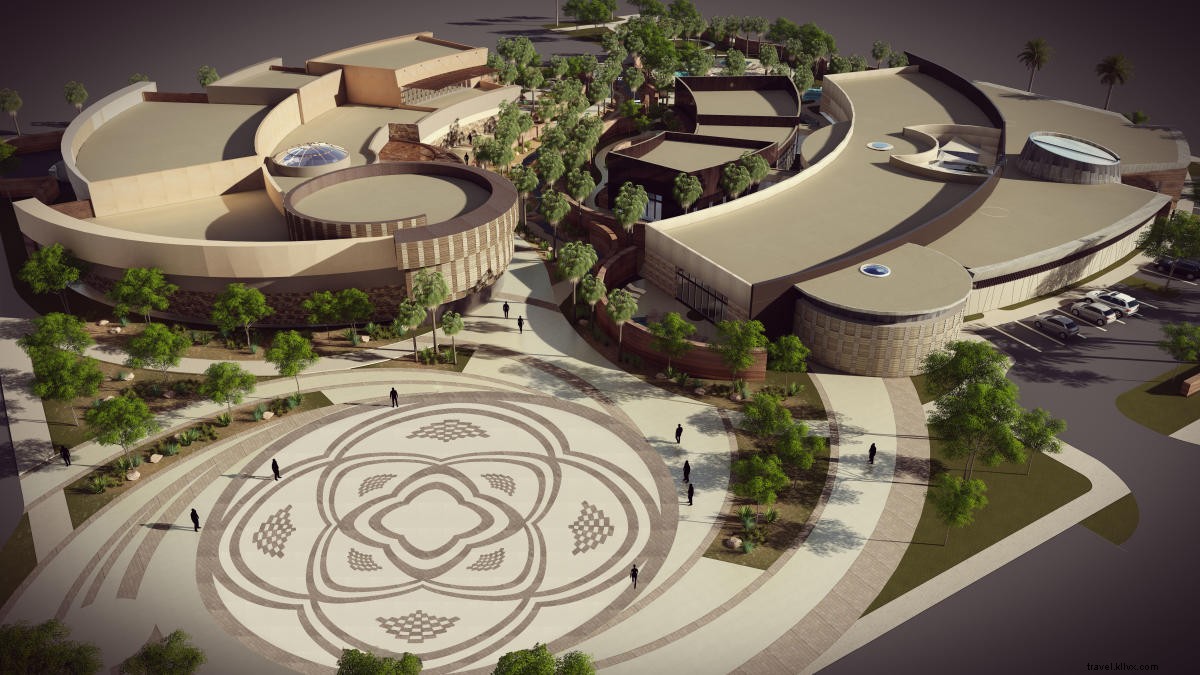
The plaza's design draws inspiration from Agua Caliente traditions like basket weaving and ollas, as well as natural elements such as desert landscapes, Indian Canyon rock formations, the Andreas Canyon stream, and the native Washingtonia filifera palm trees—the only palm indigenous to the California desert. JCJ Architecture of Phoenix designed the project, with Penta Building Group as general contractor.
Q. Can you share details about the Agua Caliente Hot Mineral Spring and The Spa at Séc-he?
A. Bubbling up in downtown Palm Springs, the Agua Caliente Hot Mineral Spring has been a sacred source for the tribe for generations. The Cultural Plaza honors this history, with the spring as a centerpiece. Alongside The Spa at Séc-he, it offers outdoor spaces like the Gathering Plaza next to the spring—originally called Séc-he, meaning "the sound of boiling water." Tribal members and visitors can gather, reflect on history, and honor these life-giving waters via landscaped terraces and pathways.
Carbon-dated to 12,000 years old, the spring's unique mineral composition is found nowhere else worldwide. The tribe has shared its healing waters with visitors for over 120 years; it was Palm Springs' first tourist attraction. The new spa is the fifth bathhouse at the site, following the original from the late 1880s.
Q. What can visitors explore at the Agua Caliente Cultural Museum?
A. The museum showcases an ethnobotanical garden, artifact-filled galleries, and an immersive 360-degree experience of our Creation Story.
Q. Artifacts were discovered during the Cultural Plaza excavation. What is their significance?
A. Thousands of artifacts, some carbon-dated over 8,000 years old, were recovered. Many will be displayed, including spear and projectile points, mortars, metates, pestles, and shell beads.
Q. What public events does the tribe host?
A. We celebrate our history and culture year-round with community events like the Jr. Ranger Expo, Kewet: Native American Learning Day & Market, Dinner in the Canyons, Singing the Birds Bird Song Festival, and Legacy Hike in the Indian Canyons.
Q. Who are some notable leaders in the tribe's history?
A. Our Tribal magazine Me Yah Whae profiles leaders from the 1830s, including Pedro Chino and Francisco Patencio, to recent figures since 1970: Richard M. Milanovich, Barbara M. Gonzales Lyons, Ray L. Patencio, and Larry N. Olinger. View it at www.aguacaliente.org.
Q. Who serves on the current Tribal Council?
A. Alongside myself, the council includes Vice Chairman Reid D. Milanovich, Secretary-Treasurer Vincent Gonzales III, Tribal Council Member Jessica Norte, and Tribal Council Member John R. Preckwinkle III.
Q. When was the Agua Caliente Indian Reservation established?
A. Established May 15, 1876, by President Ulysses S. Grant, and expanded September 29, 1877, by President Rutherford B. Hayes. It borders Palm Springs, Cathedral City, Rancho Mirage, and unincorporated Riverside County.
Q. The 1950s all-female Tribal Council was historic. Who were they and their key achievements?
A. Led by Chairwoman Vyola J. Ortner, this pioneering council advocated for Congress to approve 99-year land leases for Indian lands—a first at the Agua Caliente Hot Spring site—profoundly shaping the tribe's future.
Q. What are some recent philanthropic efforts by the tribe?
A. We support Coachella Valley charities including FIND Food Bank, Mizell Senior Center, Guide Dogs of the Desert, Boys & Girls Club, American Cancer Society, and many more.
Q. What’s next for the tribe?
A. We proudly opened the Agua Caliente Cultural Plaza in 2022 and continue advancing our cultural preservation and community initiatives.