
Minnesota Native American Powwows: Dance, Drums, and Cultural Heritage
Powwows or wacipi (Dakota translation: “they dance”) are major Native American celebrations featuring a blend of sacred customs, tribal reunions, music and traditional dances.
Open to the general public, powwows give non-Natives a look at the colorful culture and artistry of Minnesota’s Dakota and Ojibwe nations, as well as those of Native Americans from across the country who come to Minnesota for the bigger competitions.
What to Expect at a Powwow
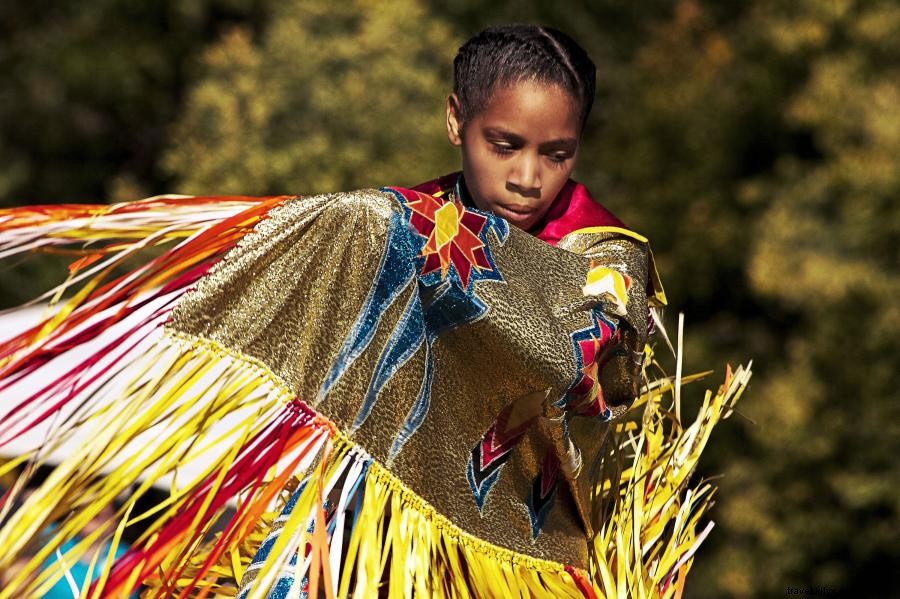
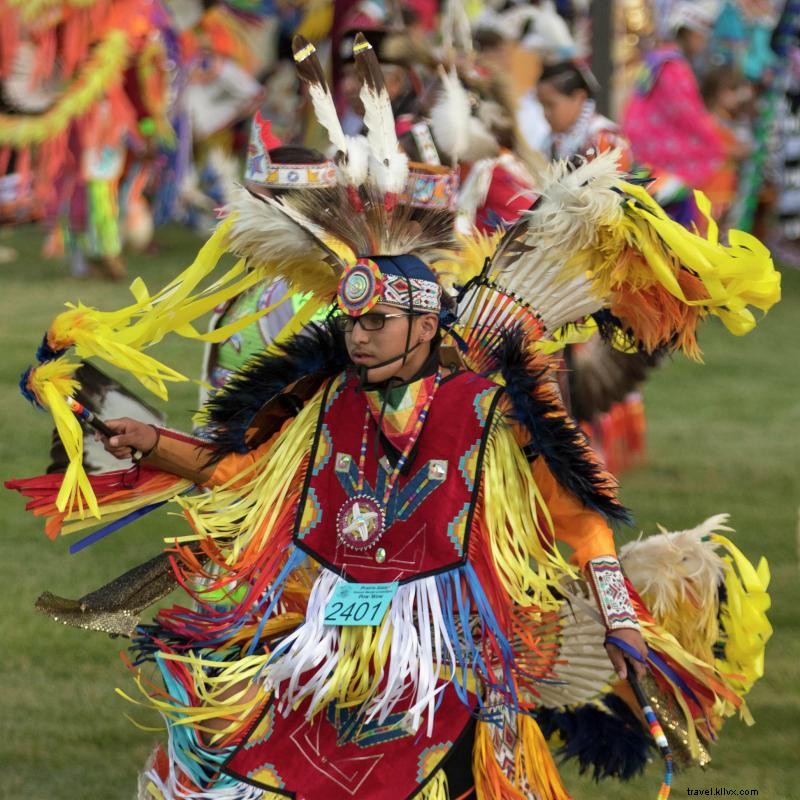
On a hot August afternoon, dancers adorned with vibrant beads, feathers, quills, leather and ribbons gather at the powwow arena for the annual Shakopee Mdewakanton Sioux Community Wacipi.
“The first thing people usually notice is the drumming,” said Cole Miller, powwow committee chairman for the Sioux Mdewakaton. “If you haven’t seen a drum group live, it really is something you have to see.” Drummers circle a large drum, which is blessed and considered sacred, and sing songs passed from one generation to the next. The music has a way of reverberating through the arena, and can be especially poignant as the competitors gather during the grand entry.
“It’s pretty amazing to see that arena and all those dancers together,” said Miller, who hopes to have 1,000 dancers competing at the August Wacipi.
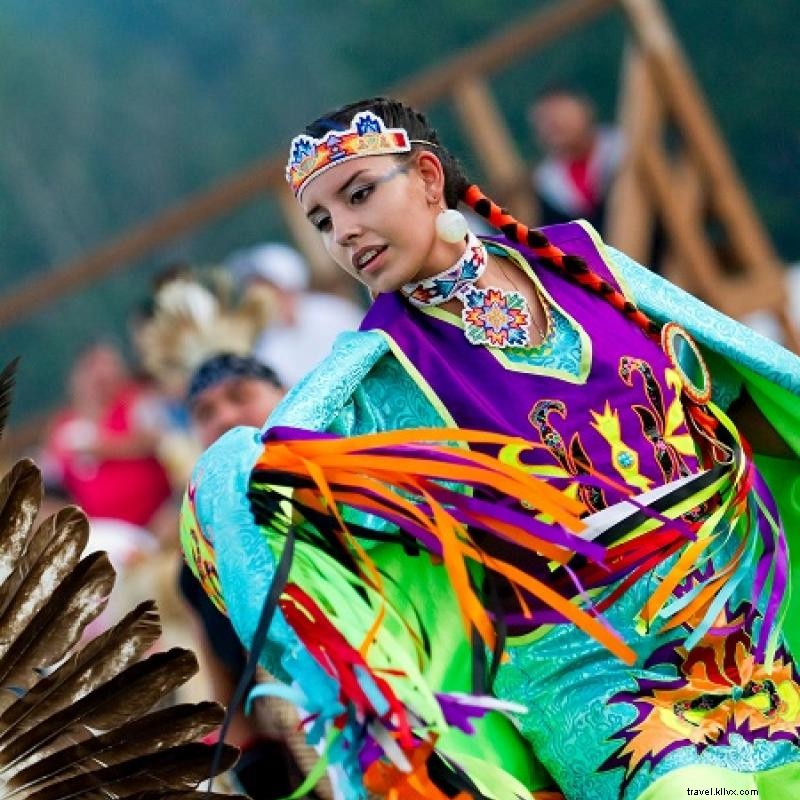
Visitors can bring a chair or grab a spot in the stands to watch women’s fancy dance competitors expertly move their feet while their arms stretch out to display their decorative shawls. Listen for the festive sound of jingle dress dancers whose skirts glitter with hundreds of metal cones, traditionally crafted from rolled snuff can lids.
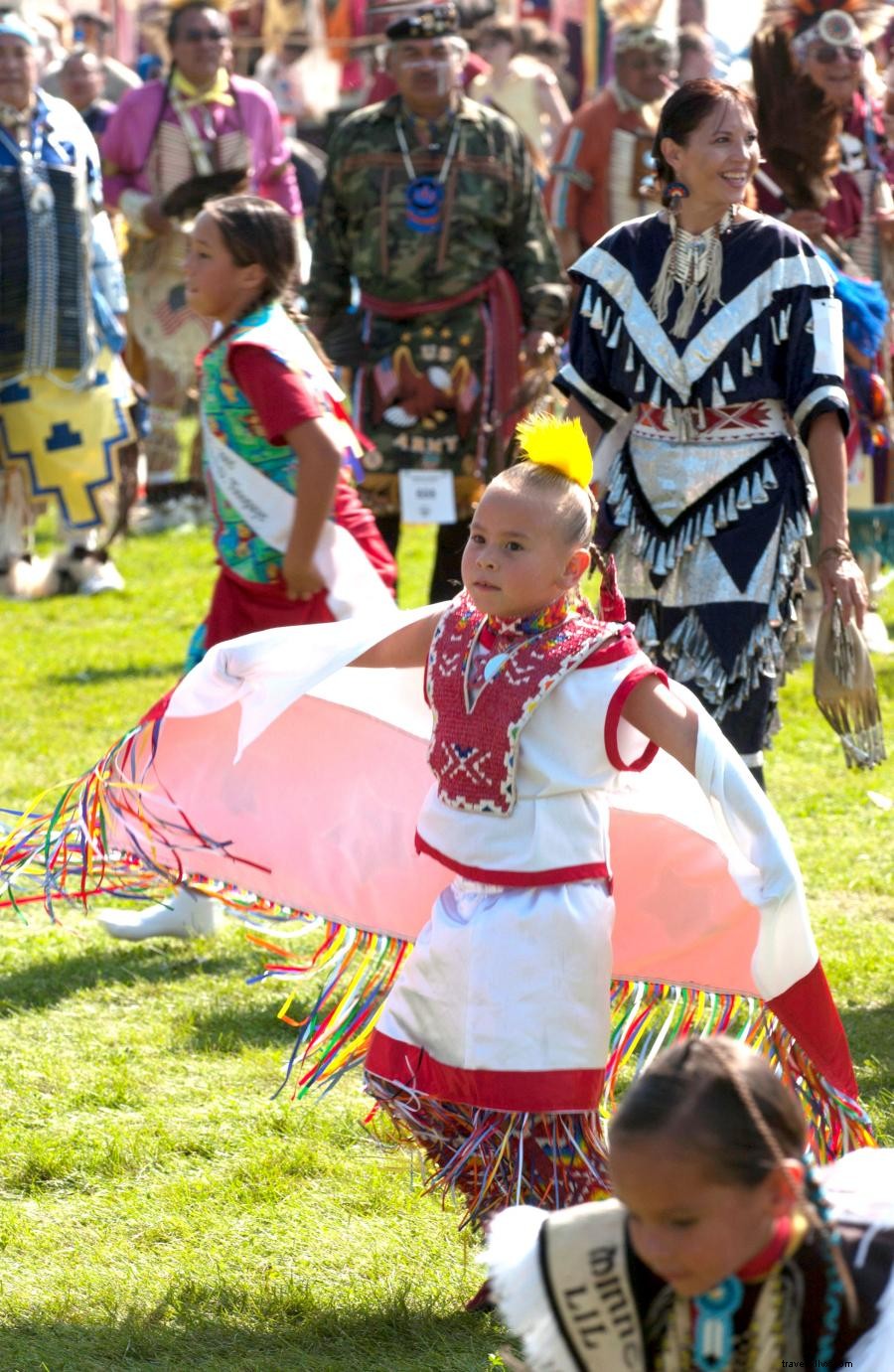
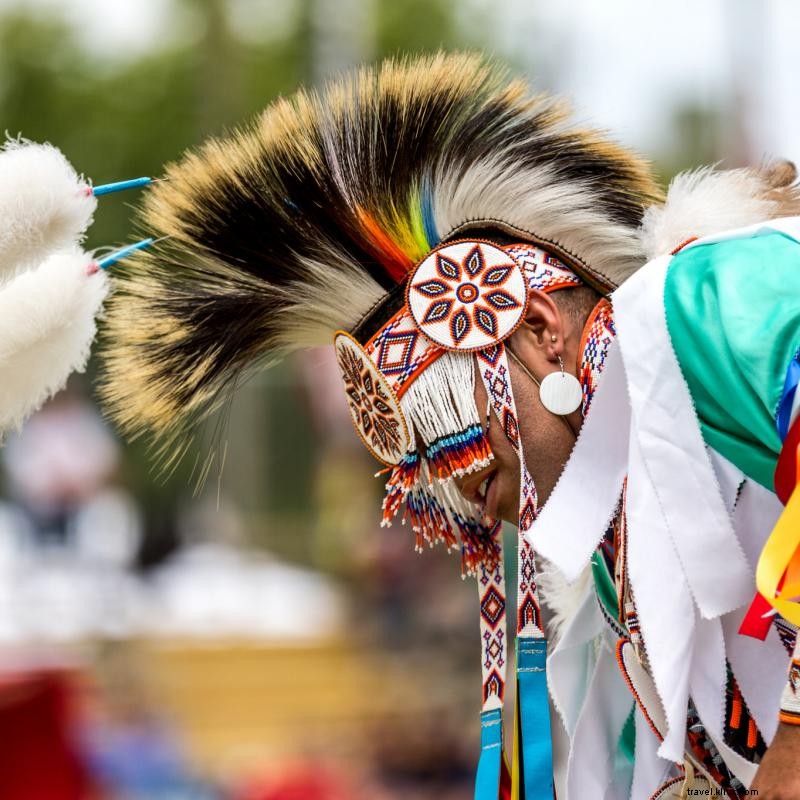
Like the women’s fancy dance, the men’s version features competitors wearing their most elaborate regalia, including beaded headbands with rosettes on the forehead, feathered head pieces, beaded and fringed yokes, and beaded moccasins. Dancers wear round, feathered and ribboned bustles behind their necks, on their waists and on their arms, making them move to the music and whirl into a blur of color as the beat quickens.
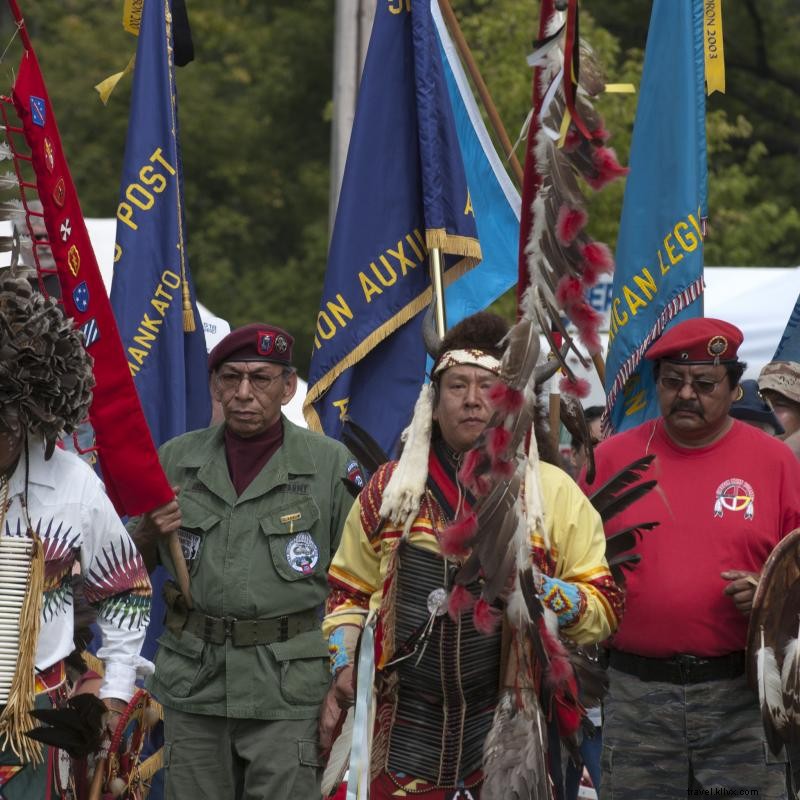
Veterans and elders receive special honors, and during designated times, the announcer may invite the audience to join in a communal dance that welcomes everyone.
Some powwows are free while others charge admission, but most also include a community meal, usually on Saturday night. Vendors also sell traditional foods such as Indian fry bread tacos, wild rice and more, along with specialty crafts such as native beadwork.
Powwow Etiquette Tips for Non-Natives
People of all cultures are welcome at powwows, but here are a few etiquette tips to keep in mind for non-Natives.
- Stand and remove hats during the grand entry.
- Do not refer to regalia as costumes.
- If you want to take photos outside the powwow arena, ask permission of the person you are photographing first.
- Wear respectful, modest clothing.
- Do not bring any alcohol or drugs to a powwow.
- Feathers are sacred. Do not pick up any that fall; let a crewmember know instead.
Still have questions? Check out these tips for attending a powwow provided by the Mille Lacs Band of Ojibwe.
Summer Powwows in Minnesota
Minnesota is home to seven Ojibwe (Chippewa) reservations and four Dakota (Sioux) communities. Some host large annual powwows, while others, such as the Leech Lake Band of Ojibwe, host several smaller powwows in communities throughout its northern Minnesota reservation. Here’s a sampling of events:
June
- Lake Vermilion Traditional Pow Wow
1610 Farm Pt. Road, Tower
July
- Fond du Lac Reservation Veterans Pow Wow
Mash Ka Wisen Powwow Grounds, Sawyer - Prairie Island Wacipi
Prairie Island Indian Reservation, Welch
August
- Pezhutazizi Oyate Traditional Wacipi
Upper Sioux Community, Granite Falls - Grand Portage Rendezvous and Powwow
Grand Portage National Monument, Grand Portage - Mille Lacs Band’s Annual Powwow
Shaw Bosh Kung Pt. north of Onamia - Shakopee Mdewakanton Sioux Community Wacipi
3212 Dakotah Pkwy., Shakopee - Labor Day Traditional Pow Wow
Veterans Memorial Pow Wow Grounds, Cass Lake
September
- Mahkato Wacipi
Land of Memories Park (Dakota Wokisuye Makoce), Mankato
Held annually since 1972, this event celebrates Dakota culture while reconciling with the past. After the U.S. Dakota War of 1862, 38 Dakota warriors were executed in Mankato in the country’s largest mass hanging.