

decorative font style

Castillo San Cristóbal: San Juan's Largest Spanish Fortress and UNESCO World Heritage Site
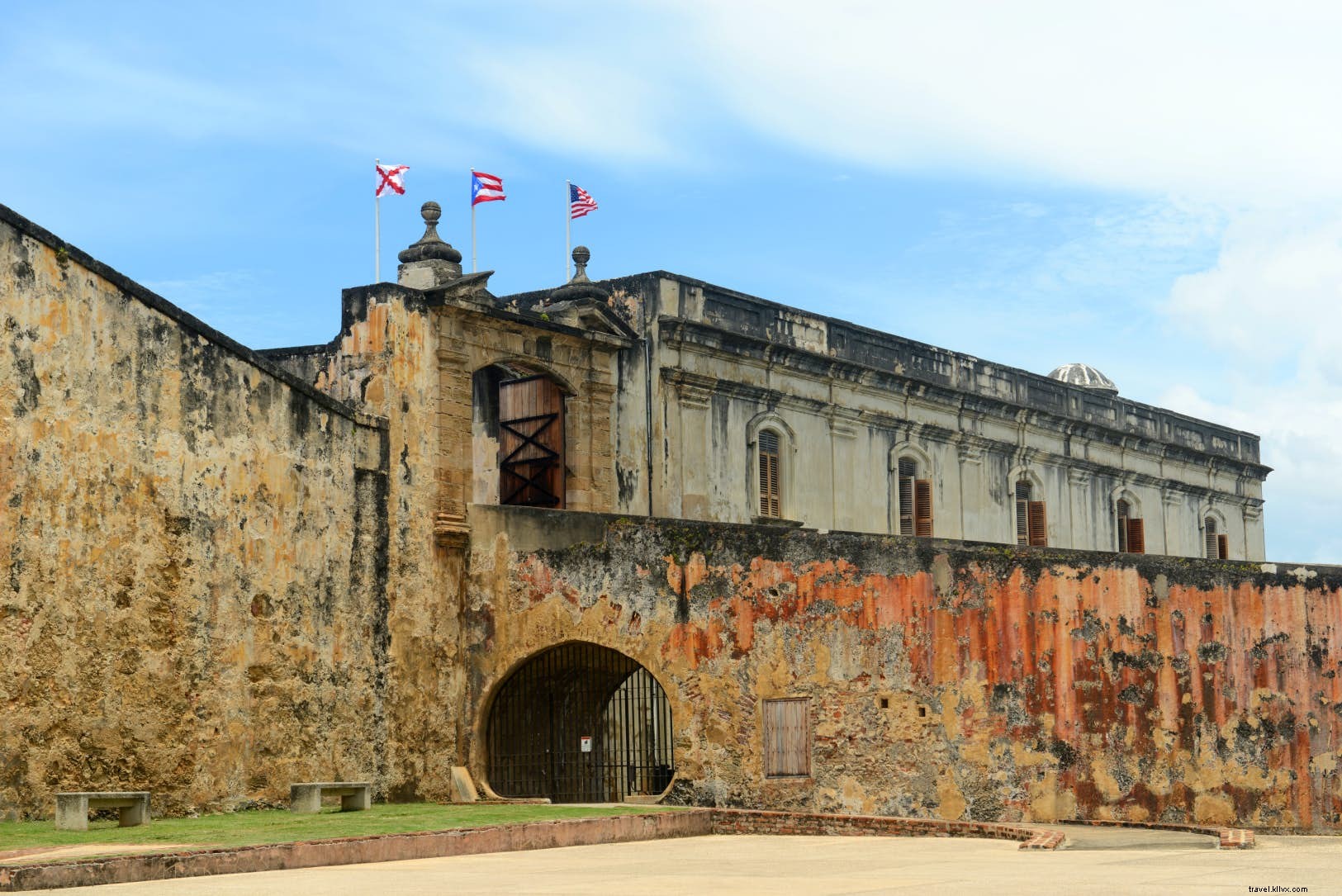
Castillo San Cristóbal: San Juan s Largest Spanish Fortress and UNESCO World Heritage Site

Castillo San Cristóbal ranks as one of the largest Spanish military fortifications in the Americas and San Juan's second major fort. Spanning 27 acres at its height, it featured a complex of six interconnected forts guarding a central core with 150-foot walls, moats, booby-trapped bridges, and tunnels. Highlights include a captivating museum, military archives, recreated barracks, a gift shop, and panoramic views of the Atlantic and city skyline. Free one-hour guided tours in English explore the tunnels at 10:30 a.m. Saturdays (Spanish on Sundays), first-come, first-served.

Designed to defend Old San Juan from land assaults via Puerta de Tierra from the east, its innovative layout was engineered by Irish experts Alejandro O’Reilly and Thomas O’Daly, employed by Spain. Construction began in 1634 after a Dutch attack, with significant expansions from 1765 to 1783.

In 1897, seven acres were removed to reduce congestion in Old San Juan. The next year, amid the Spanish-American War, its cannons targeted the USS Yale. Designated a U.S. National Historic Site in 1949, it joined the UNESCO World Heritage list in 1983.


Tourist Attraction
  • -

    The name “Teposcolollan” was known for a long time this Pueblo Mágico ( Magical Town) of the Oaxacan Mixtec which means “Junto a la torcedura del cobre” ( Next to the copper bend). Historians say this is because the currency before the arrival of the Spaniards was in the form of tiny copper axes. Although some think that these are two places, in reality, San Pedro and San Pablo Teposcolula, Oaxaca is one single municipality. It has managed to combine the influences of two cultures, the

  • -

    The mining tradition in the zone where San Joaquin is located has its origins in Prehispanic times when the ancient civilizations inhabited the Ranas and Toluquilla zone. Here there was a trading of cinnabar and garnet that was profusely used for decorative purposes. Later on, with Spanish colonization, the exploration continued, but it was until the years of 1950 and 1970 that San Joaquín reached its grandeur in the so-called “Mercury fever” when more than 100 mines were open. San Joa

  • -

    Discover its colonial charm If the stress of the daily grind has you in a tight corner or you are simply in immediate need of a luxurious weekend, it’s time to take a break in San Miguel de Allende, Guanajuato. This World Heritage City offers a provincial atmosphere with every luxury and comfort. The moment you set foot in the center of San Miguel de Allende, you get the feeling you’ve stepped into a time machine, with the neo-Gothic steeples of the Parroquia de San Miguel Arcángel (Church