Exploring the Enigmatic Plain of Jars: An Unforgettable Detour in Laos
When traveling, we always start with a plan—though we rarely stick to it rigidly. Following established routes from north to south or hub to hub simply makes sense for most journeys.
Yet sometimes, a guidebook page captures your imagination, compelling an impromptu detour. That's exactly what happened during lunch in Luang Prabang, Laos' charming French colonial gem. Flipping through my guidebook, I stumbled upon the Plain of Jars—a vast plateau dotted with massive ancient stone jars. The mystery hooked me instantly.
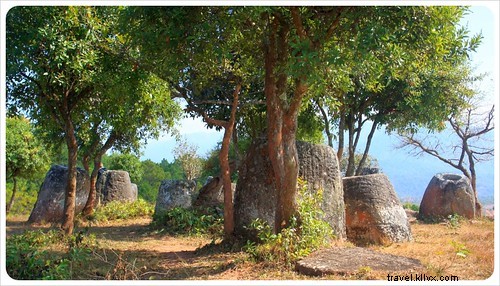
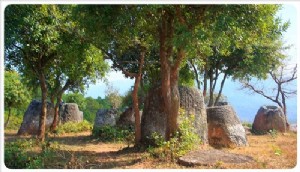
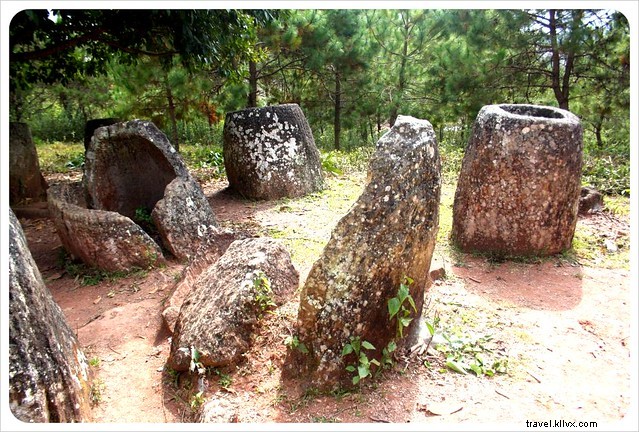
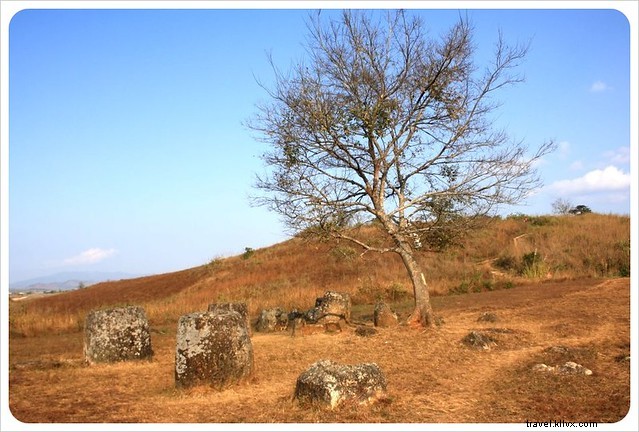 French archaeologist Madeleine Colani rediscovered the site in 1930, unearthing bones, teeth, and pottery shards. These Iron Age jars, dating from around 500 BCE to 200 CE, tower up to 3 meters high and weigh 650 kg to 1 metric ton. Their purpose remains unknown, drawing comparisons to Stonehenge or Easter Island's moai. This was travel at its purest—raw discovery.
We committed to the detour, enduring two extra days on Laos' notoriously winding roads. Our destination: Xieng Khouang province and the jars near Phonsavan, the region's dusty hub.
Phonsavan's wide streets, Soviet-era blocks, rubble piles, repair shops, and basic eateries evoked a Mongolian outpost. Dust-masked motorcyclists zipped by amid ongoing construction signaling future prosperity. We fell for it immediately.
We loved Phonsavan right away.
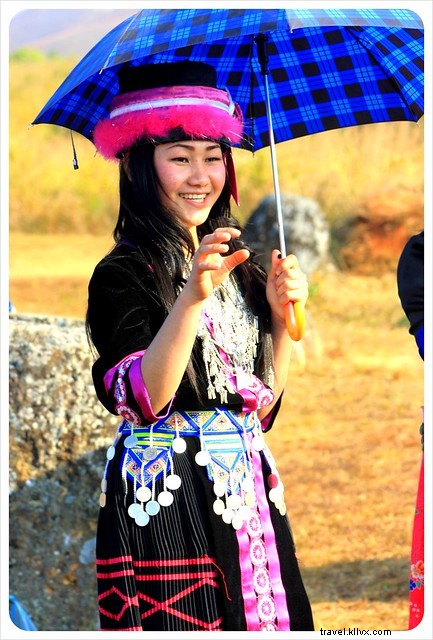
 Settling into a no-frills hotel, we were soon drawn out by festive Hmong New Year music. This southeastern Chinese ethnic group migrated to Laos' highlands in the 18th century; Phonsavan hosts one of the world's largest communities. A nearby gravel lot brimmed with colorfully attired celebrants enjoying post-harvest festivities of food, dance, and fairs lasting up to 40 days.
 Chatting with English-practicing Hmong girls and snapping photos, we then arranged a guide for the jars. Site 1 is accessible independently, but Sites 2 and 3 require experts due to distance and lingering landmines.
Giants or Funerary Urns? Legends and Theories
Lao folklore speaks of ancient giants. More scholarly views posit the jars as funerary urns, rainwater collectors, or vessels for lao lao rice whiskey. Many are damaged—used for building or bombed during the U.S. Secret War. UNESCO candidacy awaits UXO clearance by groups like MAG, a costly endeavor.
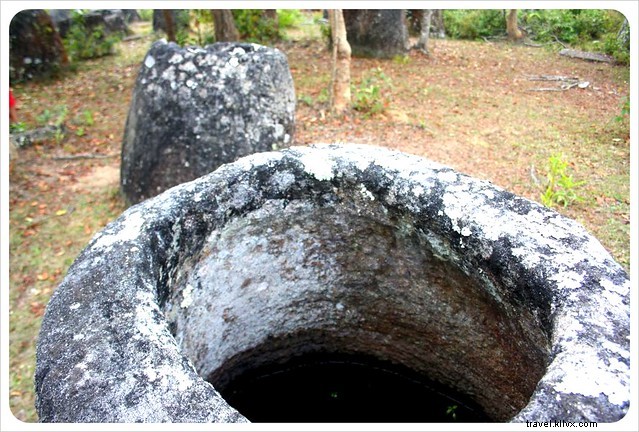
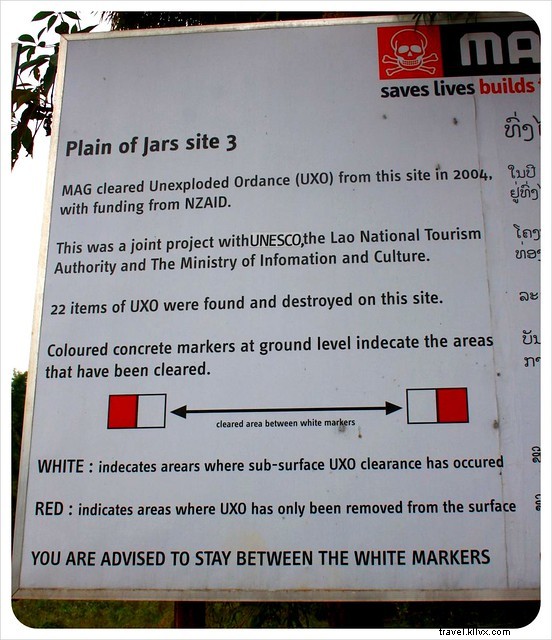 Our guide predicted a tourism boom post-UNESCO. The sites span vast areas: Site 3 (150 jars, 35 km away), Site 2 (90 jars), and Site 1 (250 jars).
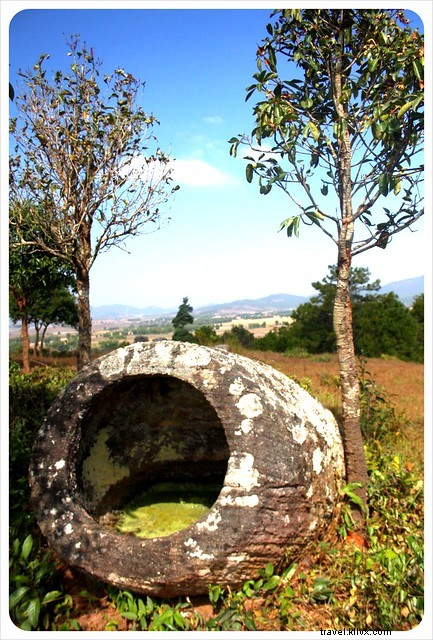
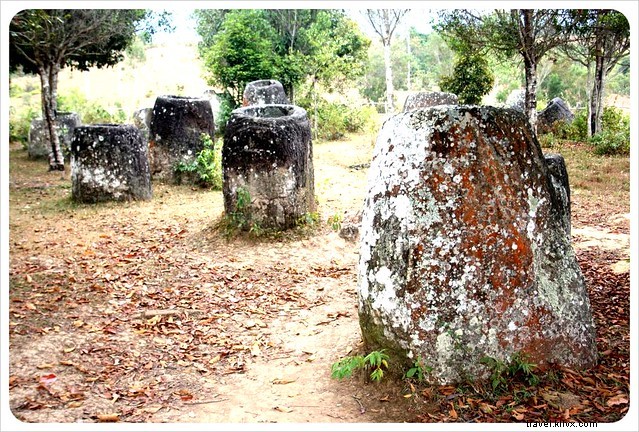 The Plain of Jars and a Lao Lao Whiskey Stop
Bouncing along dirt tracks, we hiked past rice paddies to Site 3's hilltop, where 150 behemoths defy explanation. How were they quarried, moved, and placed? Mysteries abound, fueling giant legends.
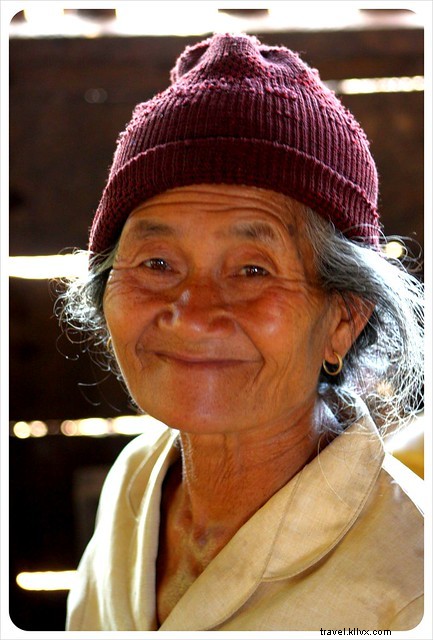
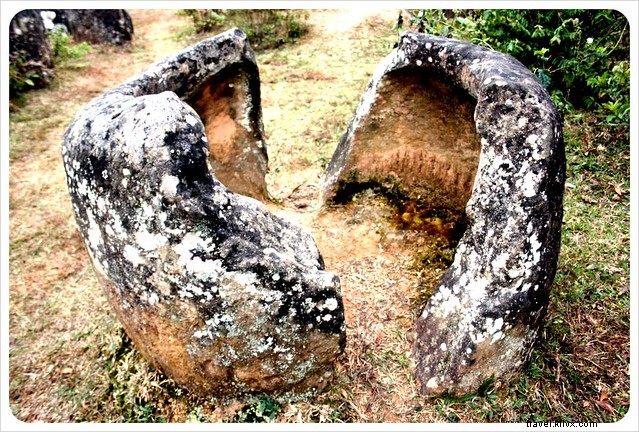 Jars range car-sized to BBQ proportions. Site 2 offered 90 jars and sweeping rural vistas. Lunch preceded a visit to a humble lao lao 'factory'—barrels, dogs, and a smiling matriarch demonstrating production.
High-Tech Flirtation: Hmong Pov Pob Game
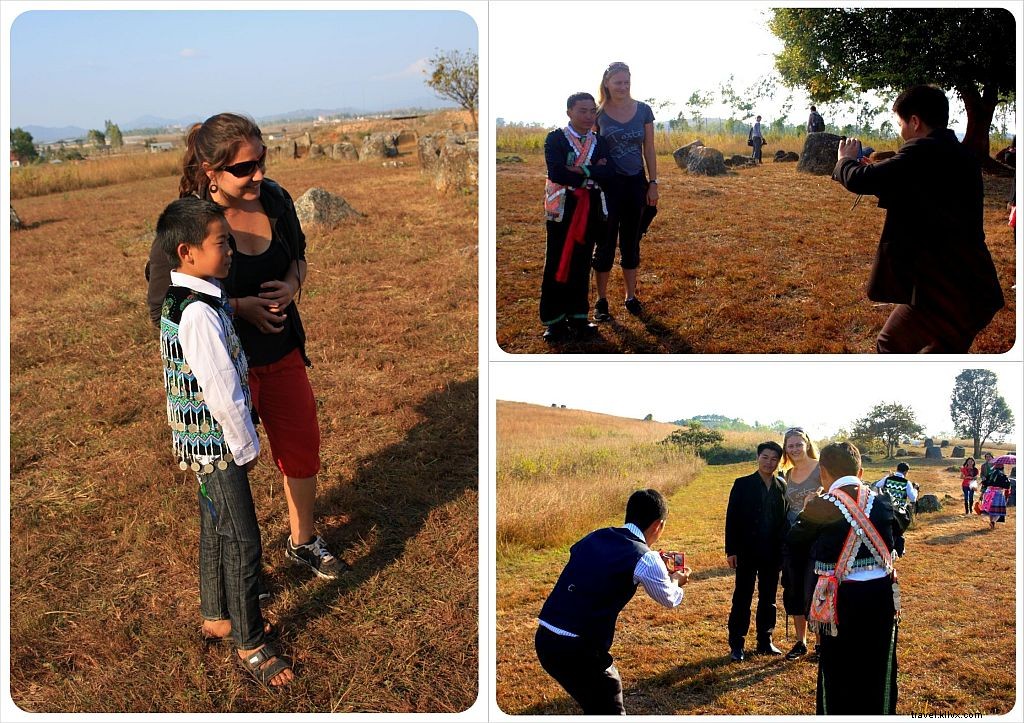
Firewater buzzing, we reached Site 1 amid New Year's crowds playing Pov Pob—Hmong 'speed dating' with tennis balls tossed between genders in traditional garb. Caught balls signal interest; drops reject suitors.
 Teens adored our companion's blonde hair, inviting her in. She opted for photos instead. Even here, smartphones peeked from embroidered pockets—texting amid tradition.
 The jars awed, evoking Stone Age wonder.
 Practical Tips for the Plain of Jars
Tours are ubiquitous; shop for deals. Variants cover Secret War or Hmong life. See Xieng Khouang website for more.
Phonsavan Highlights
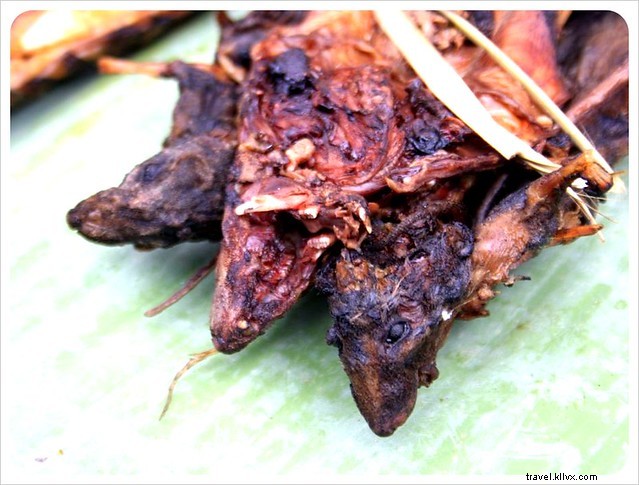
Overnight essential. Visit MAG's Bomb Harvest screening on UXO legacy (200,000 remain). Browse the vibrant daily market's exotic meats (bats, squirrels)—cultural immersion for the bold.
Stay: Guesthouses ~$12.50/night; mid-range options with Wi-Fi for discerning travelers.
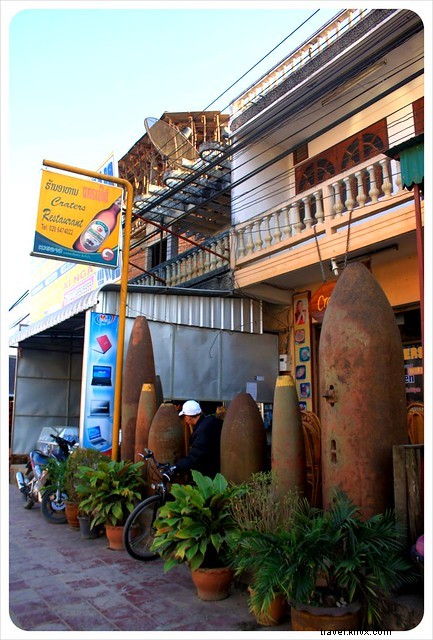
Eat: Nisha Indian (Western options, cheap, popular). Craters Bar (Western, Wi-Fi); Kong Keo (Lao fare).
 Get There: Buses from Luang Prabang/Vientiane. Check Wikitravel for schedules.