Restored: Samos’ Eupalinian Aqueduct – The 8th Wonder of Ancient Engineering
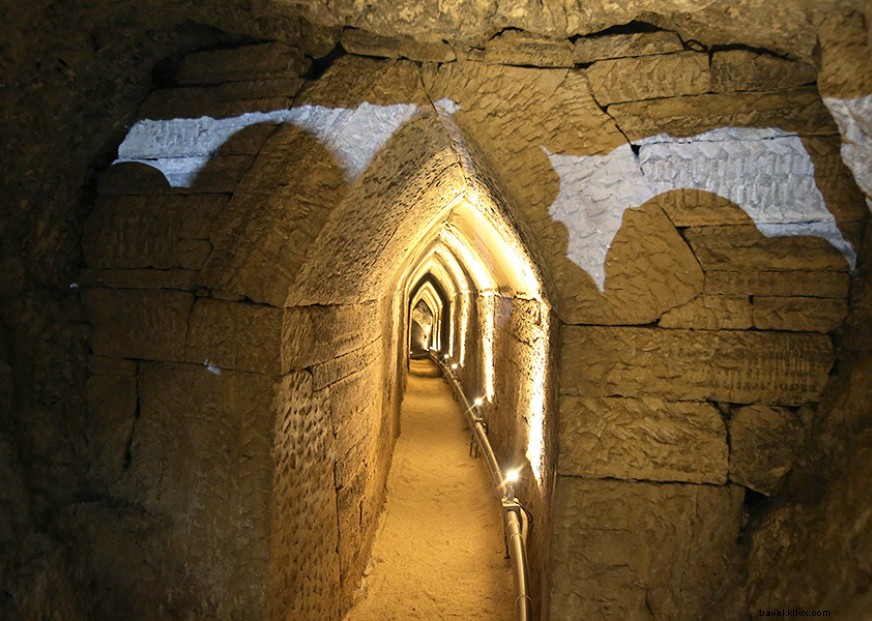
 Journalists and local dignitaries were recently invited to see the newly restored Eupalian Aqueduct at an event addressed by Culture Minister Lydia Koniordou and representatives of the team responsible for carrying out the work. “Enter the tunnel, feel the energy of the mountain and listen to all that it has to tell you ,” Ms Koniordou said, describing the site as a ‘jewel’ for the island, and one that would help attract tourists to Samos.
“The Eupalian Aqueduct is not just an impressive technical achievement. It reveals layers of thought and reflection, and that is the what sets the experience it offers apart,” local MP Dimitris Sevastakis said. For his part, Dimosthenis Svolopoulos, Head of the Office of Ancient Monument Restoration at the Culture Ministry said that the work completed was, “worthy of the importance of the monument and the glory of ancient Samos.”
Indeed Samos’s glory in the 6th century BCE is unquestioned. Trade and shipping had provided the city-state with great wealth and triggered a cultural blossoming. The residents were only lacking easy access to one basic need: water. Thus Polycrates ordered the architect Eupalinos to direct water from the rich spring of Agiades on Mount Ambelos to the settlement.
This task was close to impossible as, standing between the town and the spring stood the mountain itself. And yet, the brilliant civil engineer, using simple measuring equipment and complex mathematics decided to create a tunnel from both sides of the mountain at the same time to speed up the process, a fact that impressed the well-traveled Herodotus.
Journalists and local dignitaries were recently invited to see the newly restored Eupalian Aqueduct at an event addressed by Culture Minister Lydia Koniordou and representatives of the team responsible for carrying out the work. “Enter the tunnel, feel the energy of the mountain and listen to all that it has to tell you ,” Ms Koniordou said, describing the site as a ‘jewel’ for the island, and one that would help attract tourists to Samos.
“The Eupalian Aqueduct is not just an impressive technical achievement. It reveals layers of thought and reflection, and that is the what sets the experience it offers apart,” local MP Dimitris Sevastakis said. For his part, Dimosthenis Svolopoulos, Head of the Office of Ancient Monument Restoration at the Culture Ministry said that the work completed was, “worthy of the importance of the monument and the glory of ancient Samos.”
Indeed Samos’s glory in the 6th century BCE is unquestioned. Trade and shipping had provided the city-state with great wealth and triggered a cultural blossoming. The residents were only lacking easy access to one basic need: water. Thus Polycrates ordered the architect Eupalinos to direct water from the rich spring of Agiades on Mount Ambelos to the settlement.
This task was close to impossible as, standing between the town and the spring stood the mountain itself. And yet, the brilliant civil engineer, using simple measuring equipment and complex mathematics decided to create a tunnel from both sides of the mountain at the same time to speed up the process, a fact that impressed the well-traveled Herodotus.
 see full article here
Rethymno: A Timeless Blend of History and Modern Charm
Discover Nisyros: 9 Must-See Highlights of Greece’s Volcanic Island