Conquering Baffin: First Ascent of a Rugged Arctic Granite Face
After two weeks, a patch of blue sky appeared through the swirling morning mist. By the afternoon the sun was out and we were being bitten by a thousand ravenous mosquitoes. Given the loss of time, we decided to concentrate on two big walls near camp. So far, exploration on Baffin, such as it was, had focused on exploring and making first ascents by easy routes. We now hoped to do something never before attempted in Arctic Canada and climb one of the big granite faces around us. Guy and Phil set off that same afternoon for the elegant 2,000-foot north buttress of Breidablik.
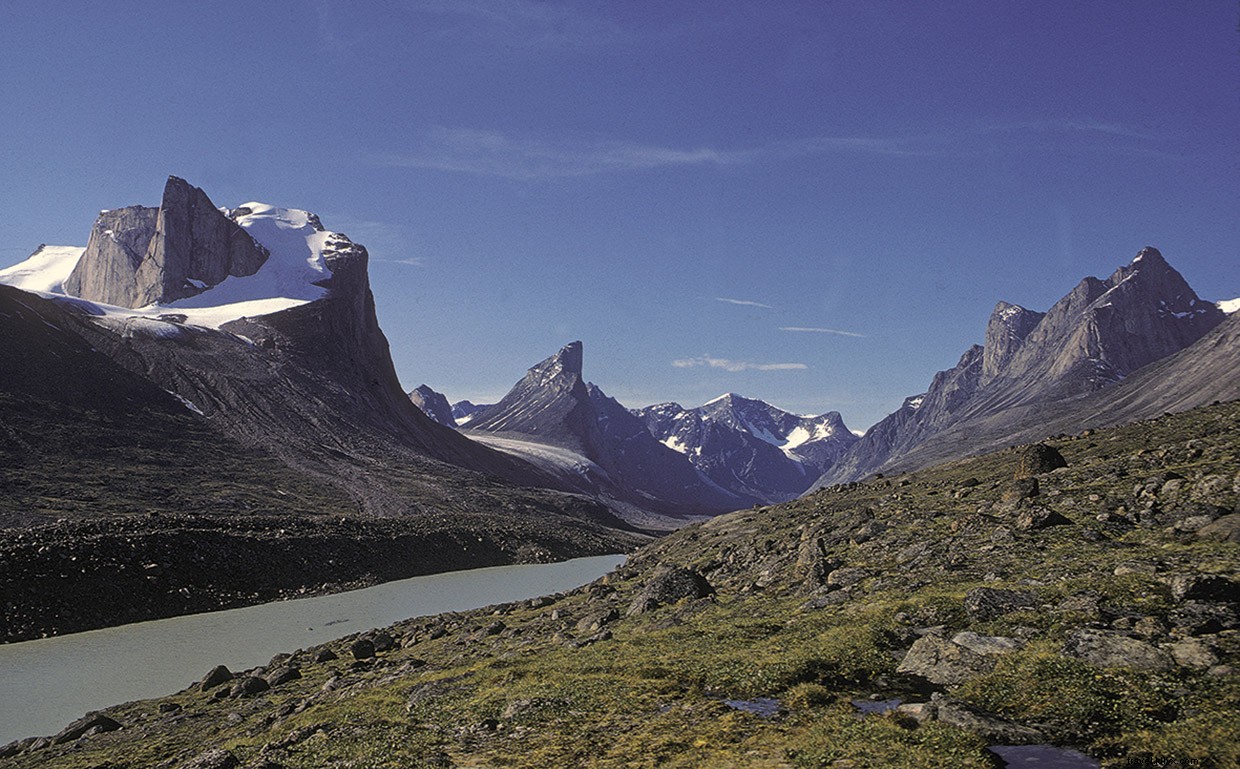
The rest of us also took advantage of this respite from the weather. The east face of Freya Peak reared up for 3,000 feet in slabs and a headwall to a point easily seen from our camp. We named the point Killabuk, since the main summit of Freya was set well back towards Asgard. We regretted not making an earlier start since the slabs were at 5.7 a bit harder than expected and required a rope. The headwall was also more difficult than we bargained and with very little food and no bivvy gear we debated whether it would be prudent to retreat. We sat around undecided until Dennis said, ‘Well, why don’t we just go up and have ourselves an adventure.’ As one came the reply: ‘Yeah!’ And so we went for it.
Towards evening we were on the headwall but the crack system we were following ended abruptly. We could neither free climb nor peg our way up and so the only solution was to arrange a pendulum and try to reach another line of cracks away to the right across a hundred feet of blank rock dripping with water. From a peg placed as high as possible we fixed a rope and slid 150 feet down it. One after the other we swung backwards and forwards, gathering momentum and distance until we could clamber into the new crack. After this exhilarating manoeuvre we made good progress to a ledge suitable for a miserably cold, wet bivouac. Winter was obviously drawing nearer for there were now a few hours of dark. We were only 600 feet from the top but the headwall overhung its base by fifty feet and we found the climbing strenuous.
Next morning, as the crack we had gained was now overhanging and full of loose flakes, we followed a ramp round to yet another crack system, crawling along as the ramp narrowed alarmingly. Right at the end it was just possible to stand precariously in balance and reach for a ledge. I tried not to notice the thousand-foot void below. From the ledge I stepped round a corner into sunlight as the sun rose, each of us warming our cold bodies and numb fingers as we flopped down on a large ledge.
Above, the mountain was cleft by chimneys set at right angles to one another. We wriggled and pushed, getting good friction from the rough red rock. Shafts of sunlight pierced the dark recesses of the mountain now full of the sound of heavy breathing and clanking pegs. After 200 feet we were disgorged on to a wide terrace below the final wall. In two more pitches of hard pegging and pleasant free climbing we arrived on the summit twenty hours after leaving camp.
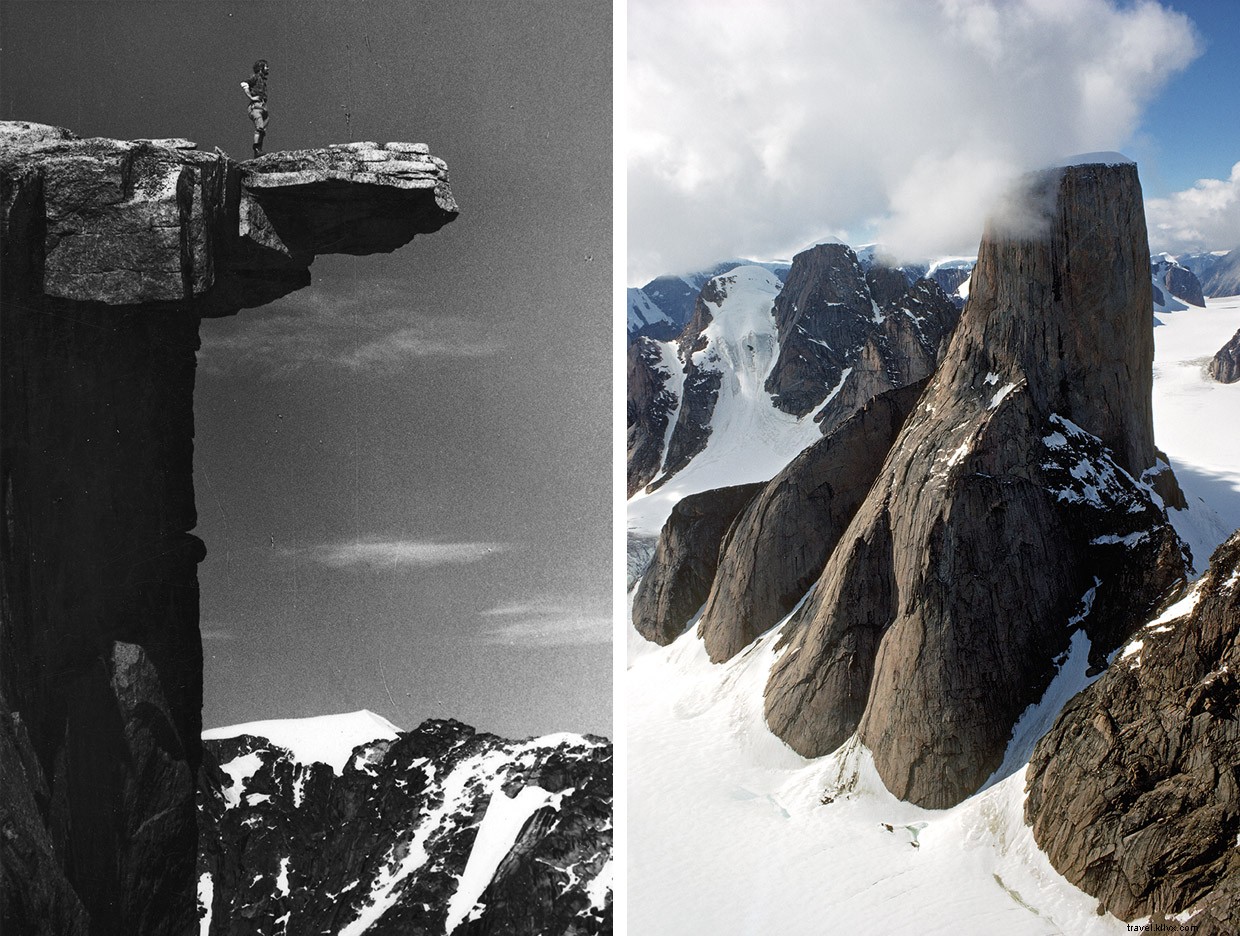
We felt elated to be there, looking down on our tents and across at the peaks stretching out in all directions, still covered in fresh snow from the storms. It is always a good feeling to arrive on the top of an unclimbed summit. We lay out in the sun among the weathered rocks scattered about the flat summit. I took photographs of Steve venturing out on a block of granite jutting out for twenty feet above the slabs 1,200 feet below. Having been cooped up for so long in the tents we were doubly elated at having carved out a fine route involving a variety of problems and difficult route finding.