Beyond Peaks: Jimmy Chin’s Iconic Climbing Legacy
Jimmy Chin is possibly the world’s most accomplished climbing photographer. He’s shot National Geographic covers with Alex Honnold, he’s climbed Meru with Conrad Anker and Renan Ozturk, making an award-winning documentary as he went, and won an Academy Award for Free Solo, the film about Alex Honnold’s once-in-a-lifetime free solo climb of El Capitan in Yosemite. And then there’s Jared Leto, star of Blade Runner 2049, Fight Club, Academy Award winner for Dallas Buyers Club, and lead singer and songwriter of Thirty Seconds to Mars. He has a new crime thriller out soon with Denzel Washington and Rami Malek called The Little Things (released in cinemas and HBO Max on January 29th). Oh, and he’s an accomplished climber and good friends with Alex Honnold, Tommy Caldwell, and Renan Ozturk. Jared even directed a series of outdoor films on US National Parks called Great Wide Open. He’s almost certainly the first Oscar winner to climb El Cap… except for Jimmy Chin.
Jimmy and Jared have been friends for years, yet even in a year of video calls this far-reaching conversation flowed like the two friends they are. They finish each other’s sentences, they joke with each other, and they are always unerringly honest. We simply sat back and enjoyed the spectacle of two friends discussing the importance of environmental stewardship and an eye-opening first-hand account of when Jared nearly died climbing.
At the time of the call, Jared was dialling in from an Airbnb in a California desert settlement, recording music, climbing, and reminiscing about their trip. Jimmy was in Kauai, Hawaii.
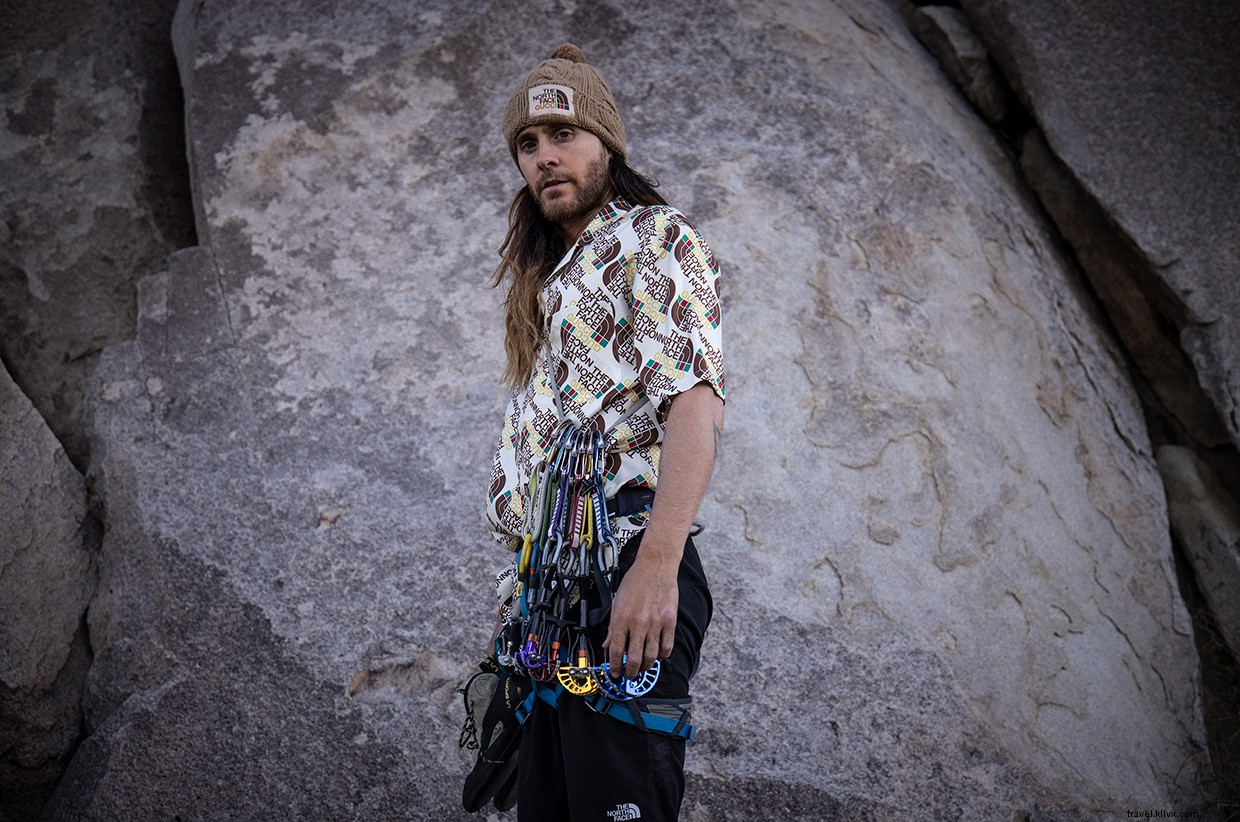
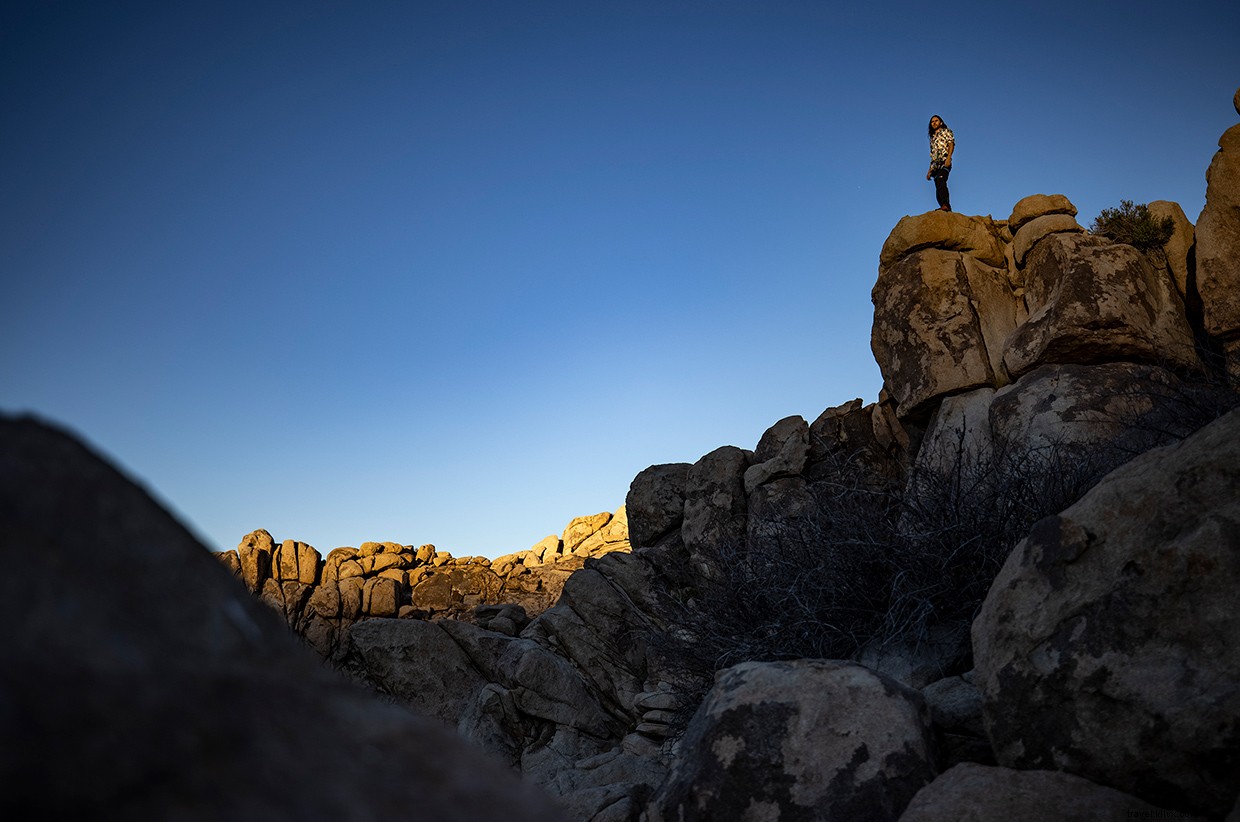
Jared Leto: I’ve got my studio set up here, recording music as always. I’m in Pioneertown, and the Airbnb that I’m staying in has got a Western town on the property. So we set up a studio in the saloon. It’s pretty cold out here, but it’s beautiful as always. Actually, I was thinking about you today because we’re back in Joshua Tree.
Jimmy Chin: Are you climbing?
Jared: I’ve been climbing a bit, and I want to go back to that spot and get revenge on that one climb we did at the end of the day. Oh, I did lead Double Cross, though [a 5.7+ climb in Joshua Tree].
Jimmy: You know what’s funny? That’s the first rock climb I ever did.
Jared: Yeah, that’s why I did it – because you mentioned that to me. And I’ve also done some rock climbing recently in Nevada. But what are you up to? You’re still in Kauai and you’re surfing?
Jimmy: For sure. I get up super early here and work, and then paddle out and try not to get vaporised by some of these sets. It can be pretty wild out there.
Jared: I would love to surf. I’ve done it a couple of times. I got my ass kicked in Brazil once but I did love it. Maybe I should’ve started a little sooner, but I love that you’re able to get out there.
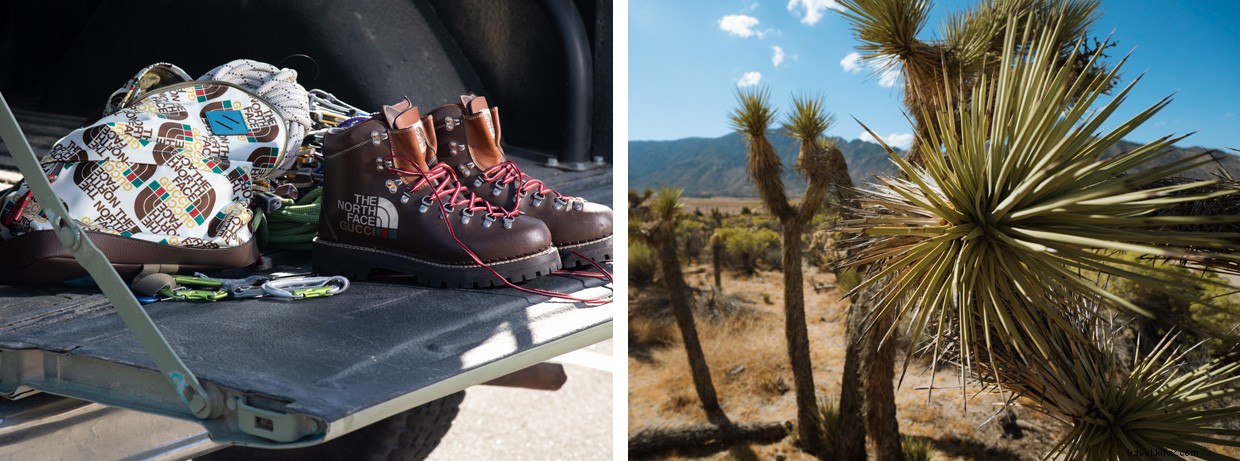
I’ve been thinking about the Joshua Tree shoot and I was so glad that you were able to be part of this. I always believe the best way to do these things is to work with your friends – the people you respect, admire, and are comfortable with. And that’s exactly the case here. We just went out to try to do something exciting that we were psyched about and, hopefully, proud of. As well as being in a place we all love and have history in.
Jimmy: Yeah, it was a highlight of the year. It’s been so crazy with production recently, and this is one of those perfect intersections of us going scouting, and getting some fun climbing and hang time in. And the shoot was really fun because it’s so different to what I normally shoot.
Jared: It’s cool to do in a place that we both love as well. The light is magic, and the features are just incredible.
In 2017, Alex Honnold free soloed El Capitan in one of the greatest climbing feats in history. Jimmy Chin and Elizabeth Chai Vasarhelyi directed the documentary film Free Solo with National Geographic. It won an Academy Award for Best Documentary Feature. Making a brief appearance in the film (well, his voice does) is Jared Leto, a personal friend and occasional climbing buddy of Alex Honnold.
Jared: So let’s talk about Free Solo – being privy to that masterpiece was pretty cool. It was an exciting time because we all knew what was happening before it was happening. It was intense and terrifying all at the same time. I was up in the Valley at some point and you guys were filming. We ended up filming and interviewing.
Jimmy: That moment made it into the film because it was so critical describing the climb. And you played the role of the audience, asking, ‘Well, why is it hard? Why hasn’t anybody done it?’
Jared: It’s like the big dumb question. They were looking at El Cap and I asked, ‘Why not free solo that?’ What did he say? Basically, it was, ‘Well, look at it.’
It’s interesting when you watch climbers, especially people that have been doing it so long – there’s this kind of grace and beauty to their movement, because you’re watching a human being at their most efficient and decisive. This is true of you as a climber, but the same is also true of you as a photographer and filmmaker. It’s really fun to watch you in your element because you have that same grace and decisiveness when you pick up a camera. I’ve seen it out on El Cap and now I’ve seen it in Joshua Tree.
So many people appreciate your climbing as much as your photography. And I guess we’re similar in a way because you’re a filmmaker, a photographer, and a climber, and I do multiple things as well. And I guess we both just don’t like a lot of downtime.
Jimmy: You’ve never told me how you got into climbing?
Jared: Well, I always wanted to be into climbing. I even bought a pair of climbing shoes as many amateurs do. It’s like: ‘OK, if I get these shoes, I’m gonna start climbing.’
I found that I spent a lot of time in the woods as a kid. Even in cities, I would find the biggest park. Whenever I was outside, I would end up scrambling around, bouncing around from rock to rock, but I never knew anyone who climbed. I went on to be so busy with music, and film, being on tour all the time. I said this to Alex [Honnold] before – it’s like I was just climbing other mountains.
But five years ago, I decided to make a documentary called Great Wide Open, and I thought that if I made this documentary, it would trick me into getting out into nature and climbing more, and that’s exactly what it did. And it had a bunch of amazing people such as Tommy Caldwell, Alex Honnold, Renan Ozturk, and Sasha DiGiulian. So that’s how I became friends with them all. And I’ve been climbing ever since.
Jimmy: It’s that recent? I assumed you had been climbing a lot longer. I mean, for the record, everybody out there, Jared is a very good climber.
Jared: At first, I think, ignorance was bliss. I would just climb, running up Middle Cathedral with Alex, simul-climbing*. I thought simul-climbing was normal climbing. It’s also fun.
Jimmy: And you thought climbing with Alex Honnold was normal climbing, too. I remember thinking that you seemed to be really comfortable climbing with Alex and using the systems that Alex told you to use – those are not normal systems.
Jared: It was just flat-out ignorance. I was fortunate because I think there’s something beautiful about the naivety. Of course, I always felt like I was in safe hands, but I didn’t know better, and that allowed me to be more free.
Jimmy: You probably now understand, at least to a degree, that you were on an accelerated programme. But it’s also a great way to take people into climbing. Instead of imposing the normal limitations that people think that you have to have to start climbing, Alex is exactly the type of person that would throw all of that out the window and just take a look at you and say, ‘Well, you should be able to do this’ – and you were. And then, before you know it, you’re sending 15-pitch routes with him.
Jared: It’s amazing, and I have a lot of gratitude for it – to all of you. And the other thing that’s fascinating to me is the system of ethics, or set of values that is shared amongst you, Tom [Caldwell], me and Alex and others out there. I think that is really compelling and attractive. It’s really something to share with the world when and wherever it’s possible. And there’s a humility there too. Of course, there are moments when you’re looking at the face of God and you feel something special, but there’s an expected humility that’s kind of thrust upon all of you guys. I think it’s pretty amazing.
Jimmy: When you said there’s an ethic besides the humility, can you specify what that is?
Jared: I guess maybe it takes an outsider to see it, but it’s the expectations that you have of yourselves about your behaviour, your stewardship of the outdoors, your accountability. The honesty and the transparency expected of people, the style in which you approach or attempt or complete a climb. Someone could write a beautiful book around it and share it with people – I would love to read it. I think this ethic is passed down through generations and carries on the tradition of some of the greats from other eras.
And that’s not pervasive in every vertical that I explore in my life. It might not be expected amongst actors, or musicians, or social media stars. I’m not saying that people don’t have a set of values or ethics at all. I mean, many people do, but I just find that climbing shares a common sense of values that I find really interesting and compelling.