Charlton Singleton: Charleston’s Jazz Maestro
MEET CHARLTON SINGLETON
By age three, Charlton Singleton was already listening to his older siblings’ lessons and intuitively playing the melodies on the family piano—an early sign of his natural gift.
Growing up on the outskirts of Charleston in a close‑knit community, Charlton was shaped by two powerful influences: the church and music. The son of a preacher, he made his stage debut at four, singing “Amazing Grace” at his father’s church. Beyond piano, he cultivated skills on organ, violin, cello, and trumpet.
Recognized by a mentor for his “perfect pitch,” Charlton was chosen as the principal trumpeter among the nation’s top high‑school musicians for the United States Collegiate Wind Band. The ensemble toured nine European countries and performed in some of the world’s most prestigious concert halls.
He went on to study at Berklee College of Music in Boston and South Carolina State University, sharing the stage with artists such as Hootie & the Blowfish, the O’Jays, Ruby Dee, and Rock & Roll Hall of Fame inductee Jerry Butler.
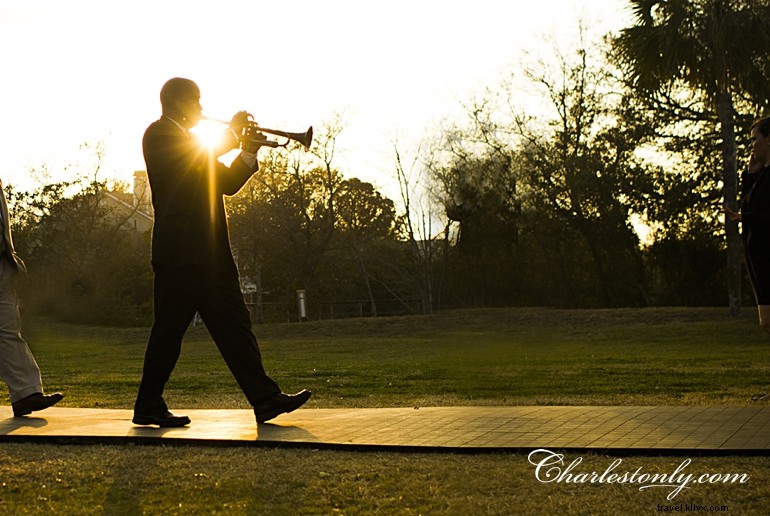
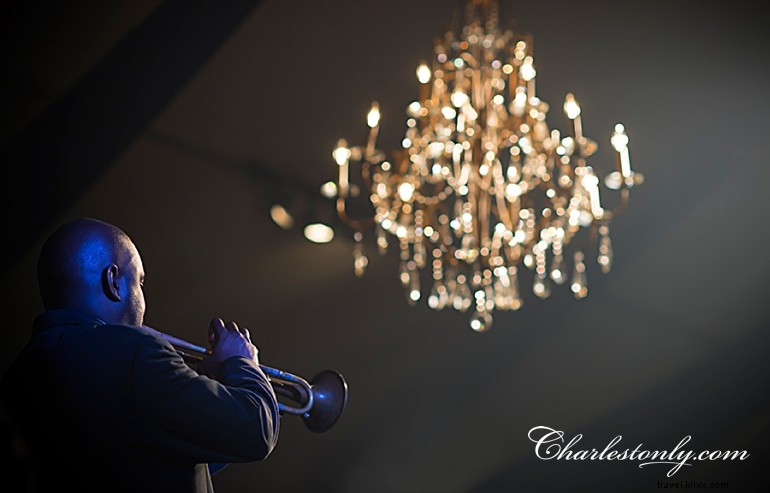
In 2000, Charlton returned to Charleston’s public schools as a music teacher and band director. Today he serves as the acclaimed Artistic Director and energetic bandleader of the Charleston Jazz Orchestra.
Want to see Charlton in action? Click here for the Jazz Artists of Charleston schedule.
CHARLTON’S CHARLESTON:
What dish defines Lowcountry cuisine?
A steaming bowl of shrimp and grits!
What color is quintessentially Charleston?
Purple. As the son of a preacher, I grew up surrounded by clergymen wearing royal purple. With Charleston being known as the Holy City, the color purple is etched into my memories of the city.
What is your favorite sound of Charleston?
The sound of Charleston for me is definitively—always has been and always will be—jazz syncopated with that distinctive Gullah rhythm.
Favorite way to spend Saturday in Charleston?
My wife and I enjoy walking around Marion Square Farmer’s Market, soaking in the people, food, and sunny weather—an ideal way to spend the day.
A few of your favorite local restaurants?
I like to eat at FIG, Charleston Grill, Fish, and Rue de Jean.
CHARLTON’S PLAYLIST:
Summertime
Arguably the most popular song connected with Charleston and the Lowcountry because of Porgy and Bess.
The Charleston
Although it’s a dance, the title and lyric “Charleston. Charleston. Made in Carolina.” stand out.
Corner Pocket (Until I Met You)
Written by Charleston native Freddie Green, who played with the Count Basie Orchestra for more than forty‑nine years! Jazz is our city’s music.
Please, Please, Please
My father watched James Brown perform this song for over thirty minutes during a show at White’s Paradise Riverside Beach—now known as Remley’s Point in Charleston. White’s Paradise was famed on the “Chitlin’ Circuit” for bringing major artists such as Count Basie, Duke Ellington, James Brown, Louis Armstrong, and Lionel Hampton.
Birks Works
In the 1980s, my father took me to see South Carolina native Dizzy Gillespie at the Gaillard Municipal Auditorium. As a budding trumpeter, Dizzy ignited my desire to become a musician.
Shoutin’ Liza Trombone
This clip is the only known footage of the remarkable Jenkins Orphanage band, capturing the youngsters performing a 1920s trombone rag.
…
DID YOU KNOW: In Charleston, jazz played a powerful role in the lives of hundreds of African American youth who lived at Jenkins Orphanage. By 1907, a 30‑member band of orphans with donated instruments toured the East Coast, even reaching as far north as Maine. DuBose Heyward mentioned the Jenkins Orphanage Brass Band in his 1925 novel Porgy, a cultural landmark of its time. The influence of Jenkins Orphanage musicians spanned decades and crossed borders.