Guest Post: The Empowering Impact of Being Out as a Gay Traveler in South America
In the latest installment of our Lesbian & Gay Travel series, Sam from IndefiniteAdventure.com shares his firsthand insights on the profound power of living openly as a gay traveler in South America, where attitudes toward same-sex relationships remain conservative in many areas.
When my partner Zab and I began our travels, I anticipated countless lessons and transformative experiences. Travel is all about growth. What surprised me was how our 10 months in South America deepened my understanding of my own identity as a gay man.
I realized I was gay at 13 and came out to friends right away. My family learned a few years later—no one was shocked. My mother said she knew since I was three.
I've never lived closeted, though I've occasionally distanced myself from gay stereotypes. Growing up in London in the late 1990s, openness was the norm—no one batted an eye.
I've never faced rejection from loved ones due to my orientation. Sure, school bullies taunted with lines like “backs to the walls, guys, here comes the gay boy!” But I brushed them off easily.
Some call it luck, but for me, acceptance was simply the default.
Internal acceptance proved harder. Embracing being gay as a source of pride took time.
That was 15 years ago. Any lingering internalized homophobia is gone. I'm here, I'm queer: deal with it! Our South America trip reaffirmed this.
Throughout our journey, fellow gay men expressed astonishment at our openness. From correcting hotel staff for a double bed instead of twins, to sharing how our families fully embrace us—even our mothers are friends.
These stories elicited awe: “That could never happen here.” It broke my heart.
One conversation lingers: Chatting with Juan, a friend met via Couchsurfing in Peru.
“Does your family know you're gay?” I asked.
“My mother does, but no one else. I won't tell my grandfather—I respect him too much and don't want to shame him.”
“Why would he be ashamed?”
“You don't understand. In Peru, people aren't open-minded. He'd lose respect if word got out.”
I replied that I couldn't respect anyone who rejected me for who I am biologically. “Force acceptance, or risk losing the relationship. Lying about yourself isn't worth it.”
“You don't understand,” he insisted.
Perhaps cultural nuances escaped me, but I saw fear of rejection driving him to stay closeted—mistaking it for respect.
I saw it as yielding to bigotry.
Discriminating by sexual orientation is as unacceptable as by race. Tragically, for LGBTQ+ people, it's often our closest family enabling it through rejection.
This pattern repeated: Many gay South Americans felt culturally trapped in the closet, perpetuating intolerance rather than demanding acceptance.
My “luck”? Being born where predecessors fought for equality, sparing me the battle.
In South America, I felt compelled to contribute where change is needed.
But as travelers, activism seemed impractical—joining groups everywhere? Unfeasible for outsiders.
So, I chose authenticity: Being unapologetically out with Zab. It models happiness and normalcy for gay men and shows the public we're just like them.
 Impossible to measure the impact, but in Peru, attitudes are shifting. Same-sex marriage approval rose from 21% in 2010 [source] to 64% three years later [source]. Our visibility likely resonated more in this evolving climate.
Our trip solidified that acceptance isn't a privilege. It fueled my commitment to always be out—nothing dismantles homophobia faster than knowing a respected gay person unashamedly.
I hope this pride sparks real change.
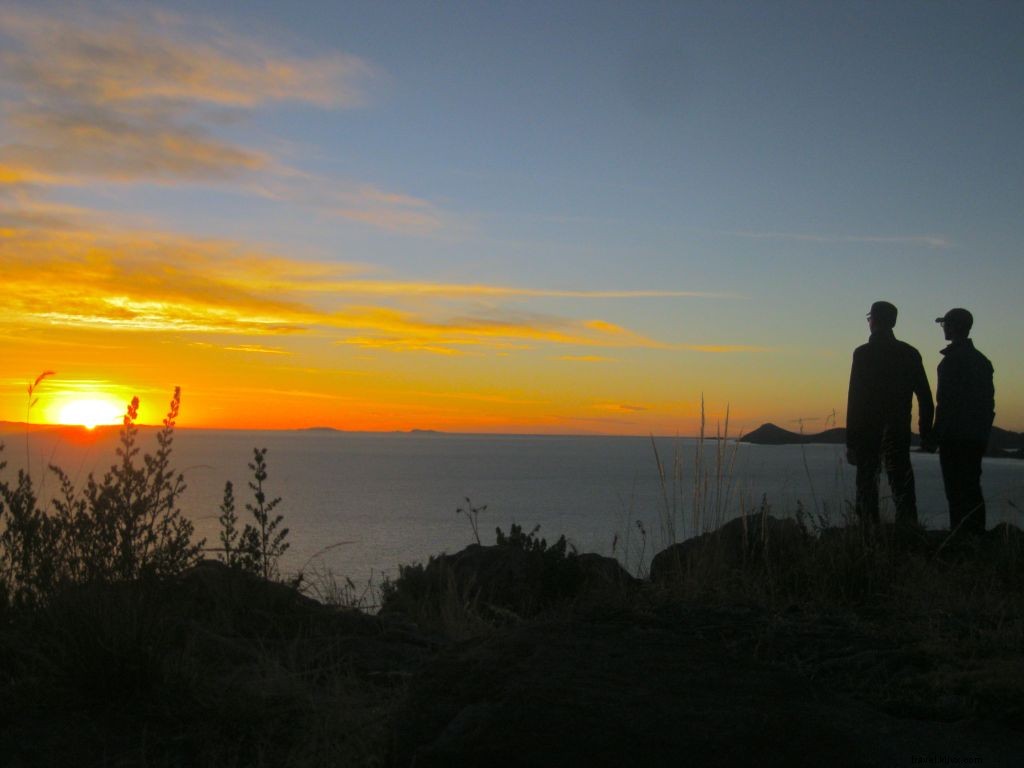
About the Author: Sam is a part-time EFL teacher, aspiring minimalist, and language enthusiast building a digital nomad life with partner Zab. Together over eight years and traveling indefinitely for one, follow their adventures at IndefiniteAdventure.com. They share destinations, vegetarian-organic-local eats, and the people they meet.