
Saguaro National Park: Iconic Cacti, Stunning Trails, and Desert Wonders Near Tucson
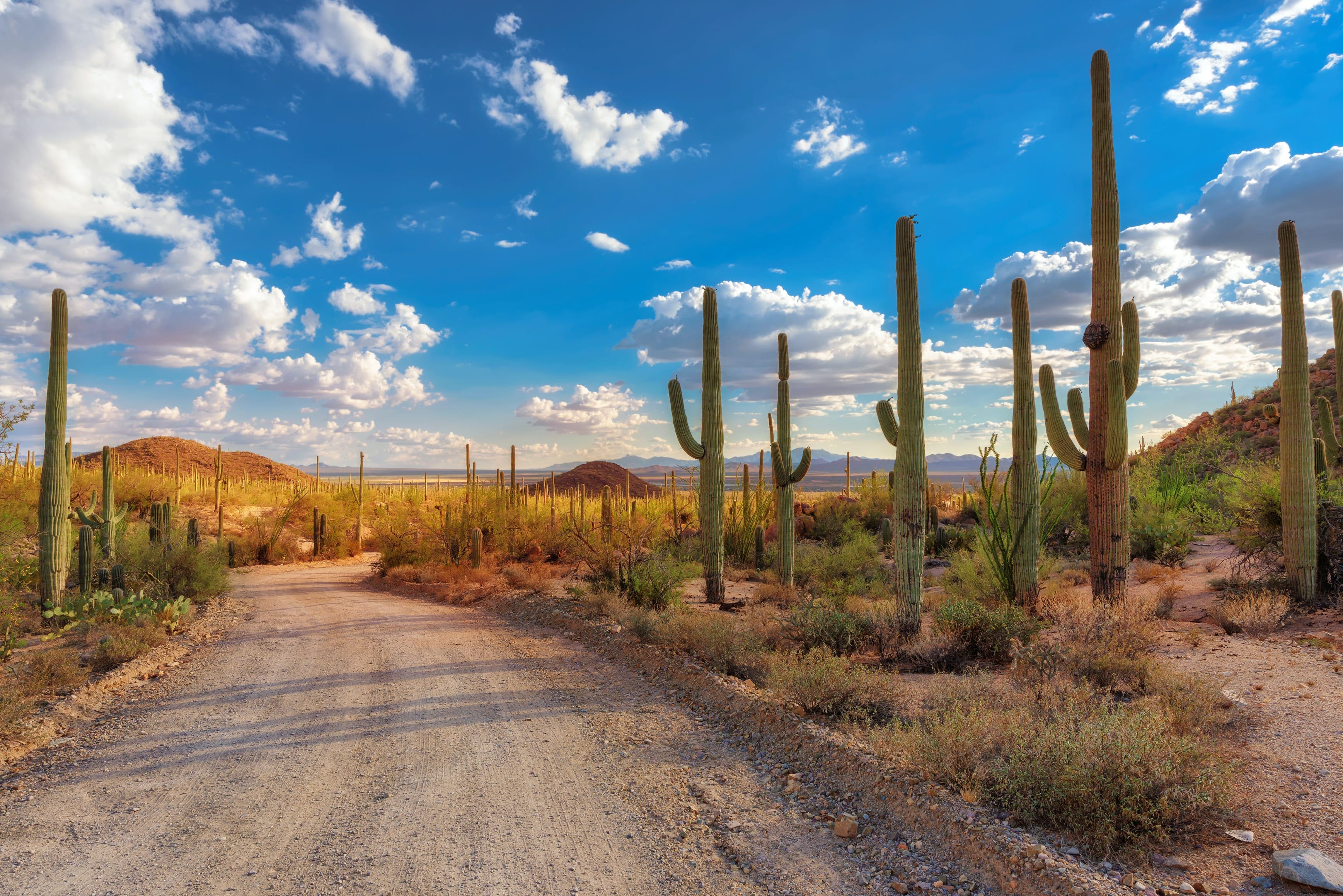
Saguaros (sah-wah-ros) are the iconic symbols of the American Southwest. This national park protects vast armies of these majestic, ribbed cacti across two distinct districts: the eastern Rincon Mountain District and the western Tucson Mountain District, separated by 30 miles and the city of Tucson. Both offer exceptional trails and desert flora, but prioritize the breathtaking western district if time is limited.
The expansive Rincon Mountain District, located 15 miles east of downtown Tucson, features a visitor center with details on day hikes, horseback riding, and backcountry camping. Camping permits cost $8 per site per day and must be obtained by noon on hike day. The 8-mile Cactus Forest Scenic Loop Drive, a paved road open to cars and bicycles, accesses picnic spots, trailheads, and scenic viewpoints.
For a quick hike, try the 1-mile round-trip Freeman Homestead Trail to a grove of towering saguaros. Serious adventurers can tackle the steep, rocky Tanque Verde Ridge Trail, a 20-mile round-trip to Mica Mountain summit (8,666 ft; $8 backcountry permit required for overnights). Families can enjoy guided trail rides with Houston's Horseback Riding in the eastern district.
In the Tucson Mountain District west of town, the Red Hills Visitor Center provides essential info. The 6-mile graded dirt Bajada Loop Drive winds through cactus forests, starting 1.5 miles north of the center. Top short hikes include the 0.8-mile round-trip Valley View Overlook Trail (stunning at sunset) and the 0.5-mile Signal Hill Trail to ancient petroglyphs. For challenge, the 7-mile round-trip King Canyon Trail begins 2 miles south near the Arizona-Sonora Desert Museum. The wheelchair-accessible 0.5-mile round-trip Desert Discovery Trail is 1 mile northwest of the center.
Park rangers emphasize: saguaros grow arms, not branches, highlighting their anthropomorphic appeal. These cacti grow slowly—15 years to 1 foot tall, 50 years to 7 feet, and nearly a century for their signature multi-armed form. Visit in April for white blossoms (Arizona's state flower) or June-July for red fruit used by local Indigenous peoples. Companions include ocotillo, teddy bear cholla, pencil cholla, and hundreds of species. Damaging or removing saguaros is illegal.
Note: Vehicles wider than 8 feet or trailers over 35 feet are prohibited on narrow scenic loops.