decorative font style
    Travel >> Holiday Travel >  >> Travel Notes

Philip English and St. Peter’s Church: Salem's First Anglican Landmark
Philip English and St. Peter’s Church: Salem s First Anglican Landmark

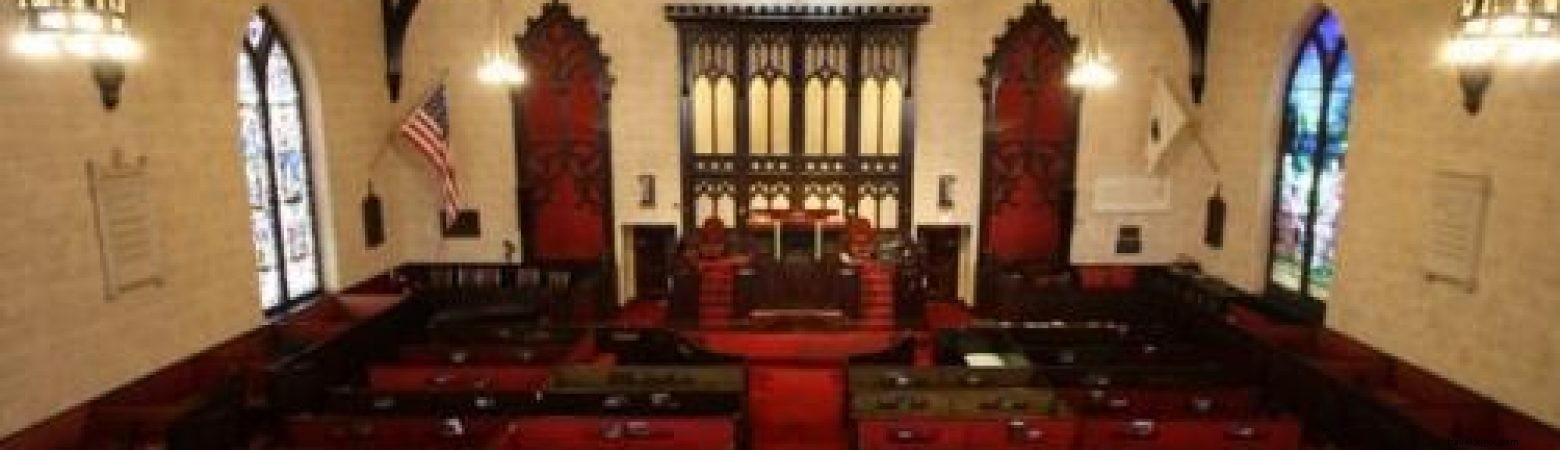
St. Peter’s Church was the first Anglican church in Salem founded in 1733/34. The church’s original structure along with its replacement, the facade you see today, was built on land donated by Philip English, a wealthy Salem trading merchant.

English was not well liked by his community for a number of reasons, including that he was a follower of the very religion Puritans removed themselves from (Anglicanism) and he supported Royal Governor Edmund Andros, who was so disliked by New England Puritans that he was eventually viewed as a symbol of their oppression.

He and his wife Mary were accused of witchcraft in April 1692, and upon examination were held for trial. With the help of Boston reverends Samuel Willard and Joshua Moody, the couple was able to escape to New York where they remained until the Salem Witch Trials came to an end.

When English returned to Salem the following year, he learned that his belongings had been confiscated and his home looted, causing him to spent the rest of his life suing anyone involved in an attempt to get his property back.

A symbol of his lifelong opposition with Puritanism, he donated the land for St. Peter’s church only a couple of years prior to his death in 1736. The tombstones you see in front of the church were originally located behind the church, however a chapel was added over the site of the graves in 1871, so the stones were moved forward (the remains are still under the chapel). Among the remains, are those of Philip English (though no stone bears his name).

Travel Notes
  • Escape to the Hills: Recharging on the Ember Bus

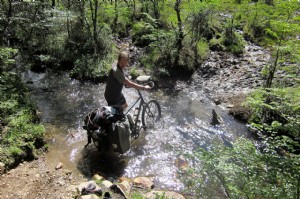
    When I boarded the electric Ember bus at St Andrew Square the city wasn’t as busy as it usually gets every August, with thousands visiting for the festivals. I left the office earlier than usual for a quick escape. After weeks of working almost non-stop I felt that a break was long overdue. From similar adventures in the past, I knew how a night in the hills on my bike, reconnecting with nature, would help me to recharge my batteries and revive myself. The focus and clarity afterwards would

  • The Pursuit of Quiet: Harnessing Silence for Mental Health and Wildlife Conservation

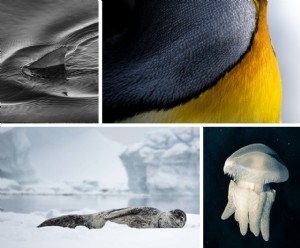
    Chasing silence has become an obsession, a therapy, an essential part of my personality, a necessity for good mental health – and a powerful tool for conservation. I’d been seeking these rare moments of silent communion with wild creatures ever since a close encounter with a female tiger shark off Cocos Island, which Jacques Cousteau called the most beautiful island on the planet, but from the isolated steppes of Kazakhstan to the Annapurna mountains nothing seemed to totally fulfil my spiri

  • Exploring Scotland s Deepest Cave: Uamh nan-Claiggion, the Cave of Skulls

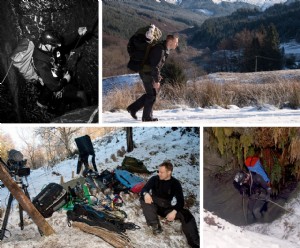
    The depths of a Highland Winter may seem an ill-advised time to embark on exploring the submerged passages of Uamh nan-Claigg ionn, The Cave of Skulls, Scotland’s deepest cave.  But I had a lull in my diary and, besides, after dragging my kit down five vertical drops and numerous constricted crawls, I’d be convincingly ‘out of the wind’. Cave diving in the Scotland is like most of the UK, specialising in tight, serpentine crawls, long abseils and muddy water (or watery mud)… and the sites are