Discover 17th-Century Salem, MA: In-Person Visits or Immersive Virtual Tours
When people consider 17th century Salem, Massachusetts, they often think of the infamous Salem Witch Trials, and with the exhibition at the Peabody Essex Museum, The Salem Witch Trials 1692, closing on April 4, the timing is perfect to consider a 17th-century visit to Salem virtually or in person. Right around the corner from PEM, the Salem Witch Museum is open for in-person visitors and tours. However, it’s not only about those accused of being witches in 17th-century Salem, here are some suggestions to explore the century while downtown:
Enjoying colonial Salem can be done in a day trip, or during an overnight vacation. For an overnight stay, the Daniels House, which was built in 1667 by a sea captain, and predates the Salem Witch Trials, is the perfect place to settle in for the night. This First Period property features open hearth fireplaces, exposed beams, and paneled walls. The Daniels House was restored and reopened in 2019.
Choose from hosted historical walking tours, the self-directed mobile tour app by Salem On Your Own, or a self-guided walk through the City. Most walking tours include Salem’s rich 17th-century history in their program, and the Bewitched After Dark walking tour is almost entirely dedicated to the Witch Trials history. Below are recommended sites to visit, many of which have their own tours in-person or virtually.
The Ward House and Quaker Meeting House (PEM)
This first Quaker Meeting House in Salem was built around 1688. The current building, erected in 1865 to resemble a Post-Medieval or First Period structure, is a reconstruction of the Quaker Meeting House and may contain some of the original timber framing. It is most interesting today as a very early example of an architectural re-creation.
The Gedney House
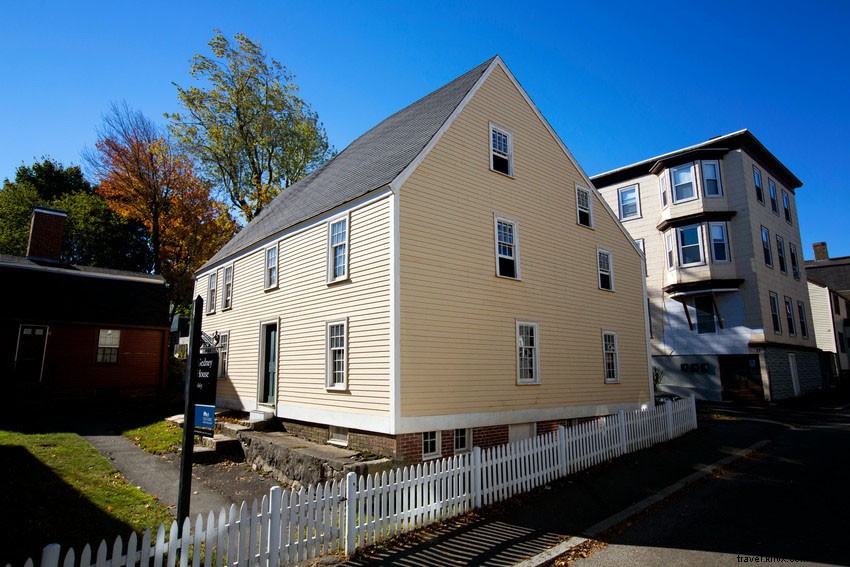
Salem shipwright Eleazer Gedney built the earliest portion of this property in 1665. Originally the house was asymmetrical, with two rooms on the first floor, a single chamber above, and an attic with a front-facing gable. Significant renovations in 1712 and 1800 resulted in dramatic changes to the house’s appearance. Gedney House is significant both for its framing and for its evidence of early decorative finishes in the hall chamber and parlor.
The Narbonne House (Salem Maritime National Historic Site)
The Narbonne House was built in 1675 for butcher Thomas Ives. It is a remarkable example of a middle-class family home of the 17th and 18th centuries.
The Samuel Pickman House
The Pickman House, built in 1665, is a Post-Medieval or First Period building, “discovered” beneath a much-later mansard roof. It stands on its original site and exhibits the characteristics associated with this style. The house was restored by Historic Salem in 1969 and purchased by the Peabody Essex Museum in 1983.
The Witch House
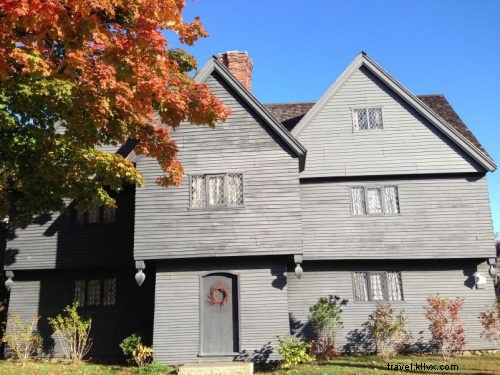
The Jonathan Corwin House, known as The Witch House, was the home of Judge Jonathan Corwin (1640–1718) and is the only structure that can be visited in Salem with direct ties to the Salem Witch Trials of 1692.
The House of the Seven Gables
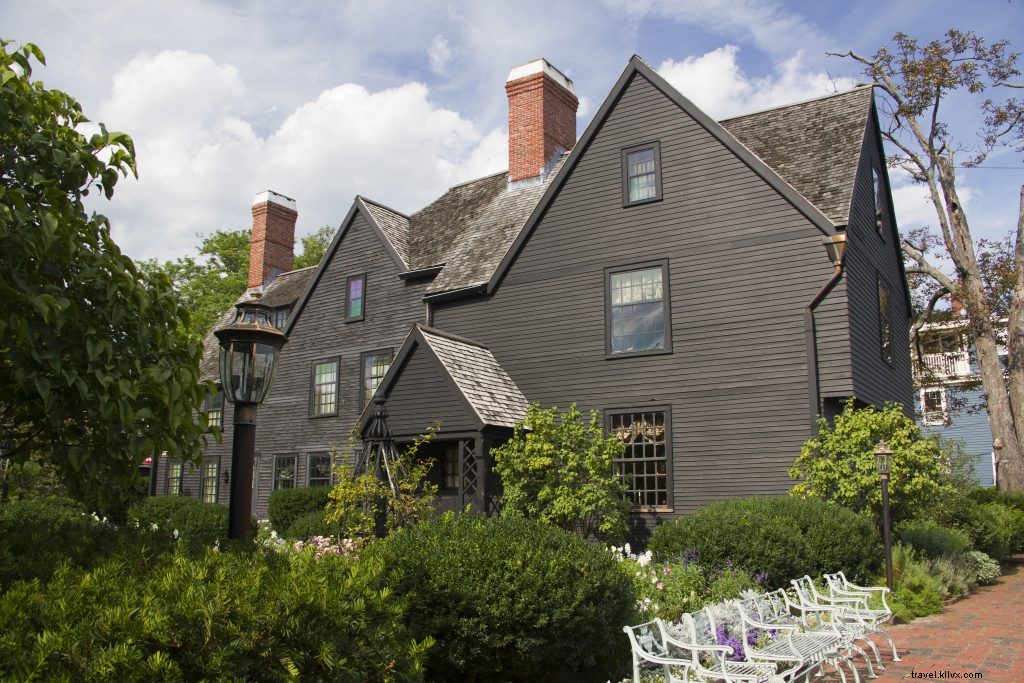
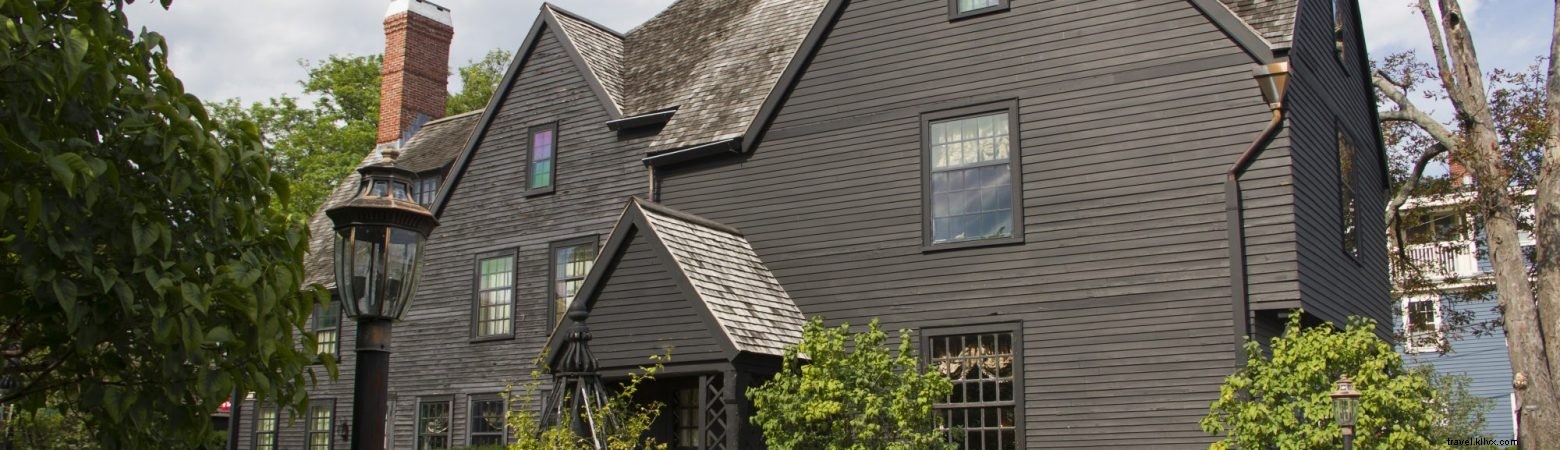
Merchant and ship-owner John Turner built this house on Salem Harbor in 1668. It was designated a National Historic Landmark District in 2007 and is best known today as the setting of world-renowned American author Nathaniel Hawthorne’s 1851 novel. The House of the Seven Gables will reopen for tours on April 2.
Pioneer Village
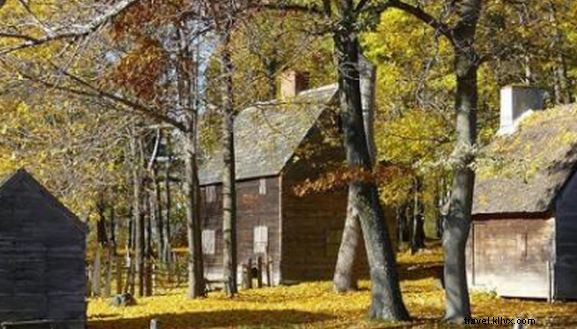
Pioneer Village is a model of Salem in 1630 that was built in 1930. The village sits on three acres of land and contains various examples of colonial architecture: dugouts, wigwams, thatched roof cottages, and the Governor’s Faire House. Culinary and medicinal gardens and a blacksmith shop further interpret early 17th-century colonial activities.
Salem has two cemeteries that date back to the 17th century. Charter Street Cemetery is closed until May 1, however, Broad Street Cemetery is currently open.