Discover the Dominican Republic's Wild Samaná Peninsula: Eco-Lodges and Secluded Beaches Beyond Punta Cana
Innovative eco-lodges on the Samaná Peninsula showcase the region's pristine natural wonders. Explore one of the Dominican Republic's most untouched corners.
“It’s surprising that in a country so commercialized, you can still find places like this,” said Noemi Araujo as we passed a For Sale sign on a fenced, wooded lot. The owner of Clave Verde Ecolodge, where my partner Luis and I were staying, guided us on a two-hour hike down the rugged road from the hotel to the breathtaking Playa Morón shoreline. Cicadas buzzed through the dense tropical forest, piercing the humid air. Moments later, she pointed upward: speckled brown palmchats, the Dominican Republic's national bird, darted in and out of their towering nest atop a royal palm.
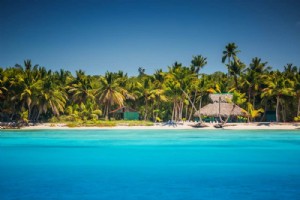
We encountered more goats than people until reaching a roadside stall where a couple sold fresh coco bread from their home. We bought two warm bundles for $1.25 each. A forest shortcut led to the secluded golden beach. A few teenagers swam in the turquoise waters. At the sand's end, a steep trail descended to Playa Limón—miles of virgin beach fringed by coconut palms. A fisherman hauled his net ashore from his canoe. Beside a lone shack, a woman tended her fogón, the traditional outdoor hearth, preparing the fresh catch for lunch. We waded into the cool shallows where the Limón River meets the sea.
Over 15 years exploring more than 20 Caribbean islands, none captivates me like the Samaná Peninsula's exuberant tropical beauty: scenic coves, rugged cliffs, endless coconut groves—just 100 miles from my home in Santo Domingo, where I've lived since 2016. Humpback whales migrate here each January to mate and calve. Beachside towns Las Terrenas and Las Galeras draw locals and travelers seeking respite from Punta Cana's crowds.
Yet the peninsula's hilly interior remained elusive—until now. Dominican-owned eco-lodges are unlocking these rural gems, using local materials, offering forest excursions amid biodiversity hotspots, and serving permaculture-grown meals. As the Caribbean reopens and travelers crave crowd-free escapes, Samaná's heart offers an ideal retreat.
Pioneering the trend is the rustic-chic Clave Verde, where Luis and I stayed during a fall weekend. Noemi and her husband Jonathan launched the solar-powered haven after moving from Santo Domingo to La Barbacoa village. Nestled amid forest trails and native groves of almond, cherry, and acacia trees, it's a quick 15-minute drive from Las Terrenas, where Araujo recommended lunch post-hike.
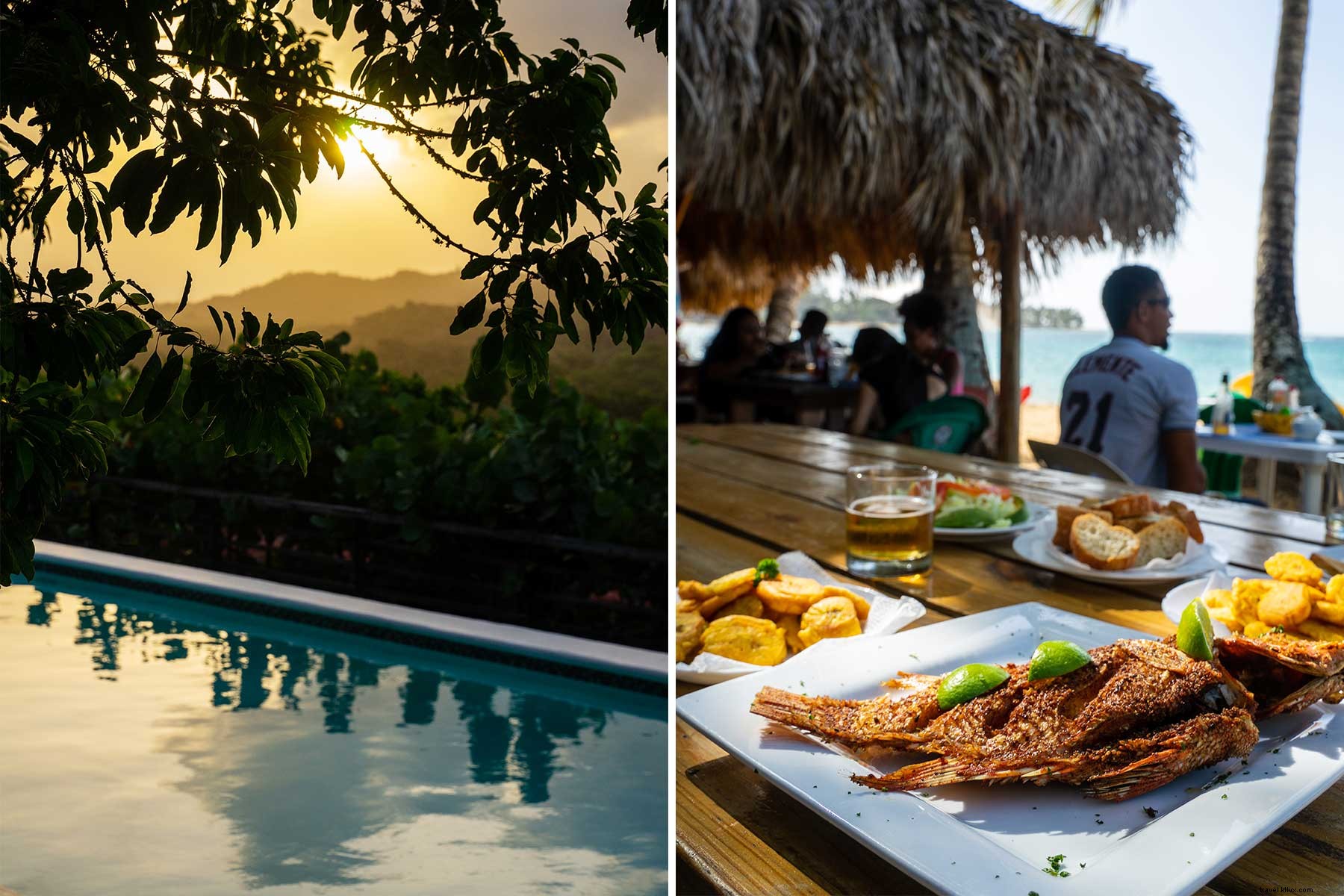
From left: The pool at Clave Verde Ecolodge, with the Sierra de Samaná beyond; lunch of fried capitán and tostones at Candelita, in the beach town of Las Terrenas. | CREDIT: LEBAWIT LILY GIRMA
We strolled past the fish market to beachfront open-air eateries. Locals savored fresh seafood and Presidente beer as a couple danced barefoot to bachata. At Candelita, we enjoyed fried capitán (hogfish) with tostones and avocado. Departing amid buzzing motorbike traffic, we cherished Clave Verde's serene hilltop perch.
The next morning, cows mooed over the bluffs heralding sunrise. From our balcony, forest canopy views mingled with crisp air in our suite. A breakfast of fried eggs and mashed green bananas powered our drive to Las Galeras, famed for its beaches. Once known for lively bars, the town now emphasizes ecotourism, like the new Seven Hidden Beaches trail through sea caves along undeveloped shores.
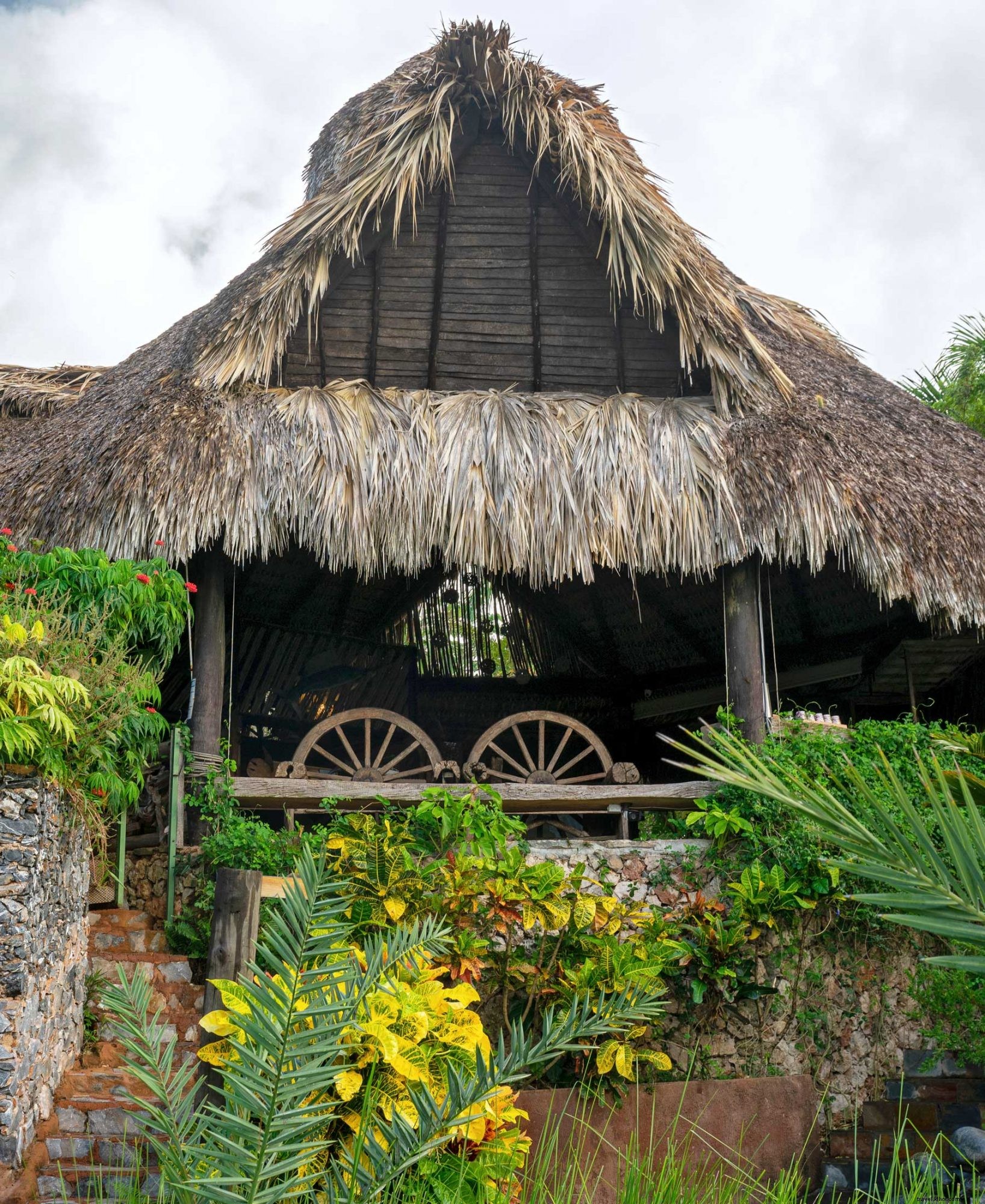
The five-bedroom villa at Casa El Paraíso. | CREDIT: LEBAWIT LILY GIRMA
At Samaná's highway end, we veered toward La Guázuma village and entered the seven-key Casa El Paraíso—a lush micro-reserve of fruit trees, palms, and petunias along a stone path. Butterflies fluttered; cicadas echoed. An open-air lounge with sculptures and Balinese furniture overlooked Samaná Bay.
José Raúl Nova, a renowned Santo Domingo veterinarian who cared for Oscar de la Renta's pets, built it as a vacation home before transforming it with wife Nora Mejía into an eco-hotel. Thatched bungalows draw from global travels: nautical Marina (de la Renta's former stay), Casita Dominicana with repurposed wood, and new Marruecos with Moroccan accents. Open-sided, bay views serve as walls. “No room keys needed,” Nova said. “Nature protects you here.”
Dinner arrived poolside: lionfish tartare from chef Mirko Casagrande. “We highlight the DR's natural riches—rivers, beaches, mountains,” he noted. The Milan native, Las Galeras resident for 20 years, crafts sustainable dishes: grilled lobster with farro, avocado, mango; octopus with honey-ginger; garden veggies amid free-range chickens. Post-lobster season, he serves invasive lionfish. “It's an environmental win,” he affirmed.
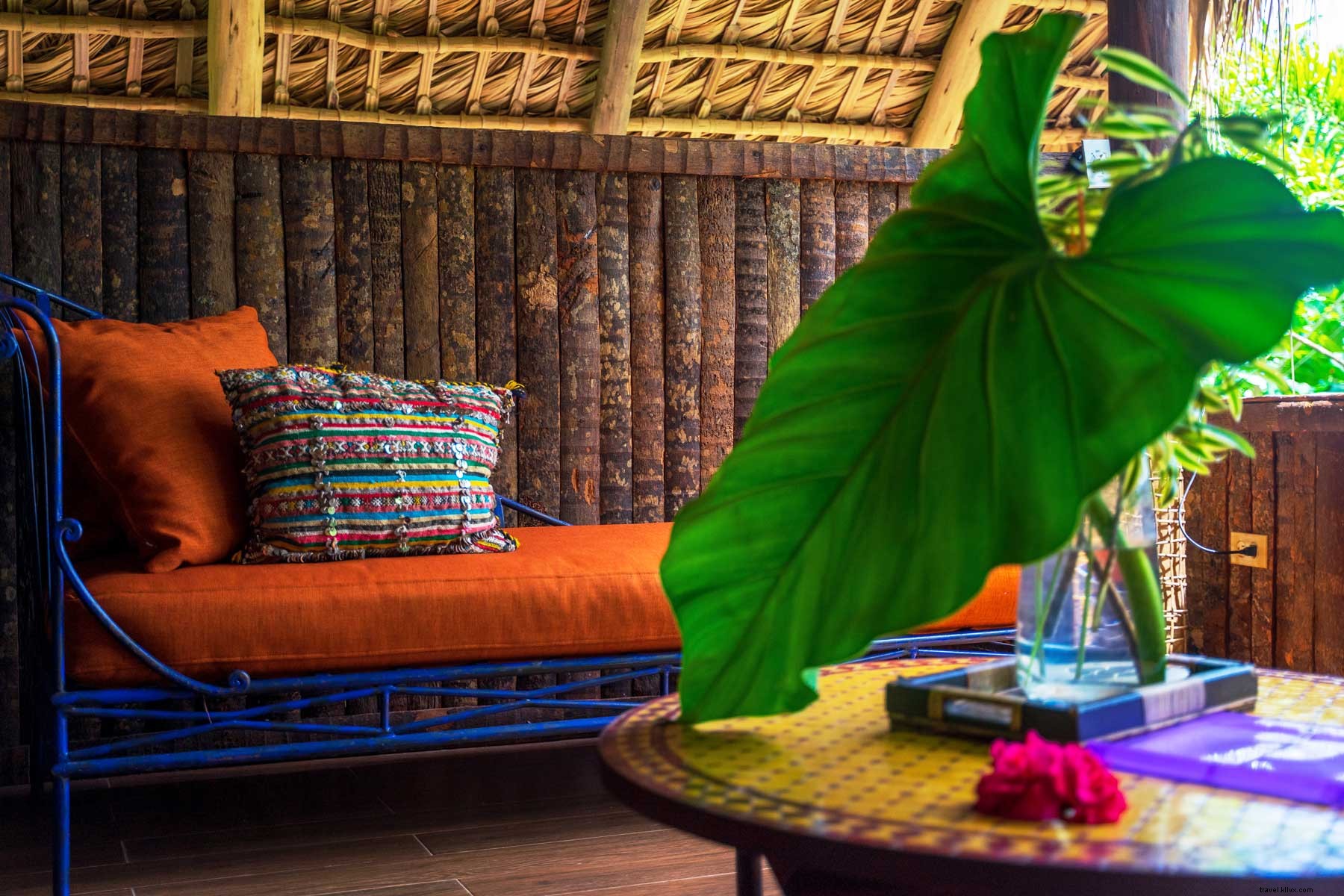
The Marruecos bungalow at Casa El Paraíso. | CREDIT: LEBAWIT LILY GIRMA
After storms nixed our beach hike, we drove to solar-powered Aventura Rincón Ecolodge, an organic farm resembling a sprawling garden with campo-inspired cabins.
“We encourage reconnecting with roots,” said Orquídea Susana, then managing permaculture. Using heirloom seeds and organics, they grow vanilla, turmeric, cacao, taro, papaya—and local piña pan de azúcar, "like sugar." Thunder hastened our tour amid cranberry hibiscus.
Lunch featured snapdragon tea, mizuna-avocado-hibiscus salad with edible flowers, sweet pineapple, and jalao coconut candy. Strolling empty Playa Colorada, solitude reigned.
This story first appeared in the December 2020 issue of Travel + Leisure as “On the Wild Side.”
https://www.travelandleisure.com/trip-ideas/island-vacations/dominican-republic-samana-peninsula