Discover Over 20 African American Heritage Sites Along South Carolina's Grand Strand
Explore more than 20 African American cultural sites along the Grand Strand in Horry and Georgetown Counties.
The South Carolina African American Heritage Commission (SCAAHC) presents The Green Book of South Carolina, the state's first mobile web travel guide to African American cultural sites. This user-friendly resource enriches cultural experiences statewide, including numerous historic landmarks along the Grand Strand. It pays homage to the original Green Book, first published in 1936, which guided African American travelers to safe and welcoming establishments across the U.S.
Discover over 20 verified African American cultural sites along the Grand Strand below. Know of others? Suggest them via the Green Book of SC form.
Horry County African American Cultural Sites
Atlantic Beach
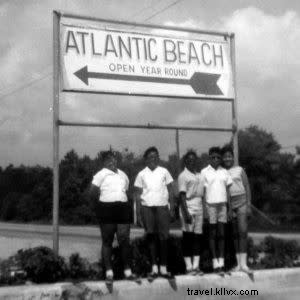
Nicknamed "The Black Pearl," Atlantic Beach was founded around 1934 as a segregated oceanfront haven for Black visitors denied access elsewhere. A premier East Coast resort for African Americans from Virginia to Florida, it thrived with hotels, nightclubs, and pavilions until desegregation in the 1970s. Chartered in 1966, it's among the few Black-owned oceanfront towns in the U.S. Marker by Atlantic Beach Historical Society, 2005.
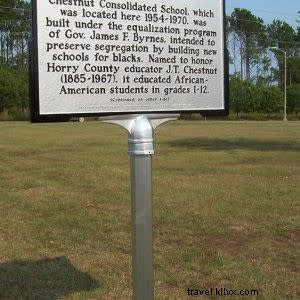
Chestnut Consolidated School / Chestnut Consolidated High School
Operating here from 1954-1970, this school was part of Gov. James F. Byrnes' equalization program to maintain segregation through new facilities for Black students. Honoring educator J.T. Chestnut (1885-1967), it served northeastern Horry County communities. The brick building was demolished in 1995. Marker by Chestnut Consolidated High School Alumni Association, 2011.
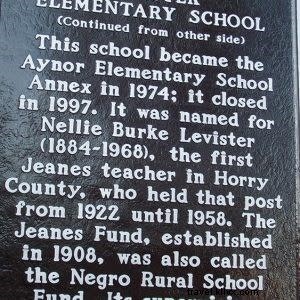
Levister Elementary School
Built in 1953 under Byrnes' equalization program, this school honored Nellie Burke Levister (1884-1968), Horry County's first Jeanes teacher. It closed after the 1969 graduating class, becoming Aynor Elementary Annex in 1973 and shuttering in 1997. Marker by Levister Development Activity Center, 2010.
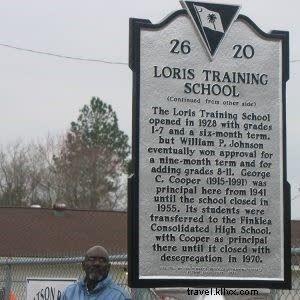
Loris Training School
A Rosenwald school from 1928-1955, it was the first for Black students in Loris and nearby areas. Students later attended Finklea Consolidated High School under principal George C. Cooper (1915-1991) until desegregation in 1970. Marker by Finklea High/Loris Training Schools Alumni Association, 2008.
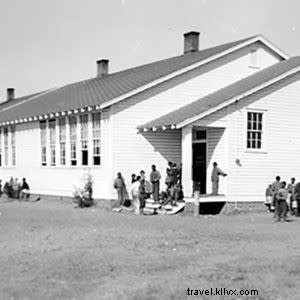
Myrtle Beach Colored School
Myrtle Beach's first public school for African American students (1930s-2001), this six-room frame structure resembled Rosenwald designs. Replaced by Carver Training School in 1953, it was reconstructed at Dunbar St. and Mr. Joe White Ave. in 2006 after demolition. Marker by City of Myrtle Beach and Myrtle Beach Colored School Committee, 2006.
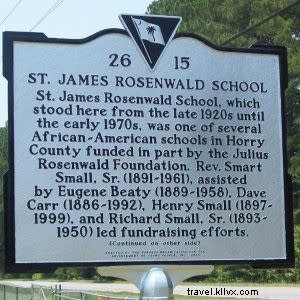
St. James Rosenwald School
One of Horry County's Rosenwald schools (late 1920s-early 1970s), fundraising was led by Rev. Smart Small, Sr. (1891-1961) and others. It closed post-desegregation in 1970. Marker by Burgess Organization for the Advancement of Young People, Inc., 2005.
True Vine Missionary Baptist Church
Organized c. 1894 by Antey Graham and others, the original frame sanctuary (c. 1913) was relocated here in 1943 by mules. The current brick structure dates to 1971. Marker by the congregation, 1999.
Whittemore School / Whittemore High School
Founded in 1870 and operating here 1936-1970, it honored Benjamin F. Whittemore (1824-1894), Freedmen's Bureau educator and congressman. Closed with county desegregation. Marker by Whittemore High School Historical Marker Commission, 2011.
Georgetown County African American Cultural Sites
Bethel AME Church, Georgetown
Founded c. 1865 with Rev. Augustus Z. Carr as first pastor, the current wood sanctuary (1882, remodeled 1908) features Gothic Revival elements. Part of Georgetown Historic District.
Bethesda Baptist Church
Organized post-Civil War with Rev. Edward Rhue, this site was purchased by 1867. The sanctuary (1922-1927) served under pastors like Rev. A.W. Puller and Rev. G. Going Daniels. Rev. W.A. Johnson led from 1956-1995.
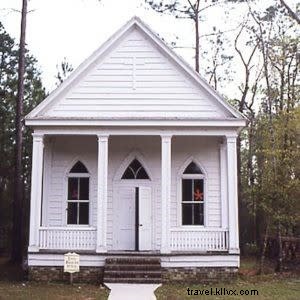
Cedar Grove Plantation Chapel
Built c. 1850 by Rev. Alexander Glennie for enslaved people on rice plantations, it's the sole survivor of 13 chapels. Relocated multiple times, last in 1985.
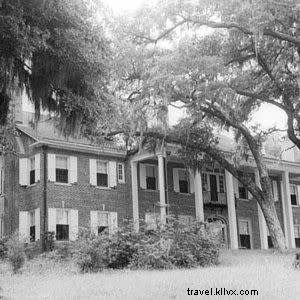
Hobcaw Barony
Bernard M. Baruch's 16,000-acre estate (1905-07) preserves African American history through graveyards, villages like Friendfield, rice fields, and roads. Open for guided tours Mon.-Fri. via Visitor Center.
Howard School
Georgetown Colored Academy built here in 1866; Howard School followed by 1908. New facilities opened 1938; merged into Georgetown High in 1984. Marker by Georgetown Delta Sigma Theta, 1986.
James A. Bowley House
Home (c. 1890) of teacher, editor, legislator, and judge James A. Bowley, who arrived in 1867 from Maryland. Served in SC House (1869-1874) and edited Georgetown Planet. In Georgetown Historic District.
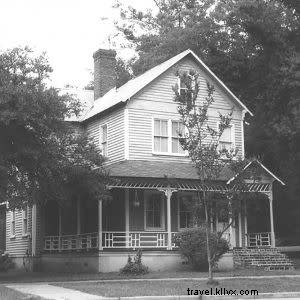
Jonathan A. Baxter House
This c. 1890 home belonged to Jonathan A. Baxter, a prominent community leader in post-Reconstruction Georgetown. Part of the Georgetown Historic District.
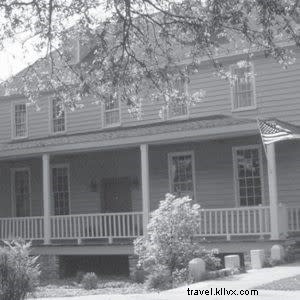
Joseph Hayne Rainey
National Historic Landmark: Home of the first African American U.S. Congressman (1870-1879). Born 1832 in Georgetown, Rainey served in SC politics post-Civil War. Died 1887. Marker by Georgetown Delta Sigma Theta, 1994.
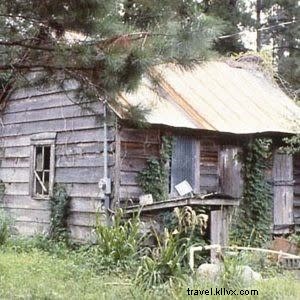
Keithfield Plantation
A key Black River rice plantation (315,000 lbs. in 1860 with 81 enslaved people), it retains fields, canals, a c. 1830 slave cabin. Site of 1866 Freedmen's uprising. 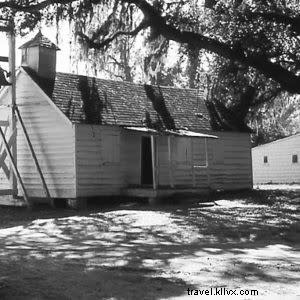
Mansfield Plantation Slave Street
18th-century rice plantation with 100+ enslaved people by 1860. Preserves six slave houses and chapel. Now a B&B since 2004.
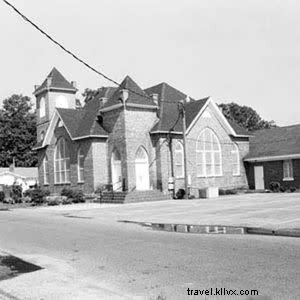
Mt. Olive Baptist Church, Georgetown
Founded 1866 by Rev. James Smalls, sanctuary built 1920 with stained glass. Grew to 100+ members by 1903. Marker by Georgetown Delta Sigma Theta, 2001.
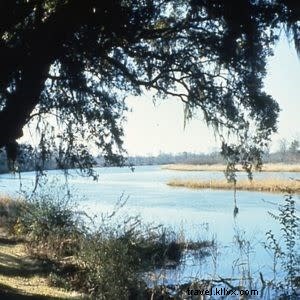
Pee Dee River Rice Planters Historic District
5,100-acre district with 17 rice plantations (1750-1910), houses, barns, rice fields, and mills along Pee Dee and Waccamaw Rivers.
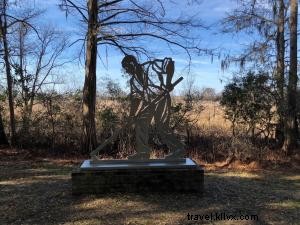
The Lowcountry Trail at Brookgreen Gardens
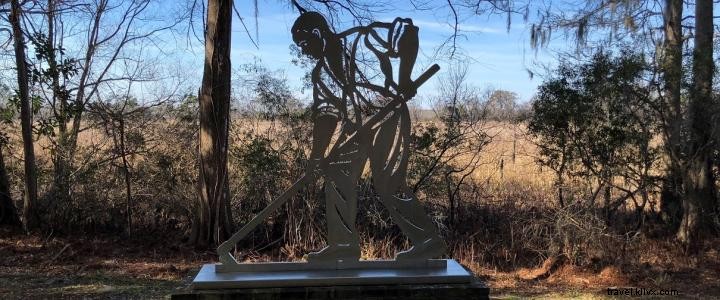
This boardwalk overlooks restored Mainfield rice field, with panels and figures depicting roles on Lowcountry plantations: owner, overseer, and enslaved Africans.