
Purple Martins' Annual Return to the Outer Banks' William Umstead Bridge
(Header Photo by Coastal Carolina Purple Martin Society)
The purple martins of the William Umstead Bridge have returned once again. Often compared to the famous swallows of Mission San Juan Capistrano, these birds faithfully return each year to their cherished nesting site on the Outer Banks.
Purple martins are the largest swallow species in North America. Like their West Coast counterparts, they are highly migratory, embarking on an epic journey from Brazil and northern South America. Recent satellite tracking has confirmed these patterns, though ongoing research explores whether the same individuals return to the same sites annually.
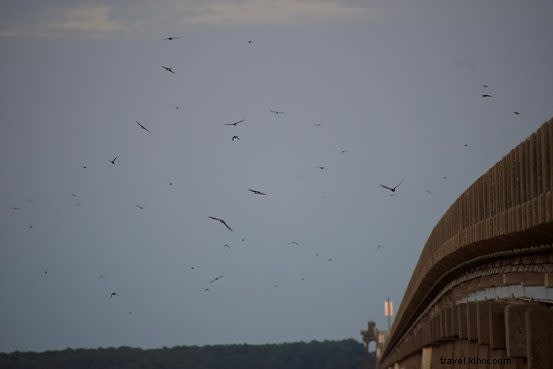
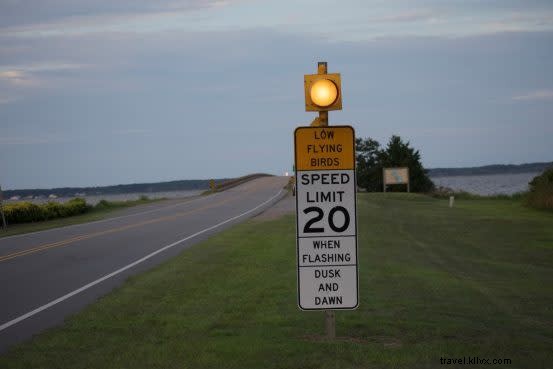
The William Umstead Bridge, the former U.S. 64 crossing at the north end of Roanoke Island, opened in 1955. Over decades, it has become a haven for more than 100,000 purple martins each summer. To protect them, the North Carolina Department of Transportation (NCDOT) has reduced the speed limit to 20 mph on the bridge during this season since 2007.
Despite their name, purple martins display a dark blue-black plumage with an iridescent sheen that shifts in the light—appearing bright blue, navy, green, or deep purple.
In flight, they deliver an aerial spectacle, reaching speeds of 40 mph while diving from 100-150 feet to skim the water for a drink before soaring upward. Their diet consists mainly of insects like moths, gnats, and flies—though they consume fewer mosquitoes than folklore suggests, as they hunt at higher altitudes.
Native Americans pioneered artificial habitats by hanging dried gourds near crops to attract these insectivores. European settlers adopted the practice, and today, backyard martin houses remain popular, though primarily for birdwatching.
Why do so many purple martins choose the Umstead Bridge?
Naturally colonial, they form large flocks. While 100,000 at the bridge exceeds typical sizes, colonies up to 700,000 have been documented. Nesting behaviors remain partly mysterious: females select mates based on nest quality, multiple females may share nests, and extra-pair mating occurs.
On the East Coast, purple martins rely almost entirely on human-made structures like bridges and houses for nesting—unlike Western populations, which use natural sites such as dead trees and cliffs.
Come fall, once fledglings are ready, they depart on their 9,000-mile journey to Brazil. They will return to Roanoke Island next spring.