Unveiling Lookout Mountain's Forgotten Incline Railway: The War of the Mountain Roads
Park at the Cravens House on the side of Lookout Mountain, as countless tourists, hikers, and trail runners do daily, and you'll be immersed in the site's rich history. Monuments rise across the grassy lawn, while others stand as silent sentinels, honoring the soldiers who fought, shouted, and sacrificed during the Civil War.
While nothing rivals the tragedy of that era, a lesser-known conflict followed: the War of the Mountain Roads. This bitter rivalry left behind roadbeds, railroads, and ruins scattered across the mountain's north end.
On a cloudy May day, my friend Jerry Patton and I started from Cravens House, heading left from the upper parking lot onto the East Cravens Trail. We passed massive boulders near the Hardy House, a historic slate-roofed cottage from the 1920s. Like many trails in the park, East Cravens was crafted by the Civilian Conservation Corps during the Great Depression but later fell into obscurity.
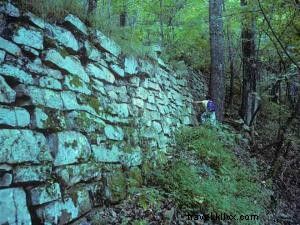
I still vividly recall 1990, when I hiked alone and stumbled upon the grand stonework of Lookout's first incline railway, built over a century prior. The trail was then completely overgrown, making me feel like the first visitor in decades to this engineering marvel. How had this steep, remarkably preserved roadway endured?
As history revealed, this incline was built not for admiration, but to spite a woman. At the heart of the War of the Mountain Roads was Harriet Whiteside, a beautiful, intelligent, yet contentious music teacher.
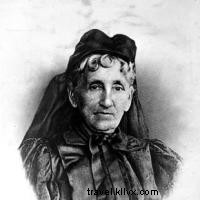
In 1843, 20-year-old Harriet Lenora Straw arrived in Chattanooga to teach piano to the daughter of Col. James Whiteside, a prominent attorney, politician, and railroad aficionado who owned much of Lookout's north end. She soon married the widowed colonel. When James died in 1861, Harriet became one of Tennessee's wealthiest women.
A prized asset was the Whiteside Turnpike, the mountain's first public road for years. The stunning view of Moccasin Bend from Point Park drew crowds. As tourism boomed and the 1878 yellow fever epidemic surged traffic, complaints mounted about high tolls and poor maintenance. Lawsuits proliferated.
Remarried to attorney Varney Gaskill, who represented her for free, Harriet grew intolerant of setbacks. When he lost cases, she charged him rent to live in his own home.
After rivals, including her son-in-law, built an alternative road (now Ochs Highway), Harriet imposed extra fees and blocked Point access with fences and armed guards. Public outrage grew as lawsuits dragged on.
With the Point sealed, competitors devised a decisive counter: In 1885, Incline #1 launched from St. Elmo to the bluff near the Point, mirroring today's Incline Railroad with counterbalanced cars.
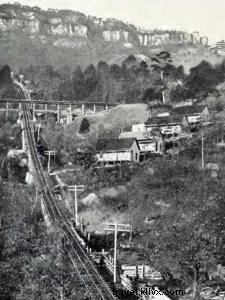
At the summit, adjacent to her land, they erected a striking hotel with wrap-around balconies. Its top floor aligned with Point Park views, bypassing her property. The incline docked in the hotel's lower level; opposite was a station for a narrow-gauge railroad along today's Bluff Trail to Sunset Rock and beyond.
Today, the well-maintained East Cravens Trail reveals these stoneworks as a mystery to most hikers. After climbing the old roadbed 100 yards, Jerry and I noted its sharp upper turn. We detoured via wooden steps to the Mountain Beautiful Trail, then right along the bluffs half a mile to the Point. Near metal stairs from Point Park, stone pillars and a large bolt remain—echoes of the hotel. The incline's path plunges steeply below.
Harriet lost the battle. Courts ruled against her; the turnpike was abandoned (now the Guild Trail from St. Elmo to Sanders Road Picnic Area). In 1887, she sold the Point. Tourists soon returned, gazing over Moccasin Bend to Chattanooga.
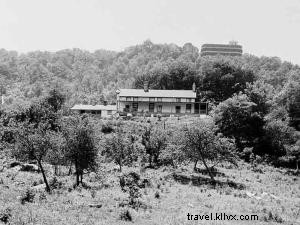
The grand hotel and Incline #1 lasted about a decade. A second Incline Railway, operational today, opened in 1895 with steeper grades and superior views. It outcompeted the original, which shut down. Rails were removed, the hotel razed, and nature reclaimed the site.
Though estranged from most of her eight children and litigation lingered post-mortem, Harriet had the final word: She financed that triumphant second incline.
Never underestimate a determined, brilliant woman.