Japanese White-eye (Zosterops japonicus) – The Charming Sociable Bird Known as Mejiro
Wisps of smoke-gray, pale-brown, and soft yellow intersect the dusky-green plumage of the Japanese white-eye. The clear, light voice of this small perching bird seldom sings alone. Mejiro (the Japanese word means “white-eye” and refers to the white ring around the eyes) is a sociable creature, and forages in teams. It’s a charming little thing, seducing us humans so easily with its agile tolerance. White-eye individuals sometimes preen each other’s feathers, even those of other birds. You may find them hanging upside down in foliage, pecking at ripe fruits, searching for nectar in deep-chaliced blossoms, hunting for insects underneath leaves. Pretty white-eye is hard to resist.
A favorite cage bird in Asia, common in Korea and Japan, white-eye was introduced to the islands in the heyday of the sugar plantations for purposes of bug control, in 1929. No one knew at the time how rapidly this tiny bird would expand its range, adapting easily to new foods and environments. Energetic, traveling in small, twittering flocks, white-eye can be found just about anywhere in Hawaii these days, as long as there are trees and shrubs. Flying in wet rain forests and near-desert conditions, from mauka to makai, white-eye has become the most common bird in the islands.
That’s a problem. White-eyes have become so numerous in native forests that they are leaving native bird species with little left to eat. They compete with native honeycreepers for seeds, berries, and nectar and may be playing a role in their decline.
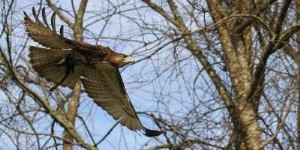
On the other hand, little white-eye is thought to facilitate the preservation of native plant species by dispersing their seeds. It has become the main pollinator, for example, of the ieie vine, which used to depend on bird species that have long gone extinct. The native Hawaiian hawk has adapted and preys on white-eye for its survival. In 2002, a Yale University study at Hawaii Volcanoes National Park determined that white-eye favors plots heavily overgrown with Kahili ginger, which is an invasive species like white-eye itself. When the ginger was removed, the white-eye population decreased.
Such findings about the interactions between invasive and native species are invaluable pieces of information for the ongoing fine-tuning of forest restoration management plans.
Invasive or darling? White-eye is likely to stay in the islands. Its lovely song is welcome around our island homes. We just need to keep an eye on it.