Exploring Coastal Forests: Foraging & Wild Cooking in the UK
This is the first in a new foraging and wild cooking series exploring different landscapes and ingredients within the UK. To follow the routes and for more ideas, visit Viewranger.com.
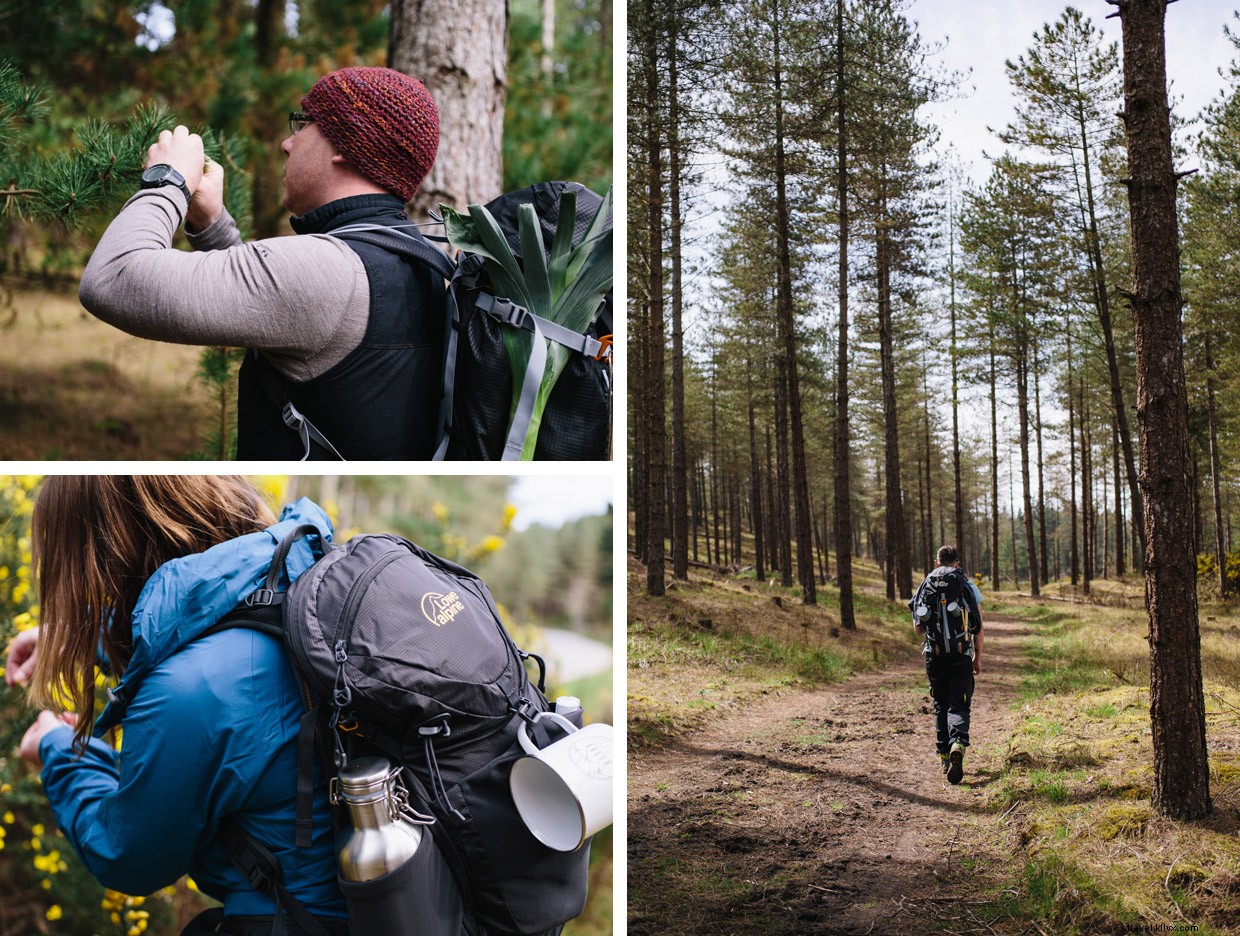
Sun dried pine needles and twigs crackle underfoot as we step off the trail and into the undergrowth. Hints of vanilla and coconut scent the air on this unseasonably hot April morning; on the far northwest reaches of Wales it can only mean a large swathe of gorse. Carefully teasing the bright yellow petals away from spiny barbs we drop handfuls of the tropical smelling flowers into our canisters.
Already in our packs we have rock samphire and wild garlic from yesterday’s hunt further inland, along with the strong earthy scent of freshly butchered racks of spring mountain lamb, sharp tangy ewes’ curd, and the first of this season’s asparagus. We have a planned hike ahead of us, exploring the forest and coastal areas of Newborough, Anglesey, but at this moment we are savouring the thought of sitting by the fire at the end of the day sharing a meal and moments with friends.
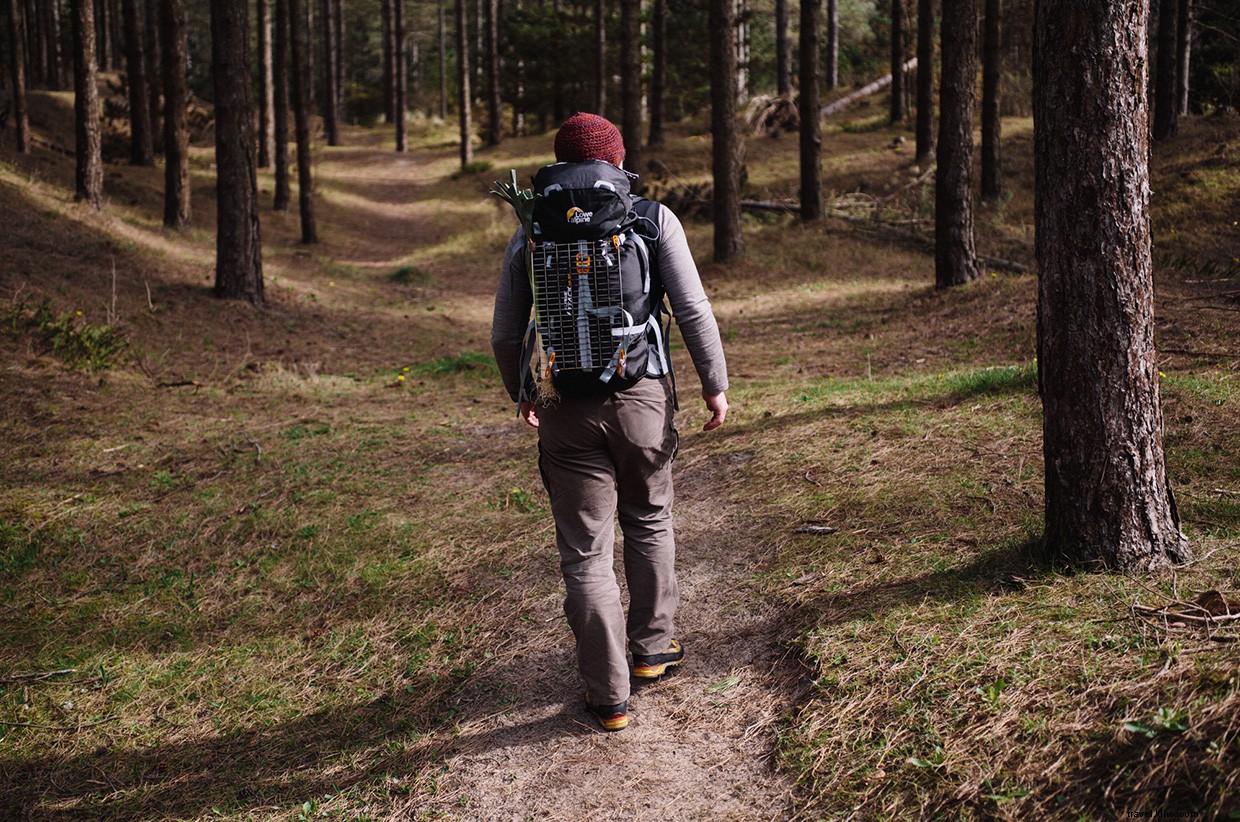
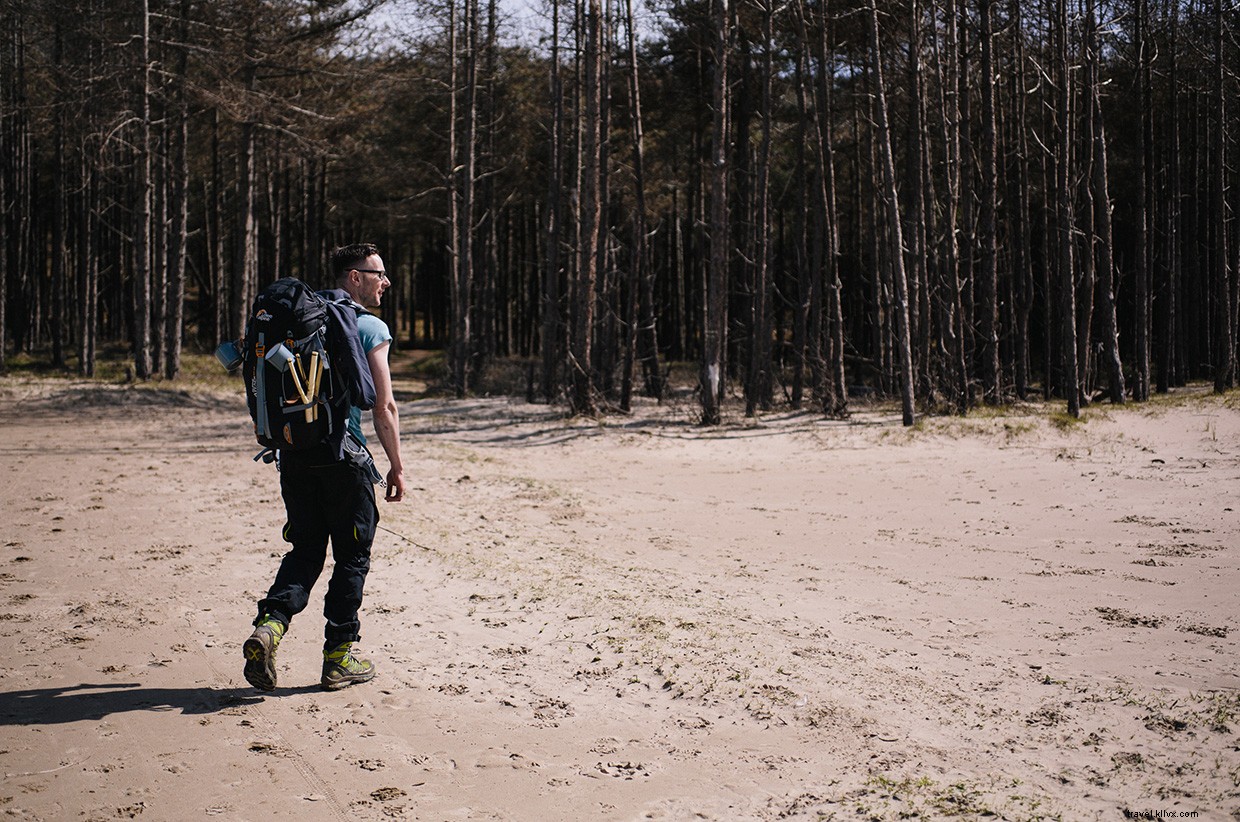
We keep our eyes peeled for additions to our dinner as we head deeper into the forest. Birdsong changes its character in response to our intrusion into their domain. Scanning the floor, undergrowth, and trees we chance upon an already flowering blackberry bush. The smell is too subtle to add much flavour to the meal, but the splash of bright colour will enliven our plates, subconsciously reminding us that, hopefully, summer is not too far away.
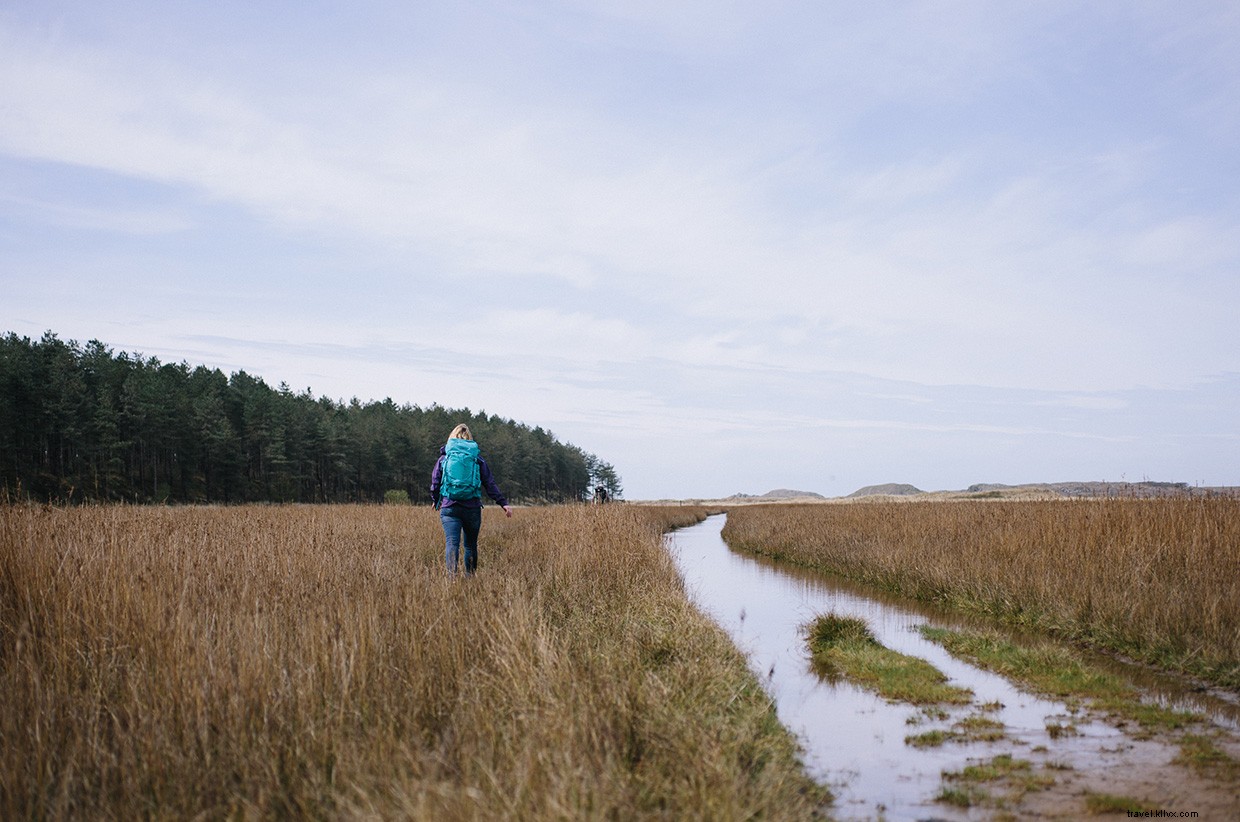
The forest thins as we come towards its edges, but the tang of pine resin increases. Out come the steel canisters once more, collecting tiny pine buds, along with stashing some of the dried kindling into our packs. Subtle changes in the landscape along with scents of iodine, salt, and undertones of decay hint that we’re on the edges of a tidal marshland.
ROUTE
Newborough Forest and Beach
Difficulty: Easy
Duration: 3 hours
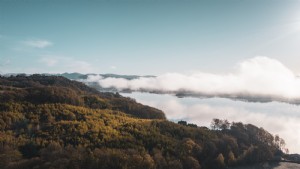
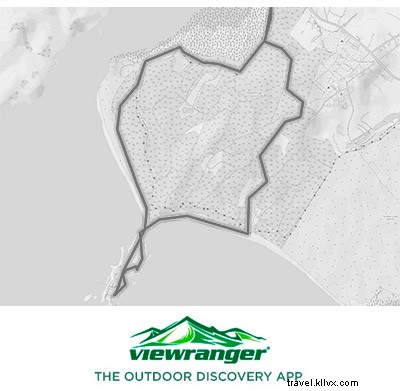
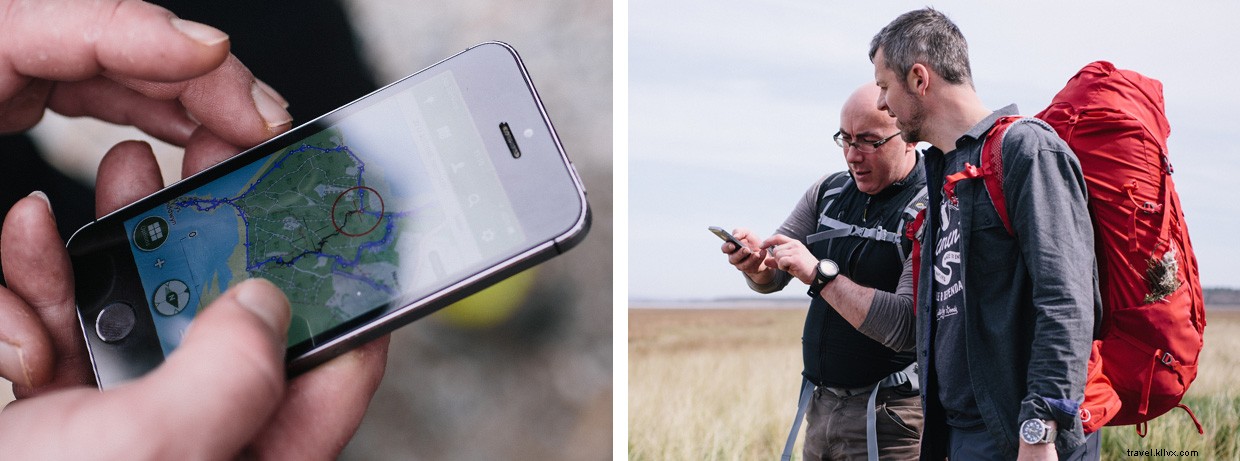
A low level costal and forest walk along well defined tracks. Starting and finishing close to Newborough, this trail mixes sandy beaches, marshland and pine forest to great effect, never straying too far from views or the smell of the open sea. Though busy beaches are close by, it’s possible to enjoy quiet trails and hunt for easily identifiable wild edibles.
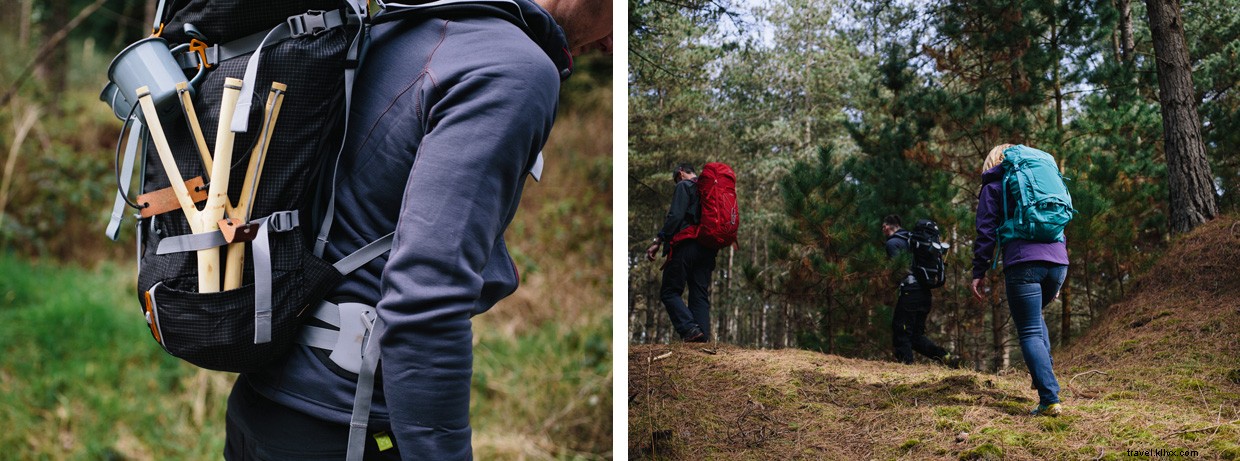
Breaking out of the forest we’re hit with fresh breeze. Hot, bright sunlight, pours down upon us. Faces instinctively turn upwards, eyes closed we breathe more deeply and ease bunched muscles. Packs down for a moment we each divide, as if by telepathic consent, to explore the dunes, to get closer to water. Being close to the sea brings out the giddy child in the most sombre of adults. Memories of happily digging in wet sand, trousers clinging to salty-wet skin, without a care. Back on the trail we come to a sudden halt at a passage of salt-, sand-, and wind-scoured trees that appear petrified, and bright yellow sand and worn-smooth pebbles and rocks. Memories of various mythological and cultural landscape references bubble to the surface and the discussion turns to alien landscapes from the Original Star Trek series and recent scenes from Game of Thrones.
Closing in on our destination, talk turns to meals eaten on various beaches and holidays as kids – sand-gritted sandwiches, slightly-flat lemonade, and proper ice cream if we were good. Now however our tastes and skills have matured and expanded, but we still experience the same joy from being battered by salt-laden wind. Wrapped in a cocoon of fleece and Neoshell we can stay out way past bedtime, cooking on an open fire with wild edibles and amazing local ingredients like organic mountain lamb, ewes curd and spring asparagus.
With almost fifteen thousand kilometres of coastline between the UK and Ireland, a detailed look can reveal a treasure trove of wild edibles, from the multitude of seaweeds, to beach greens like rock and marsh samphire, sea purslane, and seabuckthorn. Further inland, elements like wood and sheep sorrel, wild garlic, pine buds and nettles appear, enticing us to explore further, linking disparate habitats together in our minds and on our plates.
Mountain lamb, marsh samphire, wild garlic, charred leek, asparagus, ewes curd, candied pine buds and bilberry balsamic