Exploring Dartmoor: Foraging & Wild Cooking in Devon
This is the second in our foraging and wild cooking series exploring different landscapes and ingredients within the UK. To follow the routes and for more ideas, visit Viewranger.com.
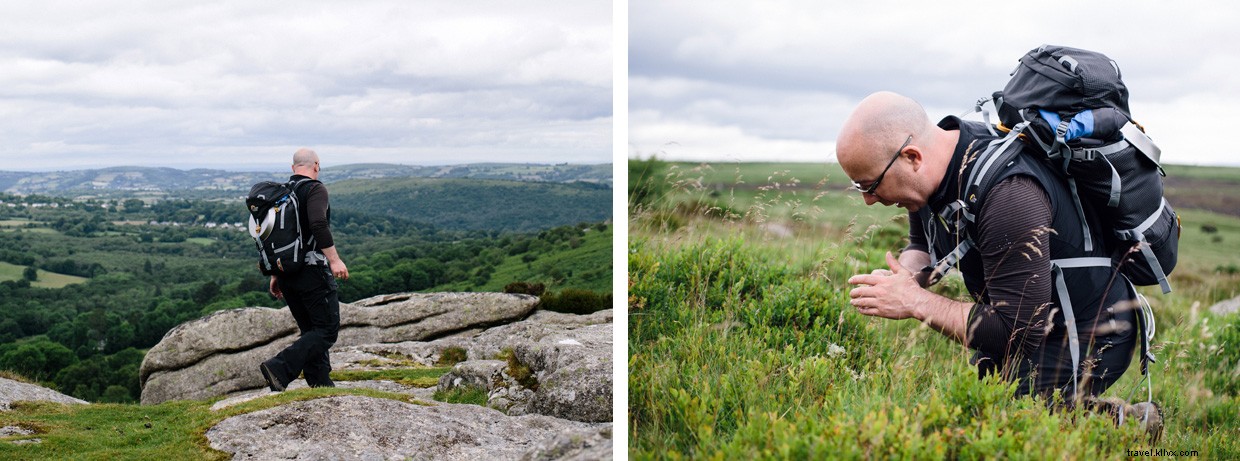
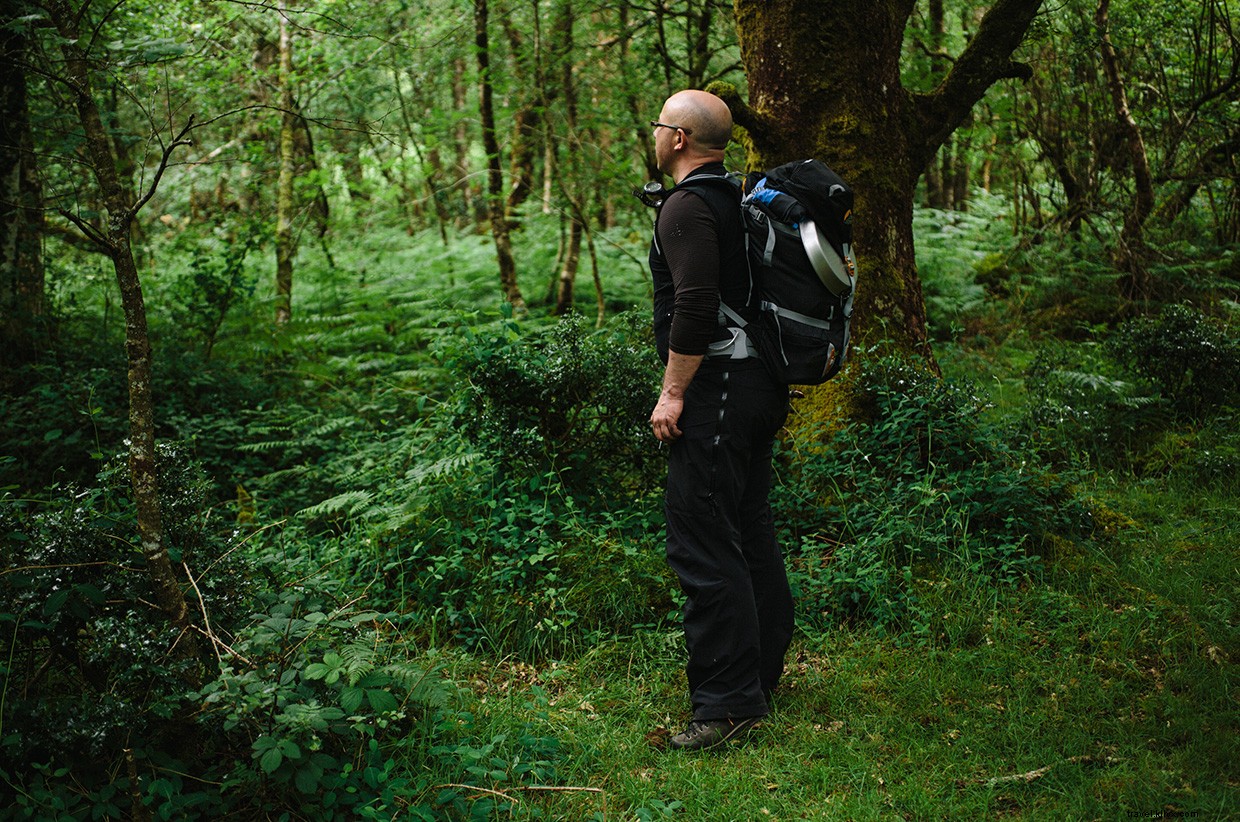
Mist still clings to the ivy-twined walls bracketing our car as we ease carefully through the narrow lanes of Devon. Passing through one small village, I sense little change in the landscape or pace of life from when I last lived and worked in this neck of the woods over a decade ago. The rumble of tyres over a cattle grid awakens the only member of our party still slumbering in the back. Now out, exposed on the open moors the rocky tors that dot the slopes and summits of many hills become more visible.
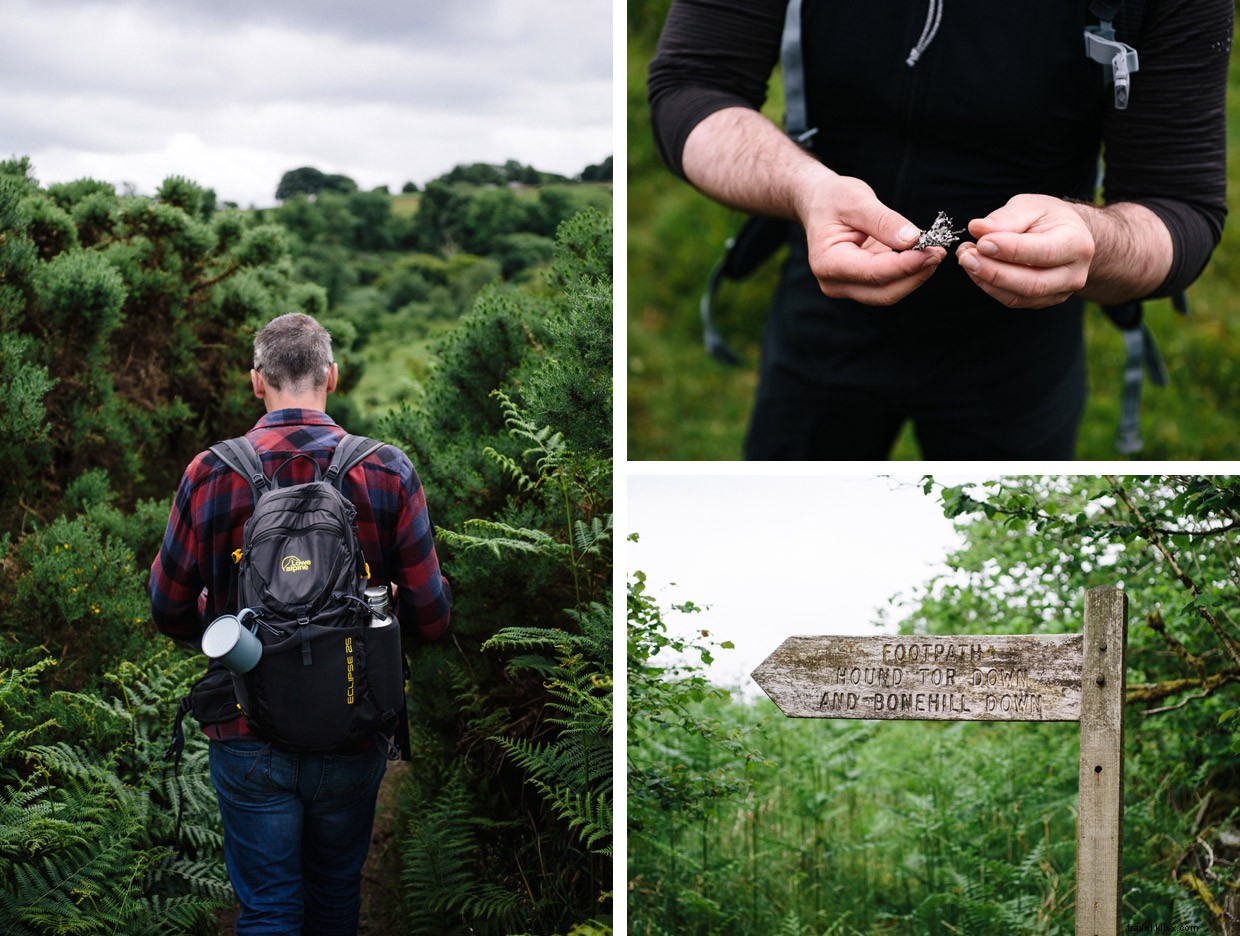
Starting up the sides of Haytor, we haven’t gone more than a few hundred metres before we come across the first of our wild edibles for todays meal – fiddlehead ferns. These vastly underrated wild greens are starting to appear in farmer’s markets across the US, but I’ve yet to encounter any in UK markets. Luckily for us, ferns colonise vast swathes of our uplands. NB: Make sure you’re 100% sure of the fern species before collecting as other ferns can be toxic. These delicate delights are at their best in spring when ferns grow their new shoots, but thanks to an extended cold snap last April, the ferns we encounter are still sprouting.
Contouring around the side of Haytor we come across one of the many quarries that dot the landscape. Nearly two hundred years ago these quarries were hives of activity, ferrying granite blocks almost ten miles via hand-cut granite and cast iron tramways to Stover canal and onwards via boat. Emerging on the far side of the hill we cross a section of the remnants of this tramway and pause to wonder about the back breaking labour and lives of the people that worked this area of Dartmoor.
ROUTE
Haytor quarry, tramway and rocks
Difficulty: Easy
Duration: 4 hours
An open moorland hike on moderate and well defined paths starting and finishing at Haytor Visitor Centre.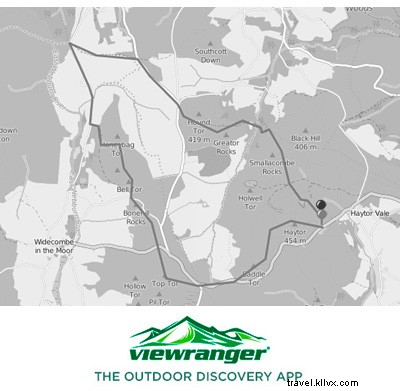
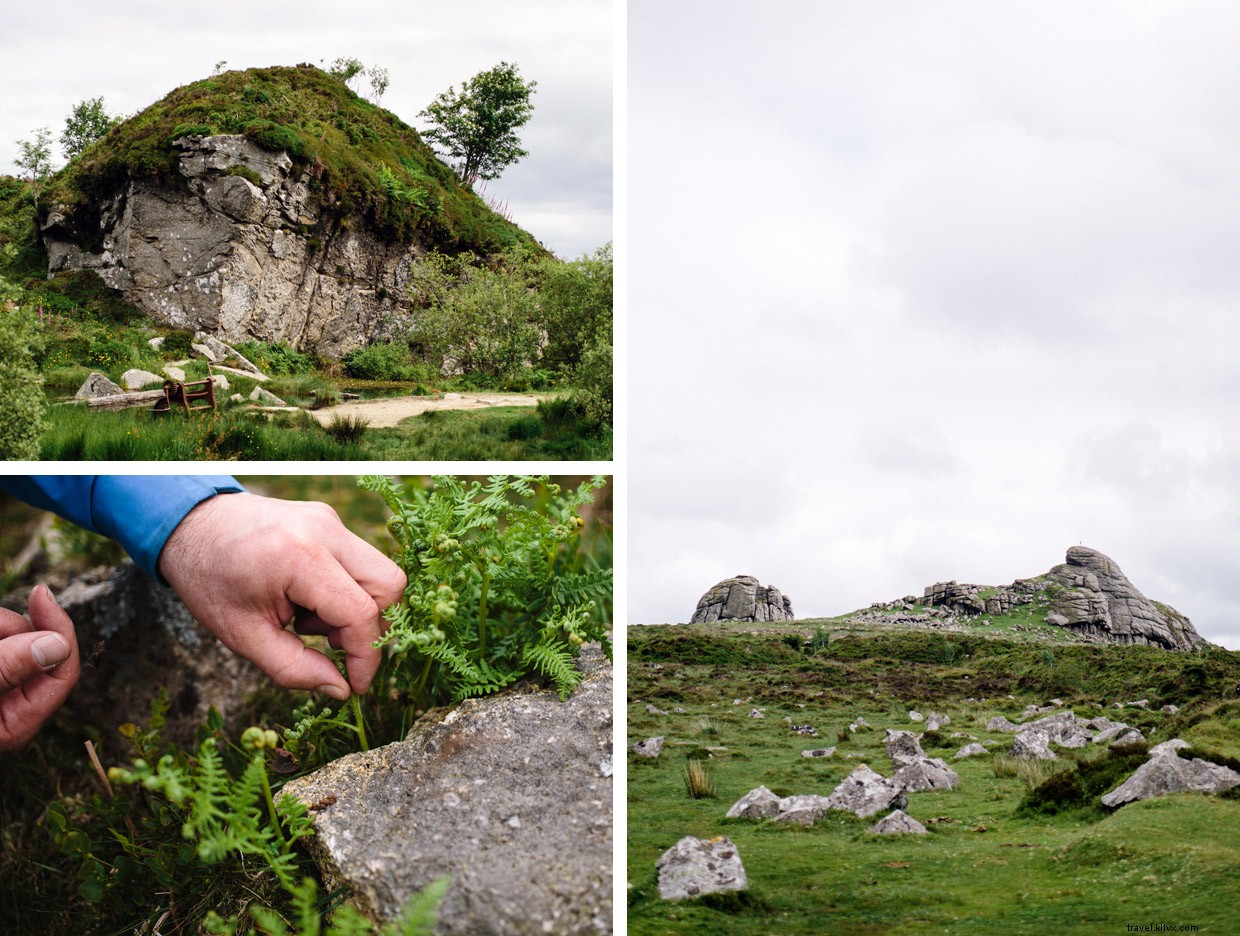

We are surrounded by bilberry bushes but, to our disappointment, the berries are bright green and rock hard with a bitter taste – once more due to the harsh April weather. A month from now and these bushes will be bursting with dark blue and purple berries, a brilliant on-the-move snack or, as we had planned, the basis for a compote – tart with that inestimable flavour that comes from foraged edibles.
Continuing our journey we cross over Becka brook and ascend towards Greator rocks and Houndtor. Sowthistle abounds in the open areas, bright yellow flowers heralding their position. Picking these peppery, slightly bitter leaves adds another element to this evening’s dinner.
Later on, and nearing our starting point once more, we scan our maps and debate potential dinner spots. Ideas abound, but on the road, in search of fresh gooseberries, debate soon gets cut short as one of the team remembers a rocky outcrop not far down the coast that affords us the perfect outdoor dining space.
Our big cities and towns have changed almost beyond recognition in ten years, but Dartmoor and many other upland areas in England, Scotland and Wales seem to have retained their distinct character. Our National Parks are an essential part of our landscape and this status confers important rights. Having wild and open spaces upon which we can explore is, for many of us, a vital ingredient in our lives. These wild areas take us far away, physically, emotionally and spiritually from the all to crowed spaces in which we choose to live.
Pan fried Cod, brown butter sauce, bilberry compote, sowthistle salad, fiddlehead fern and rhubarb pickle, with caramelised hazelnuts.