
Beyond the Peak: Heather Geluk's Journey to Overcome Prejudice in Himalayan Climbing
When she started climbing, Heather Geluk pretty much epitomised every ‘real’ climber’s worst prejudices of the commercial climbing client. No experience, no idea how to put on crampons, no understanding of the lore of alpinism or Himalayan climbing. Just a paying client tethered to a guide on the slopes of Mera, a 6,400m peak in the Nepal Himalaya.
Heather had just been dumped by her boyfriend, but instead of booking a beach holiday and drowing her sorrows in a bar serving strawberry daiquiris on tap, she called an adventure travel company looking for an escape – a trip, anything, anywhere. It could have been scuba diving or mountain biking. They told her they had one leaving in two days to Nepal and she signed up immediately.
‘Do you have any climbing experience?’ they asked. ‘No, but I love skiing, I love the cold,’ she told them. ‘Ok… are you fit?’ ‘I’m like totally fit’ – but she wasn’t.
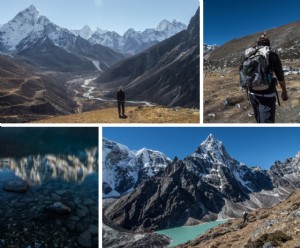
Some 48 hours later Heather found herself on the slopes of Mera Peak, Nepal. ‘In many ways it was the most amazing experience of my life but also the most awful. I knew nothing about acclimatisation. I lay awake at night with aching muscles and would stare at the ceiling of my tent and cry! But I had a great team and wonderfully patient trip leaders, including Serena Brocklebank who’d summited Everest a couple of years before. In tears I shared my story on our summit night. She was like, “Oh My God, you’re so going to summit this mountain. I’m going to make sure.” We set off and I remember saying to her “I can’t do this,” but she wouldn’t let me quit. By some miracle I got to the top. I looked out, saw five of the world’s 8,000m peaks – Kangchenjunga, Makalu, Lhotse, Everest and Cho Oyu – and thought, this is exactly where I’m supposed to be.’
That day in 2008 set off a chain reaction and quite a journey for Heather. It’s a journey that’s seen her learn her craft from world-class Himalayan climbers, put in dozens of vertical miles on many expeditions around the world – and included a few more summits too. But above all, it’s brought her numerous friendships, a value for life and a deep connection with Nepal and its people. It’s a bond that was already forged and strong before she was caught up in the earthquake last year. Let’s just say that now there’s an indelible connection to the country.
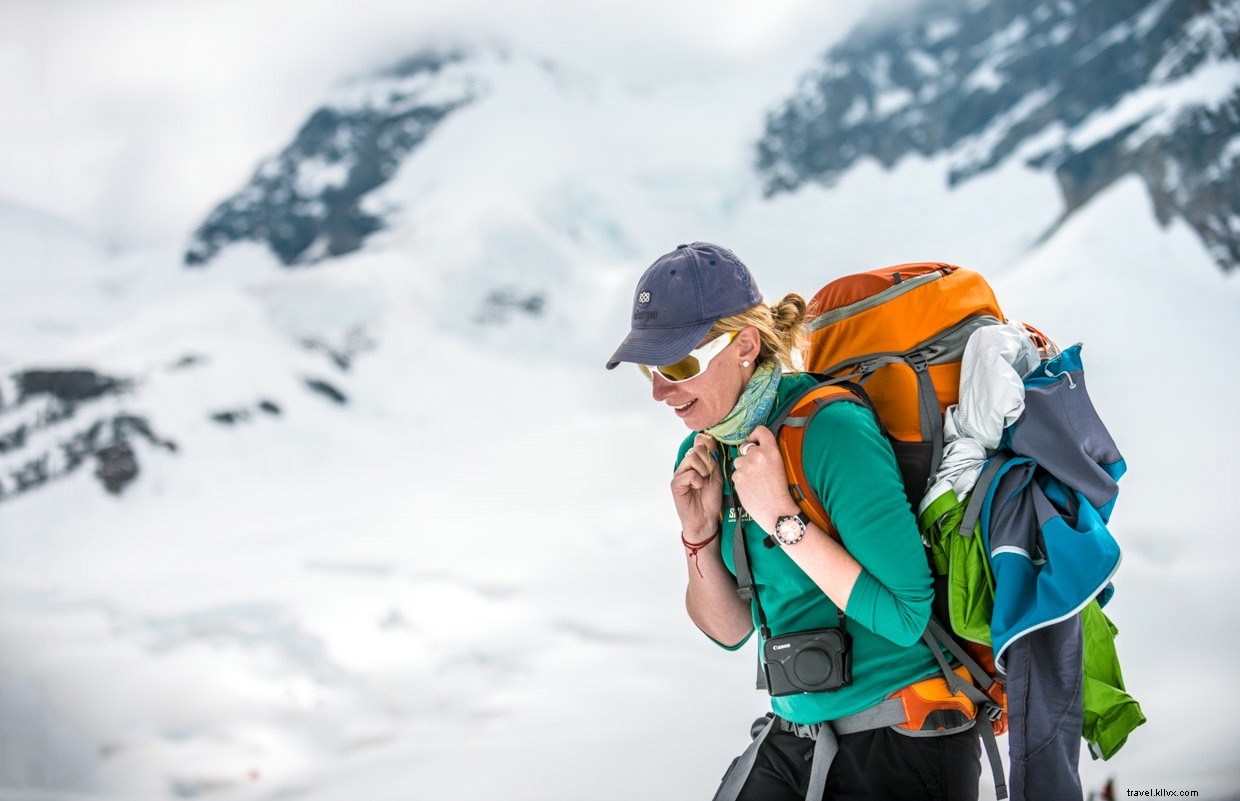
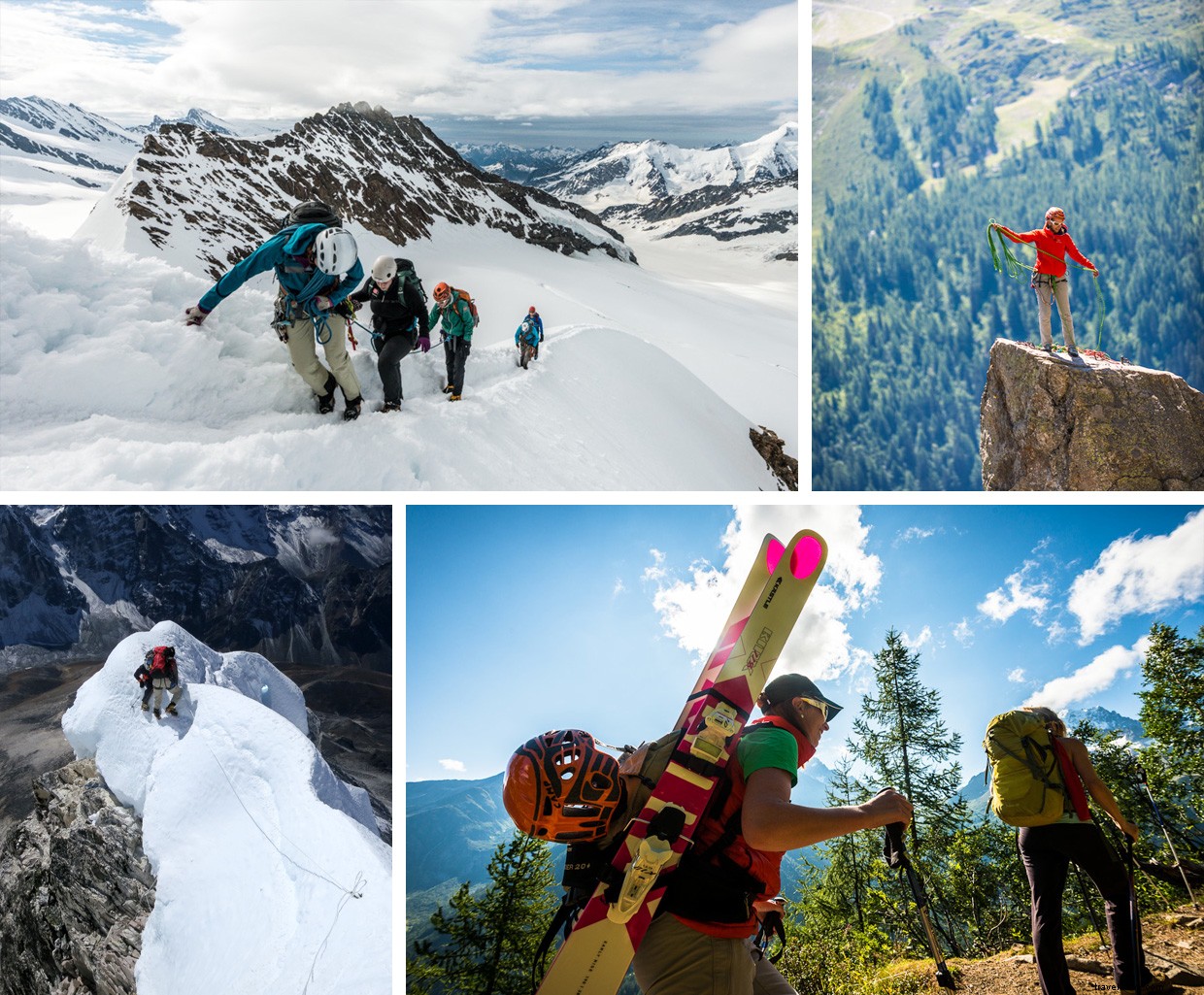
Supported by an understanding employer, Heather has been on a slew of mountaineering expeditions from popular non-technical peaks like Aconcagua and Kilimanjaro to more serious climbs such as Alpamayo, Peru and Cholatse, Nepal. She has been most active in Nepal, taking on climbs to Kyajo Ri, Ama Dablam, Island Peak and also 8,000ers including Makalu, Lhotse and Everest. And not all as a commercially guided client. For a few seasons she teamed up with the big mountain suffermeister Fabrizio Zangrilli, whom she met after he returned from an expedition to Makalu. Fabrizio taught her first hand about alpinism.
‘He was a good teacher and didn’t mince his words. He showed me everything I did wrong as a commercial climber. It was after Everest that I realised if I’d been involved in a rescue situation [as a client] I wouldn’t even have known how to tie a knot – all I knew how to do at the time was clip my jumar in to a fixed line. That scares me now. From Fabrizio, I not only learned about systems and the fundamentals of climbing, I also learned about the history and art of alpinism. From that first climb on Mera Peak and through to many character-building expeditions on mountains around the world, I’ve come to believe that when people climb mountains just to get to the summit they miss the most rewarding part of the experience,’ she adds.
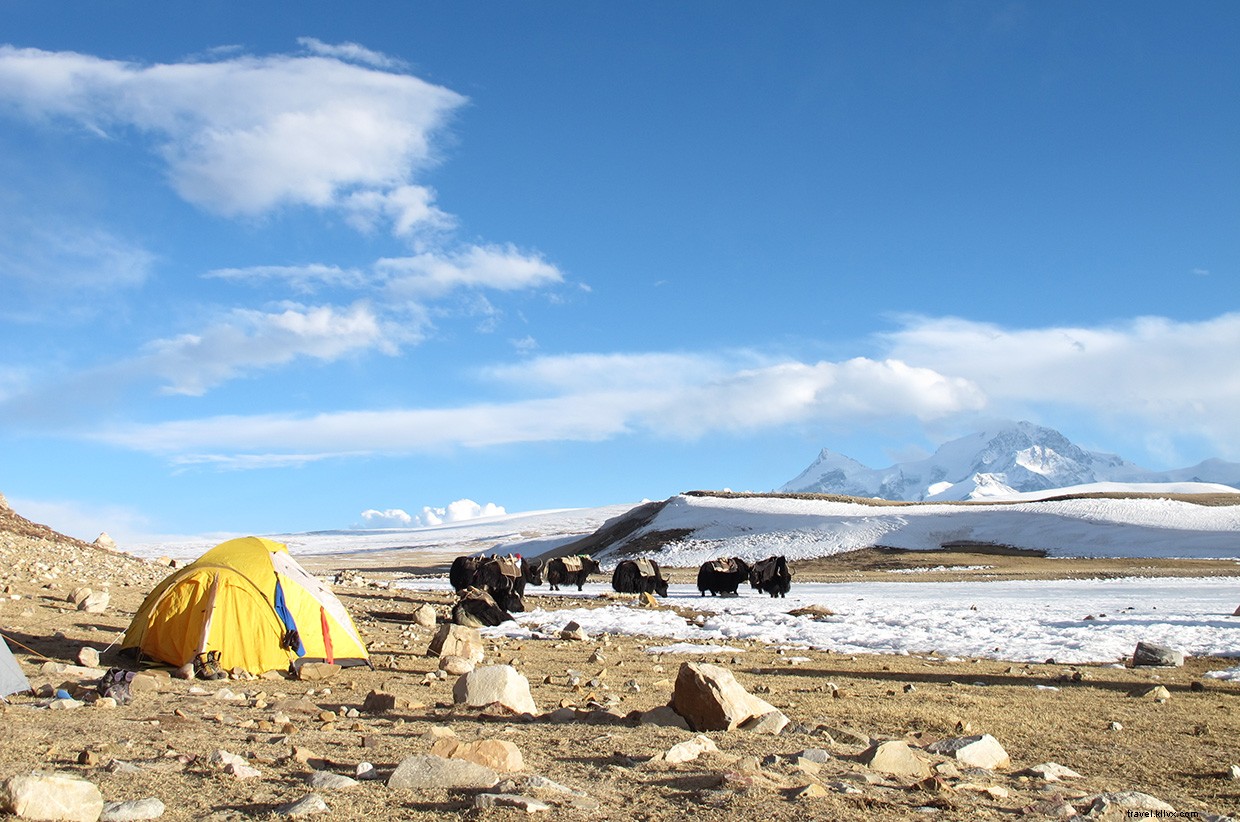
Fast forward to the 25th of April 2015 and Heather is on Shishapangma, the 14th highest mountain in the world, taking a break at 5,700m, en route to making a gear dump to the base of a glacier with her guide, Lhakpa Wongchu Sherpa. ‘Suddenly we heard this deep, unnatural rumbling sound, like thunder. Confused, I turned to Lhakpa and shouted, “What’s that?” over the ever-increasing rumbling. By this point he was already standing and, terrified, screamed, “Avalanche!” It was an overcast morning with zero visibility. Panicking, I tried to figure out where the sound was coming from – but it was coming from everywhere. Suddenly the rock we were sitting on started moving. I went into what I can only describe as the “brace-brace” position. I put my hands over my head and prepared to die. I’d always wondered if I’d die in the mountains and hoped that if I did, that it wouldn’t hurt. At that point I thought, f**k me, this is going to hurt. I looked over and the glacier was moving like a frozen tsunami of ice. After the longest minute of my life I realised I’d survived. I crawled to Lhakpa. We grabbed each other’s shoulders. Pumped full of adrenaline we screamed, “We’re alive, we’re alive.”’
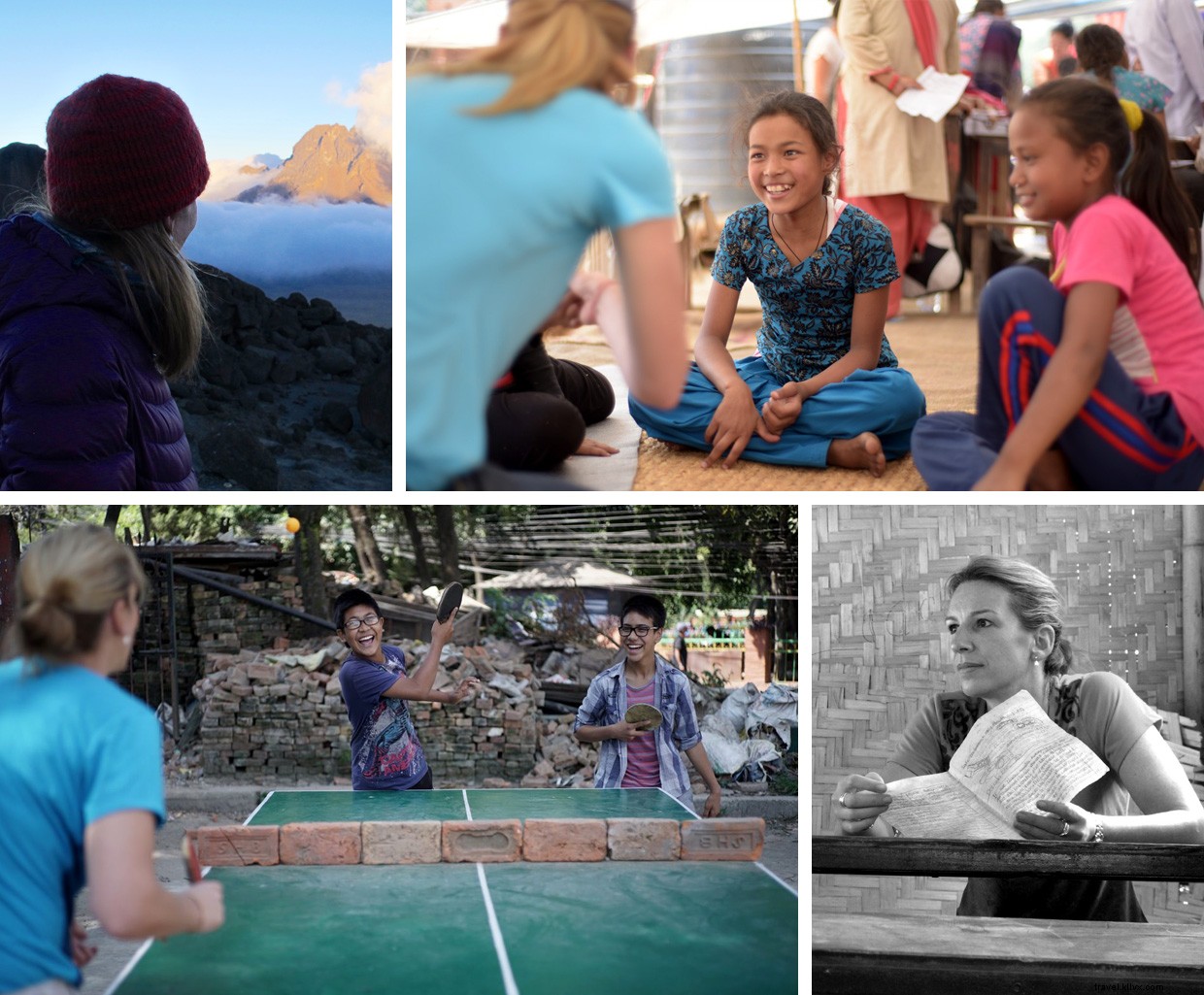
After the initial survivor euphoria came the dawning horror of what might have happened to friends and family on Everest and nearby. It didn’t take long for devastating news reflecting the scale of the tragedy to come through. It took five days to be evacuated from Shishapangma. Heather travelled to Kathmandu to throw herself into the relief efforts led by the Paldorje Education Foundation, run by the Nepal-based outdoor brand, Sherpa Adventure Gear. Then there was the aftershock on the 12th of May. ‘It shook me to my core. The building moving, the screams, the noise from helicopters, radios, mobiles; the aftershocks and the fear that there was more to come.’
But helping was therapeutic. ‘I went to Bhaktapur. Rather than think about all those who died I learned from the resilience of the Nepali approach of “let’s pick up and move forward”. And so we did. In Bhaktapur, in the middle of the dust and the chaos, I helped to move bricks. From chaos and dust we created pallets of bricks and brought order to it again.’
Sherpa Adventure Gear switched its clothing production to tents, blankets and tarps to support the relief efforts and Heather was tasked with travelling into the Khumbu to distribute tents and cash to villagers of Thame, near Namche Bazaar. After dividing the money between 234 people, it came to $66 per person.
‘There was a guy; I learned that his wife had died when their home collapsed on top of her. He grabbed my hands and as tears streamed down my face he sobbed, “Thank you.”’
Heather returned to Nepal last October and again in March to help the Chaudhary Foundation achieve their pledge to build 10,000 transitional shelters and 100 schools.
She plans on returning again but not to climb. ‘I will climb another 8,000m peak but in Nepal there are other mountains I need to climb first – proverbial ones this time.’
Instead, she’s headed to Denali in June. Even though she could probably put on a pair of crampons blindfolded in a -20ºC blizzard, she still doesn’t view herself as a climber.
‘I’m not a mountaineer or an alpinist. I’m a normal person living an ordinary life,’ she says. ‘I’m proud of all the stuff I’ve done and have learned so much. But all these experiences? They just help me appreciate life more. At the end of the day, it’s not about the summit; it’s about the journey, what you learn and what you give back – that and the people you meet along the way.’