Exploring the Hidden Depths: A Diver’s Journey into Indonesia’s Remote Marine Lake
A low growl materialized from the primeval mangrove forest that lined the edge of the water. All alone, in the midst of a remote marine lake in Indonesia, knowing that saltwater crocodiles exist in this type of habitat, I attempted to focus on composing my photographs. But I couldn’t help swivelling my eyes along the surface of the motionless water and the shores of the small lake, looking for swimming logs with reptilian eyes and long teeth.
I’m the type of diver who likes to explore sites that most find unsavoury or unpleasant, such as marine lakes. These wet, dark environments are potentially dangerous, and often odoriferous, but they have always captivated me because I love photographing unknown and untouched habitats. Exploring regions where no one has been before stirs my imagination and stimulates my creativity.
Surrounded by sharp, unstable limestone, marine lakes are difficult to access, but they offer infinite potential for ecological research – as well as exceptional photography. Hauling fins, a mask, bulky camera housing and underwater strobes over crumbling walls, through dark tunnels, across prickly vegetation and muck-filled mangrove swamps is not what most people would call fun. But the rewards are great: swimming in isolated ecosystem, where few or no humans have ever been.
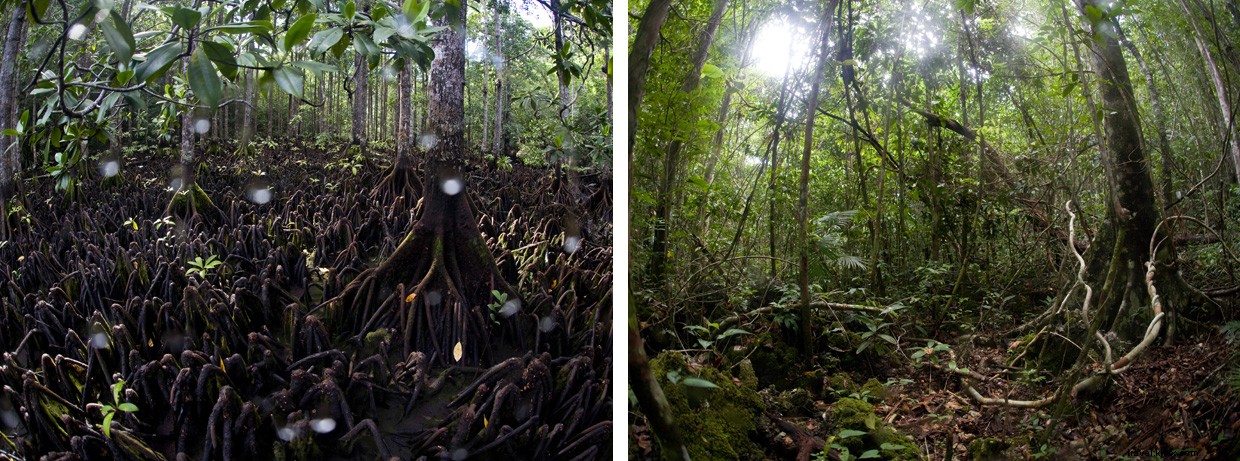
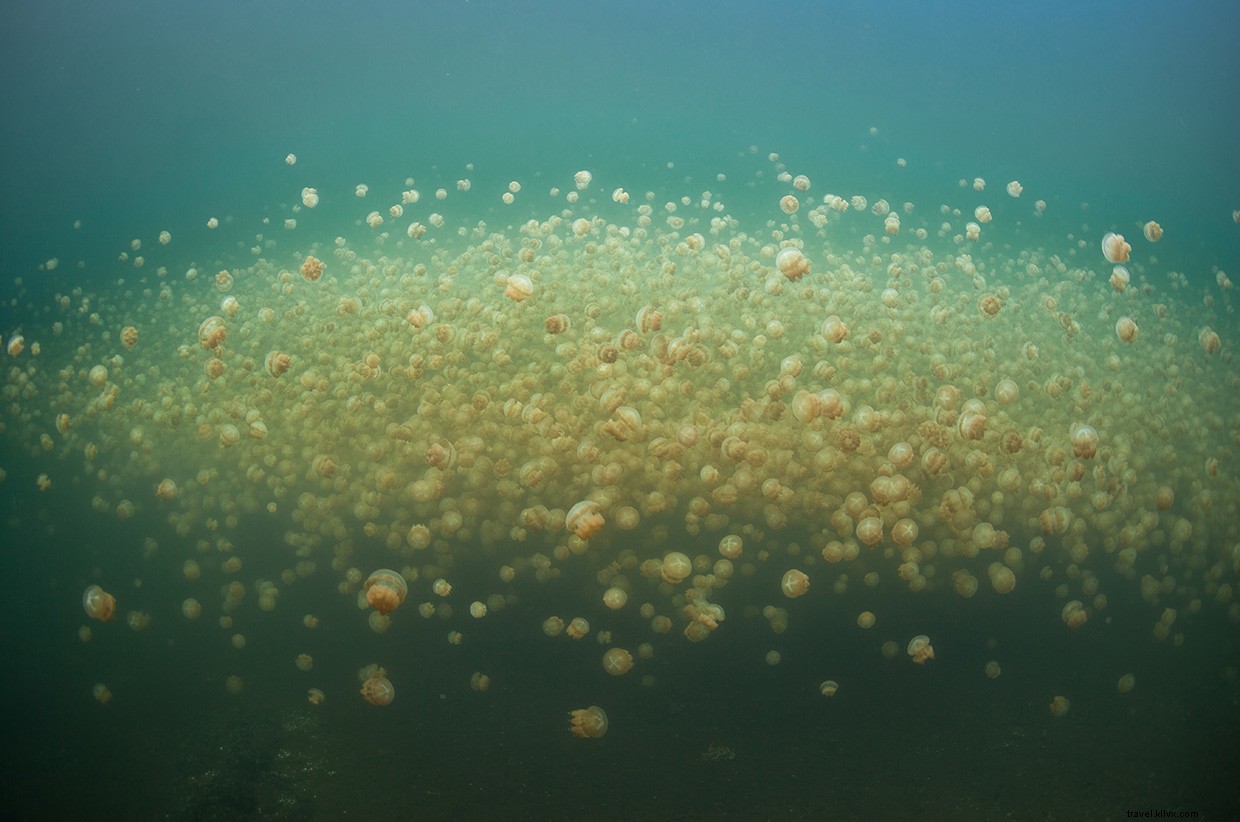
Sometimes I manage to persuade a buddy to join me on these sojourns. I neglect to mention that they involve a gruelling hike with heavy camera gear, the possibility of crocodiles, biting isopods and stinging jellyfish until we’re too far to turn back. At other times I go it alone, overcoming irrational fears that some scaly, prehistoric carnivore is stalking me. Of course, my fears may not be irrational. If I can get myself into these lakes, so can crocodiles, and, at least here in Palau, crocodiles have been documented.
Whatever the case, with steep walls, saltwater lakes are enclosed systems where natural selection has gone unfettered for up to 10,000 years. Above the water, there are haunting sounds of forest birds while, below, the surface is silent and strange to human eyes. Weird colours, forms and textures often give me the creeps, but the scenery is beautiful in an alien way. It feels as if I am photographing a vastly different planet that evolved without a care for humans. Luminous algae, delicate sponges, worms, tunicates, gastropods and tiny mussels provide an extraordinary set of eye-candy. I document marine lakes not only for their beauty, but also for their ecological importance. Most are home to endemic species with distinct water chemistries, and are perfect, untouched systems where scientists can study climate change and its effect on marine communities.
Most traditional reef dives I do commence along beautiful sea walls or slopes, where sunlight beams down on reef-building coral colonies and currents sweep a constant supply of plankton to the waiting mouths of vibrant invertebrates and fish. There’s plenty of action and energy. In contrast, isolated from the open sea, marine lakes have no currents and are extremely difficult to get in to. Planktonic organisms do exist, but in significantly fewer quantities than in the ocean. Because of overhanging trees, less sunlight hits the edges of the lake, where reef-building corals would normally grow, so marine lakes have few, if any, corals. But microscopic swimming larvae of corals, sponges and fish who survive the trip through tiny cracks in the limestone can colonize a lake if the environmental conditions are just right.
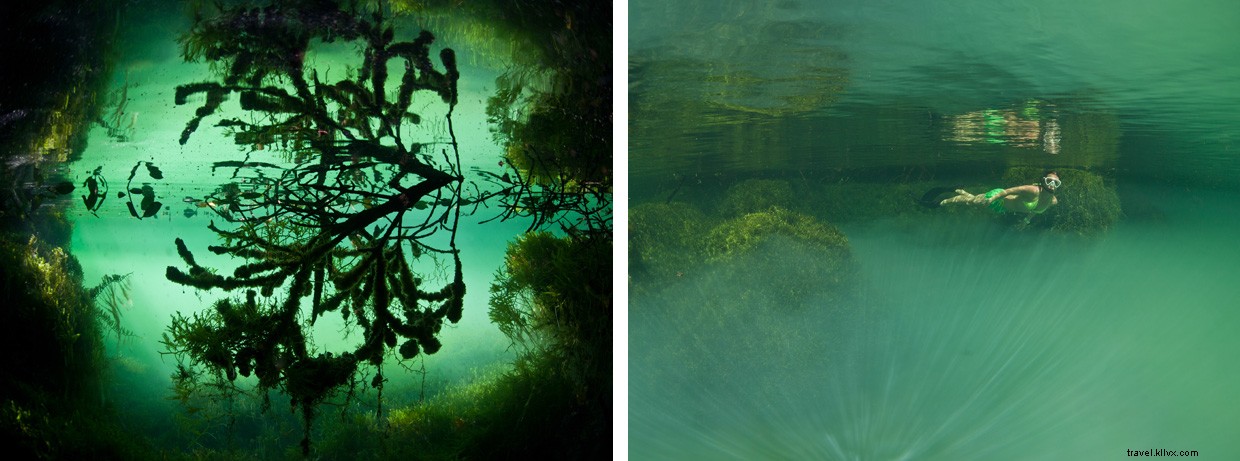
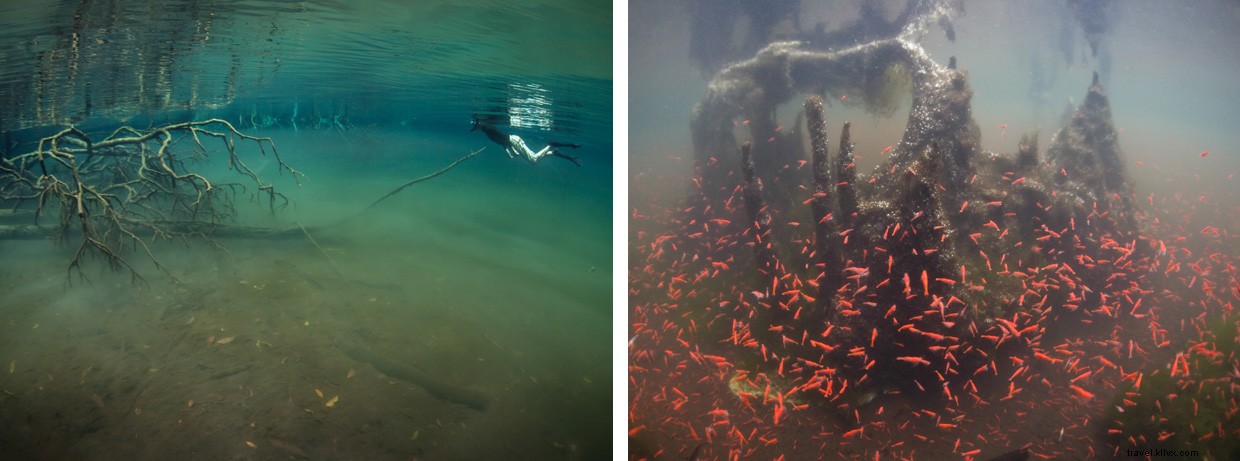
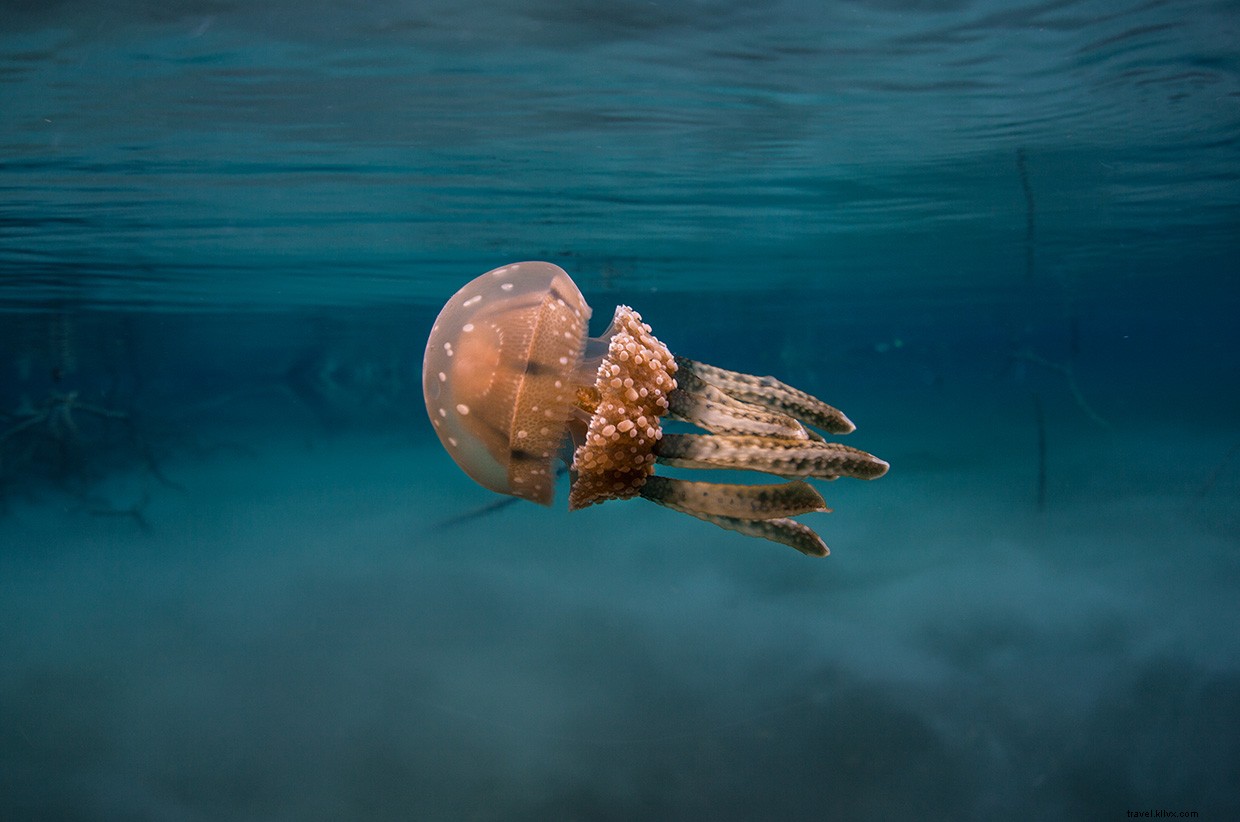
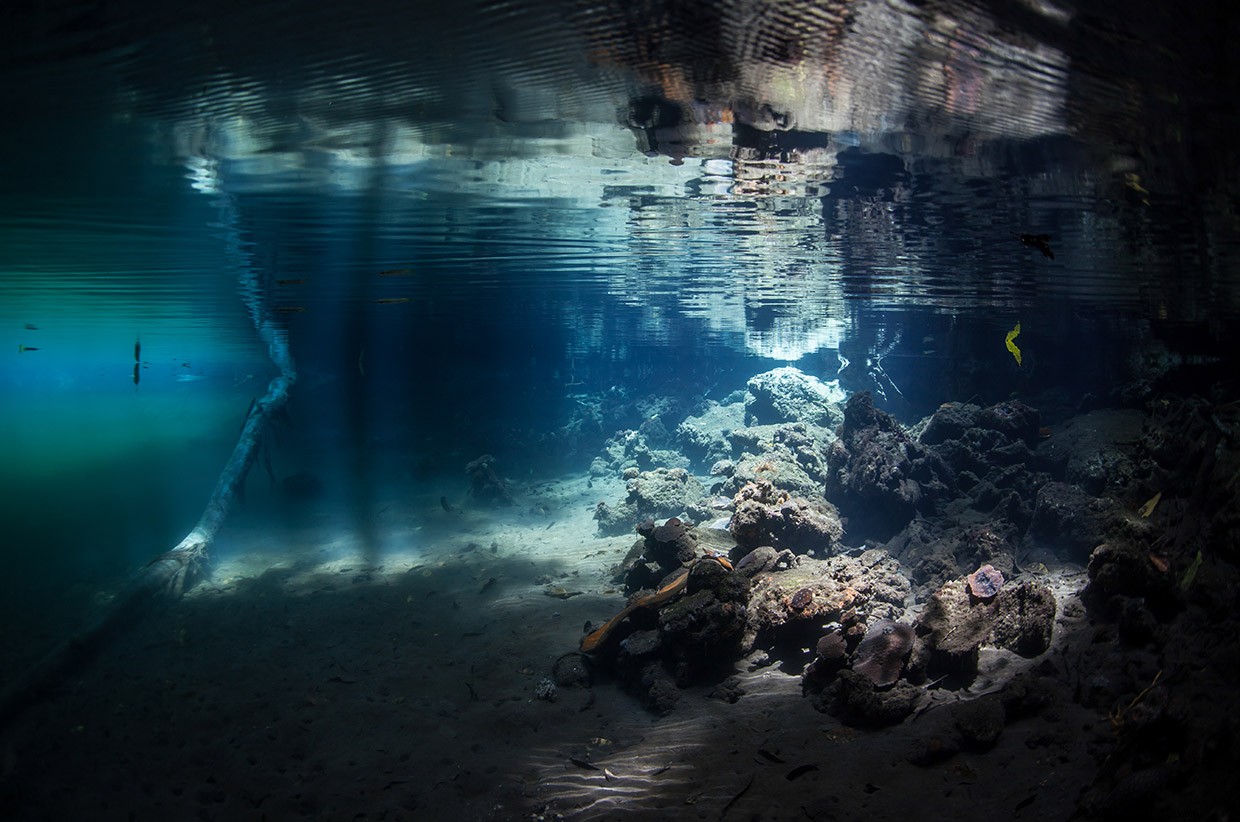
As I continued swimming along the edge of the lake, I forgot about the possibility of there being man-eating crocodiles and focused on the underwater panorama surrounding me. I used a light to spot small, bizarre critters, some of them endemic, in the shadows of mangrove roots. I needed perfect buoyancy as the bottom of the marine lake was soft, anaerobic sediment that, if disturbed, could cloud the water and ruin the excellent visibility in seconds. Wind rarely hits this lake, so there was no turnover of water. This means that the top stratum of water is oxygenated and thus relatively clear while below, where oxygen is scarce, there’s a layer of anaerobic bacteria.
Bill Hamner, a biologist from UCLA, wrote that marine lakes through “a comparative acquaintance with the bizarre … clarify the familiar.” Each lake I have explored has been unique, containing its own young, but refined ecosystem. To see what’s below the surface of a marine lake is to view a world unto itself, where windows open into the process of evolution.
All images ©2015 Ethan Daniels/OceanStockImages.com
In Sidetracked Volume 04 we featured more from Ethan Daniels as he snorkelled within the shaded, tranquil mangrove forests on the coast of the remote island of Raja Ampat in Indonesia. Click here for more information.