
Exploring California's Desert Ghost Towns: Mining Boomtowns and Route 66 Relics
Scattered across California's expansive desert lie ghost towns that evoke the thrill of bygone eras. Once-thriving mining camps fueled by gold and silver rushes, and bustling Route 66 stops catering to road-weary travelers, these sites remain magnets for history buffs and adventurers alike.
Awaken your inner archaeologist and historian on a journey through the Mojave Desert. Uncover stories of instant fortunes and highway romance, where preserved ruins and compelling narratives rival the dramatic landscapes.
Mining Towns
The late-19th-century gold and silver rushes drew tens of thousands to Southern California's desert. Today, remnants of those boomtowns reveal the dreams and challenges faced by miners and their families.
Calico Ghost Town
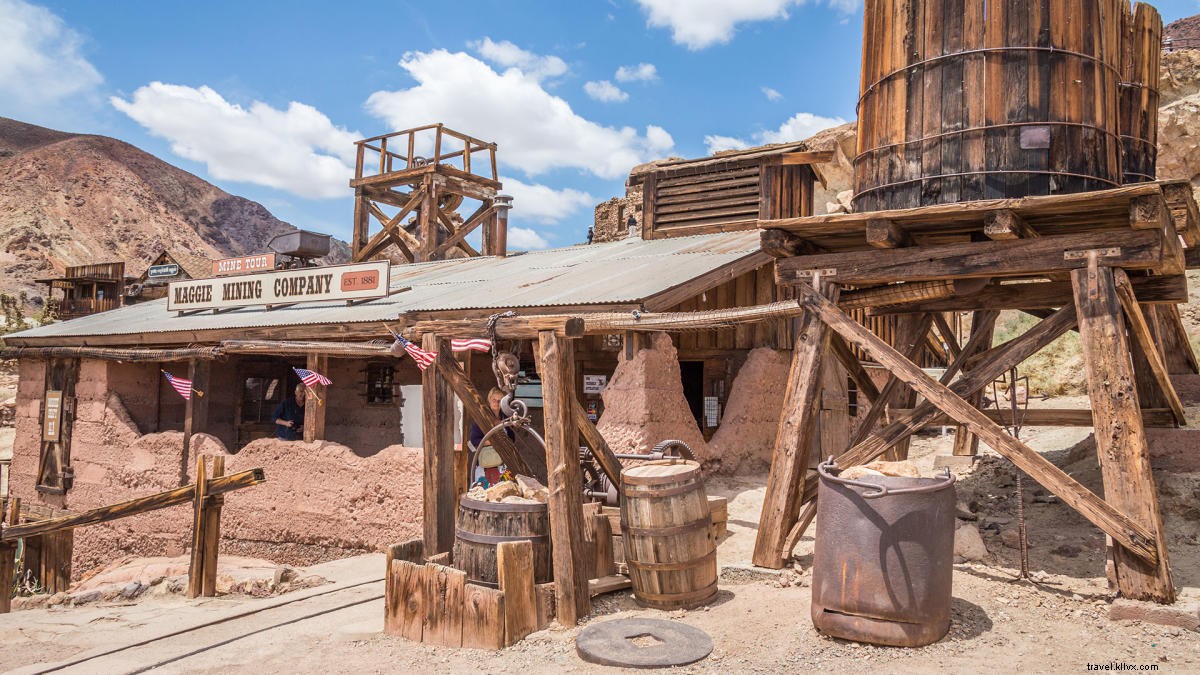
Nestled off Calico Road in Yermo, Calico Ghost Town's hills near the Early Man Site hint at ancient human presence. Wyatt Earp famously walked its streets during the 1880s silver boom. Unlike peers destroyed by fire or plague, Calico declined due to falling silver prices that rendered mining uneconomical.
Resurrected in 1950 by Walter Knott of Knott's Berry Farm, it was donated to San Bernardino County as a regional park. A modest tourist draw on weekends, it preserves authenticity amid the Mojave's quieter ghosts.

One-third of original hillside structures survive, with others reconstructed. Main Street boasts wooden sidewalks, shops, casual eateries, and period-costumed staff—gunfights included. Overlooking it: a one-room schoolhouse, miners' shacks, and abandoned shafts. Must-dos: Ghost Tour for history, Maggie's Mine exploration, and narrow-gauge train to mined mountains.
Cerro Gordo
Perched at 8,500 feet above Owens Lake, Cerro Gordo boomed after 1868 silver discoveries. It grew into the Wild West's rowdiest town—saloons, dance halls, 4,000 residents. Closed to collectors for decades, it's mineral-rich from mine tailings. Privately owned and restored across 314 acres, it features 22 structures like a hotel, saloon, bunkhouse, and chapel. Currently for sale (cheaper than a San Francisco home), book a walking tour for its storied past.
Keeler
Keeler housed 300 miners by the early 1870s; the 1883 railroad spurred marble quarries and stagecoach layovers en route to Mojave. Now a 'living' ghost town of under 70 souls, little survives of nearby Darwin and Swansea beyond histories and ruins.
Skidoo
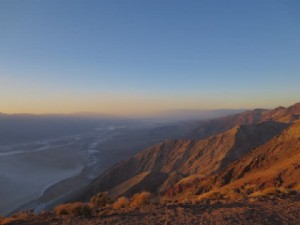
Gold struck Death Valley in 1905; Bob Montgomery founded Skidoo, named for the 23-mile water pipe from Panamint Springs ('twenty-three skidoo'). A company town peaking at 700 residents, it profited $3 million until 1917, fully ghosted by 1950. Reach via bumpy Skidoo Road—evoking pioneer wagon trails with canyon vistas. A sign details history; spot the stamping mill and mine (stay out for safety).
Randsburg
A prime 'living' ghost town, Randsburg's 1895 Yellow Aster gold strike at Rand Mountain drew 4,000. Butte Avenue retains gold-rush stores, a prospecting shop, original post office (est. 1856), and Randsburg Desert Museum with mining artifacts. Inhabited miners' shacks dot hills; pockmarked terrain warns of shafts.
Nipton
This ex-mining whistle-stop straddles rail tracks. Founded 1885, it drew outlaws to nearby hills pre-railroad. In 1984, Santa Monica buyers restored hotel, saloon, store; revived mining, added inn, restaurant, solar plant. Health issues led to sale; future may involve marijuana cultivation.
Rhyolite
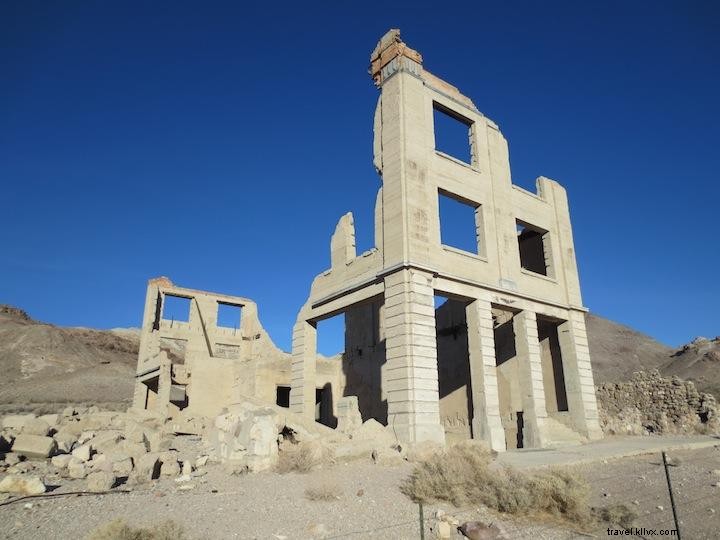
1904 gold-quartz finds spawned Rhyolite, named for local volcanic rock. 2,000+ claims boomed it with multistory buildings, hotels, school, hospital. 1906 Bottle House (50,000 bottles); 1907 Shoshone mill. 1907 panic closed mines; power off by 1916. Ruins include bank walls, jail; restored Bottle House (1925 Paramount film). 35 miles from Furnace Creek, outside Death Valley National Park.
Route 66 Towns
1920s car culture birthed Route 66 romance—300+ California miles, much desert. Towns arose for travelers; interstate bypassed them. Detour for nostalgic exploration.
Goffs
Pre-1931 Route 66 stop (ex-Blake, 1893-1902), Goffs served Santa Fe Railroad. Visit Mojave Desert Heritage and Cultural Association's restored 1914 schoolhouse museum on mining history; remnants persist.
Daggett
Historic freight waypoint; self-guided tour via Daggett Chamber brochure (street viewing only). Future museum: Stone Hotel, People's Store. Fouts Garage: ex-roundhouse, livery, etc. 1894 blacksmith built silver/borax wagons. Brochures at Community Services (weekdays) or Daggett Museum (weekends).
Amboy
Ex-mining/rail hub, famed for 1938 Roy's Café, Hotel, sign. Longtime Burris spot for meals/rest. Now Albert Okura's (Juan Pollo); restoration underway.
Bagdad
Once-thriving rail village with Harvey House (named after Iraqi town), now just cemetery ruins. Diesel post-WWII and I-40 killed it.
Ludlow
Near I-40, not fully ghosted. Old motor court/café gone; new 1970s services: gas, motel, café, Dairy Queen. Check railroad cemetery with wooden crosses.
Newberry Springs
Home to cinematic Bagdad Café (ex-Sidewinder; 1987 film cult hit for French fans). Detour to 1950s Lake Dolores Water Park (later Rock-A-Hoola) ruins baking in sun.