Joshua Tree National Park: Premier Destination for Hiking, Rock Climbing, and Desert History
Take a scenic drive along Highway 62 to Twentynine Palms, the gateway to the north entrance of Joshua Tree National Park. This high-desert wilderness features iconic "forests" of Joshua trees, diverse wildlife, stunning vistas, and a rich history that attracts visitors worldwide. Ideal for hiking, camping, rock climbing, or guided tours, the park bursts with colorful spring wildflowers and sightings of desert tortoises emerging from hibernation.
Geographically, the park showcases rugged mountains of twisted rock formations, granite monoliths, arroyos, playas, and alluvial fans. In addition to its captivating geology, wildlife, and flora, explore traces of the ancient Pinto culture and abandoned 19th-century gold mines along the extensive hiking trails.
Rock Climbing & Hiking Adventures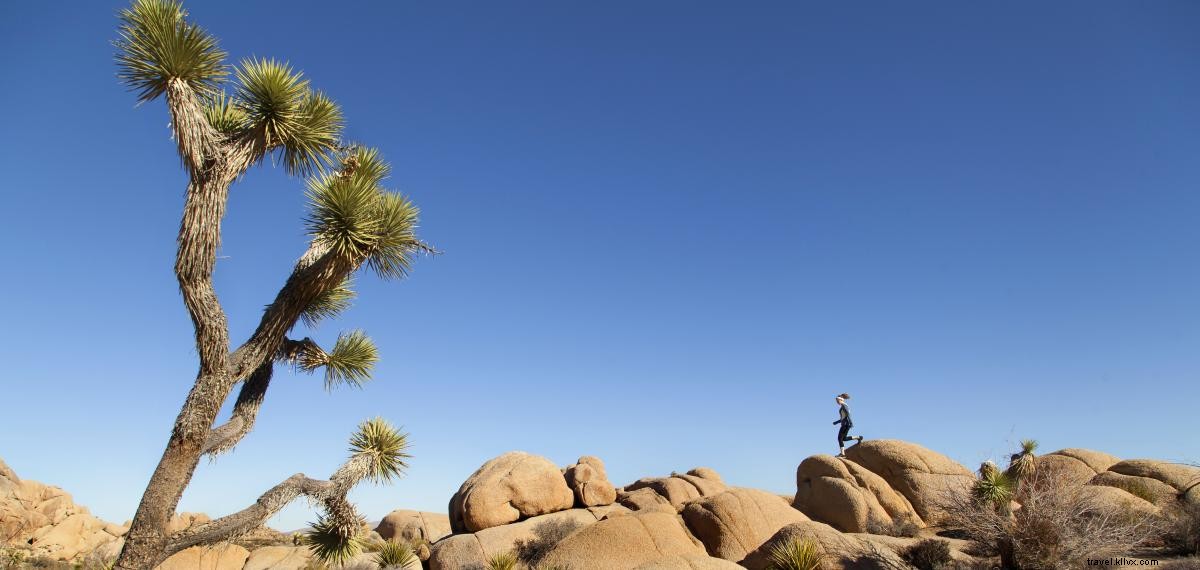
A global mecca for rock climbers, Joshua Tree offers massive boulders and renowned traditional-style crack, slab, and steep-face routes that challenge even seasoned experts. With over 400 formations and 8,000 routes, options suit every skill level.
For first-time visitors, start at the park Visitor Center for essential climbing guides and hiking maps. Rangers stress safety precautions for climbers and hikers, along with protecting the delicate desert ecosystem.
Hiking trails abound: Tackle ten peaks exceeding 5,000 feet, visit all five fan palm oases, or opt for one of twelve shorter nature trails perfect for day visits.
Guided Tours: Keys Ranch
A highlight for many, the Keys Ranch Guided Tour reveals the area's pioneering past. In the late 1800s, explorers, cattlemen, and miners ventured into the desert. The gold-rich Desert Queen Mine near a cow camp faded, passing to worker Bill Keys for back wages. Keys, linked to the notorious "Death Valley Scotty," homesteaded 160 acres including the Old Queen Mill ore site.
Bill and Frances Keys built the Desert Queen Ranch on the Mojave's edge, raising a family in isolation until the Great Depression brought neighbors. The ranger-led tour covers Keys' colorful life—including a feud leading to jail—and features the ranch house, school, store, workshop, mining gear, and orchards.  Minerva’s Park
Beyond early settlers, Joshua Tree's path to national park status owes much to Minerva Hamilton Hoyt, a passionate Pasadena socialite dubbed the "apostle of the cacti." Her desert trips fueled advocacy for preservation, leading to a California state parks commission role. She championed federal protection via the National Park Service.
Established as a national monument on August 10, 1936, by President Franklin D. Roosevelt, Joshua Tree expanded and became a full national park under the California Desert Protection Act, signed by President Bill Clinton on October 31, 1994.