Nellie Lutcher Cultural District: Lake Charles' Vibrant Hub of History and Culture
The Nellie Lutcher Cultural District was recognized in 2015 and officially designated by the state of Louisiana in 2016. Spanning from 7th Street and Railroad Avenue to the north and south, and Ryan Street and Enterprise Boulevard to the east and west, this district honors the legacy of jazz legend Nellie Lutcher. The initiative began as a grassroots effort, with the stretch of Enterprise Boulevard between Broad Street and Interstate 10 first named the Nellie Lutcher Memorial Parkway. Local activists championed recognition for her profound influence on Lake Charles and the broader music industry. As Lori Marinovich of the City of Lake Charles noted, "When we surveyed the city, this neighborhood emerged prominently, and Nellie Lutcher rose to the top as a key figure deserving of tribute."
The I-10 corridor area historically served as a vital artery for southwest Louisiana. In the late 19th century, it flourished as a microcosm of America's melting pot, where immigrants from Syria, Hungary, Lebanon, and Italy worked alongside African American entrepreneurs. While named for Nellie Lutcher, the district boasts several landmark buildings central to Lake Charles' history. Learn more about the Nellie Lutcher Cultural District here.
Historic Structures in the District
Discover some of the district's most notable buildings:
Cash & Carry Building
Constructed in the 1930s at the corner of Enterprise and Broad Street, the Cash & Carry Building originally functioned as a warehouse with booths for small markets selling fresh produce and goods under one roof. It supplied wholesale products to local businesses, which then retailed them citywide. Abandoned and officially closed in 1992, it landed on the Calcasieu Historical Preservation Society's Eleven Most Endangered Sites List. Rescued and restored by Rick and Donna Richard through their Empire of the Seed organization, it now thrives as one of Southwest Louisiana's premier wedding venues. Its exposed brick and ductwork evoke its warehouse roots, and it hosts a vibrant Farmer's Market every Tuesday evening—completing a remarkable full-circle journey as a historic landmark.
Lake Charles High School
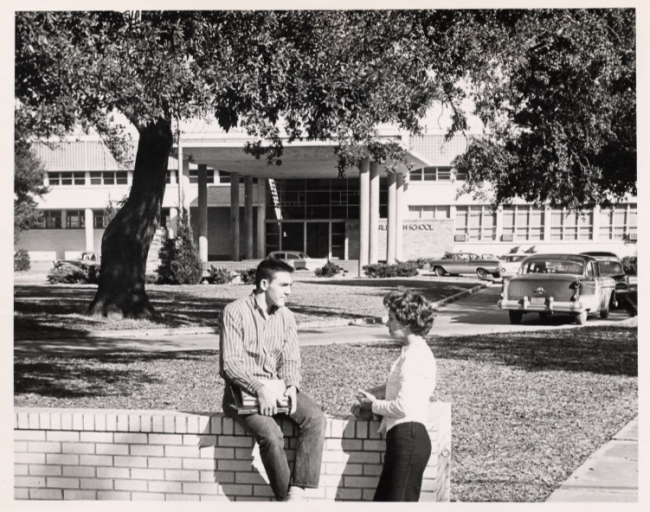
This Enterprise Boulevard landmark has evolved over more than a century. In 1903, Lake Charles High School separated from the Central School on Kirby Street to operate independently. Adopting the Wildcats mascot, it celebrated championship football teams and the renowned Kilties marching band. During wartime, students spearheaded war bond sales and recycling drives. In 1983, it merged with W.O. Boston High School to form Lake Charles-Boston High School, which closed in 2007 and reopened as the Lake Charles-Boston Academy of Learning, providing extended services for Calcasieu Parish students.
Lake Charles Little Theatre
Founded in 1927 by Emma Michie, Mrs. J.W. Gardiner, Mary Gayle Porter, and Rosa Hart, the Lake Charles Little Theatre (LCLT) started with over 150 members and raised more than $700 in its debut year, staging three plays. The 1929 stock market crash curtailed luxuries like theatre, prompting a 1938 move to the Stable Playhouse on Bilbo Street, which burned in 1958. The group relocated to its current New Stable Playhouse on Enterprise Boulevard for the 1986-87 season. Powered by volunteers, LCLT has enriched Southwest Louisiana's arts scene for nearly a century, producing over 300 plays and musicals.
Sacred Heart Catholic Church
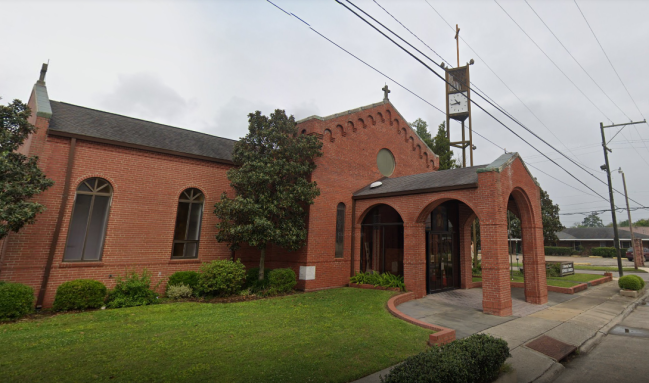
Celebrating its centennial in October 2019, Sacred Heart Catholic Church originated as a 1908 schoolhouse. The African American community, backed by white religious leaders, petitioned the Diocese of Lafayette for a dedicated church. Primarily serving Black parishioners, it became the first integrated parish in the Lake Charles Diocese. By mid-20th century, it drew over 9,000 members with six Sunday services, inspiring new Catholic congregations across Southwest Louisiana. The church fueled growth in Lake Charles' Black middle class, enduring challenges like Ku Klux Klan cross burnings during McNeese State University's integration. Undaunted, parishioners upheld it as a beacon of faith, family, and community. Today, it holds two Sunday services on Mill Street.