Wat Rong Khun: Chiang Rai's Iconic White Temple – A Surreal Masterpiece Rivalling Gaudí
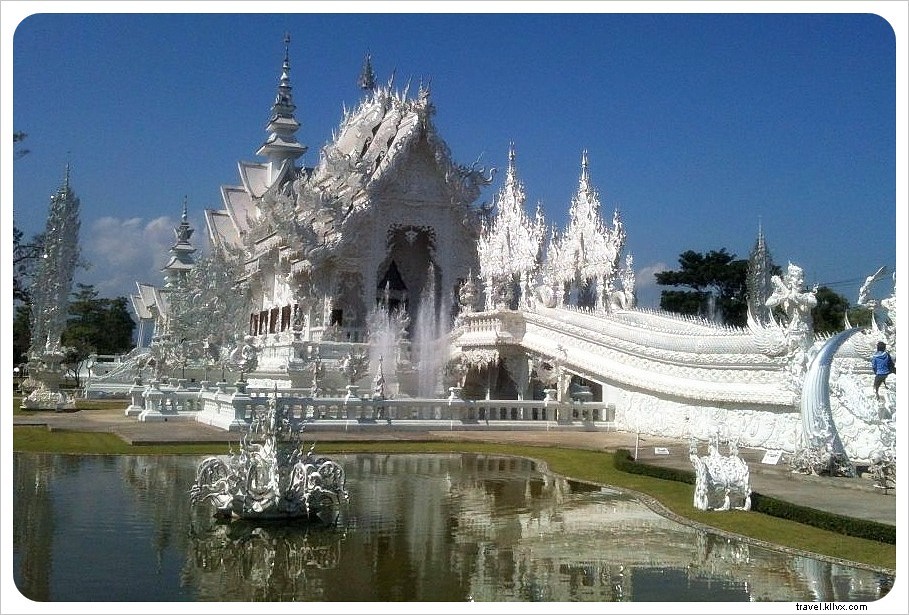
Wat Rong Khun, known as the White Temple, defies convention in breathtaking ways. Situated just outside Chiang Rai in northern Thailand, this modern architectural marvel blends Buddhist symbolism with contemporary art, creating a surreal experience unlike any traditional temple.
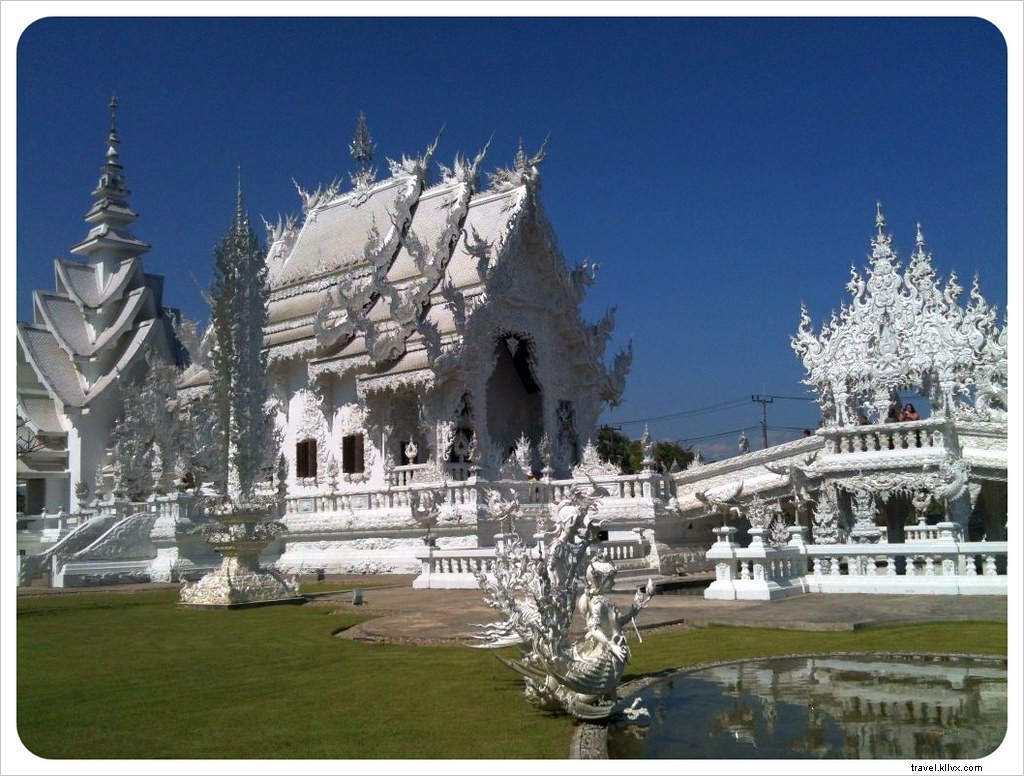 Construction began in the late 1990s under the vision of acclaimed Thai artist Chalermchai Kositpipat. Parts of the facade remain unfinished, yet the temple stands unparalleled among Buddhist sites worldwide. Primarily an artistic endeavor rather than a conventional place of worship, it draws daily visitors for its bold creativity. Kositpipat has likened it to Antoni Gaudí's Sagrada Família, a comparison borne out after more than two decades of work. The results range from exquisitely beautiful to profoundly unsettling.
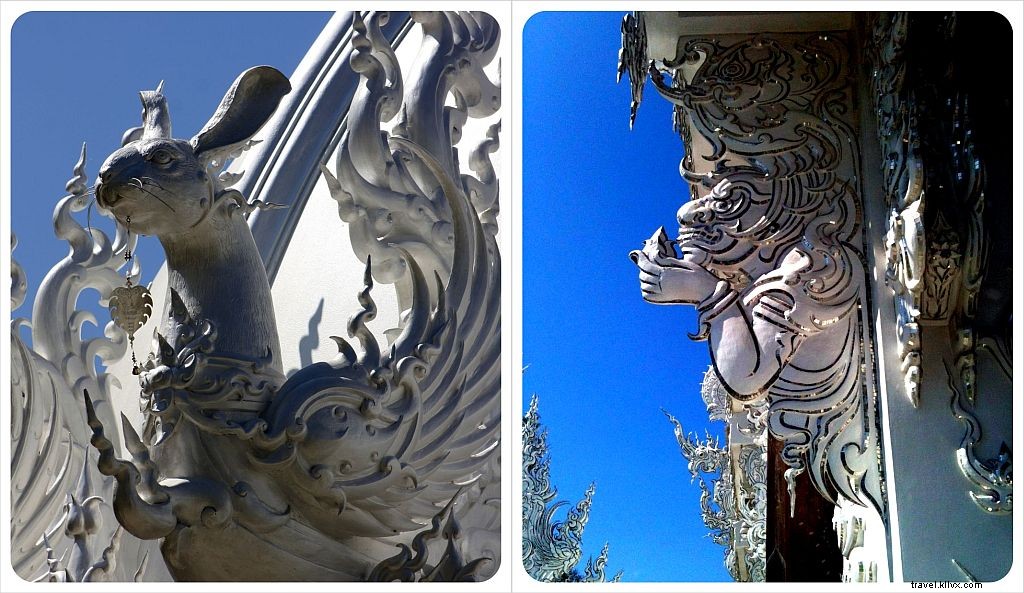
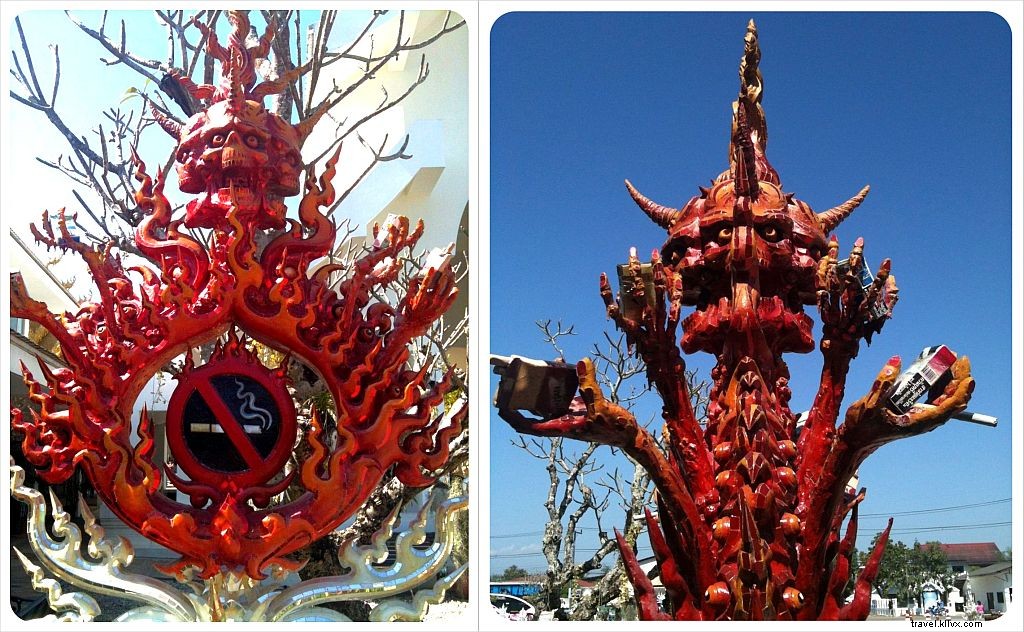
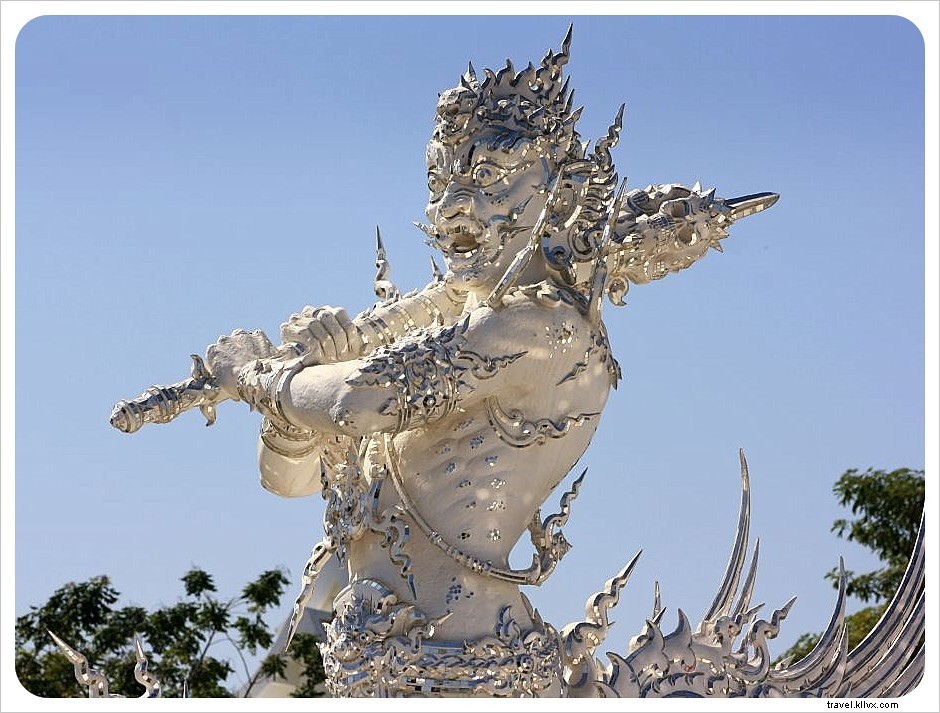
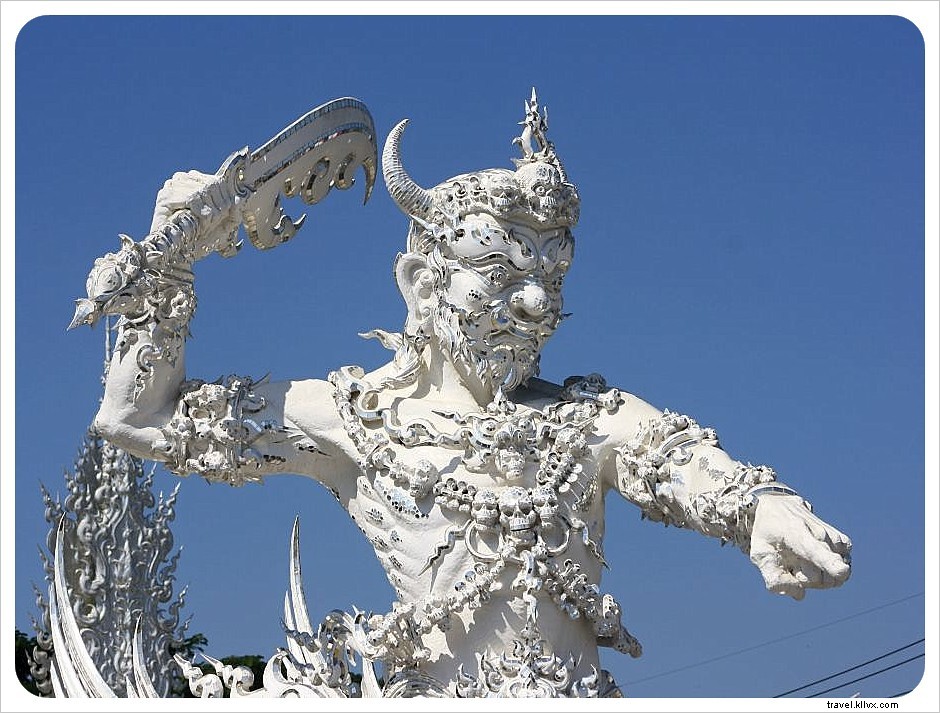
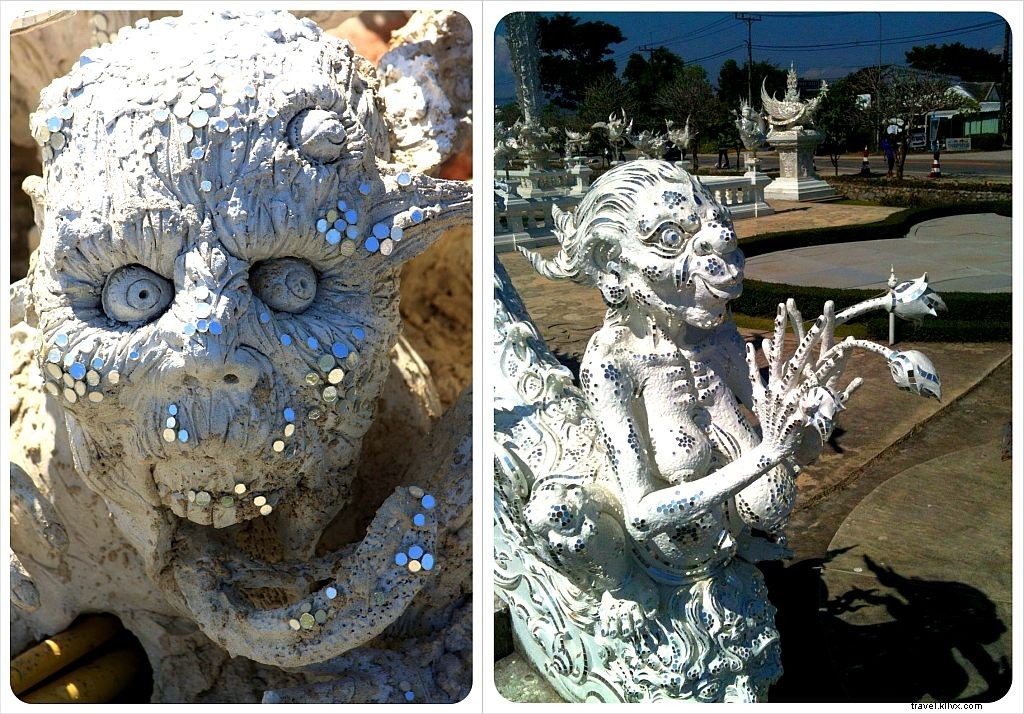 At the entrance, two imposing demon figures guard the path, symbolizing human vices like alcohol and cigarettes.
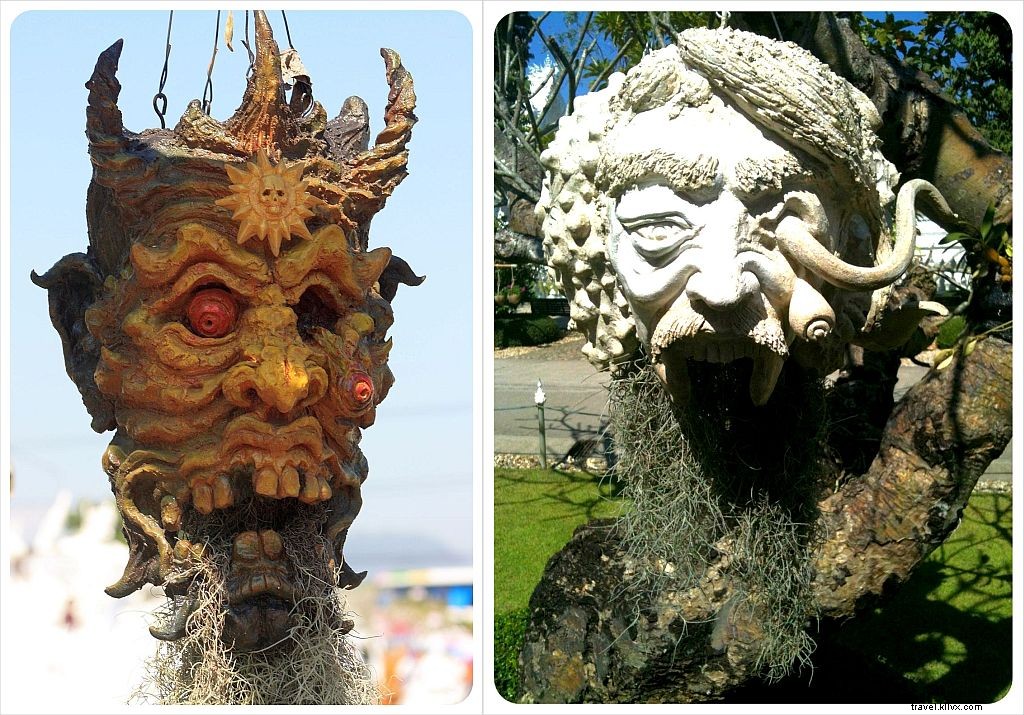
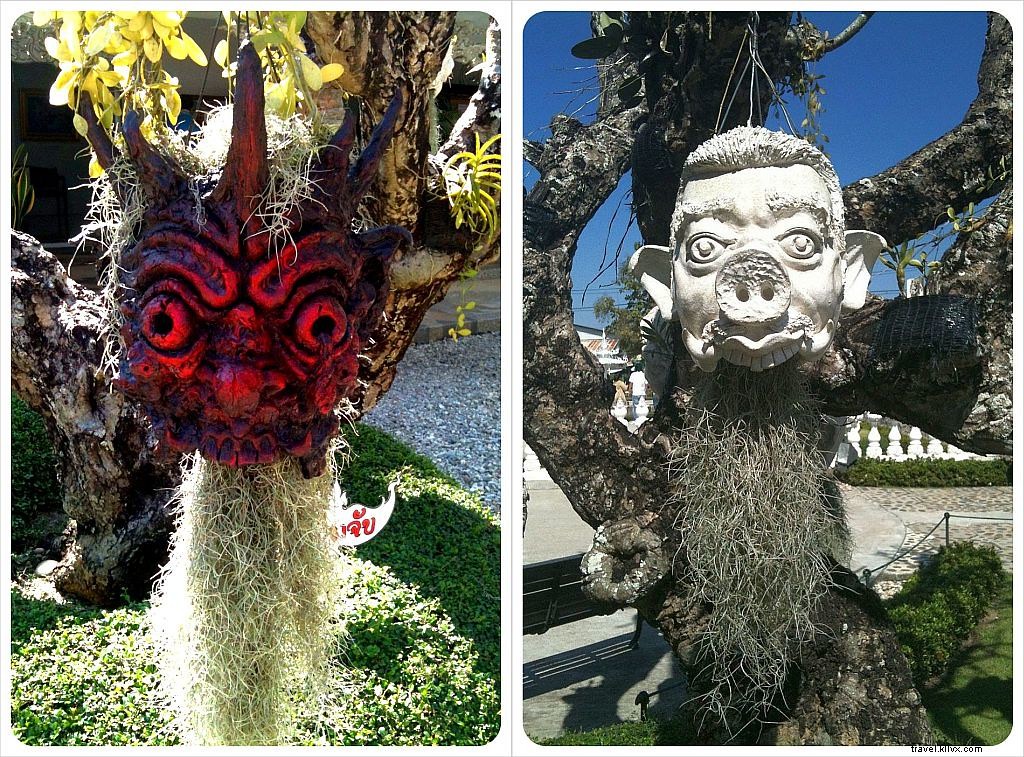
 Visitors first cross a serene pond teeming with koi, then encounter eerie trees adorned with dangling skulls—some whimsical, others nightmarishly vivid.
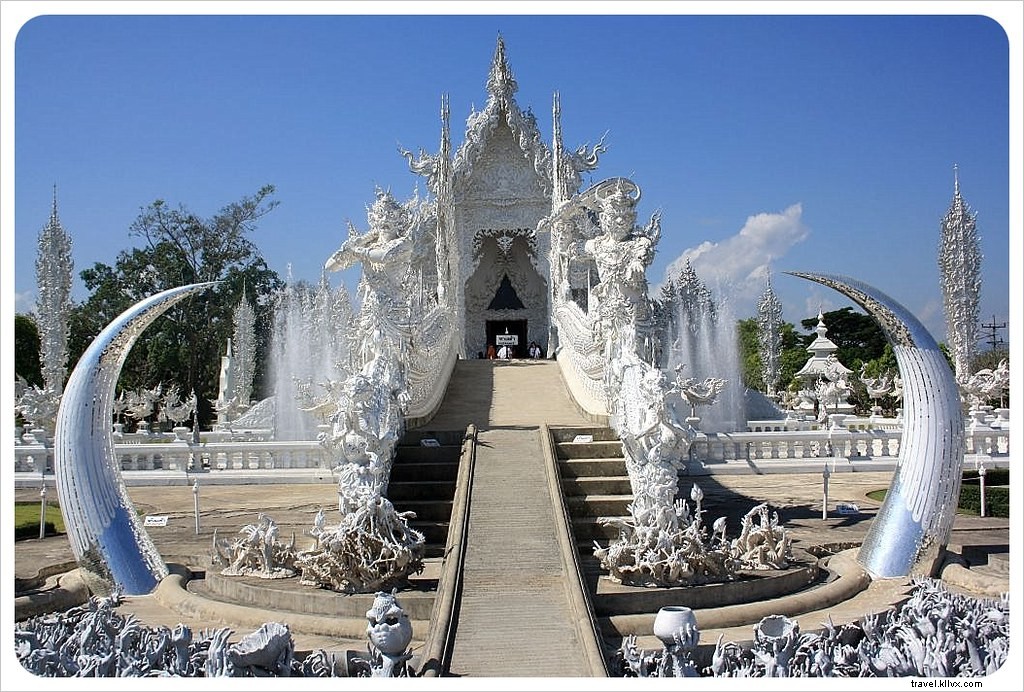
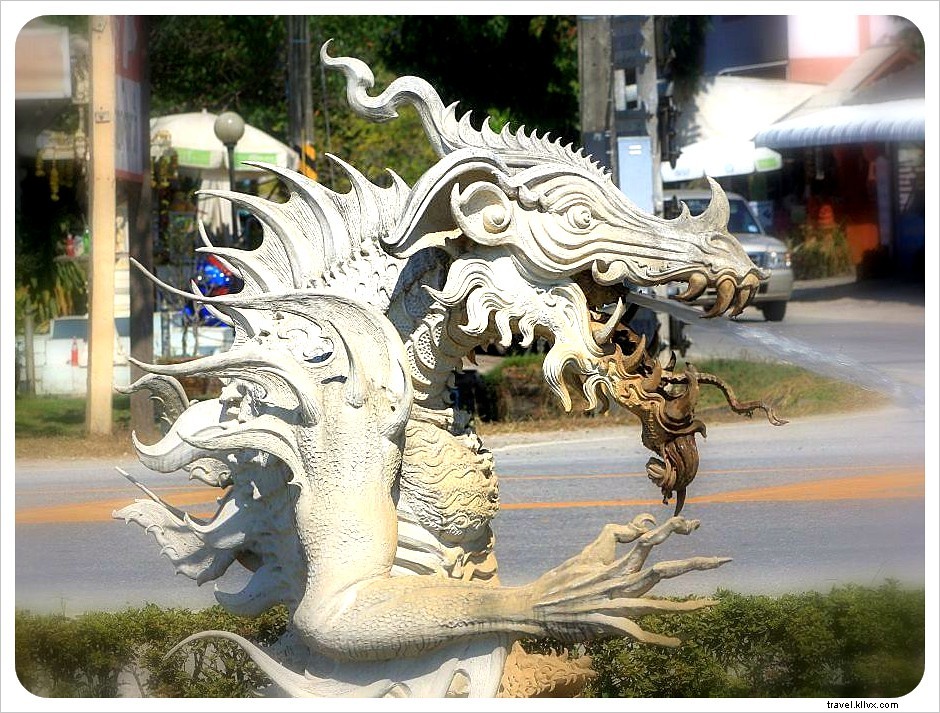
 A magnificent bridge, inlaid with reflective mirrors, leads to the temple, flanked by guardian sculptures.
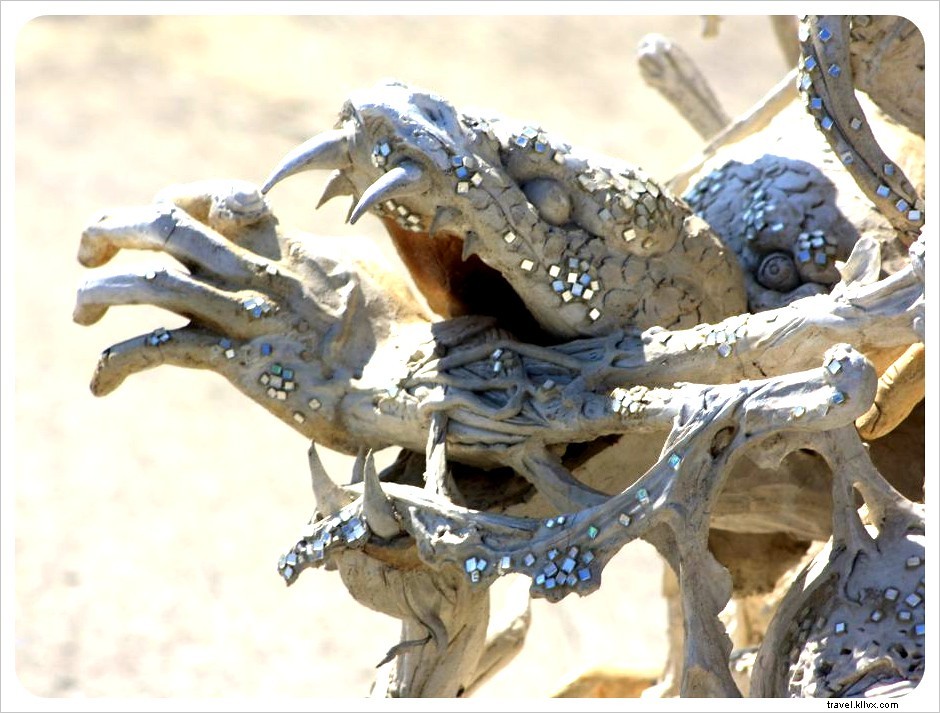
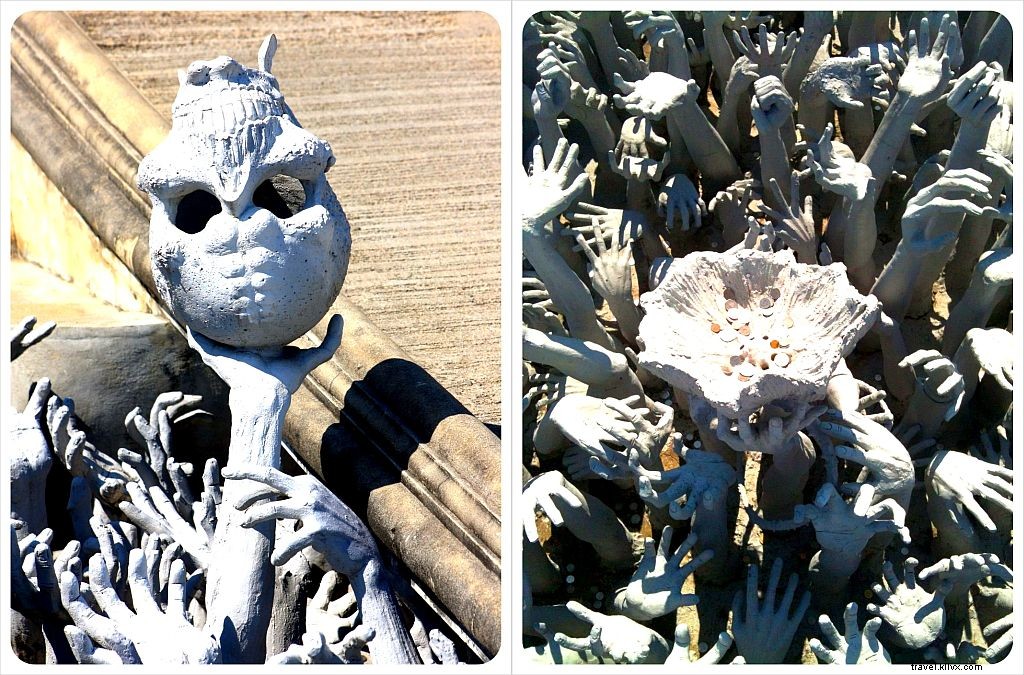
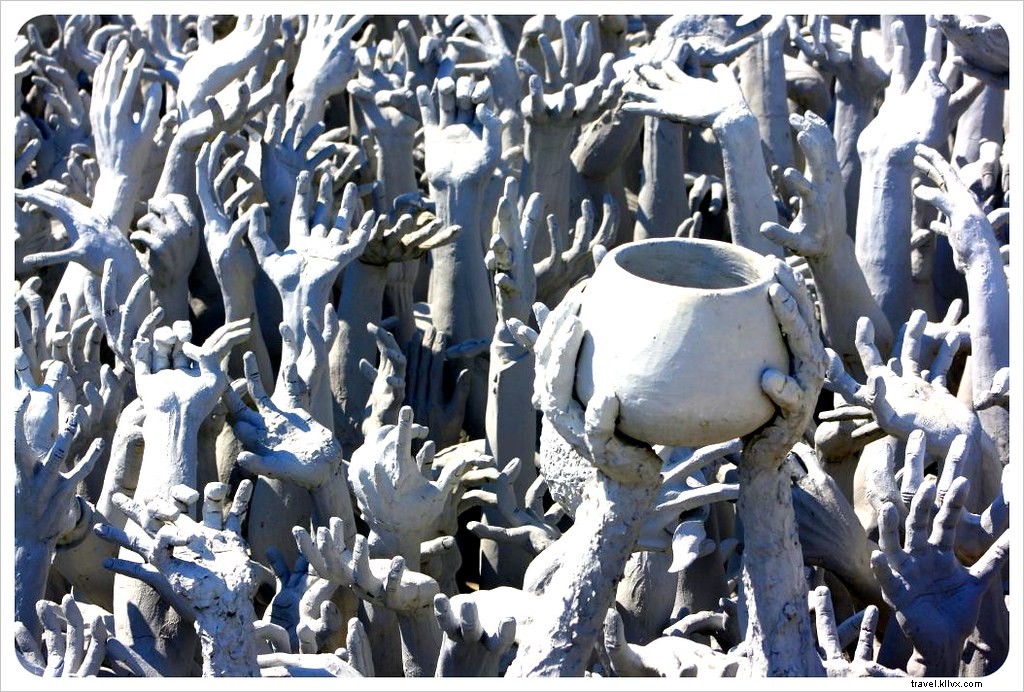
 Beneath it lies the 'Pit of Hell,' where hundreds of clay hands claw desperately upward, grasping skulls or alms bowls—representing the struggle to escape samsara.
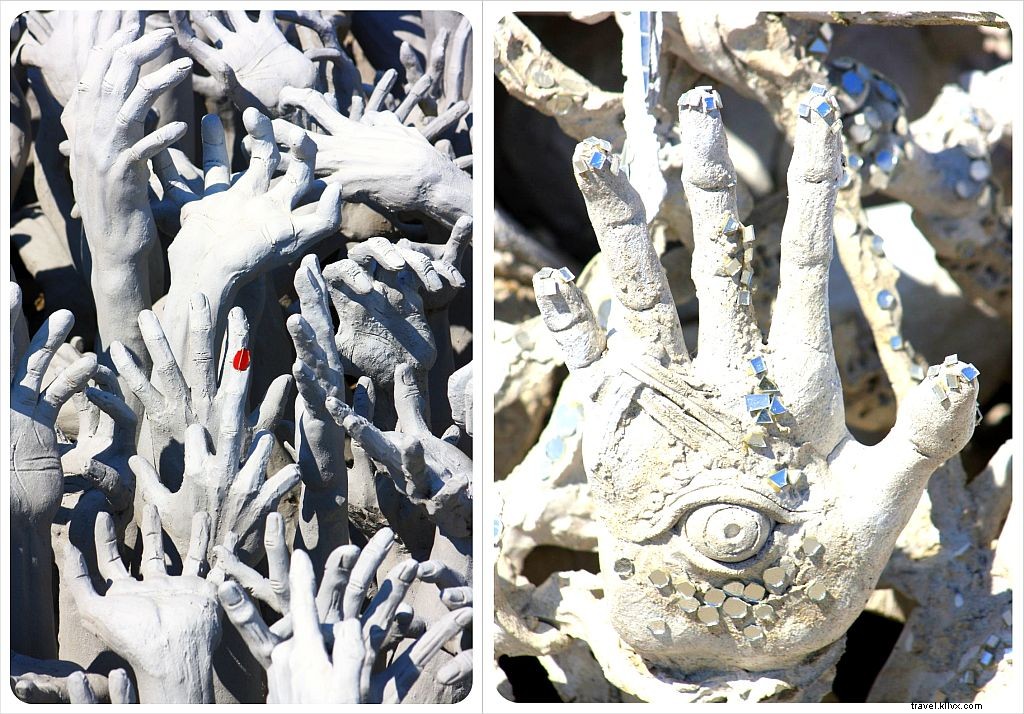
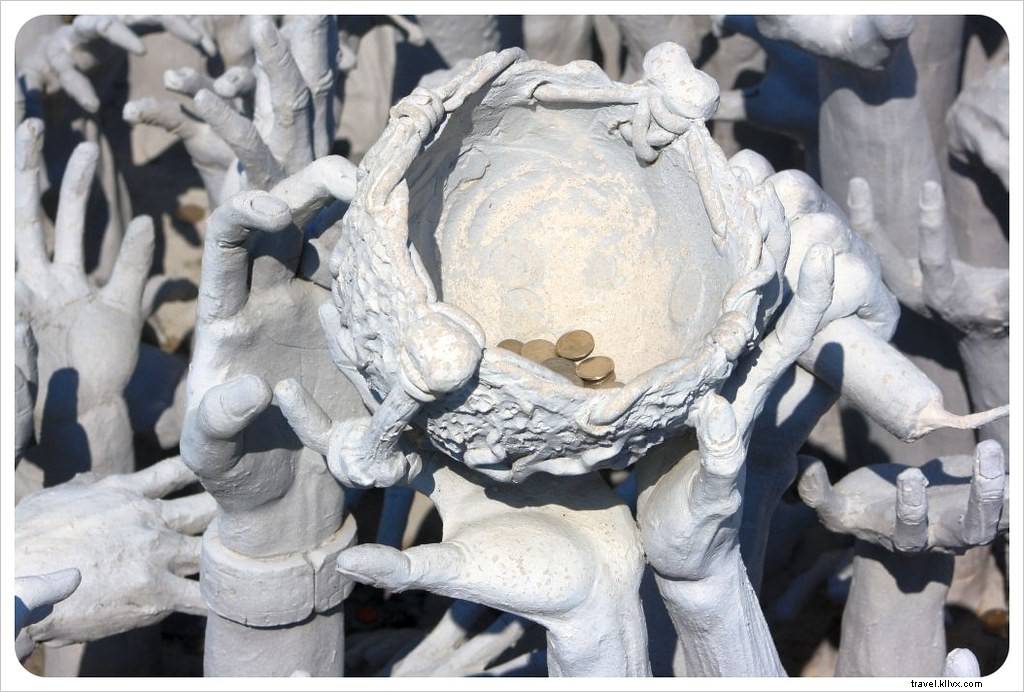
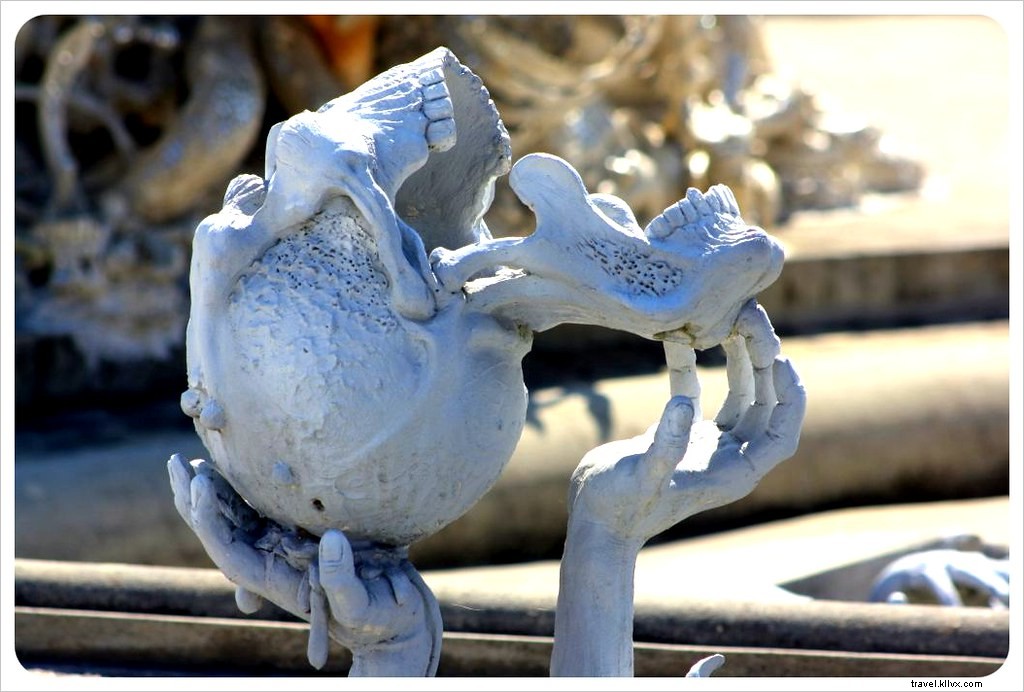 The bridge symbolizes the path from rebirth's cycle to Buddha's realm. The semi-circle depicts the human world, while encircling fangs evoke Rahu's maw—hell's gateway of mental impurities.
 Surrounding ponds feature haunting details, such as a fish devouring a human hand.
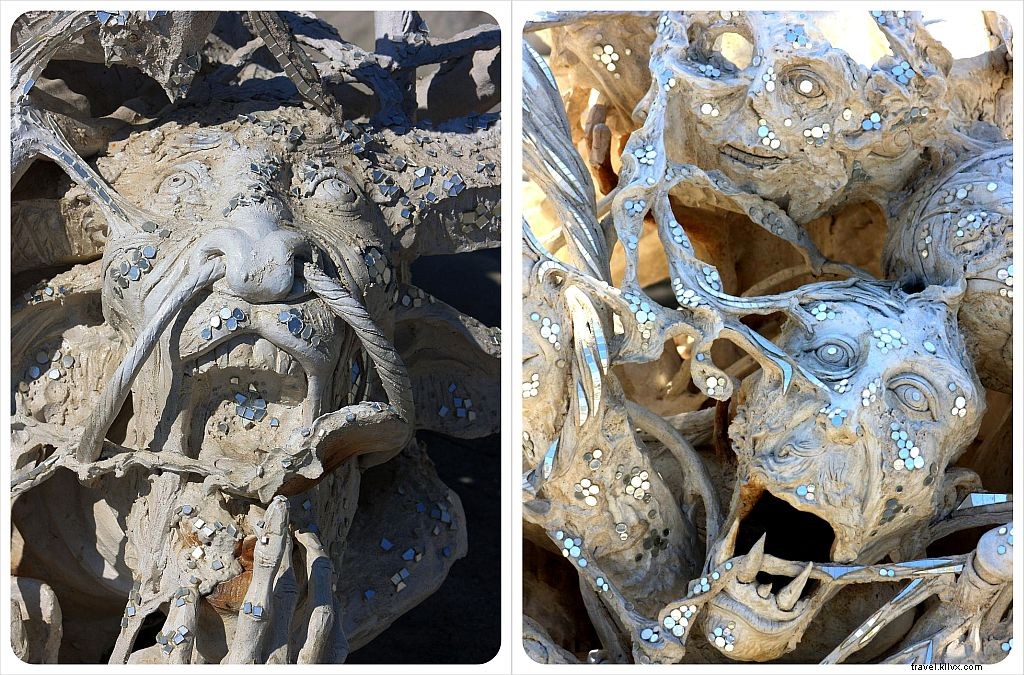
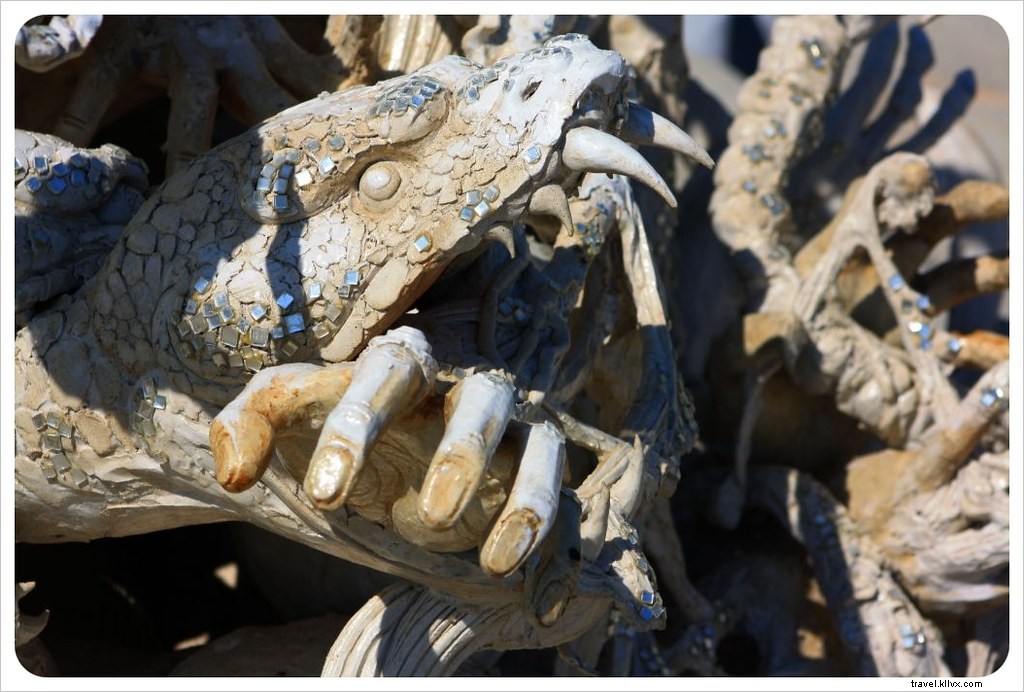
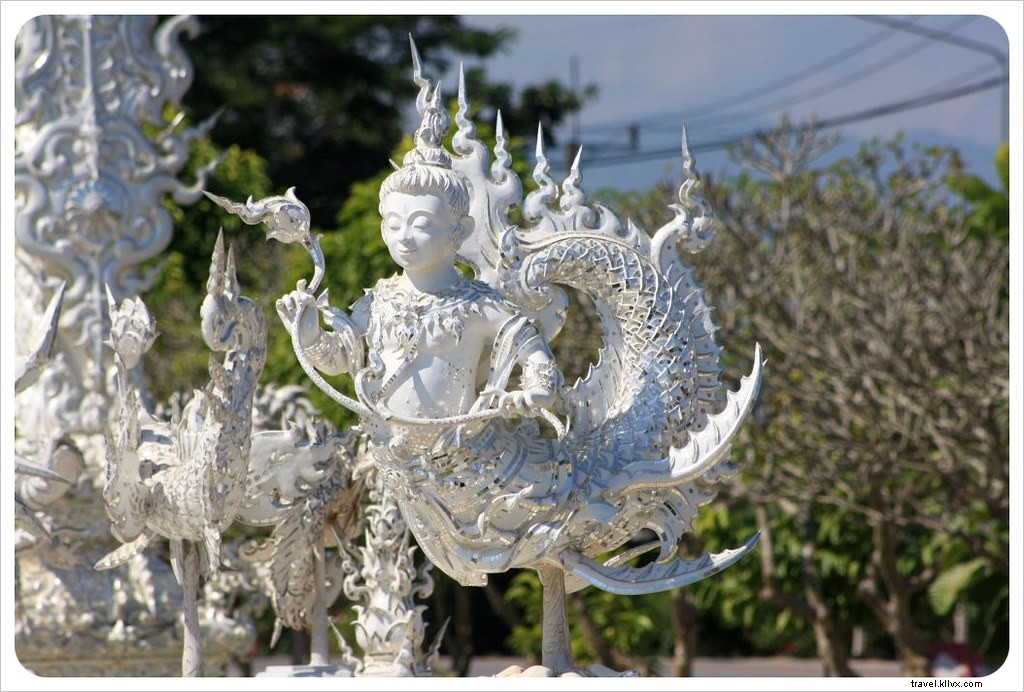
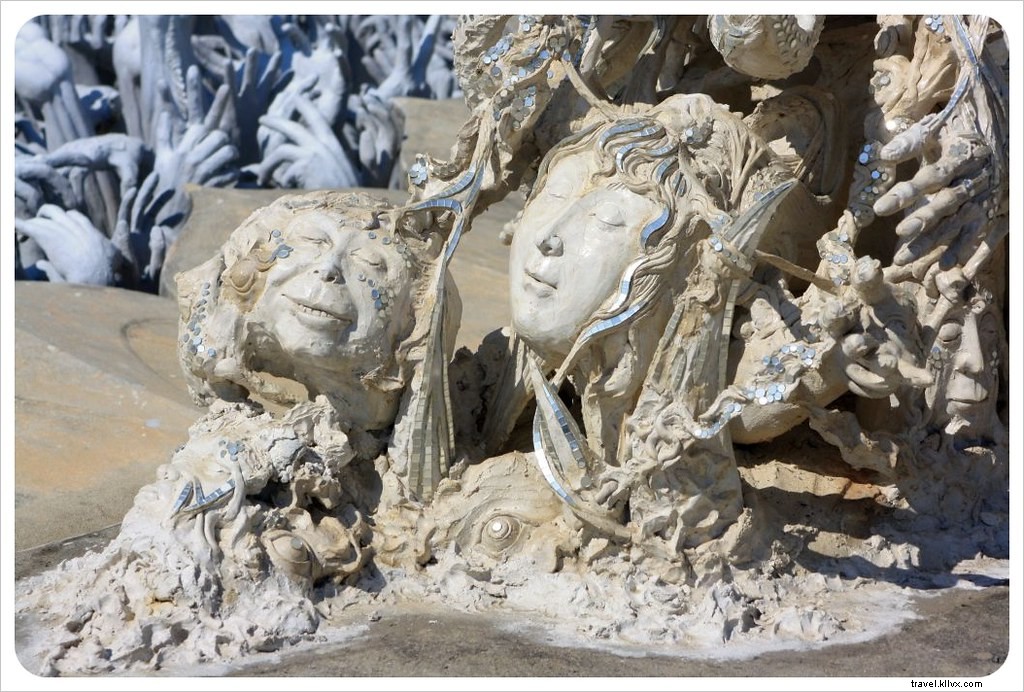 The principal ubosot gleams pure white, embodying Buddha's purity, adorned with intricate white sculptures and mirrored mosaics.
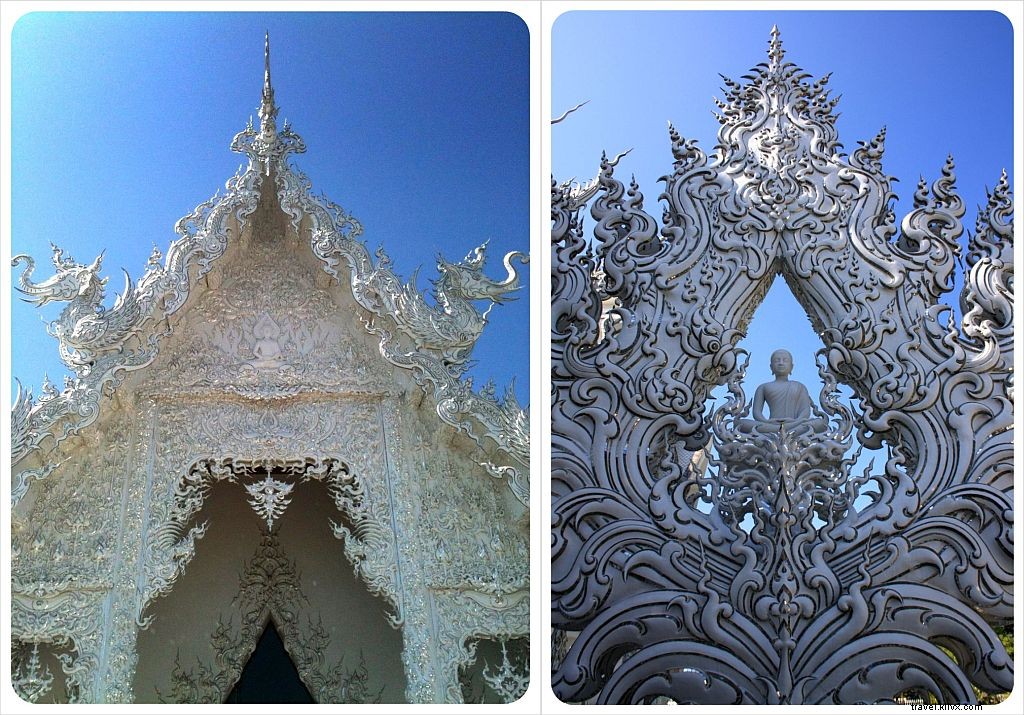
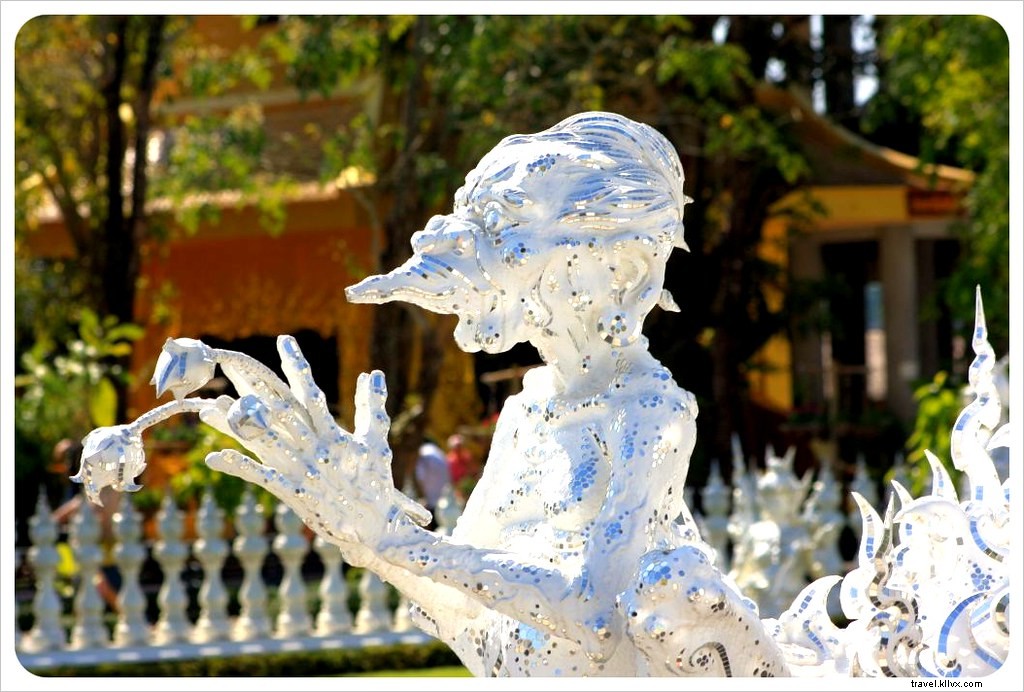
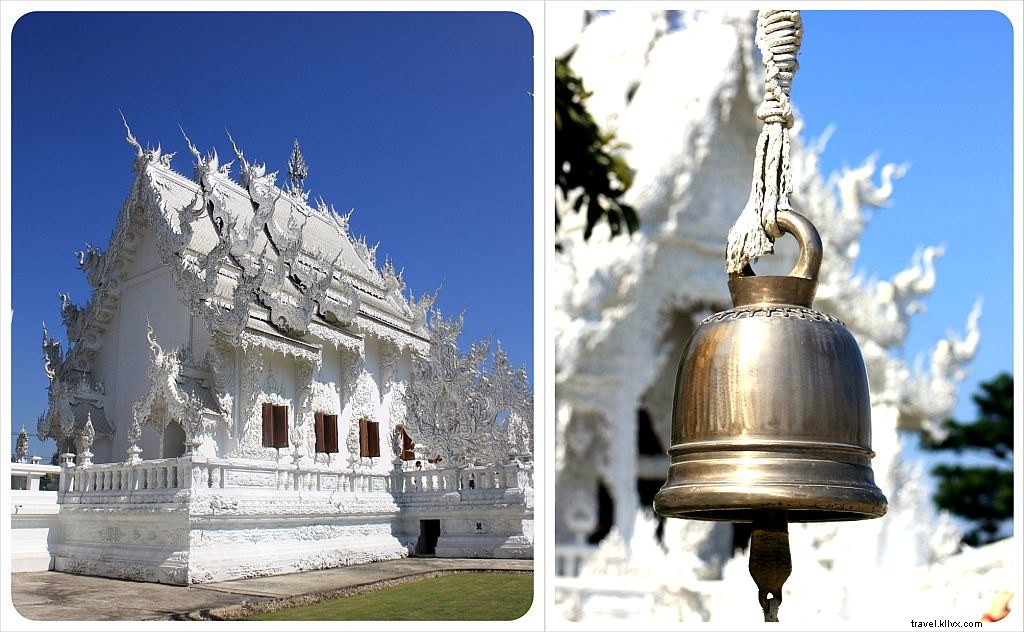
 Photography is banned inside, but envision: Buddha faces an orange mural fusing pop icons—Spider-Man, Superman, Star Wars, The Matrix's Neo, McDonald's, 9/11 imagery, Bin Laden, and George W. Bush—with global chaos. Unconventional for a temple, yet profoundly thought-provoking. Some interior sections remain incomplete, hinting at future surprises.
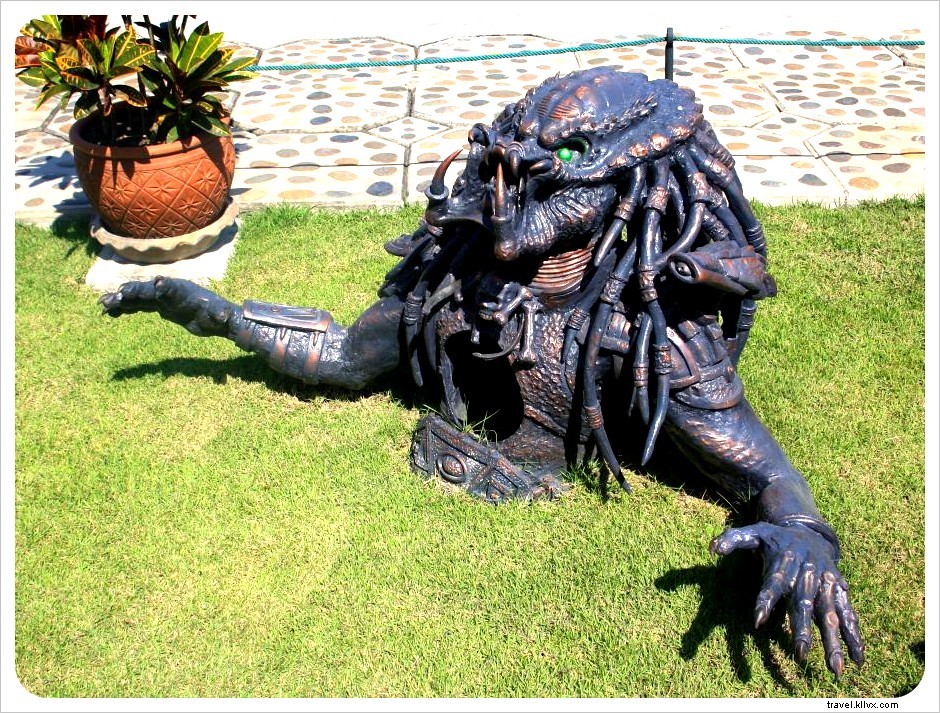
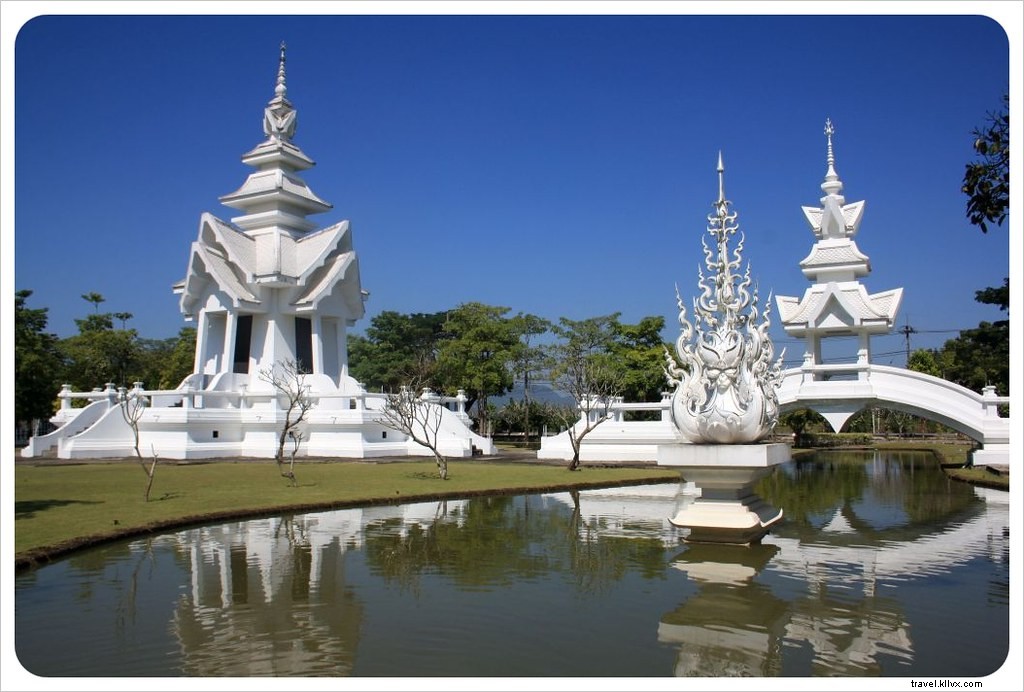
 Beyond the ubosot, another white bridge spans a pond to a luminous pagoda.
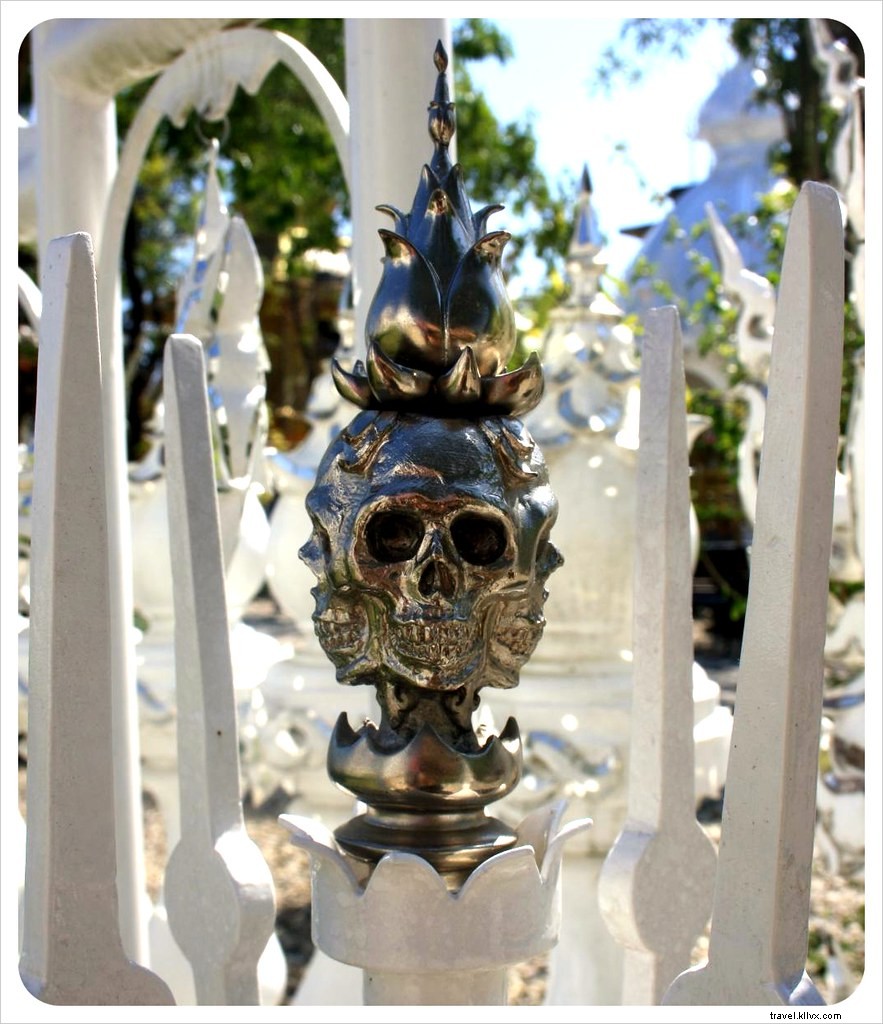
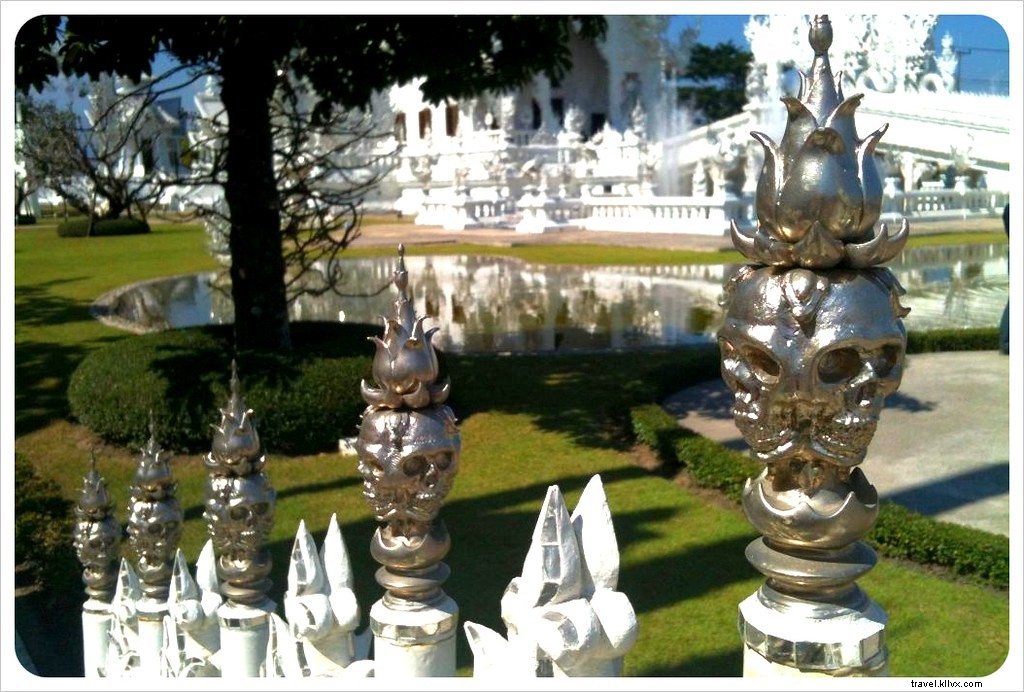
 The gardens brim with details, like skull-encrusted fences.
 A pristine gazebo crowns animal sculptures in exquisite detail.
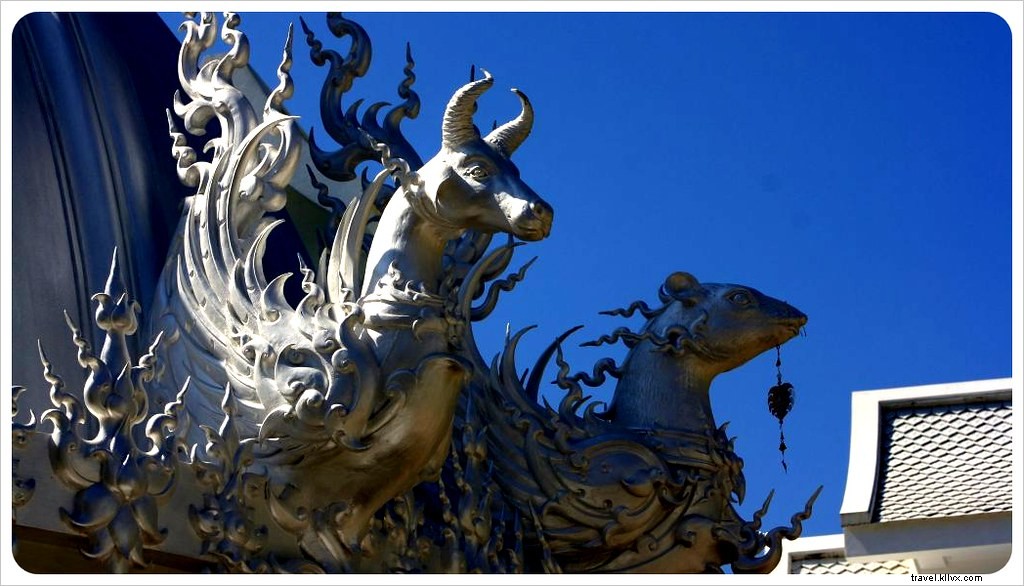
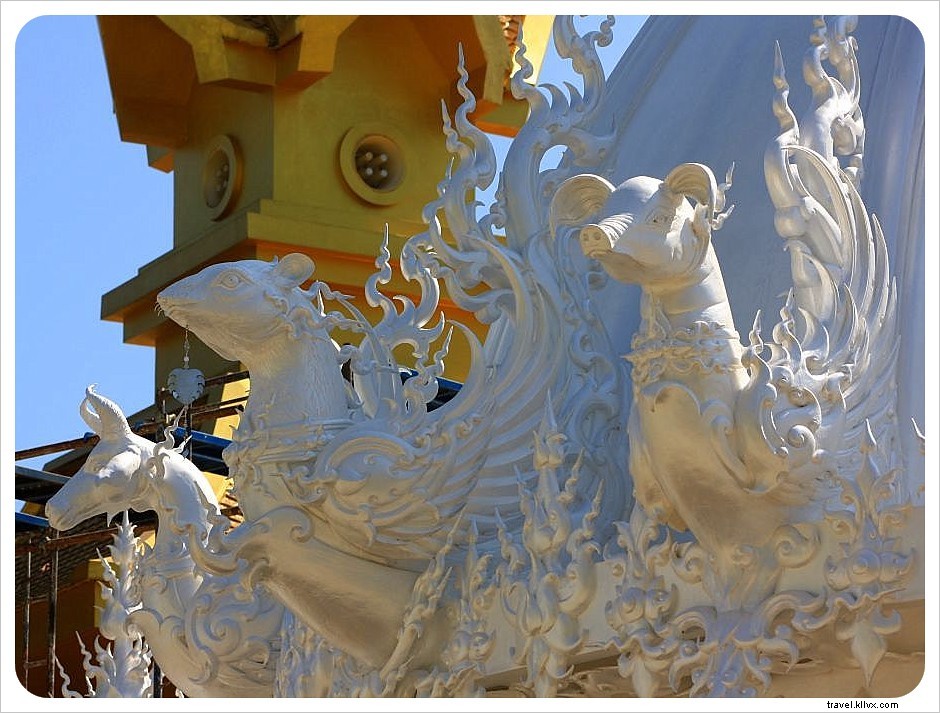 Upon completion, nine structures will rise: ubosot, relic hall, Buddha image hall, preaching hall, contemplation hall, monk's quarters, Buddhavasa facade, art gallery, and restrooms.
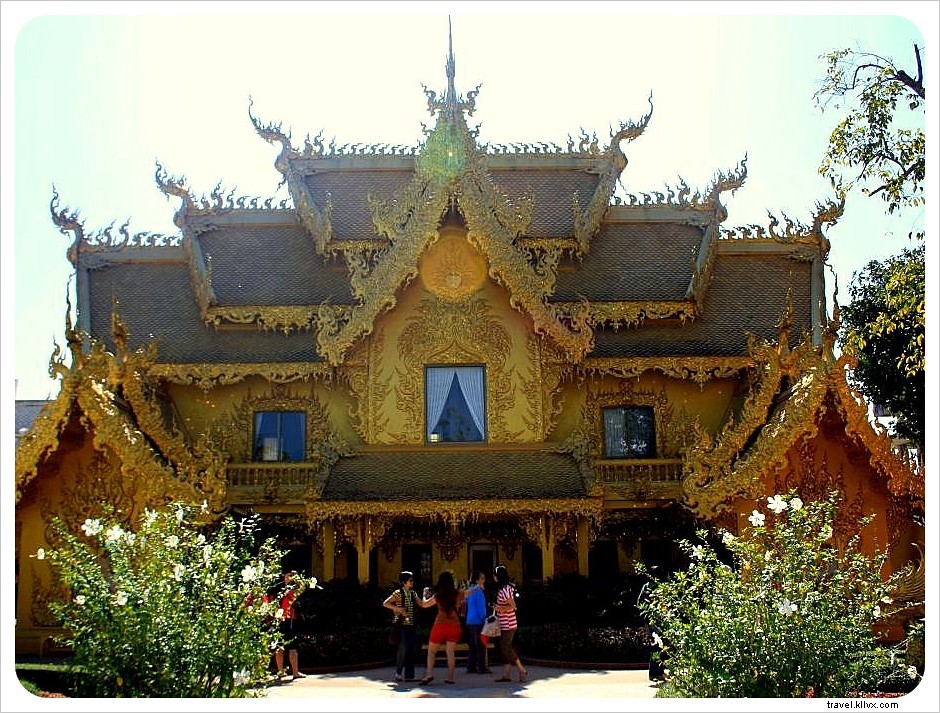
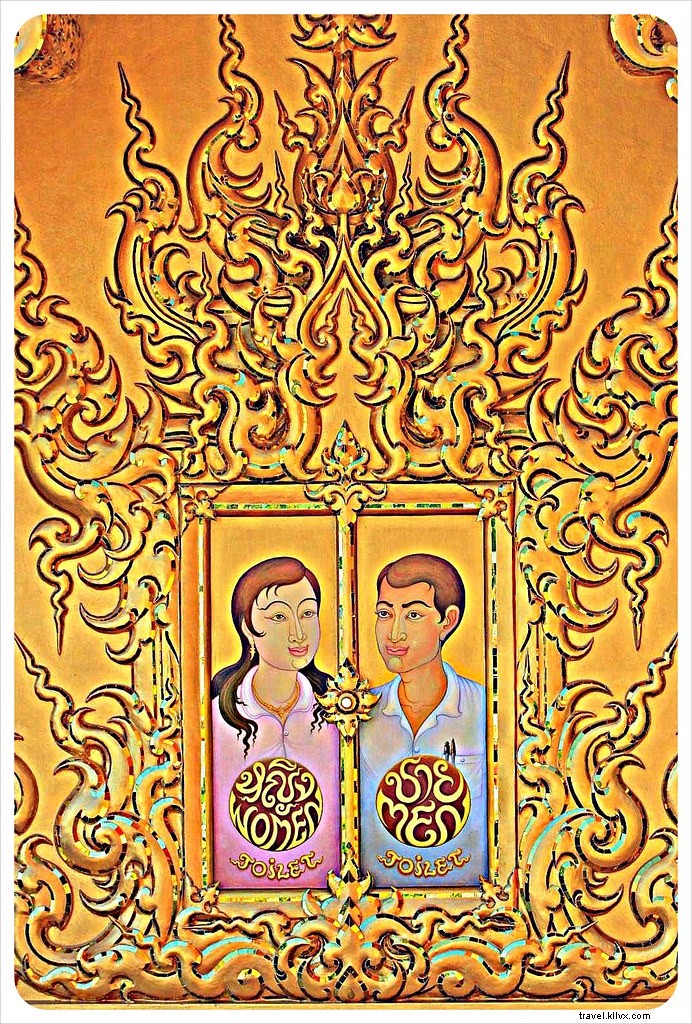
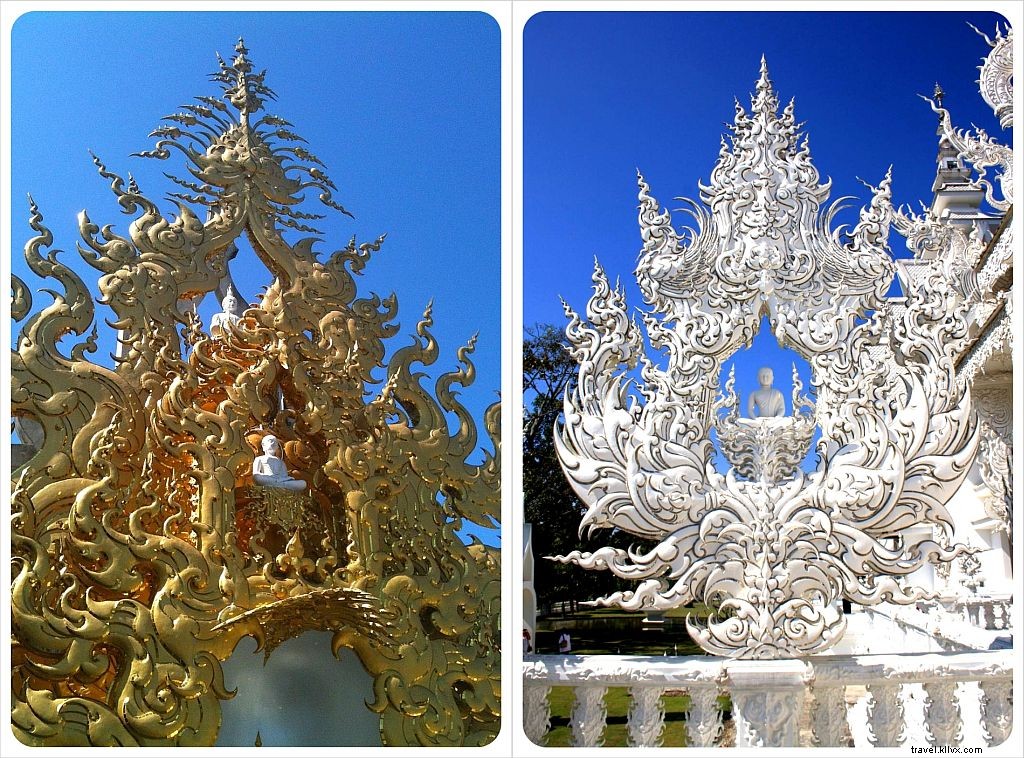 Even the opulent golden bathrooms exude artistry.
 Visiting Wat Rong Khun: Located in Ban Rong Khun, 13 km southwest of Chiang Rai. Catch public buses (around 40 Baht) from Chiang Rai's bus station—ask for Wat Rong Khun departures. The 20-minute ride is straightforward.
Allow at least an hour to absorb the intricate details that reveal themselves upon closer inspection.