Visiting Cambodia's Killing Fields and Tuol Sleng: A Personal Account from Phnom Penh
Our visit to the Killing Fields begins in an unexpected way…
Haggling for a Tuk-Tuk Ride to the Killing Fields
The most surreal aspect of visiting the Killing Fields happens right at the outset. Like in many Southeast Asian cities, the day starts with negotiating the price of a tuk-tuk tour. But today, we're heading to sites where thousands of Cambodians were tortured and murdered during the Khmer Rouge regime.
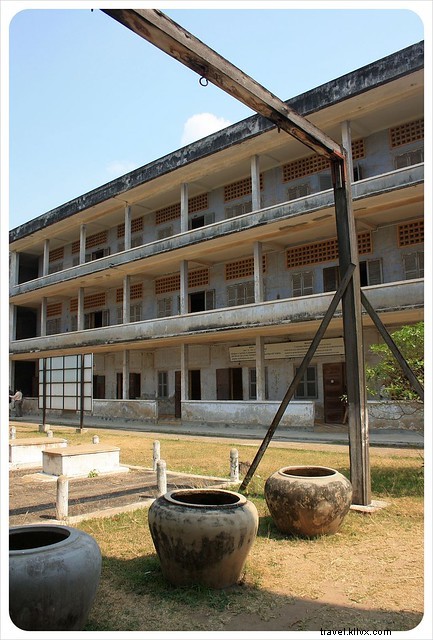
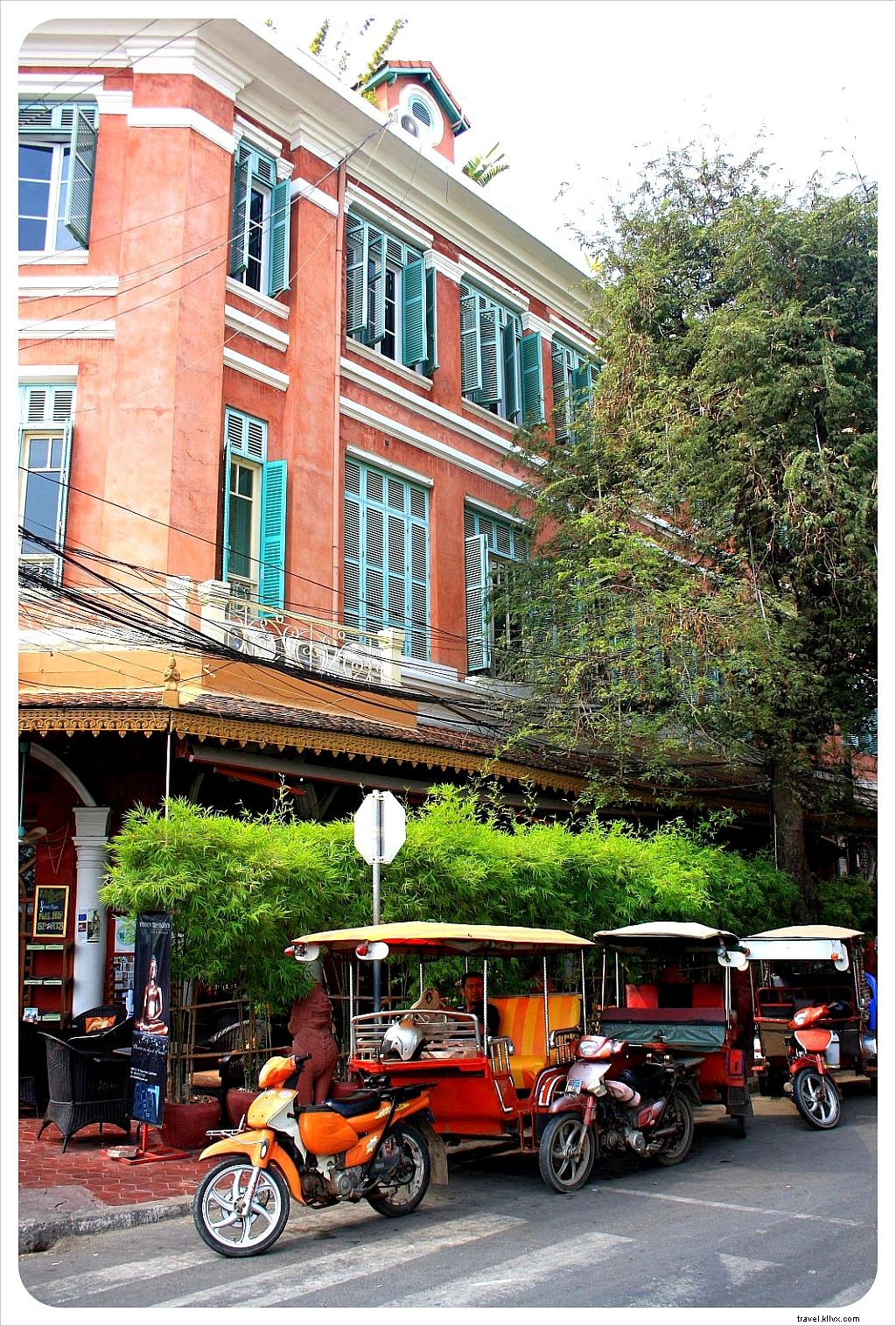 For the driver, it's just another day ferrying tourists: first to the Choeung Ek Killing Fields, where approximately 17,000 people were executed and buried in mass graves between 1975 and 1979; then to Tuol Sleng (S-21), a former school turned prison where victims endured brutal torture before their execution; and finally, to the Russian Market for souvenirs.
He initially quotes $20, but after a few weeks in Cambodia, we know better and settle on $10. Though bargaining feels uneasy here, we're disturbed when he offers an extra $5 add-on: a visit to a shooting range.
Declining the Shooting Range Offer
Shooting ranges are a common upsell among Phnom Penh tuk-tuk drivers. We're bracing for the grim history of the Khmer Rouge genocide, which claimed around 2 million lives—over 25% of Cambodia's population. Yet some tourists opt to shoot guns beforehand. We decline and head out.
Our roughly 45-year-old driver was a child during the Khmer Rouge era (1975-1979). He likely lost family and friends, yet now guides visitors daily to these atrocity sites. It's an uncomfortable reality.
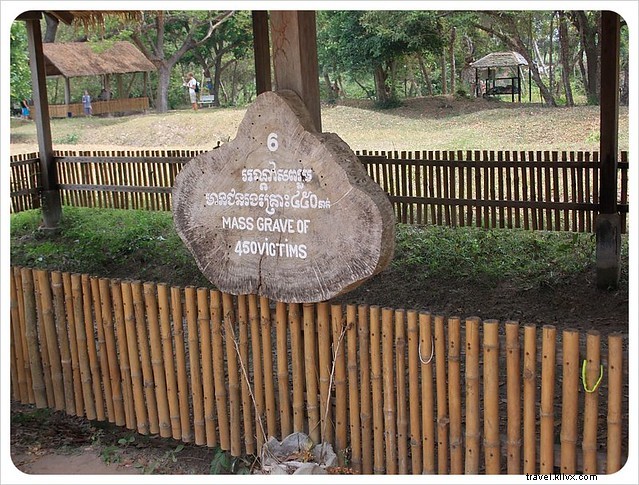
Humbling Reflections at the Killing Fields
Busloads of tourists arrive with audio guides, reminiscent of museum visits—a stark contrast to the starvation and suffering here decades ago. Initially off-putting, I soon recognize the importance of bearing witness to Pol Pot's genocide, often overlooked in Western education compared to the Holocaust.
The Khmer Rouge targeted educated people and foreigners, forcing others into labor camps to build an agrarian utopia. From 1975-1979, they killed about 2 million to achieve this vision.
Unforgettable Moments at the Site
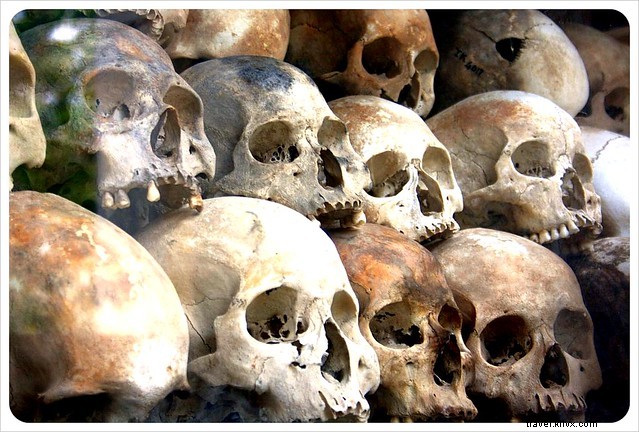
Scenes etched in memory: the ground bubbling from decomposing bodies; victims' weathered clothes emerging from the soil; the Killing Tree, where infants were smashed to death to save bullets.
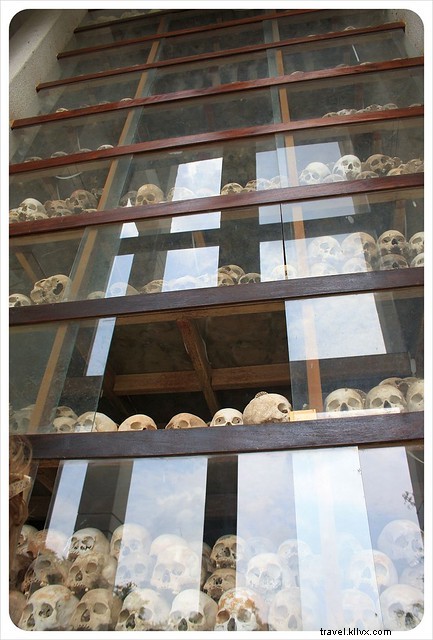
At Stop 18, the Memorial Stupa holds over 8,000 skulls, bones, and clothing from the 17,000 victims—making the horror's scale visceral. The experience is profoundly unsettling, evoking nausea, grief, and anger.
If visiting (and you should, for its lessons), prepare for a sobering ordeal that lingers.
Slim Survival Odds at Tuol Sleng
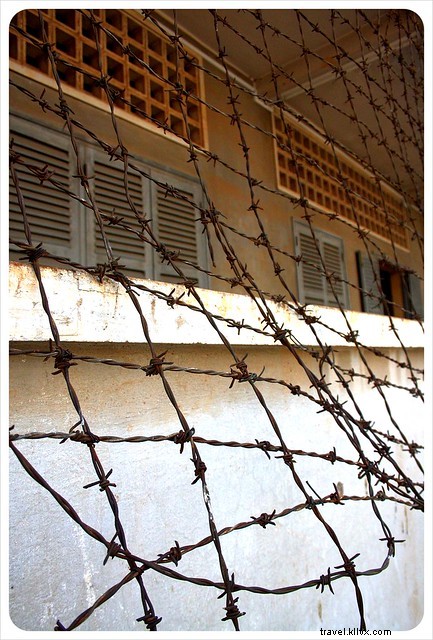
At the Tuol Sleng Genocide Museum, only about a dozen of the 14,000-20,000 prisoners survived. Entry here meant prolonged torture followed by execution.
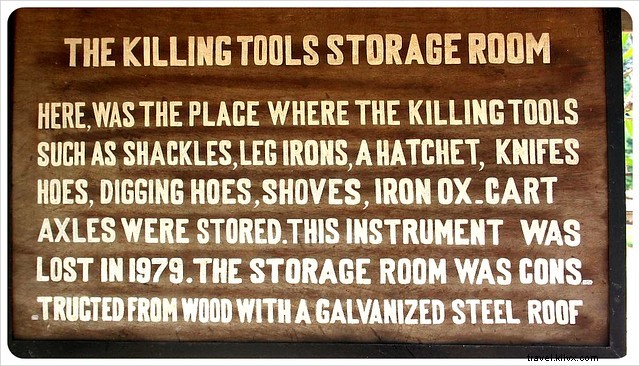 Outside, a legless blind beggar—likely a regime survivor—pleads for alms.
Inside, thousands of mugshots of arrivals stare hauntingly. Viewing them brings choked-back tears.
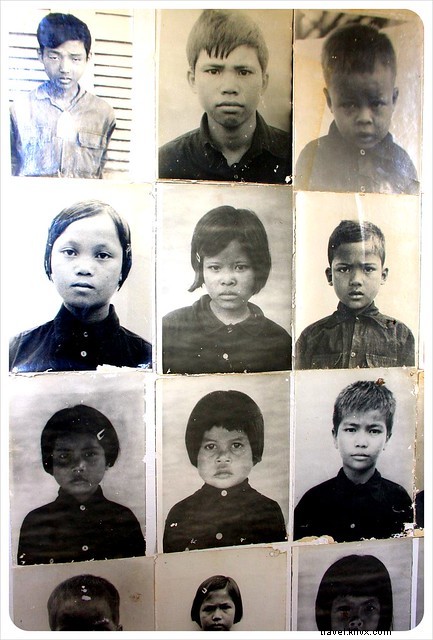 The hardest moment: one survivor signs books, recounting tortures like hanging upside down over water, electrocution, beatings, and starvation. Overwhelmed, we can't approach.
 Hearts heavy, we briefly visit the Russian Market but leave quickly. En route back, dark questions arise: Was our driver a victim or perpetrator? Many Cambodians aged 40-60 were involved somehow. Accountability remains elusive—Pol Pot died unprosecuted in 1998; tribunals continue.
Further Reading on Cambodia's History
For deeper insight, read First They Killed My Father by Loung Ung, a survivor's memoir from age five amid the 1975 Phnom Penh evacuation, labor camps, and child soldiery, to her U.S. life. Sequel Lucky Child covers family reunion in healing Cambodia.
Getting to Phnom Penh
From Thailand: 12-hour bus from Bangkok or cheap flight. From Siem Reap: 5-6 hour bus or flight.
Visiting the Killing Fields
Any Phnom Penh tuk-tuk driver can take you. Negotiate the fare upfront.